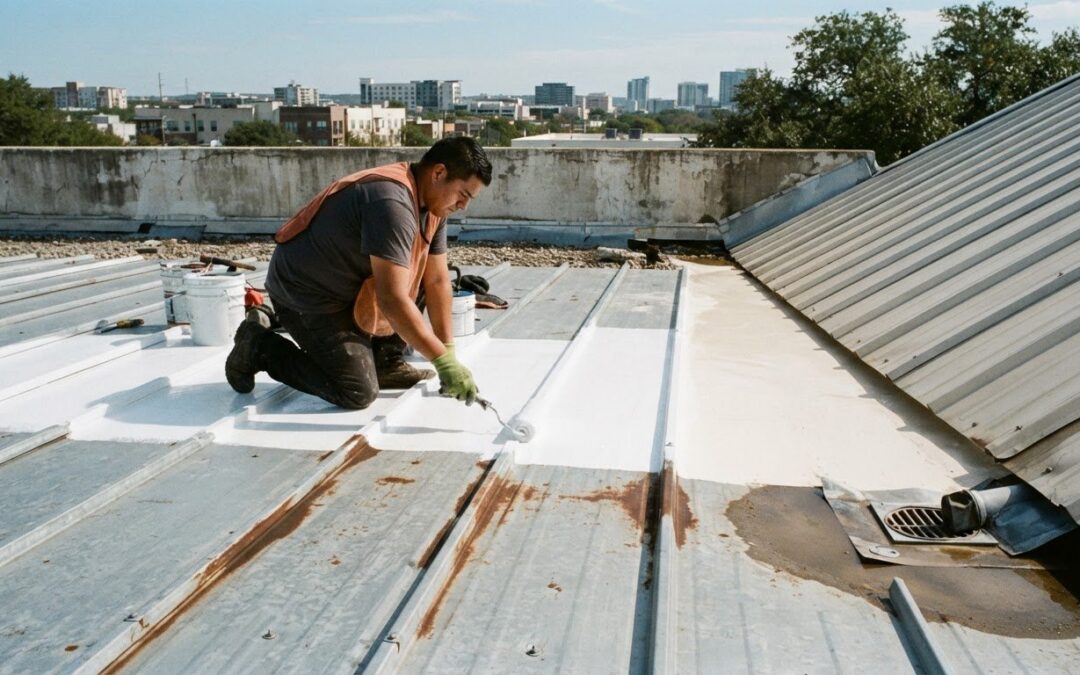
The coating that reflects the most sunlight isn’t automatically the best fit for your roof. For silicone vs acrylic roof coating for metal roofs in Austin, drainage is a key factor: acrylic generally suits sloped roofs that drain well, while silicone is often preferred for low-slope areas where water may pond.
It’s reasonable to compare both coatings by reflectivity and durability, but application conditions matter too. Acrylic typically needs temperatures of 50°F and rising to apply, while silicone typically needs 35°F and rising. Humidity can also affect how quickly each coating cures.
This guide compares silicone vs acrylic roof coating for metal roofs in Austin and the Central Texas climate. See how slope and standing water affect suitability, what to expect from reflectivity and dirt retention, and why application temperature and curing conditions matter. These trade-offs can help you assess which coating better suits your roof’s condition and drainage.
Key Takeaways
- Use roof slope and drainage to narrow down which coating is a better fit, especially where water tends to collect.
- Proper rust treatment, seam sealing, and surface preparation help set up a metal roof coating for reliable performance.
- Reflectivity is only part of the comparison; consider how each coating handles UV exposure and surface dirt over time.
- Before choosing restoration or repair, assess the roof’s condition and the work needed to prepare it. The article also explains what affects coating costs.
Silicone vs Acrylic Roof Coating for Metal Roofs in Austin: Which Is Better?
Choose an Austin contractor who assesses drainage, seams, rust, substrate condition, and coating compatibility before recommending a system. That roof-first approach matters for commercial roofing in Austin, where ponding can put the roof at risk.
Silicone Coating Performance in Ponding Water
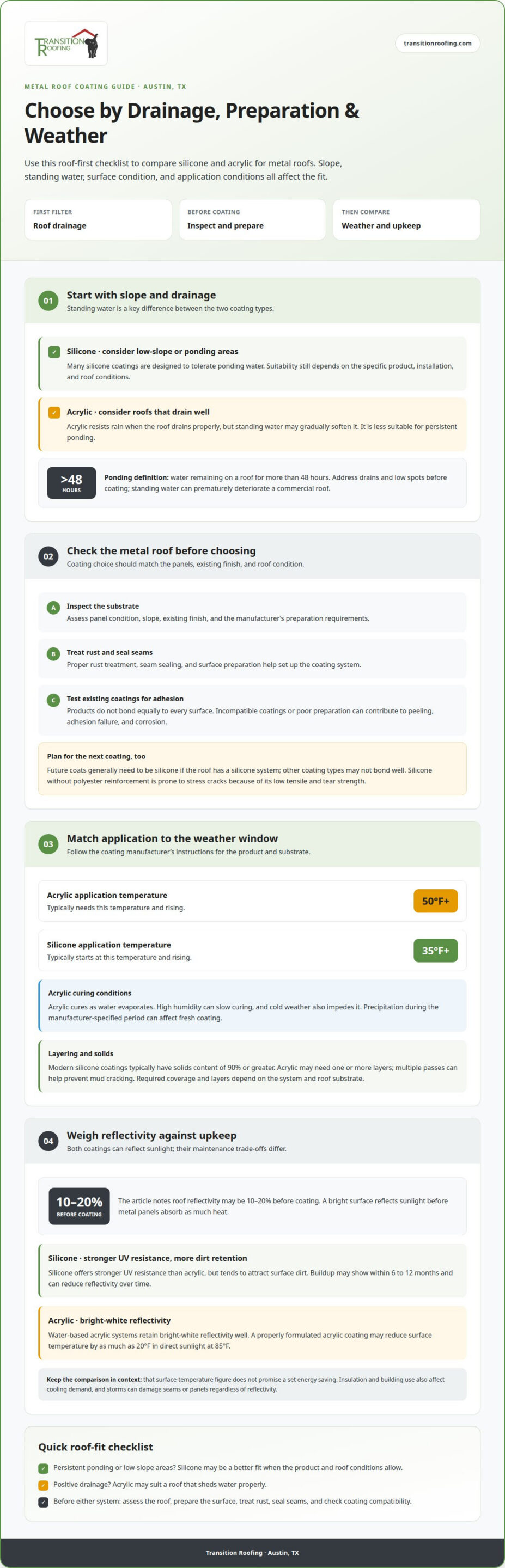
Many silicone coatings are designed to tolerate ponding water, but performance depends on the specific product, installation, and roof conditions. Silicone may be more suitable than acrylic where drainage leaves recurring pools. Ponding means water remains on a roof for more than 48 hours. On commercial roofs, standing water lasting a few days or more can prematurely deteriorate the roof, so drains and low spots need attention before coating.
Acrylic Coating Performance in Ponding Water
Acrylic resists rain when the roof drains properly, but standing water can gradually soften it. That makes it less suitable than silicone for persistent ponding. Neither coating resolves moisture-related mildew concerns on its own: drainage, surface condition, and proper preparation still matter.
| Coating | Ponding water | Better fit |
|---|---|---|
| Silicone | May tolerate persistent ponding, depending on the product, installation, and roof conditions | Low-slope areas |
| Acrylic | May soften under standing water | Roofs with positive drainage |
Choose according to drainage: silicone may suit ponding areas when the product and roof conditions allow, while acrylic is better suited to roofs that shed water.
Metal Roof Coating Suitability in Austin, TX
In Austin, coating selection should account for the metal panels, slope, existing finish, and the manufacturer’s preparation requirements. Acrylic may suit sound panels that drain well, while silicone offers greater UV resistance on exposed roofs. A flat metal roof with persistent ponding calls for a different choice than a steep roof that sheds rain.
Poor preparation or incompatible coatings can increase the risk of adhesion failure, peeling, and corrosion. Metal roof preparation includes treating rust and sealing seams before coating. Existing coatings should be adhesion-tested because products do not bond equally to every surface. Silicone also transmits vapor, so it does not completely prevent moisture from reaching the underlying membrane.
Follow the coating manufacturer’s instructions for the specific substrate and system. Silicone without polyester reinforcement is prone to stress cracks because it has low tensile and tear strength. Plan for future recoating, too: later coats generally need to be silicone, as other coating types may not bond well. For an older roof, the existing coating and its condition help determine compatible options. Match the coating to the roof’s slope, metal condition, and existing layers, not just the Austin sun.
Acrylic Roof Coating Application in Austin, TX
Acrylic coatings typically require application temperatures of 50°F and rising. Silicone coatings typically start at 35°F and rising, giving crews a different weather window. Austin’s warm spells can help, but surface conditions and the product’s application instructions still guide scheduling.
Acrylic cures as water evaporates, so high humidity can slow the process. Cold weather also impedes curing, and precipitation during the period specified by the manufacturer can affect a fresh coating. Application timing should account for these conditions to support proper adhesion and avoid trapping moisture beneath the film.
For codes and permits, follow manufacturer requirements for preparation and application conditions. Permit and code requirements depend on project scope and applicable local rules, so coating work should account for both.
Modern silicone coatings typically have solids content of 90% or greater. Solids describe the material left behind as the coating cures. Acrylic coatings may need one or more layers; applying them in multiple passes can help prevent mud cracking. The required coverage and layers depend on the coating system and roof substrate.
On a sound commercial roof, a fluid-applied system may restore waterproofing without replacing the roof. It will not repair damaged panels or correct poor drainage on its own. The process includes inspecting the substrate, preparing it according to manufacturer requirements, applying the specified coating, and allowing it to cure adequately before exposure to weather.
Roof Coating Reflectivity and Heat in Austin, TX
Both acrylic and silicone coatings can reflect sunlight and may help limit heat absorption. Before coating, roof reflectivity may be 10-20%. A bright surface reflects sunlight before metal panels absorb as much heat, helping moderate roof temperatures.
Silicone coatings offer stronger UV resistance than acrylic, a useful trait under Austin’s intense sun. But silicone tends to attract surface dirt. Roofs may show buildup within 6 to 12 months after application. As grime covers the coating, reflectivity can decline, so account for dirt and cleaning needs over time.
Acrylic coatings also reflect sunlight, and water-based acrylic systems retain bright-white reflectivity well. A properly formulated acrylic coating may reduce surface temperature by as much as 20 degrees F in direct sunlight at 85 degrees F. That doesn’t promise a set energy saving; insulation and building use also affect cooling demand.
Both coatings can help manage heat and UV exposure, but storms create separate demands. Damage to seams or panels can affect the roof regardless of how reflective the coating is. The practical trade-off is sunlight performance and upkeep: silicone offers greater UV resistance but attracts dirt, while acrylic can retain a bright finish.
Metal Roof Coating Costs in Austin, TX
Metal roof coating costs in Austin depend on the roof’s condition and the work required, so a reliable price range isn’t possible without roof measurements and an inspection. Acrylic generally costs less than silicone, but preparation affects the total. Rust treatment, seam sealing, damaged fasteners, removal of old coating, and extra application layers all affect labor and material needs.
A fluid-applied roof coating can restore waterproofing at roughly a third to half the cost of roof replacement. This broad comparison does not determine the price for a particular metal roof. Roof size, access, surface condition, and required coverage all shape the project scope and estimate.
Coverage rates matter because a coating system needs enough material to form the specified protective layer. Manufacturer requirements may call for more product or additional coats, increasing material and labor needs. Corrosion or failing seams also need repairs before coating; applying product over these problems will not fix them.
For a useful cost comparison, distinguish restoration from replacement. Check whether the estimate includes surface preparation, seam repairs, coating application, and any required extra layers. A lower coating price may reflect a narrower scope, while a higher price may include more repairs or preparation. Compare the complete work plan for the roof, not just the coating name.
Metal Roof Coating Repairs in Austin, TX
Heat, hail, and storms can expose weak points in a metal roof coating. Look for peeling or cracked coating, rust around seams, loose fasteners, and water entering near panel joints. These signs can call for different repairs, so coating over the surface without identifying the cause may leave a leak unresolved.
Start repairs by identifying whether the problem lies in the coating, the metal, or the drainage path. Treat rust and seal open seams before recoating. If a panel is damaged, coating alone will not restore it. Widespread peeling may indicate poor adhesion or an incompatible layer, rather than an isolated spot that needs a patch.
Clean and adhesion-test existing coatings before applying a new layer. Silicone generally accepts silicone for recoating; acrylic and urethane surfaces may accept other options after proper preparation. Base the repair plan on the existing coating and the selected manufacturer’s requirements.
Seek a professional assessment if leaks continue, corrosion spreads, panels loosen, or coating failure covers broad areas. After hail, wind, or storm damage, Transition Roofing assists homeowners with insurance claims alongside roof repairs. A focused repair may address isolated damage, while extensive metal deterioration may call for panel replacement. Prompt attention helps identify damage that threatens the roof’s waterproofing.
Commercial Roofing Services from Transition Roofing in Austin, TX
Transition Roofing brings over 15 years of local experience to Austin property owners and managers weighing roof repairs, restoration, or replacement. Its insured, manufacturer-certified installers hold certifications from GAF, Certainteed, Versico, and Dura-last. This experience supports a practical review of the roof’s condition, drainage, and the work needed to protect the building.
Transition Roofing serves commercial customers with Commercial Roof Installation, TPO Roofing Systems, commercial roof repair, and Metal Roofing Systems. These options address different project needs. TPO is a roofing system, not a coating, while metal roofing may suit projects where metal panels are the right solution.
For an existing metal roof, start with its condition, seams, drainage, and current coating. If the panels remain serviceable, targeted repairs may address localized problems. If wear is widespread, installation options may be more appropriate. A clear assessment matches the work to the roof rather than treating every leak or coating issue as a full replacement.
Whether you’re managing commercial roof repairs or considering a new roofing system, Transition Roofing can help clarify the next step. For a practical discussion about your roof, contact Transition Roofing.
Frequently Asked Questions
Can you coat over an old coating?
Yes, if the existing coating is sound and the new system can bond to it. An adhesion test helps assess the bond before work proceeds. Old layers also affect the finished roof: applying new paint over existing layers increases thickness and the potential for future coating problems on steel, according to the National Bureau of Standards. The condition of each layer matters.
Which roof coating lasts the longest?
Silicone typically lasts longer than acrylic: its service life is usually 15-20 years with proper maintenance, compared with 10-15 years for acrylic. For a useful comparison, look beyond the chemistry and consider the system’s warranted service period. Properly matched silicone, acrylic, and urethane coatings can each provide 10-20 years of warrantable service.
Is silicone or acrylic roof coating better for metal roofs in Austin, Texas?
Neither coating is best for every roof; the right choice depends on drainage and the existing system. Plan for future recoating, too: silicone generally needs another silicone layer, while other coating surfaces may allow more options after suitable preparation. This long-term compatibility can matter if you plan to maintain the roof in stages.
Can silicone and acrylic coatings be applied to painted or galvanized metal roofs?
Either type may be used on painted or galvanized metal when the selected coating system is compatible with the surface. Roof coatings are not interchangeable across every substrate, so follow the manufacturer’s preparation instructions. On painted steel, added layers can also increase total film thickness. Consider the existing finish and coating history when selecting a product.
What roof preparation and application steps are required for silicone versus acrylic coatings?
Begin with the coating manufacturer’s preparation requirements for the specific roof surface. The system may also call for polyester reinforcement, which is recommended with both silicone and acrylic coatings. Apply the product at its required coverage after preparation. Acrylic coatings may be applied in one or more layers, while ponding areas need the correct primer before silicone application.
What are typical silicone and acrylic roof coating material and installation costs in Austin?
Acrylic materials generally cost less than silicone, but warranty coverage can affect how much product is required. Acrylic coating warranties commonly specify coverage rates, and extended warranties require additional coverage. Material quantity, not just coating type, can therefore affect project scope. A reliable Austin-area price requires the roof size, existing condition, preparation and repair needs, and warranty requirements. Compare proposals by their specified coverage and warranty terms, along with the preparation and repair work included.
If you’re considering a roof coating in Austin, we can assess your roof and provide a clear plan. Schedule an inspection to discuss the right system and project scope.