

Replacing roofs across several Round Rock buildings doesn’t have to bring the property to a standstill. Keeping tenants happy during a commercial reroof in Round Rock starts with phasing the work, coordinating access, and giving tenants clear notice about the schedule and any changes. That helps businesses plan around noise, restricted areas, and active work.
It’s reasonable to worry about disruption when tenants rely on their spaces every day. A phased plan can keep parts of a property operating while crews work elsewhere, though the right sequence depends on the buildings, roof conditions, and how tenants use the site.
Project planning, defined work zones, and timely communication all help make a reroof smoother. Coordinate access and tenant notices before work begins, allow schedules to adapt to Round Rock weather, and use a qualified roofing team to protect the building while limiting disruption.
Key Takeaways
- Learn how phased roof work can keep parts of a multi-tenant property operating while crews work in other areas.
- See how tenant notices, access planning, and schedule updates can reduce avoidable disruption.
- Understand how roof condition, material choice, and storm damage shape repair or replacement planning.
- Find out what to expect from a roofing contractor’s project coordination, from the initial estimate through construction.
Keeping tenants happy during a commercial reroof in Round Rock, Austin TX
A commercial reroof has no fixed duration. Roof area, repairs, access, phasing, and weather shape the schedule. A phased plan can keep unaffected suites open as crews move between work zones.
Work Scheduling Around Retail Hours
For Round Rock retail properties, the work sequence should account for customer traffic, deliveries, and busy trading periods. When site conditions allow, the roofing team can schedule material staging and noisy tear-off away from tenants’ peak hours. Efficiently managing tear-off waste through reliable container services like Rapid Rolloff Dumpsters LLC helps keep lots orderly and prevents disposal bins from blocking vital storefront spaces. Storms can also interrupt exposed roof work, so build room for weather-related changes into the plan and keep tenants informed.
Tenant Notices and Access Scheduling
A clear notice tells tenants which areas are affected, when access may change, and how entrances will remain usable. For example, a Williamson County retail property can receive updates before crews move from one building entrance to another. Coordinate delivery routes, marked work zones, and tenant access with the property manager. Advance notice gives businesses time to alert staff and customers.
Project Approvals and Communication
Before work begins, document the work areas, planned sequence, and access needs for the property manager to review. Identify who approves schedule changes and who updates tenants. If an inspection or insurance review affects the sequence, provide the property manager with a clear status update. Using one communication channel helps prevent conflicting directions about access or roof repairs.
Schedule and Job-Site Cleanliness
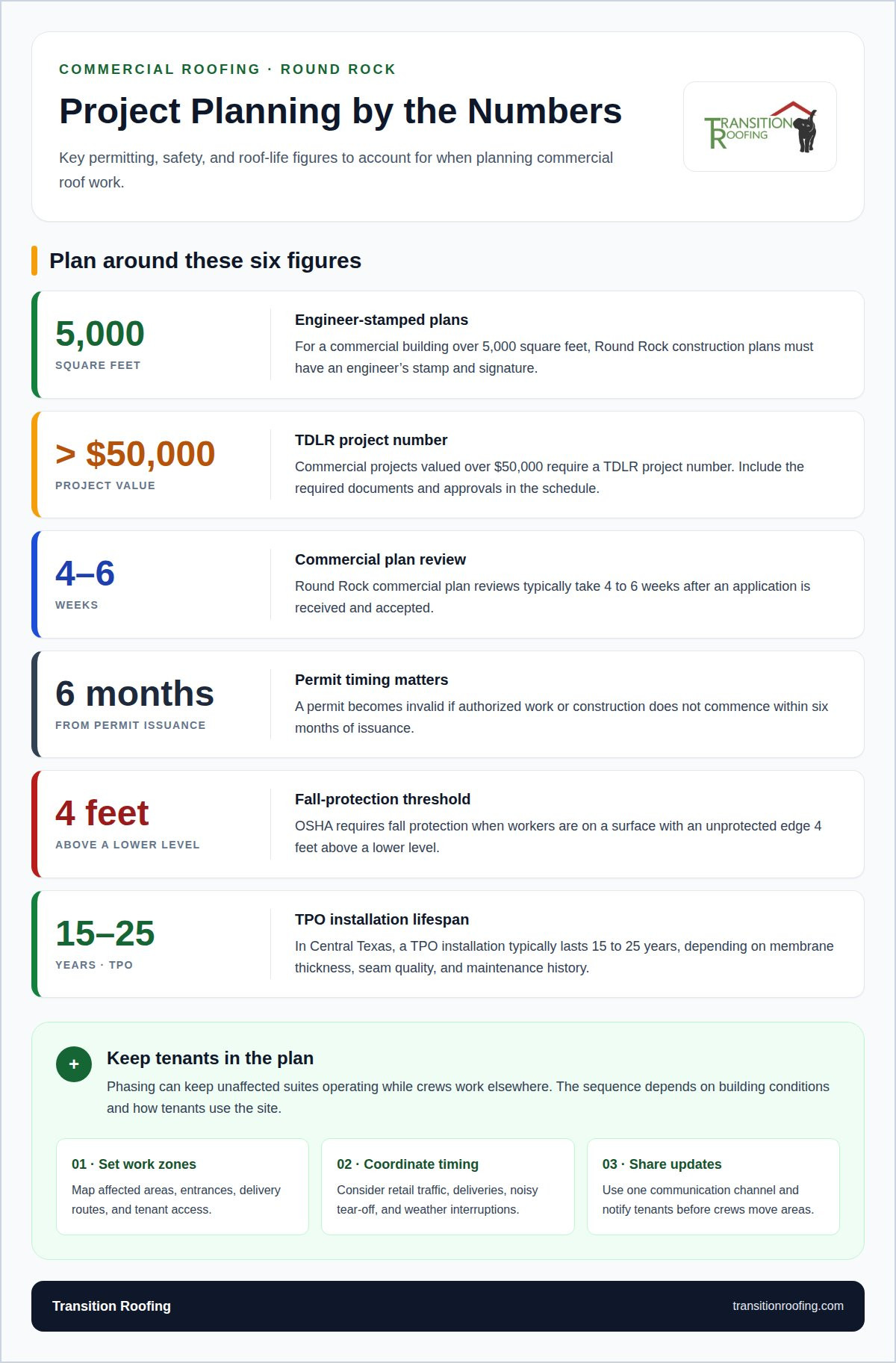
Daily cleanup belongs in the work plan, not just at project closeout. Crews can clear debris from active areas and use rolling magnets to collect stray nails and screws before tenants return to nearby spaces. OSHA requires fall protection for workers on a surface with an unprotected edge 4 feet above a lower level. Safe access and clean walkways help protect tenants throughout construction.
Planning commercial roof repairs and replacements in Austin TX
A useful commercial roofing estimate connects roof condition to a clear construction scope. For example, a leak near an HVAC curb may need flashing work, while widespread membrane failure can point toward replacement. Property managers should see which roof areas, materials, and repairs the estimate covers. That detail makes scopes easier to compare and helps prevent missed work from disrupting the project later. A plan for keeping tenants happy during a commercial reroof in Round Rock should also account for how crews move between work areas.
Round Rock permitting can shape project planning. For a commercial building over 5,000 square feet, construction plans must have an engineer’s stamp and signature. Commercial projects valued over $50,000 require a TDLR project number. These requirements affect the documents and approvals needed before construction starts, so they belong in the schedule. Clear coordination gives property managers time to align access and building operations with the construction sequence.
After hail or wind, document the damage before making repair decisions. A roofing professional can record visible membrane damage, affected rooftop equipment, and signs of water entry. An inspection record, for example, can help distinguish urgent leak repairs from broader replacement planning. Clear findings give the insurer and building owner a shared description of the damage.
In Round Rock, commercial plan reviews typically take 4 to 6 weeks after an application is received and accepted. A permit becomes invalid if authorized work or construction does not commence within six months of issuance. Property managers can build those timelines into the project calendar, then coordinate material staging and building operations around the approved sequence. A schedule that reflects each building’s daily use helps property managers coordinate the project with tenants.
How a roofing contractor communicates with tenants about roof work in Austin TX
OSHA requires fall protection when workers face an unprotected edge 4 feet above a lower level. Property managers can route tenant complaints to one contact, then coordinate a prompt response with the roofing contractor.
How a roofing contractor communicates with tenants and handles complaints during reroofing
For a multi-building replacement, share the sequence by building, affected entrances, and expected work areas. Before crews move to the next building, tenants should receive a schedule update through the property manager. A clear complaint process records each concern, its location, and timing, then assigns follow-up. This helps distinguish construction noise from a leak or access problem that needs prompt attention.
Leaks and Business Interruption
If water appears during work, report the exact suite and affected area so the crew can trace the entry point. The team can protect the exposed roof area, inspect nearby flashing and drainage, and report repair steps to the property manager. To limit business interruption, updates should identify open access routes and any changes to the work sequence. Clear records also support insurance review.
Commercial roof replacement pricing depends on roof area, tear-off needs, insulation condition, drainage details, and selected materials. An estimate should show how each item affects the scope, without treating a rough figure as a final price. For TPO, a Central Texas installation typically lasts 15 to 25 years, depending on membrane thickness, seam quality, and maintenance history.
Plan maintenance around the roof system: inspect flashing, seams, and drainage, then document issues before they spread. Regular maintenance gives owners a clearer basis for repair decisions and future replacement planning.
Commercial roofing project planning in Austin TX
A useful commercial roofing estimate connects the roof’s condition to a clear construction scope. A leak near an HVAC curb may require flashing work, while widespread membrane failure can point to replacement. Property managers should see which roof areas, materials, and repairs the estimate covers. That detail makes scopes easier to assess and helps prevent missed work from disrupting the project.
Round Rock permitting can also shape project planning. For a commercial building over 5,000 square feet, construction plans must have an engineer’s stamp and signature. Commercial projects valued over $50,000 require a TDLR project number. These requirements can affect the documents and approvals needed before construction starts, so they belong in the project schedule, not as last-minute tasks.
After hail or wind, document the damage before making repair decisions. A roofing professional can record visible membrane damage, affected rooftop equipment, and signs of water entry. Property managers can use the inspection record to distinguish urgent leak repairs from broader replacement planning. Clear findings also give the insurer and building owner a shared description of the damage.
In Round Rock, commercial plan reviews typically take 4 to 6 weeks after an application is received and accepted. A permit becomes invalid if authorized work or construction does not commence within six months of issuance. Property managers can build those timelines into their project calendar, then coordinate tenant access, material staging, and building operations around the approved sequence. A written schedule gives each stakeholder a practical reference when weather or site conditions shift the work.
Transition Roofing
Transition Roofing helps Round Rock property managers plan commercial roofing around tenant needs and building operations. With over 15 years of local experience, the team brings knowledge of Central Texas codes and climate to repair and installation decisions. That perspective helps connect roof condition with the practical demands of an occupied property.
Transition Roofing’s installers are insured and certified to install GAF, Certainteed, Versico, and Dura-last roofing systems. Commercial roof repair addresses specific problems, while commercial roof installation is suited to projects that need a new system. Available options include TPO, metal, and flat roofing systems. Roof condition, drainage, equipment, and building use all help shape the scope and system choice.
Property managers can share details about building use and known roof concerns during planning. Transition Roofing serves commercial customers in Round Rock and across Central Texas, using that context to define the work scope and discuss how the project fits the property’s operations. A clear scope shows which areas are included and how repair or installation decisions relate to the building’s needs.
For multi-tenant properties, the roofing team and property manager can align project planning with site requirements. The manager’s knowledge of building access, tenant operations, and roof history adds useful context to the assessment. Together, those details help define the work before construction begins and give the property team a clearer basis for coordinating internally.
If you’re planning commercial roof work in Round Rock, contact Transition Roofing to discuss your property’s needs.
Frequently Asked Questions
Can you replace roofs on several Round Rock buildings in phases?
Yes. Transition Roofing can phase roof replacement across several Round Rock buildings, completing a defined area before moving crews and materials to the next. The sequence can prioritize buildings with active leaks, coordinate shared parking or loading areas, and keep unaffected spaces in service. Commercial projects take anywhere from a couple of days to multiple months, depending on complexity.
Can you reroof a large warehouse in Round Rock without shutting it down?
A large warehouse can remain partly operational during reroofing if work zones stay separate from staff, forklifts, and stored goods. Before setting the sequence, the roofing team and property manager should identify loading doors, overhead equipment, and shipping routes. Some tasks may require brief access limits, so plan a safe alternate route and move sensitive stock away from active work areas.
Do you work on retail centers that stay open during roofing?
Yes. Commercial roofing work can be planned for retail centers that remain open to customers. Map customer entrances, delivery access, rooftop equipment, and sales areas below active work. If a section affects the only safe route or a critical operation, temporarily restrict access while crews complete the task, then reopen it when safe.
How do you work around tenants during a replacement?
During replacement, the roofing team can coordinate access with tenant-specific needs, such as a clinic’s patient drop-off or a restaurant’s delivery window. The property manager can flag spaces with sensitive equipment, scheduled events, or limited entry points. These details help crews choose staging locations and work order, while tenant representatives have one clear way to report an urgent access conflict.
How can a roofing contractor schedule a commercial reroof to minimize disruption to tenants and customers?
To minimize disruption, tie the work sequence to the property’s operating calendar, not just roof area. A shopping center with a weekend market, for example, may need nearby staging moved before the event. The contractor can also coordinate around deliveries, waste pickup, and HVAC service visits, then update the site calendar when weather shifts planned work.
What noise, dust, odor, and access disruptions should tenants expect during commercial roof replacement?
Tenants should expect intermittent machinery or installation noise, and possibly dust or small debris near active work areas. Some materials or adhesives can create temporary odors. Crews may restrict a walkway, parking row, or entrance as work moves. Before each phase, property managers should share affected locations and access changes so tenants can plan alternate routes or deliveries.
If you’re planning commercial roof work, contact Transition Roofing to discuss your property’s needs.