
A commercial roof warranty doesn’t transfer automatically when an Austin property sells. Transferring a commercial roof warranty in an Austin property sale requires a request, paperwork, and action before the warranty’s deadline. The written terms determine whether the warranty can transfer and what conditions apply.
That can affect what protection the buyer receives and which roof records matter after closing. This guide explains how to check transfer eligibility, why deadlines and coverage terms vary, and what installation, inspection, maintenance, and repair records to keep if the warranty won’t transfer. A clear paper trail helps both sides understand the roof’s documented condition and history.
Key Takeaways
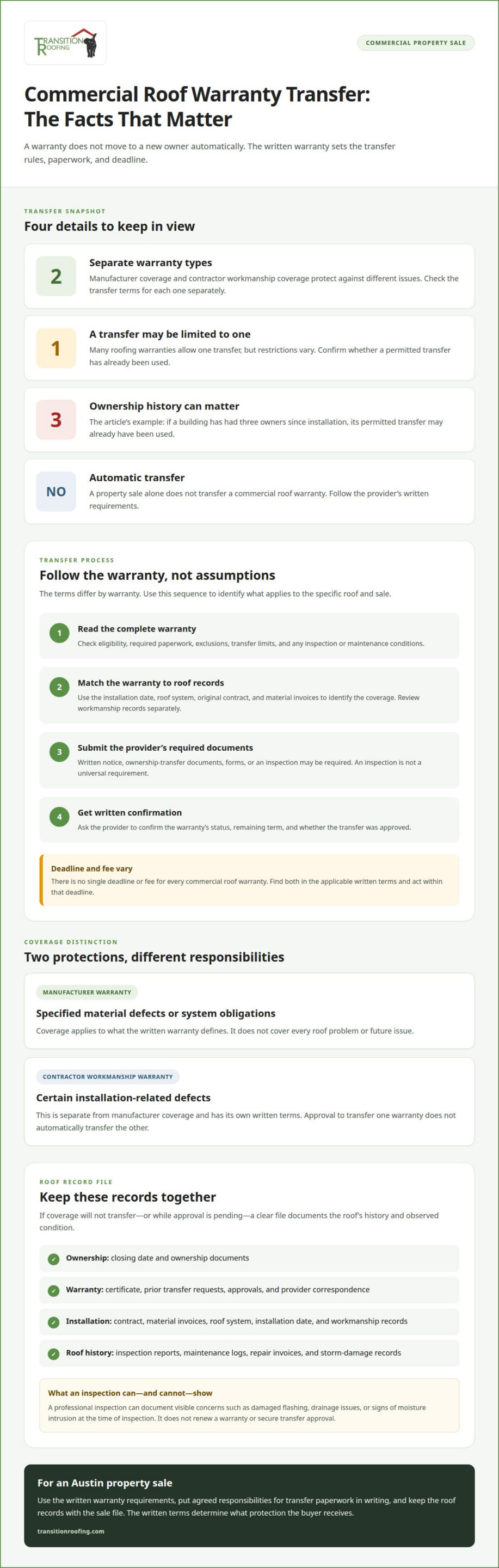
- A warranty does not transfer automatically with an Austin commercial property sale. The written terms set the transfer steps and conditions.
- Manufacturer coverage and contractor workmanship coverage protect against different issues, so review each warranty separately.
- Keep installation and warranty documents, repair invoices, maintenance logs, inspection reports, and storm-damage records together.
- Transfer deadlines vary. Find the deadline in the applicable warranty and act promptly after closing to avoid missing the window.
Can You Transfer a Commercial Roof Warranty When Selling in Austin, TX?
A commercial roof warranty may transfer during an Austin property sale, but it doesn’t transfer automatically. The warranty document sets the coverage, required paperwork, and transfer conditions.
Manufacturer and Workmanship Warranty Types
A manufacturer warranty covers specified roofing material defects or system obligations; a contractor workmanship warranty covers certain installation-related defects. These are separate protections, each with its own transfer rules and terms. Buyers should identify both before closing. For example, material coverage may address a product defect, while workmanship coverage may address an installation problem. Approval to transfer one does not automatically transfer the other.
Defect Coverage and Warranty Exclusions
Manufacturer coverage applies to specified defects, not every roof problem. A system warranty may cover defined components or performance obligations for an approved roof assembly. Enhanced coverage may have broader terms, but the written warranty controls what qualifies. Exclusions and conditions matter too: a valid warranty doesn’t mean the roof is defect-free or protected from every future issue. Buyers should distinguish covered defects from damage or conditions outside the warranty’s scope.
Manufacturer Transfer Requirements
Transfer requirements are the manufacturer’s stated steps for approving a new owner’s coverage. They may include written notice, ownership-transfer documents, forms, and compliance with inspection or maintenance conditions. An inspection or maintenance records may be required if the warranty terms say so; neither is a universal requirement. Keep the installation date, roof system details, and repair history with the warranty paperwork. A clear description of the assembly helps identify the relevant commercial roofing in Austin records.
Transfer Fees and Local Rules
A transfer fee may apply, with the amount specified in the warranty terms. No single deadline or fee applies to every commercial roof warranty. For an Austin sale, follow the written warranty requirements rather than assuming a general city or Texas transfer rule. The sale contract can state the warranty’s status, assign responsibility for submitting transfer paperwork, and require delivery of available roof records. Put the agreed steps in writing before closing.
Roof Condition Documentation When Coverage Does Not Transfer in Austin, TX
If a commercial roof warranty won’t transfer, a complete condition file gives the buyer a useful record at closing. Buyers can verify an existing warranty’s status and remaining term by requesting written confirmation directly from its provider, including confirmation of any approved transfer. The original warranty document alone may not show whether coverage remains active.
For a building with a newer roof, request the original installation contract, material invoices, and warranty paperwork. These records identify the roofing system, installation date, and any workmanship warranty. Add repair invoices, maintenance logs, inspection reports, and storm-damage records. Together, they document completed work and observed conditions, not a guarantee against future problems.
- Ownership documents and the real estate closing date
- The warranty certificate and any prior transfer requests or approvals
- Installation contracts, material invoices, and workmanship records
- Inspection reports, maintenance logs, repair invoices, and storm records
Before listing, sellers can gather the original records and organize them by date. Include correspondence about transfer requests, required forms, and the provider’s stated deadline. If paperwork is missing, note which records are available and preserve copies of relevant invoices and reports. A clear file helps prevent administrative gaps from obscuring the roof’s history.
A professional inspection can document visible concerns such as damaged flashing, drainage issues, or signs of moisture intrusion. It records conditions at the time of inspection, but doesn’t renew a warranty or secure transfer approval. Buyers should receive the report before closing, alongside available roofing records. If coverage ends or cannot transfer, the inspection and repair history give both owners a factual starting point for future maintenance decisions.
Transferring a Commercial Roof Warranty in an Austin Property Sale
Start with the complete warranty document, not a seller’s summary. Read the transfer clause for eligibility, required paperwork, exclusions, and inspection or maintenance conditions. Many roofing warranties allow one transfer, but restrictions vary by warranty and state. If the building has had three owners since installation, its permitted transfer may already have been used. This review is central to transferring a commercial roof warranty in an Austin property sale.
Match the warranty to the roof records. The installation date, roof system, original contract, and material invoices help identify the coverage. Review workmanship records separately because a contractor’s warranty has its own terms. Buyers shouldn’t assume manufacturer approval also transfers contractor workmanship coverage.
- Building address, roof system, and installation date
- Warranty documents, original invoices, and installation records
- Recent repairs, maintenance history, and available inspection reports
- Authorized access contact for any required roof inspection
The seller can assemble the documentation and submit the transfer request using the provider’s forms. Buyers should obtain written confirmation of the warranty’s status, remaining term, and approved transfer. A professional roof inspection can document visible conditions, but it doesn’t itself secure transfer approval or change warranty terms.
Keep the sale timeline in view. Written notice, ownership-transfer documents, or an inspection may be required under the agreement. Missing paperwork can delay review, while a missed deadline can affect eligibility. For example, include repair invoices showing work completed after installation so the provider can assess the roof’s history. Clear records help sellers and buyers resolve questions before closing rather than relying on assumptions.
How Soon After Closing Must a Roof Warranty Transfer Be Requested in Austin, TX?
Most commercial roof warranty transfers must be completed within 30 days after closing. Transfer windows commonly run 30 to 60 days from the closing date, but the applicable warranty certificate controls. For an Austin property sale, identify that deadline before closing, not after the buyer takes possession.
The seller can locate the warranty certificate and prepare ownership-transfer documents before closing. The buyer should submit the provider’s forms promptly after the sale. Include the building address, closing date, warranty details, and required ownership paperwork. Keep copies of the request and delivery record. This gives both parties a clear record of when the transfer process began.
- Find the transfer deadline in the warranty certificate.
- Prepare required forms and ownership documents before closing.
- Submit the complete request soon after the sale.
- Save written confirmation and any follow-up instructions.
Some agreements require more than a form. A provider may also require an inspection, maintenance records, or proof of the property transfer. Arrange those steps early, since missing documents can delay a complete submission. Sending a request alone doesn’t complete the transfer; follow the agreement’s stated process through approval.
Missing the deadline can prevent the new owner from receiving transferred coverage under that warranty. The roof may remain serviceable, but the buyer could lose the expected manufacturer protection. For example, a request submitted on time may still be incomplete if required records or an inspection are outstanding. Use the certificate’s deadline and required steps to keep the transfer paperwork on track before coverage is affected.
Transition Roofing
Transition Roofing helps Austin property owners assess commercial roofing concerns that surface during a sale. With over 15 years of local experience, its insured installers certified by GAF, CertainTeed, Versico, and Dura-Last understand how Central Texas heat, hail, and storms affect roof condition. A roof inspection can help clarify whether the building needs repair, maintenance, or a new system.
For leaks or storm damage, commercial roof repair can address specific problem areas. If the roof needs broader work, Transition Roofing also handles commercial roof installation, including TPO and metal roofing systems. The right scope depends on the existing roof and its condition, as documented during an assessment.
Roof work and warranty transfer are separate matters. A repair or new installation does not replace transfer paperwork or approval under an existing warranty. Transition Roofing offers manufacturer-backed material warranties and workmanship warranties; many systems include a transferable lifetime warranty. The written warranty terms describe the coverage and transfer conditions.
Owners can keep inspection findings, repair records, and installation documents with the property file. That organized history can help buyers understand the roof’s condition and the work completed, especially after a hail event or storm. For commercial roof needs tied to an Austin property sale, a clear assessment helps identify the practical next step.
Contact Transition Roofing to schedule a commercial roof inspection in Austin and get a clear plan.
Frequently Asked Questions
What should you ask before you sign?
Ask for the warranty provider’s written status, remaining term, and transfer decision before signing the sale contract. Also clarify whether manufacturer and contractor warranties are separate, and who will submit each transfer request. For example, if the seller agrees to provide roof records, name the records in the contract and set a delivery point before closing. This makes the roof-related terms clearer to both parties.
Can a commercial roof warranty be transferred to a new owner when selling a property?
Yes, a commercial roof warranty can transfer if its terms permit it and the required process is completed. Buyers should distinguish eligibility from approval: a warranty may allow a transfer, but the provider still needs the required request and documents. Before relying on coverage in a purchase decision, get written confirmation naming the property and new owner. The warranty’s remaining term and exclusions still apply.
What are the manufacturer requirements for transferring a commercial roofing warranty?
Requirements depend on the manufacturer’s warranty document. It may call for written notice, ownership-transfer paperwork, specific forms, or records showing required maintenance. Some agreements also set conditions for inspection or repairs. A useful question is whether the provider needs original documents or accepts copies. Ask for the decision and any remaining conditions in writing so the buyer knows whether the transfer is complete or still awaiting action.
What are the contractor workmanship warranty transfer rules for commercial roofs?
Contractor workmanship warranties follow the contractor’s written terms, which may differ from the manufacturer’s rules. They can cover certain installation-related defects, subject to stated conditions, and do not automatically move with the building sale. Review the original agreement for transfer permission, notice steps, and coverage limits. If the installing contractor’s warranty is separate, obtain its transfer decision independently rather than treating manufacturer approval as approval of both.
What documents are needed to transfer a commercial roof warranty?
Commonly useful records include the warranty certificate, proof of ownership change, closing date, original installation contract, and material invoices. The provider may also request transfer forms, recent repair records, or maintenance documentation. For example, a buyer may need an invoice to identify which roof system was installed. Keep copies of everything submitted and any written response, including confirmation of the new owner and transferred coverage.
Can a commercial roof warranty transfer be denied or reduce coverage?
Yes. A transfer may be denied if the agreement’s eligibility conditions, deadline, or required steps aren’t met. The new owner may also receive only the coverage specified for an approved transfer, which can differ from the seller’s expectations. For example, exclusions or maintenance conditions still matter after ownership changes. Compare the provider’s written approval with the original warranty before treating the roof as covered.