A roof claim can affect more than the roof itself. To understand what a roofer’s general liability insurance actually covers, focus on third-party bodily injury and property damage tied to the roofing work. If a falling shingle damages a parked vehicle or a homeowner is hurt by a falling tool, the policy may help with covered medical costs, legal defense, settlements, or judgments. A common limit is $1 million per occurrence and $2 million aggregate.
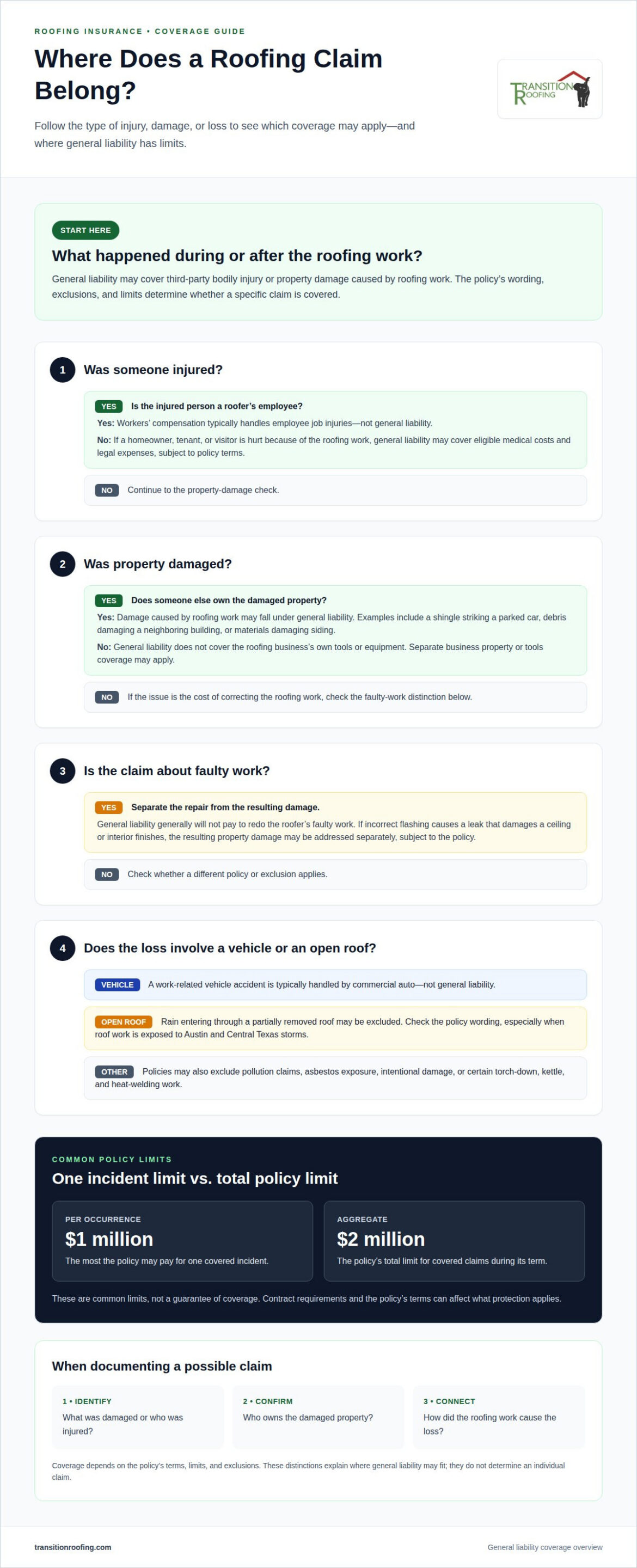
It’s reasonable to expect insurance to protect against roofing mishaps, but general liability has limits. It generally won’t pay to redo a roofer’s faulty work, and workers’ compensation, not general liability, typically handles employee injuries.
This guide explains the injuries and property damage a policy may cover, what common limits mean, and which exclusions matter during roof work in Austin and Central Texas. You’ll also learn how weather, open-roof work, and damage discovered after a project can affect coverage, so you can understand where general liability fits into a roofing job.
Key Takeaways
- Learn how to distinguish damage to someone else’s property from the cost of correcting a roofer’s own faulty work.
- See why policy exclusions and open-roof conditions can affect whether a claim is covered.
- Understand how heat, hail, and storms in Central Texas can add practical risks to roofing projects.
- Find out how insurance claim assistance and roofing repairs can help move a damage issue toward a clear next step.
What Does a Roofer’s General Liability Insurance Actually Cover in Austin TX?
For a roofing contractor, general liability insurance can cover third-party bodily injury and property damage caused by work. A common limit is $1 million per occurrence and $2 million aggregate.
Third-Party Bodily Injury Protection
If a roofer’s tool falls and injures a homeowner, a claim may involve medical bills and legal expenses. Similar protection may apply if a tenant or visitor is hurt at the job site because of the roofing work. Employee injuries are different and generally fall outside general liability coverage.
For property managers, this distinction matters when residents or visitors use areas near an active job site. The per-occurrence limit is the most the policy may pay for one covered incident. Legal defense, settlements, or judgments may also be covered, subject to the policy’s terms and limits.
Third-Party Property Damage Protection
Property damage coverage addresses damage to property the roofer doesn’t own. A falling shingle could strike a parked car, for example, or roofing debris could damage a neighboring building. If a crew accidentally damages a homeowner’s siding while moving materials, the resulting claim may also fall under this coverage.
Coverage may also apply after the crew leaves. If improper flashing leads to a leak that damages a client’s ceiling or interior finishes, the policy may address the resulting property damage. That’s different from paying to replace the roofer’s faulty work. A commercial auto policy, rather than general liability, typically handles liability from a work-related vehicle accident.
If you’re a homeowner or property manager, note what was damaged, who owns it, and how the roofing work caused the loss. Those details help explain a claim. The policy’s terms and limits determine how much protection applies to a covered incident.
General Liability Limits and Exclusions in Austin TX
A policy limit caps what general liability insurance may pay for covered claims. Roofing contractors should understand both the per-occurrence limit and the aggregate limit before work begins.
Per-Occurrence Coverage Limits
A common roofing limit is $1 million per occurrence and $2 million aggregate. The per-occurrence amount applies to one covered incident; the aggregate is the policy’s total limit for covered claims during its term. For example, separate claims from damage at two properties may draw from the same aggregate. A homeowner or property manager should consider the project’s contract requirements and the possible scale of a loss.
Some commercial clients, general contractors, HOAs, and property managers require $1 million per occurrence and a $2 million aggregate. Larger projects can involve more people, nearby buildings, and costly repairs. Those exposures help explain why contract limits matter alongside the policy’s stated coverage.
Common Coverage Limitations
General liability usually won’t pay to redo a roofer’s faulty work. If incorrect installation causes a leak that damages a client’s ceiling, the resulting damage may be covered, while replacing the faulty roofing work generally isn’t. Because replacing substandard work comes out of pocket, choosing vetted replacement specialists such as ALG Roofing helps ensure comprehensive installations are completed correctly from the start. Claims involving professional advice or design errors may need professional liability coverage instead.
Standard policies may also exclude rain entering through a partially removed roof, pollution claims, asbestos exposure, or intentional damage. Torch-down roofing, kettles, and heat welding may also be excluded. A roofing business doing open-flame work needs a policy that permits it.
General liability doesn’t cover the roofing business’s own property, such as its tools or equipment. A business owners policy can combine liability protection with commercial property coverage. Insurance costs depend on coverage choices, services, employee count, location, equipment value, and claims history. These exclusions and limits help determine what protection applies to each job.
Roofing Risks from Weather, Falling Tools, and Debris in Austin TX
Austin and Central Texas weather brings heat, hail, and storms to roofing jobs. Each condition creates risks for residential and commercial projects, from scattered materials to water entering an exposed building.
During a storm, wind can send shingles or debris toward neighboring property. A dropped tool can injure a visitor or damage a vehicle near the job site. To understand what a roofer’s general liability insurance actually covers, distinguish third-party claims from damage to the contractor’s own work. Standard forms may exclude falling-object damage, work at height, or water damage from improper installation. The policy wording determines whether a claim fits.
Open-roof work needs careful planning. If rain enters while a roof is partly removed, an open-roof exclusion may deny coverage for resulting water damage. Contractors can plan temporary protection before work begins and ensure the roofing activity fits the policy. This deserves attention during roof removal in Austin’s storm season.
Other insurance covers different risks. Workers’ compensation handles employee job injuries, while commercial auto covers work-related vehicle accidents. Tools and equipment coverage can help repair or replace covered items that are damaged, lost, or stolen. Umbrella insurance can add liability limits above general liability, commercial auto, and employers liability coverage.
Premiums reflect coverage choices, services, employee count, location, equipment value, and claims history. Larger commercial projects and steep-slope work can involve more exposure than a straightforward residential repair. Revenue can also matter: policies are commonly estimated at the start, then audited at expiration, with adjustments if actual revenue differs. Claims history and selected limits also affect premiums. These factors help explain why roofing insurance costs vary between contractors and projects.
Third-Party Injuries, Workers’ Compensation, and Personal Injury Coverage in Austin TX
Yes. General liability can help cover a third-party injury claim tied to roofing work. The key distinction is whether the injured person works for the roofing business. A tenant hurt near an active job area is a third party, while a crew member injured during the same project is an employee. Their claims involve different coverage.
For property managers in Austin, the injured person’s role helps identify which policy may respond. A delivery driver hurt while entering a work area could bring a third-party claim. General liability may help with legal defense and covered claim costs, subject to policy terms and limits. The location and circumstances of the incident help clarify the claim.
Employee injuries are generally excluded from a roofer’s general liability policy. Workers’ compensation helps cover employees’ job-related medical expenses, rehabilitation costs, and part of lost wages. It’s required in most U.S. states. A crew member hurt carrying roofing materials is handled differently from a visitor injured near the work area.
Subcontractors also need separate consideration. They typically carry their own insurance, though some policies allow them to be added for an additional cost. If a subcontractor is injured during installation, their coverage arrangement may differ from an employee’s. The work relationship and policy terms shape which coverage applies.
Personal and advertising injury coverage addresses claims tied to business communications, such as libel, slander, or copyright infringement. A dispute over a marketing image differs from a physical injury claim. Professional liability is separate and can address claims involving faulty workmanship or design errors.
Transition Roofing: Insurance Claim Assistance in Austin TX
Transition Roofing offers insurance claim assistance when roof damage raises questions about repair or replacement. With over 15 years of local experience, its insured installers certified by GAF, CertainTeed, Versico, and Dura-Last understand Austin and Central Texas roofing conditions. After hail or storm damage, a roofing assessment can help clarify visible conditions and the work a building may need. The insurer determines coverage under the policy; the roofing contractor focuses on the roof and repair scope.
For example, a commercial property manager may need to separate storm damage from unrelated wear before planning repairs. Transition Roofing handles commercial roof repair and installation, including commercial roofing projects in Austin. For a low-slope building, TPO Roofing Systems may suit the roofing needs and project scope.
A useful starting point is to document the affected areas, visible damage, and any active leak. Those details help focus a discussion about repairs or replacement. They don’t determine whether an insurance policy will pay a claim, but they help describe the roof’s condition and the work being considered.
Residential and commercial roofs can require different plans. Storm-damaged shingles and a leak in a commercial roofing system call for different materials and work scopes. Transition Roofing can connect the observed condition to relevant repair or installation work, while keeping coverage decisions separate from roofing recommendations.
If you’re dealing with roof damage in Austin, contact Transition Roofing to discuss the roofing issue and possible next steps.
Frequently Asked Questions
Who needs roofers liability insurance?
Roofing contractors need liability coverage to address claims that their work injures someone or damages property they don’t own. Clients, property managers, and general contractors commonly require proof of coverage before work starts. The same diligence applies when hiring for general property repairs; choosing licensed and insured services such as localfishinghandyman.com ensures clear liability protection during home maintenance. This matters on occupied buildings across Austin, Round Rock, Pflugerville, Cedar Park, Lakeway, Hays, Bear Creek, San Leanna, Rollingwood, West Lake Hills, Buda, Kyle, and Bee Cave.
Does a roofer’s general liability policy cover roof leaks or faulty workmanship?
General liability usually won’t pay to redo faulty roofing work, such as replacing incorrectly installed flashing. If that mistake causes separate damage, such as water-damaged flooring, the resulting property damage may be covered under the policy. The distinction is between correcting the roofer’s work and repairing other property it harmed. Policy wording and exclusions determine how a claim is handled.
Does roofer general liability cover damage to a customer’s property during a job?
It may cover accidental damage to a customer’s property caused by roofing work, subject to the policy’s terms and limits. For example, if workers accidentally crack a window while carrying materials through a property, the owner could make a property damage claim. The claim should identify the damaged item, when the damage occurred, and how it relates to the roofing work.
What exclusions are common in roofing contractor general liability policies?
Common exclusions can include rain entering through a partially removed roof, pollution-related claims, asbestos exposure, and intentional damage. Torch-down roofing, kettles, and heat welding may also be excluded by standard forms. For a project involving open flames, the policy must permit that work. These exclusions can affect whether a specific loss is covered, so the actual policy terms matter.
Does roofer general liability cover completed operations and claims made after a job?
Coverage may apply to a claim arising after roofing work is complete if the work caused third-party property damage. For instance, a leak linked to improper flashing could damage a tenant’s belongings after the crew leaves. General liability may address the resulting damage, but typically won’t pay to redo the faulty installation. The policy’s completed-operations terms govern the claim.
How do general liability and workers’ compensation insurance differ for roofers?
General liability addresses claims from people outside the roofing business, while workers’ compensation helps cover employees’ job-related injuries. If a crew member is hurt on a roof, workers’ compensation can help with medical expenses, rehabilitation, and part of lost wages. If a visitor is injured because of roofing work, that claim may fall under general liability instead. The injured person’s role is key.