A dented panel doesn’t automatically mean a standing seam roof has failed, and hail damage isn’t always visible. Hail can affect protective coatings, seams, or fasteners without leaving obvious dents, so repairing hail dents on a standing seam metal roof in Austin starts with checking how the roof performs, not appearance alone.
That distinction matters after a Central Texas storm. Some dents are cosmetic, while damage to a seam or roof penetration can create a path for water. You shouldn’t have to guess from the ground or climb onto a wet roof to understand what needs attention.
This guide explains what a professional inspection looks for, how isolated damage differs from widespread damage, and when repair may make more sense than replacement. You’ll also learn what information can support an insurance claim and what to expect from an assessment and repair service in Austin and Central Texas.
Key Takeaways
- Look beyond visible dents: an inspection should assess whether hail affected the roof’s coating, seams, fasteners, or leak-prone areas.
- Weigh the roof’s age, overall condition, and extent of damage before choosing panel repair or full replacement.
- Panel profile, gauge, and color all matter when matching a replacement section to an existing standing seam roof.
- Repair scope and insurance coverage depend on documented damage, roof details, and the terms of your policy.
Signs of Hail Damage on Metal Roofs in Austin, TX
After an Austin hailstorm, dents are only one clue. An inspection should also assess seams, coating, fasteners, and flashing.
Cosmetic and Functional Damage
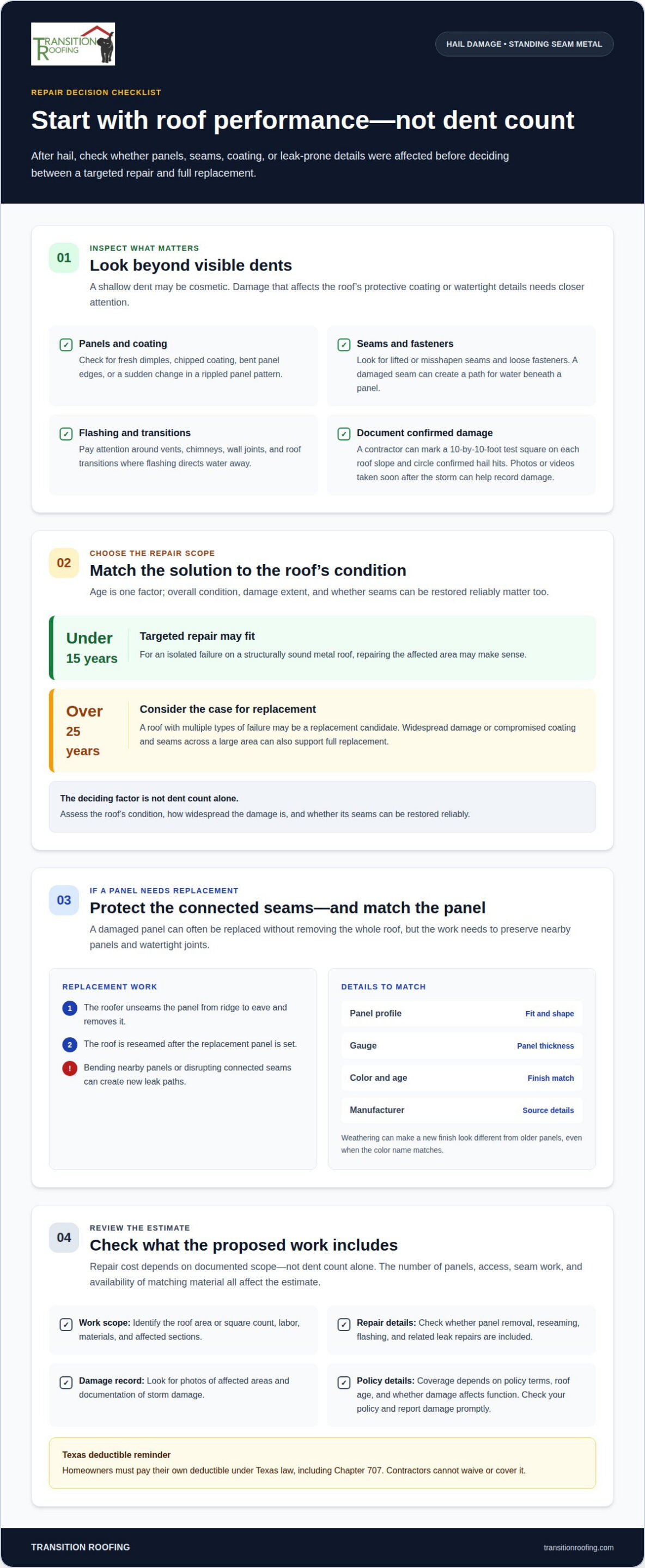
A shallow dent may change a panel’s appearance without affecting drainage or its protective coating. Functional hail damage is different: a cracked coating, distorted seam, loose fastener, or opening near flashing can let water reach the roof system. Before deciding whether damage is cosmetic or affects performance, a roofer assesses the dent’s location and the surrounding details, not just its size.
Hail Signs on Panels and Seams
Look for clusters of fresh dimples, chipped coating, bent panel edges, and seams that appear lifted or misshapen. Check roof transitions, vents, chimneys, and wall joints, where flashing helps direct water away. For commercial buildings, commercial roofing in Austin also requires attention to roof transitions and flashing after storms.
Roof Inspection and Damage Documentation
A contractor inspects panels, seams, fasteners, flashing, and possible water entry points. To document impacts, the contractor marks a 10-by-10-foot test square on each roof slope and circles confirmed hits. Photos or videos taken soon after the storm can help record damage, according to the Internal Revenue Service. Claim deadlines depend on the policy and may vary, so check your policy and report damage promptly. Policy terms may exclude cosmetic dents. Texas law, including Chapter 707, requires homeowners to pay their own deductible; contractors cannot waive or cover it.
Can Standing Seam Metal Roofs Handle Texas Hail?
Standing-seam metal roofs resist hail better than standard asphalt shingles, but impacts can still dent panels. In Austin’s Central Texas climate, performance depends on panel gauge, seam condition, and installation.
Gauge affects dent resistance. A 26-gauge panel can show a golf-ball-sized hail dimple while remaining intact. By comparison, 29-gauge panels are thinner and more prone to folding under serious impact. Heavier material, such as 24-gauge steel or heavy aluminum, can offer a more hail-resistant option. Gauge alone doesn’t show whether the roof still performs.
Dents near seam edges can distort a panel and weaken its watertight joint. If a seam opens, water may travel beneath the panel before appearing inside. Standing-seam panels lock together mechanically without fastener holes through the panel surface, but seam or fastener failures can still cause leaks. A roofer checks seams, fasteners, and gutters, then addresses weak points. Repairing hail dents on a standing seam metal roof in Austin means assessing how the roof functions, not just counting dents.
Oil-canning is a wavy or rippled appearance across a wide panel. It is often cosmetic and related to manufacturing or installation, but a sudden change in the pattern warrants inspection for a structural or installation issue. If a panel needs replacement, the roofer identifies its profile, gauge, color, age, and manufacturer to help match the new material to the roof. For homeowners, repairing hail dents on a standing seam metal roof in Austin starts with understanding the panel and seam conditions.
Repairing Hail Dents on a Standing Seam Metal Roof in Austin
Repair decisions depend on whether storm damage affects isolated panels or the roof’s overall performance. The roof’s age and condition, and whether its seams can be restored reliably, also matter.
Repair Versus Roof Replacement
For an isolated failure on a structurally sound metal roof under 15 years old, targeted repair may fit. A metal roof over 25 years old with multiple failure types may be a replacement candidate. Widespread damage or compromised coating and seams across a large area can also support full replacement. Contractors weigh the roof’s condition, not dent count alone.
Individual Panel Repair or Replacement
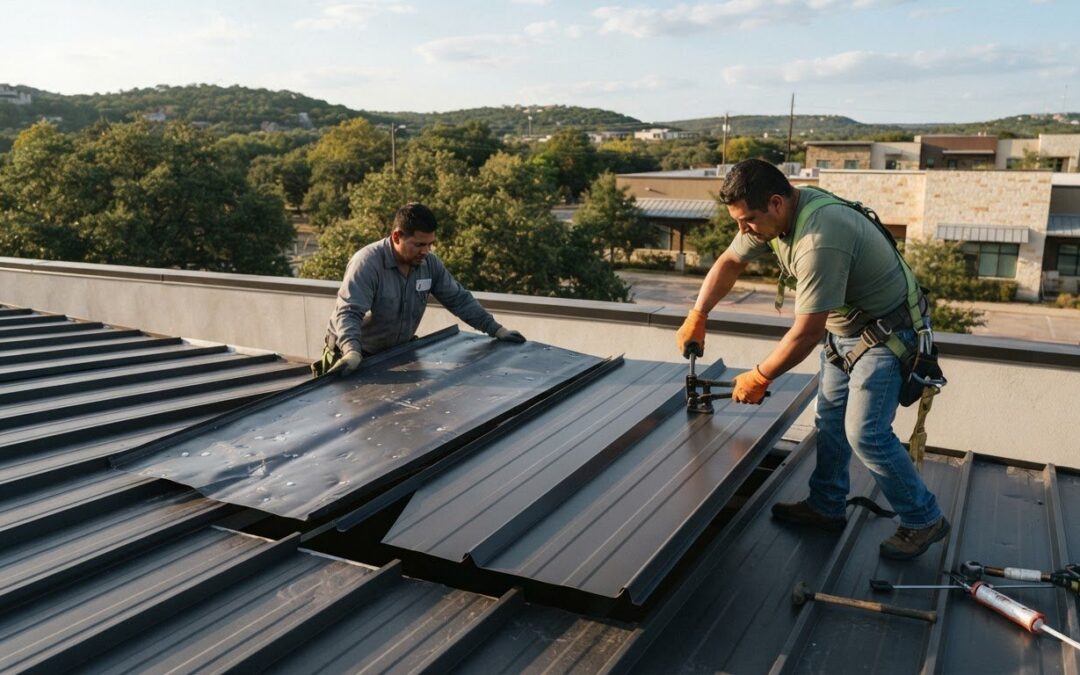
A damaged panel can often be replaced without removing the entire roof. The roofer unseams it from ridge to eave, removes it, and reseams the roof. The work requires care: bending nearby panels or disrupting connected seams can create new leak paths. DIY work also risks falls and damage to the coating or the roof’s watertight joints.
Matching Panel Colors and Profiles
Before replacing a panel, the roofer identifies its profile, gauge, color, age, and manufacturer. A close match helps preserve the roof’s appearance and fit. Weathering can make a new finish look different from older panels, even when the color name matches. Unlike asphalt shingles, metal panels have no granule layer to disguise a mismatch.
Hail Repair Costs in Austin
There is no single repair price for every Austin roof. An estimate depends on the number of panels, access, seam work, and whether matching material is available. Full replacement involves a larger scope than localized repairs. A clear, itemized estimate should explain the work and document storm damage so homeowners can understand what drives the total.
Hail Damage Repair Costs in Austin, TX
For an Austin metal roof, repair cost depends on the documented scope, not the dent count alone. A roofer considers how many panels need work, whether seams must be opened and resealed, roof access, and whether matching material can be sourced. Replacing one panel requires different labor and materials from repairing widespread storm damage.
A useful estimate breaks down each task. It should identify the roof area or square count, list labor and materials, and include photos of affected sections. Check whether the scope covers panel removal, reseaming, flashing, and related leak repairs. Clear line items help homeowners understand what drives the total and compare the proposed work with the damage record.
Insurance does not set one repair amount for every property. Coverage for hail damage to metal roofing depends on policy terms, roof age, and whether the damage affects function. A policy may exclude cosmetic damage. The deductible also affects the homeowner’s out-of-pocket share, so distinguish it from the contractor’s repair estimate.
For example, isolated panel damage may call for limited work, while compromised seams across a wider area can require more labor and replacement material. Ask for a written, itemized estimate tied to inspection photos, then compare its scope with the documented damage and the policy decision. This makes the cost easier to evaluate without treating every dented Austin roof as the same project.
Austin-Area Hail Damage Repair Coverage
Roof assessments in Austin and across Central Texas look for storm damage to metal panels, seams, and flashing. An inspection should identify affected sections and document them clearly, taking the property’s location and roof type into account. That record gives homeowners a practical basis for an insurance claim and helps distinguish hail damage from existing wear.
Insurance coverage depends on the policy and the type of damage. Some Texas homeowners’ policies exclude cosmetic damage to metal roofs, while functional damage may be treated differently. Photos, inspection notes, and a detailed repair scope help connect the claim to specific roof conditions. The insurer’s decision still follows the policy terms.
Central Texas hail season runs from March through September, and storms can affect different roofing materials. On asphalt shingles, an inspection may look for granule loss or other impact marks. On standing-seam metal, the key checks include panel coating, seams, and potential water entry points. The repair plan should suit the material rather than assume every roof needs the same work.
Roof replacement may be appropriate when damage is widespread or the existing roof has other performance problems. A sound roof with isolated storm damage may need only a targeted repair. For Austin homeowners weighing these options, the inspection record explains which areas need attention and why. It also gives an insurance claim a clear description of the work under consideration.
Transition Roofing: Hail Damage Repair in Austin, TX
Transition Roofing provides hail damage repair for Austin roofs with dents, damaged seams, or storm-related leaks. With over 15 years of local experience, its insured, manufacturer-certified installers bring knowledge of Central Texas roofing conditions and systems from GAF, Certainteed, Versico, and Dura-last.
The repair process starts by examining affected panels, seams, fasteners, and flashing. The findings help show whether damage is isolated or spread across the roof. For standing-seam metal, a repair plan can address affected areas without assuming that every dent calls for full replacement. If broader damage or existing wear changes the outlook, include those factors in the repair-versus-replacement discussion.
Clear documentation also helps homeowners understand the proposed work. Inspection photos and a written scope show where hail caused damage and which repairs address it. If you’re preparing an insurance claim, these records can help explain the roof’s condition and the work under consideration. Coverage remains subject to your policy terms.
Commercial roofing needs can differ from residential repairs. Transition Roofing serves both residential and commercial customers and handles commercial roof repair, TPO roofing systems, and commercial roof installation. The appropriate next step depends on the roof material, where the damage is, and whether repairs can restore the roof’s function.
If hail has dented or damaged your roof, contact Transition Roofing to discuss the next step.
Frequently Asked Questions
How soon after a storm should I get my roof inspected?
Arrange a professional inspection promptly if hail may have damaged your roof. Don’t climb onto wet or damaged panels, which may be slippery or unstable. Storm damage in Austin is not always easy to spot from the ground. A timely inspection can document the roof’s condition while the storm details are still fresh.
Metal Roof Repair in Austin, TX: Fix It, Replace It, or Leave It Alone?
Repair isolated damage if the rest of the metal roof remains sound. Replacement may make more sense when damage is widespread, seams or coatings have lost integrity across a large area, or an older roof has multiple types of failure. Cosmetic dents alone may not need repair if they do not affect performance. Base the decision on the roof’s condition, not appearance alone.
Can you repair a metal roof, or do you only work on shingle?
Transition Roofing works on metal and shingle roofs. Its services include metal roofing systems, asphalt shingle roofing, and hail damage repair. The assessment can focus on the material already on your property, whether it is a standing-seam metal roof or an asphalt shingle roof. The repair plan should address the specific damage to that roof.
Can you tell the difference between hail damage and normal wear?
Yes. A roofing inspection compares the location and pattern of impact marks with wear around seams, fasteners, flashing, and roof edges. Hail damage may appear as grouped impacts, while gradual wear can show as aging or deterioration across exposed areas. The inspector also checks whether impacts affected the coating or created a leak path, since appearance alone can be misleading.
Can you work directly with my insurance adjuster?
Yes. “We work directly with homeowners and their insurance companies” on hail, wind, and storm claims. Transition Roofing’s insurance claim assistance can help organize inspection findings and damage records for the claim process. Keep your policy information and the insurer’s claim details available. Coverage and payment decisions remain subject to your policy and the insurer’s review.
Can hail dents in a standing seam metal roof be repaired without replacing panels?
Yes. If dents are cosmetic and the panels, coating, and seams still perform properly, panel replacement may not be necessary. If an impact has distorted a seam or damaged the coating, a roofer may need to replace the affected panel to restore the roof’s function. The inspection should also check nearby fasteners and flashing for related storm damage.