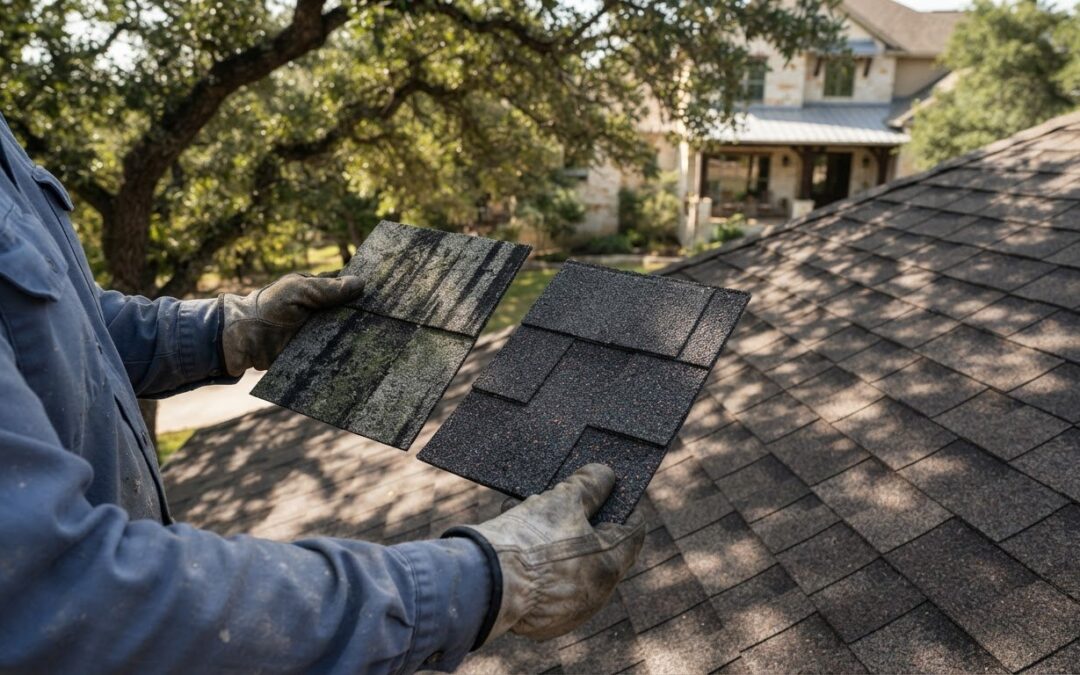
Black roof streaks can spread from roof to roof without meaning the shingles have failed. Algae-resistant shingles for homes in West Lake Hills are designed to slow staining with protective granules, such as copper or zinc, in the shingle surface.
It’s reasonable to wonder how algae reaches a roof and why it often appears first in shaded, damp areas. Wind can carry spores between homes, while limited sunlight and lingering moisture create favorable conditions for growth. Streaks are usually cosmetic, but moss and other growth can lift shingles and increase the risk of leaks.
This guide explains how algae spreads, how algae-resistant shingles differ, and what their contamination warranties may cover. You’ll also learn why warranty terms vary, including the five-year coverage common to many algae-resistant shingles and GAF’s 25-year limited warranty for products sold with the StainGuard Plus logo.
Key Takeaways
- Learn how shade, moisture, and roof debris encourage algae and other growth, and which signs may point to shingle or leak concerns.
- See how algae-resistant shingles use copper- or zinc-bearing granules to help limit staining.
- Understand why algae-stain warranty terms vary and what to look for, including GAF StainGuard Plus coverage.
- Explore when professional roof cleaning, repair, or asphalt shingle replacement may be the more suitable next step.
What Causes Roof Algae and Other Growth in West Lake Hills and Austin, TX?
In West Lake Hills, warm, humid conditions and damp roof areas encourage algae growth. North- and east-facing slopes receive less direct sunlight, so moisture can linger and dark streaks may appear. Wind carries spores between nearby roofs. Leaves, pine needles, and pollen can also trap moisture against shingles, creating conditions for algae, mold, moss, and lichen.
These growths affect shingles in different ways. Algae usually stains the surface and can reduce curb appeal. Moss may grow beneath shingles, lifting or curling them and allowing water underneath. Lichen can wear away the protective surface, while trapped moisture can contribute to deck rot and leaks. A roofer can check shingle edges, granule coverage, and soft spots to assess the roof’s condition.
Professional gutter cleaning removes wet leaves and debris that can keep roof edges damp. Clear gutters help direct water away from shingles. For roof growth, a trained professional can assess the affected areas and use a low-pressure sprayer. ARMA advises against power washing asphalt shingles because high pressure can strip protective granules.
A professional coating may help inhibit growth on suitable shingles, but it cannot solve every roof problem. Cracked, broken, or missing shingles need repair or replacement before coating. Coating is also ineffective when much of the roof has lost its granules. A roofer can assess whether cleaning or coating is appropriate, or whether replacement is worth considering.
Permit and building-code requirements depend on the roofing work and applicable West Lake Hills rules. Replacement and major repair projects must follow the requirements that apply to the work.
Algae-Resistant Shingle Materials for Homes in West Lake Hills, TX: algae resistant shingles for homes in West Lake Hills
Algae-resistant asphalt shingles use mineral granules to help slow algae growth. Manufacturers use different protective materials, so compare the product details and warranty rather than relying on a general label.
Copper and Zinc Granule Technologies
Copper or zinc granules help inhibit algae as rainwater runs across the shingle surface. CertainTeed’s StreakFighter technology uses copper-containing granules that gradually release copper. Copper-coated granules use a related approach. Compare the manufacturer’s description of the granules and the protection terms for the specific product. These materials help resist algae, but they cannot prevent every stain or roof problem.
Shingle Brands and Algae Resistance
GAF and CertainTeed offer asphalt shingles with algae-resistant features. GAF’s StainGuard Plus and CertainTeed’s StreakFighter use protective granules to help inhibit algae growth. The technology and warranty can differ between shingle lines, even within one manufacturer’s range. Check the exact product and package to understand the protection offered. Comparing those details helps homeowners choose shingles that suit their roof and appearance preferences.
Roofing Material Comparisons
Metal roofing does not use asphalt granules, so embedded copper or zinc protection does not apply. Algae discoloration can affect nearly all roofing systems, although it shows more clearly on light-colored surfaces. Compare materials based on the home’s appearance and roofing needs, not stain visibility alone.
The cost per square for algae-resistant shingles depends on the product and project details, including roof size, slope, access, and preparation. Installation charges also reflect tear-off work and necessary repairs. These factors shape the project scope, so a roof-specific assessment determines the material and labor required.
Algae-Resistant Shingle Costs and Warranty Coverage in West Lake Hills, TX
Algae-stain warranties have limits, so read the product terms carefully. Coverage varies by manufacturer and shingle package.
Installation cost depends on the roof’s size, slope, access, and preparation needs. Shingle choice, tear-off work, and repairs to damaged decking can also affect the project scope. A quote should break down materials and installation, while the warranty explains algae-stain protection. These decisions are related, but a warranty is not a price guarantee.
Algae-Stain Warranty Protection
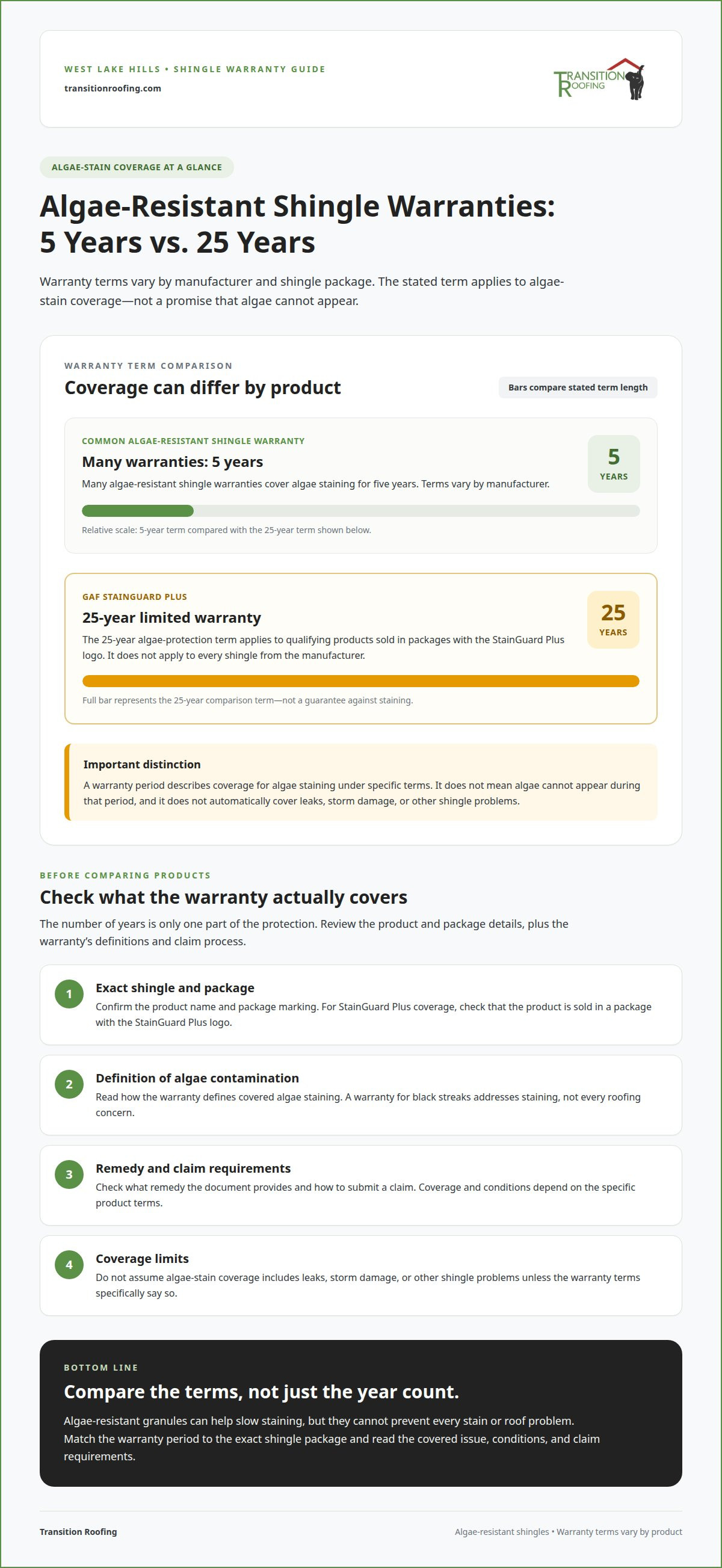
Most algae-resistant shingle warranties cover algae staining for five years, though coverage varies by manufacturer. GAF’s StainGuard Plus algae protection limited warranty lasts 25 years for products sold in packages with the StainGuard Plus logo. That term applies to qualifying products, not every GAF shingle. Review the exact product, package marking, covered staining, and warranty conditions before comparing offers.
Warranty language matters. Check how the document defines algae contamination, what remedy it provides, and how to submit a claim. A warranty for black streaks addresses staining, not every roofing concern. It should not be understood as coverage for leaks, storm damage, or other shingle problems unless the terms say so.
Algae Resistance Duration
How long do algae-resistant shingles resist algae growth? Many warranties cover algae staining for five years, while GAF StainGuard Plus offers a 25-year limited warranty on eligible packages. These periods describe warranty coverage, not a promise that algae cannot appear during that time. The protection and its limits depend on the manufacturer’s specific product terms.
Before choosing, compare the warranty period with the shingle’s stated algae protection. Confirm the product name, package logo where applicable, covered issue, and claim requirements. These details help homeowners understand what the roofing warranty protects and how long that protection applies. A longer term alone does not explain every condition.
Roof Cleaning and Repair Options in West Lake Hills, TX
Professional treatment starts with identifying the growth and checking the shingle surface. Algae mainly stains, while moss can lift shingles and lichen can wear away their protective layer. Mold and persistent moisture also warrant a closer look at the roof and underlying deck. The shingles’ condition helps determine whether cleaning, repair, or replacement is appropriate.
For asphalt shingles, cleaning must protect the granules that shield them from weather and sun. ARMA advises against power washers, brushes, and brooms because they can damage shingles or remove granules. It recommends applying an approved bleach-and-water solution gently, without scrubbing, and leaving it on for at least 15 minutes and no more than 20 minutes. Other cleaning chemicals or methods require shingle-manufacturer approval.
A trained professional can apply a cleaning solution with a low-pressure sprayer and avoid harsh scrubbing. After treatment, algae, lichen, and moss die over the following several days. The roof may not look clear right away; dead growth can remain visible before the weather gradually washes it away. Only trained professionals should climb or work on a roof, as ARMA warns that roof work is dangerous.
Coatings may help protect suitable shingles and inhibit growth, but they are not a solution for every roof. Cracked, broken, or missing shingles should be repaired or replaced before coating. A coating will not be effective if much of the roof has already lost granules. A roofer can assess whether the shingle surface can support a coating or needs a different repair plan.
For homeowners in West Lake Hills, the practical choice depends on roof condition, not streak color alone. Sound shingles may be candidates for professional cleaning; lifted shingles, leaks, or widespread granule loss point toward repair or replacement.
Transition Roofing: Asphalt Shingle Roofing in West Lake Hills, TX
Transition Roofing is a practical next step for West Lake Hills homeowners considering asphalt shingle replacement. With over 15 years of local experience, the company helps homeowners assess roof condition and plan a suitable roofing project. Its installers are insured and hold manufacturer certifications, including GAF, CertainTeed, Versico, and Dura-last. The goal is a clear process based on the roof’s needs, not on staining alone.
Consider an assessment if staining returns, shingles show damage, or granules are missing. Dark marks can affect appearance, while lifted shingles, leaks, and widespread surface wear point to other concerns. Distinguishing cosmetic staining from physical damage helps determine whether repair or replacement suits the roof. The roof’s condition and the homeowner’s material priorities guide that decision.
For algae-resistant shingles in West Lake Hills, the product and warranty terms matter. GAF and CertainTeed shingles are available options, with algae-protection features that vary by product. Transition Roofing can explain how a selected shingle suits the roof and what its warranty covers. Homeowners can review residential asphalt shingle roofing as they consider their project.
Central Texas heat, hail, and storms can also affect roof condition. Leaks or storm damage call for attention to vulnerable areas, while staining on sound shingles may not require replacement. A careful assessment distinguishes surface discoloration from damage that affects roof performance, helping homeowners make a decision based on the roof rather than appearance alone.
Homeowners weighing a new asphalt roof can discuss the roof’s condition, material choice, and project needs with Transition Roofing. For a straightforward next step, get in touch with Transition Roofing about your West Lake Hills home.
Frequently Asked Questions
Do darker shingles hide algae better?
Usually, yes. Dark shingles can make black algae streaks less noticeable than light shingles, but they do not prevent algae growth. The difference is visual, not protective. For example, a pale roof may show streaks more clearly across a broad slope, while similar staining may blend into charcoal shingles. Choose a color for the home’s appearance, not as a way to control algae.
What Is Algae Growth?
Roof algae is a stain-producing buildup on roofing surfaces. A common culprit, Gloeocapsa magma, is a blue-green algae that can look black because of its protective dark sheath. Wind can carry spores between roofs, so staining may appear across a neighborhood. The streaks affect appearance, and on asphalt shingles, algae can feed on limestone in the shingle material.
What’s Growing on My Roof?
Dark, flat streaks often point to algae, while raised green patches may be moss. Lichen tends to form stubborn, crusty spots attached to the roof surface. Mold is another possible growth, especially where moisture remains. These signs can overlap, so appearance alone may not identify the exact growth. A roofer can inspect the affected area and look for lifted shingles, granule loss, or moisture damage.
How Do Algae-Resistant Shingles Compare With Standard Asphalt Shingles?
Algae-resistant shingles include protective materials, often copper or zinc granules, that help inhibit algae. Standard asphalt shingles may not include the same algae-control feature. The added protection can help limit staining, but it does not make shingles immune to roof growth. Compare the actual product details and warranty, since protection methods and coverage differ across shingle lines and manufacturers.
Do Algae-Resistant Shingles Come With Algae-Stain Warranties, and What Do They Cover?
Some algae-resistant shingles include warranties for algae staining, but coverage depends on the manufacturer and product. A stain warranty addresses the appearance of algae contamination; it does not automatically cover leaks, storm damage, or other roof defects. Read the terms for eligible products, exclusions, claim steps, and the remedy offered. Keep the product and installation records with the warranty documents.
How Do Central Texas Heat, Humidity, and Tree Shade Affect Roof Algae Growth?
Warm, humid conditions support algae growth, while tree shade can keep roof areas damp by limiting direct sunlight. North- and east-facing slopes often receive less sun, so moisture may linger there. Branches can also drop leaves and needles that hold moisture against roofing. This combination can make shaded sections more prone to visible growth than sunny, open roof areas.