
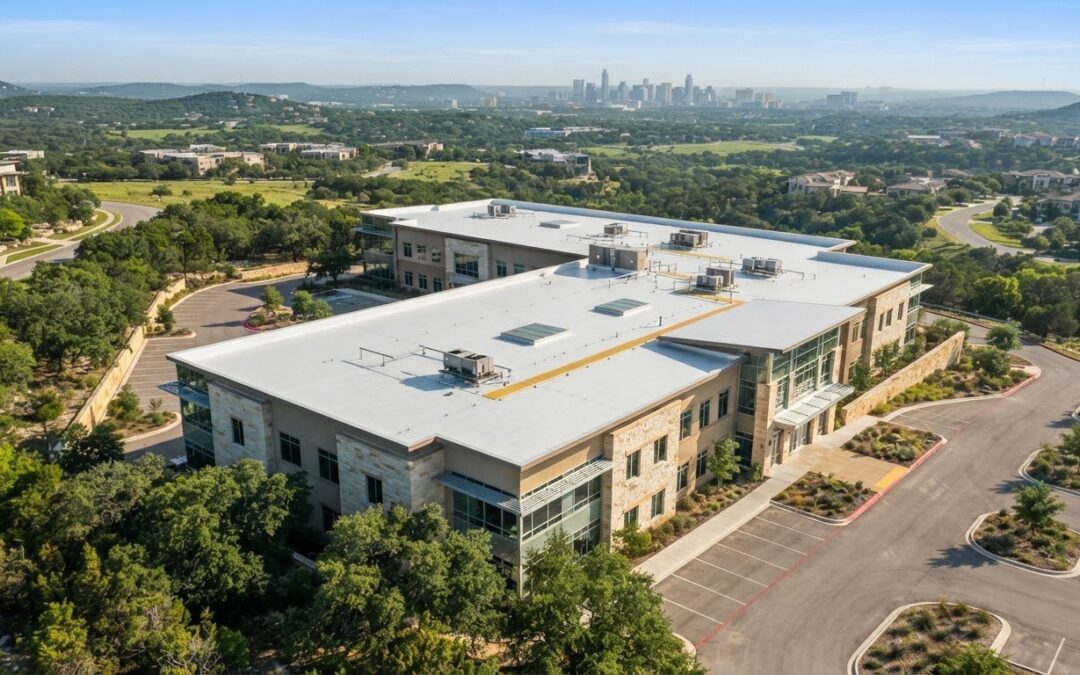
A light-colored TPO roof reflects sunlight and can support energy efficiency during Austin’s hot summers. For commercial properties in Bee Cave, TX, TPO is a single-ply option for flat or low-slope roofs. Its reflective surface can help reduce heat absorption, but the right system depends on the building and roof conditions.
It’s reasonable to ask how TPO works, whether it suits your building, and what to expect when an aging roof needs replacement. This guide explains the material, its potential energy benefits, and the factors that shape a commercial roof replacement plan.
You’ll also learn how roof use, drainage, and rooftop equipment affect material selection. The article covers commercial TPO installation in Austin and what to consider when planning work for a Bee Cave property.
Key Takeaways
- Consider how much rooftop foot traffic and equipment access your building needs when weighing TPO against other flat-roof systems.
- Learn which installation steps help create a continuous membrane, including surface preparation, secure attachment, and sealed roof penetrations.
- Use regular inspections, cleaning, and seam checks to help catch developing roof issues before they lead to leaks.
- Compare a contractor’s experience with commercial TPO projects and how the roof deck, drainage, and building use shape the replacement plan.
Reflective roofing and energy efficiency
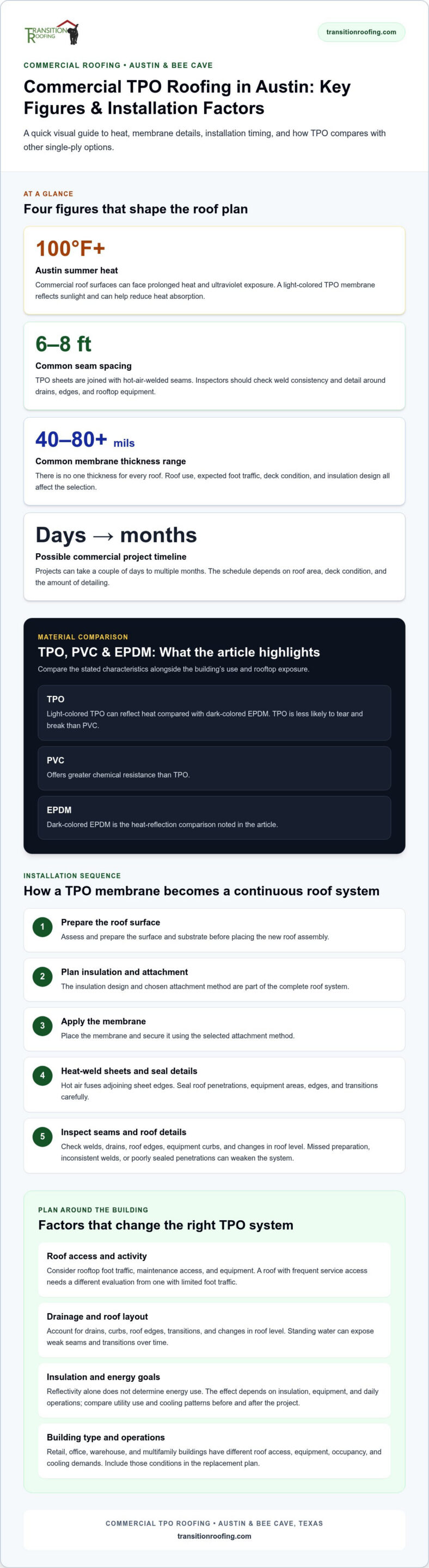
In Austin, summer temperatures can exceed 100°F, putting commercial roof surfaces under prolonged heat and ultraviolet exposure. A light-colored TPO membrane reflects sunlight and can help keep retail, office, warehouse, and multifamily buildings cooler in summer without increasing HVAC use. The effect on energy use depends on the building’s insulation, equipment, and daily operations.
TPO is a single-ply roofing membrane used on flat and low-slope properties. Its reflective surface can make it a practical option when energy efficiency is a priority and rooftop foot traffic is limited. For example, an office roof with little service access may suit a reflective membrane better than a roof regularly used by maintenance crews.
Commercial TPO roofing installation in Austin starts with preparing the roof surface and addressing the substrate. Installers then place the membrane, secure it using the chosen attachment method, and heat-weld the seams. They seal roof penetrations and equipment areas carefully to help protect against leaks, then inspect the seams and transitions.
For retail properties, reflectivity may help support cooler indoor conditions during hot afternoons. Warehouses with large roof areas may also benefit from a bright membrane, while multifamily buildings need a system suited to shared rooftop equipment and access. Roof replacement planning should account for drainage, insulation, and how the property uses its roof.
How does TPO compare with PVC and EPDM? Light-colored TPO can reflect heat compared with dark-colored EPDM, while PVC offers greater chemical resistance. TPO is less likely to tear and break than PVC, so building use and rooftop exposure matter when comparing single-ply roofing systems.
How do you choose a licensed and insured commercial roofer in Bee Cave, TX? Ask for the roofer’s license details and current insurance documentation, then verify them with the relevant issuing or insurance organization. Review the company’s experience with commercial TPO, including how its insured, manufacturer-certified installers handle heat-welded seams and rooftop penetrations.
GOT ANY QUESTIONS ABOUT FLAT & TPO ROOFING?
Commercial TPO installation turns a prepared flat roof into a continuous membrane system. The seams, attachment method, insulation, and roof details all affect the finished assembly’s performance.
Hot-Air Welding and Seams
TPO membrane combines synthetic materials and reinforcing scrim. Installers use hot air to weld adjoining sheets, fusing their edges into durable seams rather than relying on glue alone. Seams commonly appear every 6-8 feet. Inspectors should look for consistent welds and careful detailing around drains, edges, and equipment, where gaps can allow water beneath the membrane.
Installation Process and Timeline
Installation typically involves surface preparation, insulation placement, membrane application, seam welding, and sealing around roof penetrations and equipment. A final inspection checks these details. The schedule depends on the roof area, deck condition, and amount of detailing. Commercial projects can take a couple of days to multiple months, depending on complexity. Transition Roofing can explain the work sequence for your building.
Membrane Thickness and Insulation
TPO membranes commonly range from 40 to 80 mils thick or more. There isn’t one thickness that suits every Central Texas roof. Roof use, expected rooftop traffic, deck condition, and the insulation design all shape the selection. For example, a roof with frequent maintenance access needs a different evaluation than one with little foot traffic. Review the full assembly, not membrane thickness alone.
Installation Risks and Common Problems
Missed preparation, inconsistent welds, and poorly sealed penetrations can weaken a new roof system. Drainage details matter too: standing water can expose weak seams and transitions over time. During installation, pay attention to roof edges, drains, equipment curbs, and changes in roof level. Ask for a clear explanation of the inspection process and how the crew checks each welded seam before completion.
For a project-specific look at the work sequence, review this commercial roof installation approach.
What is TPO roofing and why is it popular in Austin?
For Austin properties, TPO selection should account for building operations as well as roof design. The membrane’s performance is one part of a complete roofing system.
Heat Reflection and Energy Efficiency
To assess whether a reflective roof supports your energy goals, start with a baseline. Review utility use and cooling patterns before the project, then compare them afterward. This gives property managers a practical way to track changes without assuming the roof alone caused them. An office and a warehouse may show different results because their hours, occupancy, and cooling demands differ.
Also review the insulation beneath the membrane. A reflective surface cannot replace an insulation plan suited to the building. For example, an Austin retail property with uneven indoor temperatures may need its roof assembly and existing insulation considered together. Ask how the proposed system addresses the building, rather than treating color as the only energy decision.
Reflective Surfaces and Heat-Welded Seams
Assess the entire roof surface, including areas around equipment and roof edges. A large, open roof and one divided by curbs or service units present different installation conditions. Record these features during planning so the scope accounts for details that interrupt the main roof area.
Heat-welded seams are part of the finished system, but they are not the only factor to consider. Review how the proposal accounts for membrane transitions and how the completed work will be inspected. TPO also offers increased puncture resistance compared with other commonly used roofing materials, which may matter for commercial properties with rooftop activity. Weigh that benefit against actual building use and maintenance needs.
Commercial TPO roofing contractors in Bee Cave TX
Choose a Bee Cave contractor with experience installing TPO on multiple commercial projects. Retail buildings, warehouses, and multifamily properties can have different drainage, equipment, and access needs. Ask how the proposed system will suit your roof deck and the way your building operates.
Review the work scope before installation begins. It should explain surface preparation, membrane attachment, seam welding, and sealing around roof penetrations. For example, an office roof with rooftop equipment needs a plan for curbs, drains, and service paths. A clear scope shows what the crew will do and where detail work is required.
Discuss how installers will handle roof edges, drains, equipment, and other transitions. Ask what the inspection process covers and how completed work is documented. These details help you assess whether the contractor has a consistent plan for areas that require precise installation.
For an occupied property in Bee Cave or Austin, discuss access and communication with building managers. A warehouse may need coordination around loading activity, while a multifamily property may need staff informed about roof access during the project.
Before approving the proposal, compare its scope with the building’s use. Make sure it addresses the roof deck, drainage, insulation, equipment, and maintenance access. A contractor familiar with commercial TPO installation in Bee Cave, TX, can explain how these conditions shape the project instead of applying the same plan to every flat roof.
If you’re planning a commercial TPO project, discuss your property’s needs through commercial roof installation services.
Transition Roofing: Commercial Roof Installation
Transition Roofing helps Austin-area property owners plan commercial roof installation, TPO roofing, and commercial roof repairs. Turn to the team when an aging membrane, recurring leak, or storm damage calls for a clear assessment of the roof’s condition and next steps.
For a flat or low-slope building, the installation plan should account for the roof deck, drainage, insulation, rooftop equipment, and how the property is used. TPO may suit roofs where reflectivity matters and foot traffic is limited. Metal roofing systems offer another option when the building’s needs point to a different material.
Discuss the roof concern and project goals with Transition Roofing to determine a practical path for your Bee Cave property. Explore commercial roofing and contact Transition Roofing.
Plan the Next Step for Your Commercial Roof
A roof decision is easier when the next step starts with the building’s needs, not a material label. Before planning a commercial TPO installation in Bee Cave, TX, note where leaks appear, how the roof is used, and which equipment or drains need attention. Those details help focus the discussion on the roof’s condition and the work it may need.
Transition Roofing offers commercial roof installation, TPO roofing systems, and commercial roof repair. If your roof has recurring leaks or visible wear, a focused assessment can help clarify whether repair or replacement is the right direction. Share the issues you’ve noticed and your property’s needs to start a practical discussion.
Contact Transition Roofing about TPO roofing and take the next step toward a sound plan for your property.
Frequently Asked Questions
Can TPO roofs be repaired easily?
Localized TPO damage can often be repaired without replacing the entire roof. The repair approach depends on whether the issue is limited to the membrane or extends into insulation, seams, or roof details. For example, a small puncture differs from recurring water entry near a drain. Prompt commercial roof repair can help keep a contained problem from spreading.
How long does TPO roofing last?
A properly installed TPO roof typically lasts 20-30 years with regular maintenance. The roof’s condition over time depends on installation quality, drainage, exposure, and upkeep. For example, blocked drains can leave water sitting on the surface and make inspections more important. Track repairs and inspection findings so you can spot recurring issues and plan work before leaks disrupt building operations.
How long does a flat roof last?
Is TPO roofing good for Texas weather?
TPO can suit Texas commercial roofs because it resists heat and damaging ultraviolet rays, while light-colored membranes reflect sunlight. Those traits are useful during Austin’s hot summers. Storm exposure and rooftop traffic still matter, since hail or frequent service access can affect the roof. Consider the building’s conditions alongside reflectivity when deciding whether TPO fits its needs.
What is the commercial TPO roof installation cost per square foot in Bee Cave, TX?
There isn’t one dependable per-square-foot figure for every Bee Cave commercial TPO project. The scope depends on the existing roof, deck condition, insulation needs, drainage, and details around equipment or edges. A straightforward roof surface differs from one needing substantial preparation or detail work. These conditions determine what the installation includes and shape its overall cost. Transition Roofing provides free, no-obligation estimates with transparent pricing and no hidden fees.
What factors affect commercial TPO roofing costs in Bee Cave, TX?
The main cost drivers are roof size, existing roof condition, removal and preparation needs, insulation, drainage, and the number of penetrations or transitions. Access matters too: rooftop equipment or limited work areas can affect how crews handle installation. For example, a roof with multiple curbs and drains requires more detailing than a broad, unobstructed surface.