

A flat-roof leak can be active long before water reaches the ceiling. Water stains, damp areas, or a musty odor are warning signs to take seriously. A flat roof leak detection service in Round Rock can help trace the source when it isn’t visible.
Moisture can travel beneath the roof surface before it appears indoors. This guide covers warning signs and practical checks for drains, roof penetrations, seams, and flashing, so you can better understand what may be happening above the ceiling.
Transition Roofing brings over 15 years of experience and insured, manufacturer-certified installers to residential and commercial roofing work. Its roofing expertise includes GAF and CertainTeed shingles, along with Versico and Dura-last systems. Use the inspection details in this guide to understand when a focused repair or a broader roofing plan may be the next step.
Key Takeaways
- Look for ceiling stains, damp areas, mold, or musty odors, even when the roof surface appears intact.
- Check whether roof drains are clear and water can move off the surface rather than collect around low spots.
- Pay close attention to vents, pipes, seams, and flashing, where small gaps can let water in.
- When the leak’s source is hidden, a professional inspection can help trace the moisture and identify the right repair.
Q: How do I know if I need a flat roof leak detection service in Round Rock? (Austin, TX)
In Round Rock, recurring moisture, unexplained stains, or roof damage can call for professional leak detection. A flat roof leak detection service in Round Rock can help trace the entry point when visible clues don’t show its exact location.
Interior and Exterior Roof Inspections
Inside, note ceiling marks, damp walls, or musty odors, and record their locations. Outside, an inspection should check drains, seams, roof penetrations, and flashing. Round Rock’s 2023 storm brought hail from 1.5 to nearly 4 inches across most of the city. If you see impact damage, document it for the inspection and any insurance discussion.
Thermal and On-Site Leak Checks
Thermal imaging uses infrared technology to find temperature changes that may signal trapped moisture. It helps guide an on-site inspection but doesn’t identify every leak by itself. An insured, manufacturer-certified roofer can compare readings with interior clues and roof details, then explain likely entry points and repair needs.
Routine Seam Leak Inspection
Include seams in roof evaluations, especially where membrane sections meet or connect to edges. Look for lifted material, open joints, or separated sealant. Photograph changes and note when moisture appears. A flat roof leak detection service in Round Rock can investigate recurring seam concerns and distinguish a localized defect from a broader roof problem.
Does homeowners insurance cover detection and repairs? Coverage depends on your policy and the cause of the leak. Review the policy terms for storm damage and wear.
How much does detection cost? The scope, roof access, and testing method affect the estimate. Ask what inspection work it includes.
Are inspections or estimates free? Fees vary by roofer. Confirm the inspection and estimate terms when arranging service.
Which companies offer detection? Choose a roofer experienced with flat-roof systems and tracing hidden leaks.
How quickly can a service respond? Response timing varies with current workload, storm demand, and roof access.
What should I ask before hiring? Ask how the roofer will inspect the roof, report findings, and explain repair options.
How can I limit damage while waiting? Move belongings, catch drips, and photograph moisture. Avoid walking on a wet roof.
Warning signs of hidden water leaks in Austin, TX
A hidden roof leak may leave clues before water drips indoors. Look for changes that return after rain, spread over time, or appear below a roof drain, seam, or penetration. Write down where each sign appears and when you notice it; that pattern helps an inspector locate the source.
Check these less obvious signs in a home or business:
- Paint that bubbles or peels beneath the roofline.
- Ceiling material that feels soft, bows, or shows a growing mark.
- Wet insulation or damp framing in an accessible attic or ceiling space.
- Water collecting near a flat-roof drain after rainfall.
- Stains that return after a temporary repair or after another storm.
Water meter checks can help distinguish roof concerns from plumbing leaks. Turn off faucets and appliances, then observe the meter. If it continues moving, there may be a plumbing leak; a roof leak does not normally use metered water. This check is useful for a home or business with unexplained moisture, but it cannot locate a roof opening.
For roofing systems, controlled water testing can help locate the entry point. A professional applies water to a specific roof area while someone watches inside for moisture. Testing one section at a time helps connect the indoor symptom with a drain, seam, edge, or penetration. Avoid spraying the whole roof at once, which can make the source harder to identify.
Common sources include separated seams, damaged flashing, clogged drains, and gaps around pipes or rooftop equipment. A previous patch can also fail, allowing water to travel beneath the roof deck before appearing elsewhere. Ask the inspector to explain whether targeted repair, broader replacement, or restoration of wet materials is appropriate. The estimate should connect observed damage to its likely source.
If roof moisture needs a closer look, explore roofing repair information as a next step.
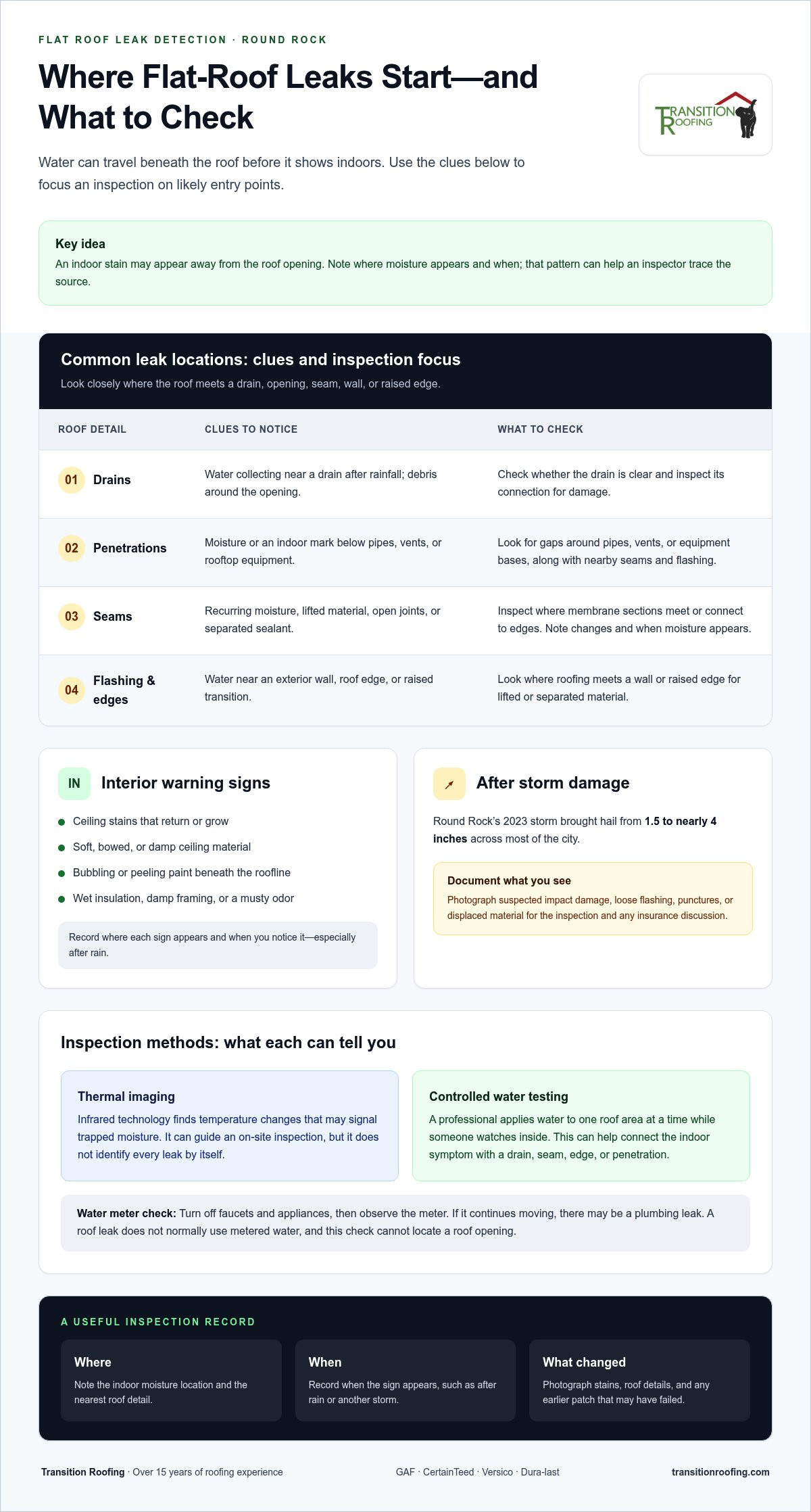
Common leak locations and warning signs
Flat-roof leaks often start where the roof surface changes direction or meets another material. Check drains, roof edges, seams, flashing, and openings for pipes or equipment. An indoor stain may appear away from the entry point because water can travel beneath the roofing before it becomes visible.
- Drains: Debris or a damaged drain connection can hold water near the opening.
- Penetrations: Gaps around pipes, vents, or equipment bases can let moisture beneath the roof.
- Flashing: Look where roofing meets a wall or raised edge for lifted or separated material.
- Seams: Open joints or loose membrane edges can create a path for water.
Trace each sign to its nearest roof detail. For example, a ceiling mark below rooftop equipment calls for a close look at its base, nearby seams, and flashing. If water appears near an exterior wall, inspect the roof-to-wall transition and edge. These clues help focus leak repair instead of treating only the indoor stain.
Storm damage can affect more than the roof membrane. Check for loose flashing, punctures, or displaced material near exposed edges and rooftop fixtures. On a commercial roof, note whether water damage appears beneath equipment, along a wall, or near a drain. Photos from inside and outside can help connect those locations during an inspection.
Act promptly if water is actively entering or spreading across a ceiling. Move belongings, contain drips, and keep people clear of a sagging area. Don’t cut into the ceiling or walk on a wet roof. Transition Roofing provides emergency roof repairs and storm-damage restoration, with an inspection to assess the source and explain whether targeted repair or broader work is needed.
After the leak is controlled, the repair plan should address the entry point and any damaged roofing around it. If the membrane or underlying area has deteriorated, a patch alone may not resolve the cause. Ask for inspection findings that connect the proposed repair to the specific roof locations observed.
Drainage, roof penetrations, and flashing checks
Use a simple route across the roof: start at drains, then inspect penetrations and flashing. In Central Texas, storms can leave debris around drains or reveal weak points near roof edges. A thorough check connects each visible defect with indoor moisture, rather than assuming the nearest roof detail caused it.
At each drain, look for leaves, standing water, a loose grate, or a gap around the drain opening. Note whether water appears trapped beside the drain or along a low area. Don’t pull up roofing or force debris into the drain. These observations help guide a safe inspection and identify where roof repair may be needed.
- Check that drain openings are clear and their surrounding roof material looks intact.
- Look for gaps or cracked seals around pipes, vents, and equipment bases.
- Inspect flashing where the roof meets walls, raised edges, or a skylight.
Penetrations deserve close attention because each opening interrupts the roof surface. BesTex reports that rubber seals around roof vents and plumbing pipes can become dry and cracked in as little as 5 or 10 years. Look for visible splits, loose edges, or a seal that has pulled away, then note the opening’s location.
At flashing, check for lifted metal, separated joints, or an edge that no longer lies flat. A skylight’s corners and the transition between its frame and roof are practical places to examine. Water can travel below the surface, so match any exterior defect with the indoor area where moisture appears. Persistent water can also affect structural materials.
Photograph each concern from a safe position and share the location during a professional assessment. That record helps focus testing and explain whether a targeted repair can address the defect. If drainage, penetrations, or flashing show damage, arrange a flat roof assessment to discuss the next step.
Transition Roofing: Commercial Roof Installation
Transition Roofing can help property owners move from leak findings to a practical roofing plan. If an inspection points to a repairable issue on a commercial roof, commercial roof repair may address the affected area. If damage is widespread or the system needs replacement, Commercial Roof Installation and TPO Roofing Systems are options to consider.
The right next step depends on the roof’s condition, the leak source, and the extent of affected materials. Clear inspection findings help guide that decision and keep repair work focused on the actual problem.
For help planning commercial roof repair or a flat roof project, contact Transition Roofing.
Turn Roof Findings Into a Clear Next Step
Use your inspection notes to move from concern to a defined plan. A clear record of the affected area, visible damage, and any moisture inside helps focus the discussion on the roof’s condition and the work it needs. For a flat roof leak detection service in Round Rock, the goal is to connect the suspected entry point with a practical repair or replacement decision.
Transition Roofing provides commercial roof repair, TPO Roofing Systems, and Commercial Roof Installation. These options can support a commercial property when findings point beyond a small, isolated repair. The right scope should reflect the roof’s condition and the source of the leak, not just the visible stain.
Share your roof concerns with Transition Roofing and discuss a practical next step. Contact Transition Roofing today to start the conversation and move forward with greater clarity.
Frequently Asked Questions
What flat roof leak detection methods do Round Rock roofers use?
Roofers commonly begin with a visual inspection, then select testing based on the roof and leak clues. Thermal imaging uses infrared technology to identify temperature differences that may point to moisture. Controlled water testing can help connect a specific roof area with an indoor leak. The inspector may compare test results with roof seams, drains, and penetrations before recommending a repair.
What signs indicate a flat roof leak that needs professional detection?
Arrange a professional assessment if moisture returns after a previous repair, appears in several rooms, or spreads beyond the original mark. These patterns can mean water is traveling beneath the roof before showing indoors. Also act if a commercial space develops recurring damp materials near electrical equipment or stored goods. Keep people away from visibly sagging ceiling areas and document changes for the inspection.
How do thermal imaging and electronic leak detection compare for flat roofs?
Thermal imaging shows temperature differences that may indicate trapped moisture, so it helps narrow the inspection area but doesn’t prove a membrane breach by itself. Electronic leak detection uses electrical testing to identify possible openings in compatible roof assemblies. The methods rely on different signals, and roof construction affects which test fits. An inspector can explain the method and findings for your specific roof.
Are Round Rock flat roof leak detection companies licensed, insured, and reviewed?
Transition Roofing has insured installers. Before scheduling, check the roofer’s credentials, insurance details, and customer reviews.