

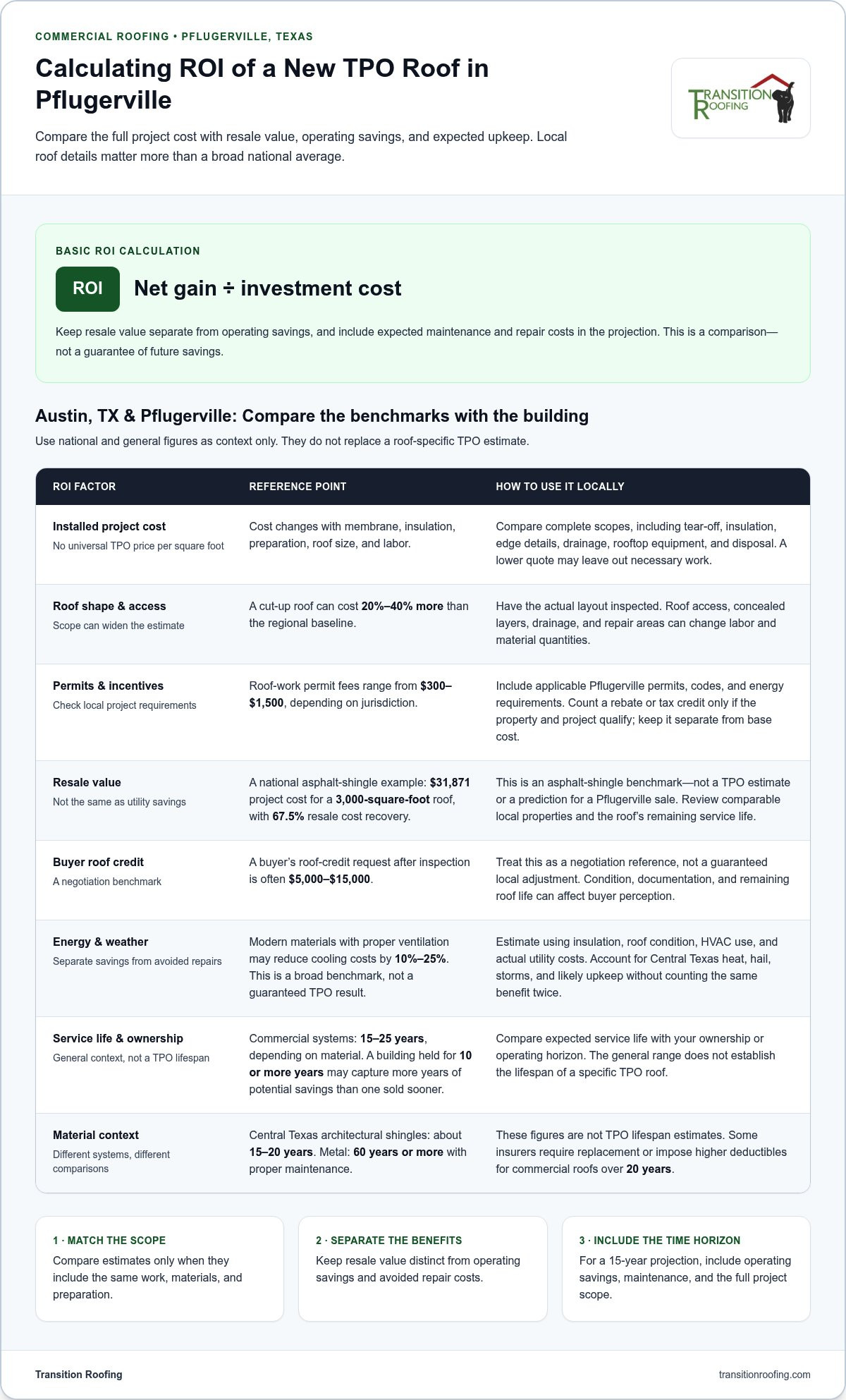
A TPO roof’s return depends on more than its installation cost. When calculating ROI of a new TPO roof in Pflugerville, compare the project cost with potential resale value and the savings or repair costs it may affect over time. A basic ROI calculation is net gain divided by investment cost.
An estimate is most useful when it reflects the building, not a generic calculator. Roof size and layout, Central Texas heat and storms, energy use, expected maintenance, and how long you plan to own the property can all change the projection. Include resale value and ongoing upkeep alongside energy savings when weighing a TPO replacement against continued repairs. The result is a clearer comparison, not a guarantee of future savings.
Key Takeaways
- Separate resale value from operating savings to see what is driving the projected return.
- Use national benchmarks as context, not as a substitute for a roof-specific Pflugerville estimate.
- Account for Central Texas heat and storms when weighing a TPO roof’s potential energy and protection value.
- Include expected upkeep in the projection so the comparison reflects the roof’s full service life.
Factors affecting roof value and cost in Austin, TX: calculating ROI of a new TPO roof in Pflugerville
A useful estimate compares the full project cost with resale value, operating savings, and future upkeep. When calculating ROI of a new TPO roof in Pflugerville, use the building’s actual scope rather than a broad roofing average.
Cost Versus Value Calculations
Cost-versus-value compares the investment with benefits the property may gain. The basic ROI formula is net profit divided by cost. A national asphalt-shingle example adds an average of $15,247 to a home’s resale value, but it isn’t a TPO estimate. Include installation scope, insulation, energy efficiency, and maintenance. Workmanship and warranty terms also shape potential repair exposure and financial return.
Resale Value and Marketability
Resale value is what buyers may recognize in a property; marketability is how its condition supports a sale. A TPO roof may strengthen a buyer’s perception when its condition and maintenance records are clear. Estimate any added value by reviewing comparable local properties and the roof’s remaining service life. Keep resale expectations separate from operating savings when calculating ROI of a new TPO roof in Pflugerville.
Installed Costs and Roof Specifications
Installed cost includes the membrane, insulation, preparation, and roof size. No single per-square-foot amount applies to every Pflugerville TPO project. TPO, PVC, EPDM, and modified bitumen systems differ in assembly, upkeep, and energy performance. Membrane thickness and insulation affect material needs and thermal performance, while roof size affects quantities and labor. Compare complete scopes, not material labels alone.
Local Requirements and Incentives
Local requirements and incentives can change project scope and net cost. Include applicable Pflugerville permits, building codes, and energy requirements in the estimate. Permit fees for roof work range from $300 to $1,500, depending on jurisdiction. Add a rebate or tax credit only when the property and project qualify under its program terms. Keep incentives separate from base costs to make the comparison clear.
Limits of national averages and local market estimates in Austin, TX
National roofing averages are comparison points, not bids for a Pflugerville building. Material, roof access, tear-off needs, drainage, and layout change the work included in an estimate. A simple roof and a cut-up roof with many features don’t require the same labor. A cut-up roof can cost 20%-40% more than the regional baseline, so roof shape alone can widen cost ranges.
The 2025 national Cost vs. Value Report modeled asphalt-shingle replacement on a 3,000-square-foot roof. Its project cost was $31,871, with 67.5% resale cost recovery. That figure describes asphalt shingles, not TPO, and it doesn’t predict a Pflugerville sale price. It shows why material-specific comparisons matter. A metal roof’s national replacement example had a different cost and resale recovery, reinforcing that one material’s average cannot stand in for another’s.
A local estimate starts with the roof’s actual area and assembly. An inspection can identify concealed layers, drainage details, rooftop equipment, and areas needing repair, all of which affect labor and material quantities. Compare estimates only when they cover the same scope, including tear-off, insulation, edge details, and disposal. Otherwise, a lower total may simply exclude necessary work.
Real estate timing also changes the value calculation. If selling soon, buyers may focus on visible condition, documentation, and remaining roof life. A buyer’s roof credit request after inspection is often $5,000-$15,000, but this is a negotiation benchmark, not a guaranteed Pflugerville adjustment. For a 15-year projection, include operating savings and maintenance alongside resale value, then compare the result with the full project scope.
Use national data to frame questions, then base the decision on local roof conditions and a matching estimate. If a commercial property needs a closer scope review, commercial roofing in Austin can connect the roof’s condition with the work being priced. That makes the ROI comparison more useful than applying a broad real estate average to a specific building.
Location and climate effects on ROI in Austin, TX
Commercial roofing systems typically have an expected lifespan of 15-25 years, depending on the material. That is a general range, not a TPO-specific lifespan. In Central Texas, heat, hail, storms, installation quality, and maintenance all affect how long a roof performs.
Modern roofing materials with proper ventilation can reduce cooling costs by 10-25%. Treat this as a broad benchmark, not a guaranteed TPO result. For a Pflugerville building, estimate energy savings using its insulation, roof condition, HVAC use, and actual utility costs. A reflective roof and sound insulation can help limit heat transfer, but building operation also affects the final savings.
Local weather affects costs after installation. Pflugerville’s summer heat can increase cooling demand, while hail and storms can cause damage and change repair needs. Include likely upkeep and storm-related repairs in the ROI projection. This separates energy savings from avoided costs instead of counting both as the same benefit.
Material comparisons need local context. Architectural shingles in Central Texas realistically last about 15-20 years, while metal roofs can last 60 years or more with proper maintenance. Those figures don’t establish a TPO lifespan, but show why material life and maintenance affect a long-term return on investment. Some insurers require replacement or impose higher deductibles for commercial roofs over 20 years old.
For an actual projection, compare expected service life with the time you plan to own or operate the property. A building held for 10 or more years can capture more years of potential operating savings than one sold sooner. Keep home value separate from cooling savings: resale depends on the property and market, while utility savings depend on energy use. That distinction makes the ROI estimate more useful for Pflugerville owners.
Maintenance cost projections
A maintenance projection estimates inspection, upkeep, and repair costs across the roof’s service life. For a homeowner or property manager, it shows how ongoing expenses change the real cost beyond installation. Roof maintenance costs are described as minimal during years 1-5 and moderate during years 10-15. Use those periods as planning stages, not fixed bills for every roof.
Build the estimate from actual roof records. Separate routine maintenance from storm repairs, leak response, and damage to the building interior. Pflugerville’s hail and storms can affect repair needs, while drainage problems or neglected defects can add work. The calculator’s sample annual maintenance savings of $150 offers an example of one possible comparison, not a forecast for every property.
- Track inspection findings and completed repairs by year, so recurring issues stand out.
- Compare annual maintenance costs with replacement cost; the guidance flags costs above $2 per square foot annually as a reason to consider replacement.
- Watch repair frequency and scope. Significant ongoing repairs, emergency calls, and interior damage are risks for roofs aged 15 or more years.
Repair timing affects the return. If an inspection finds repeated leaks or rising repair needs, include those expenses in the existing-roof scenario. The last five years of an asphalt roof’s life are typically its most expensive, so don’t assume equal costs every year. A new roof’s maintenance needs also vary by material and upkeep; replacement does not eliminate future expenses.
Compare both paths over the same ownership period: continued repairs versus upfront replacement plus projected maintenance. If annual costs keep climbing, explore preventative roof maintenance to help organize ongoing care and identify developing issues before they expand.
Transition Roofing: Commercial Roof Installation
Transition Roofing installs commercial roofs and TPO systems for property owners planning a replacement. If an inspection shows the roof can remain in service, commercial roof repair may be the more suitable next step. A clear project scope connects the roof’s condition, selected system, and expected maintenance to the ROI estimate.
For Pflugerville commercial properties, compare the project findings with the factors above: roof layout, insulation, energy use, and existing damage. Transition Roofing also installs metal roofing systems, giving property owners another option to consider when planning a roof project.
To discuss a commercial roof installation or TPO system, contact Transition Roofing about commercial roofing.
Turn Your Roof Estimate Into a Clear Decision
Use the ROI projection to set a practical decision point: compare continued repair costs with the value of a planned replacement, then revisit the comparison as the roof’s condition changes. This ties the decision to the building’s needs rather than a broad market benchmark. When calculating ROI of a new TPO roof in Pflugerville, make sure the estimate reflects the property’s use and your plans for it.
Transition Roofing provides commercial roof installation, TPO roofing systems, and commercial roof repair. These services address roofs that need replacement or continued repair, with the work guided by the building’s condition and project scope.
Contact Transition Roofing about your roof to discuss the next step for your property. A clear plan can help you move forward with confidence and protect the building for the years ahead.
Frequently Asked Questions
What does the new roof ROI calculator estimate?
A new roof ROI calculator estimates how projected financial benefits compare with the replacement investment. It can organize inputs such as project cost, expected energy savings, avoided repairs, maintenance, and resale value. Run separate scenarios using conservative and stronger savings assumptions. This shows which inputs drive the result and whether changing the planned ownership period meaningfully alters the projection.
How Can You Calculate ROI Ahead of Time?
Start with a written project scope and the building’s recent utility, repair, and maintenance records. Estimate annual savings and avoided costs, then subtract ongoing expenses. Compare the net amount with the full installation investment. For a useful forecast, create a separate continued-repair scenario and use the same expected ownership period for both projections.
How do hail, heat, wind, and UV exposure in Pflugerville affect TPO roof maintenance and replacement costs?
Hail and wind can cause visible damage or affect roof edges, seams, and flashing; heat and sun exposure can contribute to material wear over time. After a severe storm, document visible changes and arrange an inspection of seams, penetrations, and drainage paths. Compare each finding with earlier inspection records. This helps distinguish new storm damage from gradual wear when planning repairs or replacement.
What maintenance and repair costs should be included when calculating TPO roof ROI?
Include planned inspections, drain cleaning, small repairs, seam or flashing work, leak response, and storm-related repairs. Record each expense by date and roof area, separating routine upkeep from one-time damage. Also note any disruption or interior damage linked to a leak. This itemized history gives the projection a stronger basis than carrying one unchanged maintenance allowance forward.
What formula and payback period should be used to calculate TPO roof ROI?
Calculate ROI as net profit divided by total project cost, then multiply by 100 for a percentage. Net profit means total benefits minus total costs across the period being assessed. Estimate simple payback by dividing net upfront cost by annual net savings. For roofs generally, estimated payback ranges from 8-15 years when energy savings, insurance discounts, and avoided repairs are included.
How do TPO roofing costs and energy savings vary by membrane thickness, insulation, and roof size?
Membrane thickness and insulation affect material needs and thermal performance, while roof size changes material quantities and labor. Energy savings depend on insulation, roof condition, HVAC use, and utility costs; the 10-25% cooling-cost reduction is a broad benchmark, not a guaranteed TPO result.