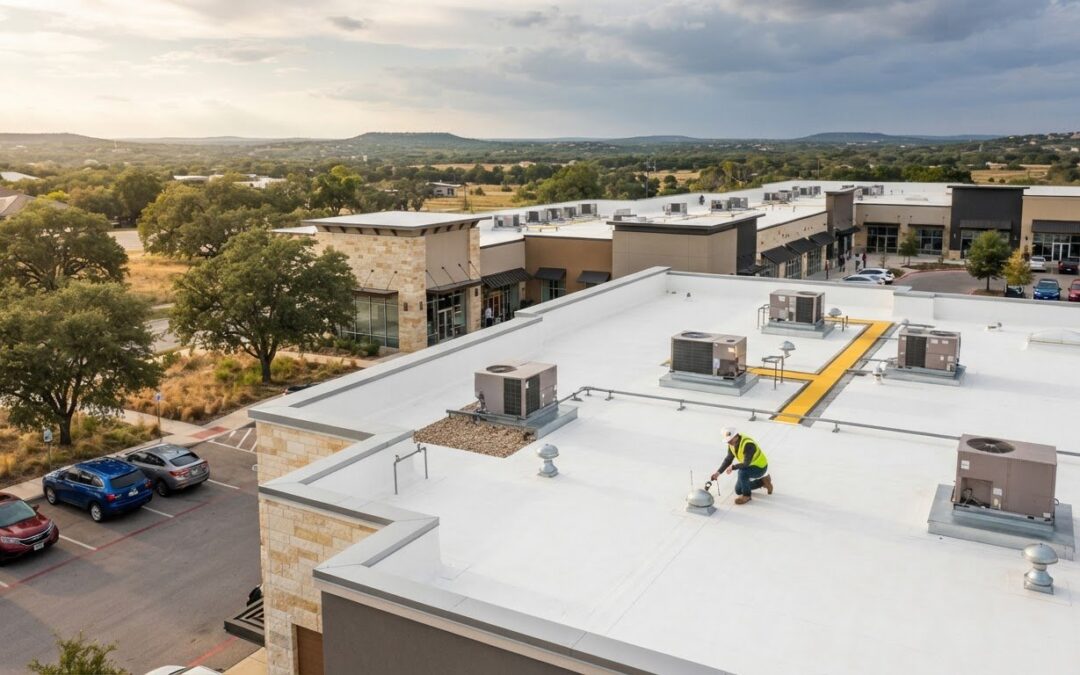
Waiting for a leak is a poor maintenance schedule. Preventative maintenance for retail strip mall roofs in Pflugerville should include inspections at least twice a year, in spring and fall, plus an inspection after severe weather. These visits help property managers catch developing problems before water reaches tenant spaces, with close attention to HVAC units, drains, flashing, seams, and roof access paths.
For a busy retail property, the challenge is keeping maintenance practical while tenants, service crews, and equipment share the roof. Pflugerville’s heat, hail, and storms can stress roofing materials and details. This guide explains how often to inspect, what to check around rooftop equipment and drainage, and how maintenance records help track defects and follow-up repairs. You’ll also learn when a property may need more frequent attention, so upkeep can reflect the building’s condition and exposure instead of waiting for a visible leak.
Key Takeaways
- Schedule roof inspections in spring and fall, and arrange another assessment after severe weather.
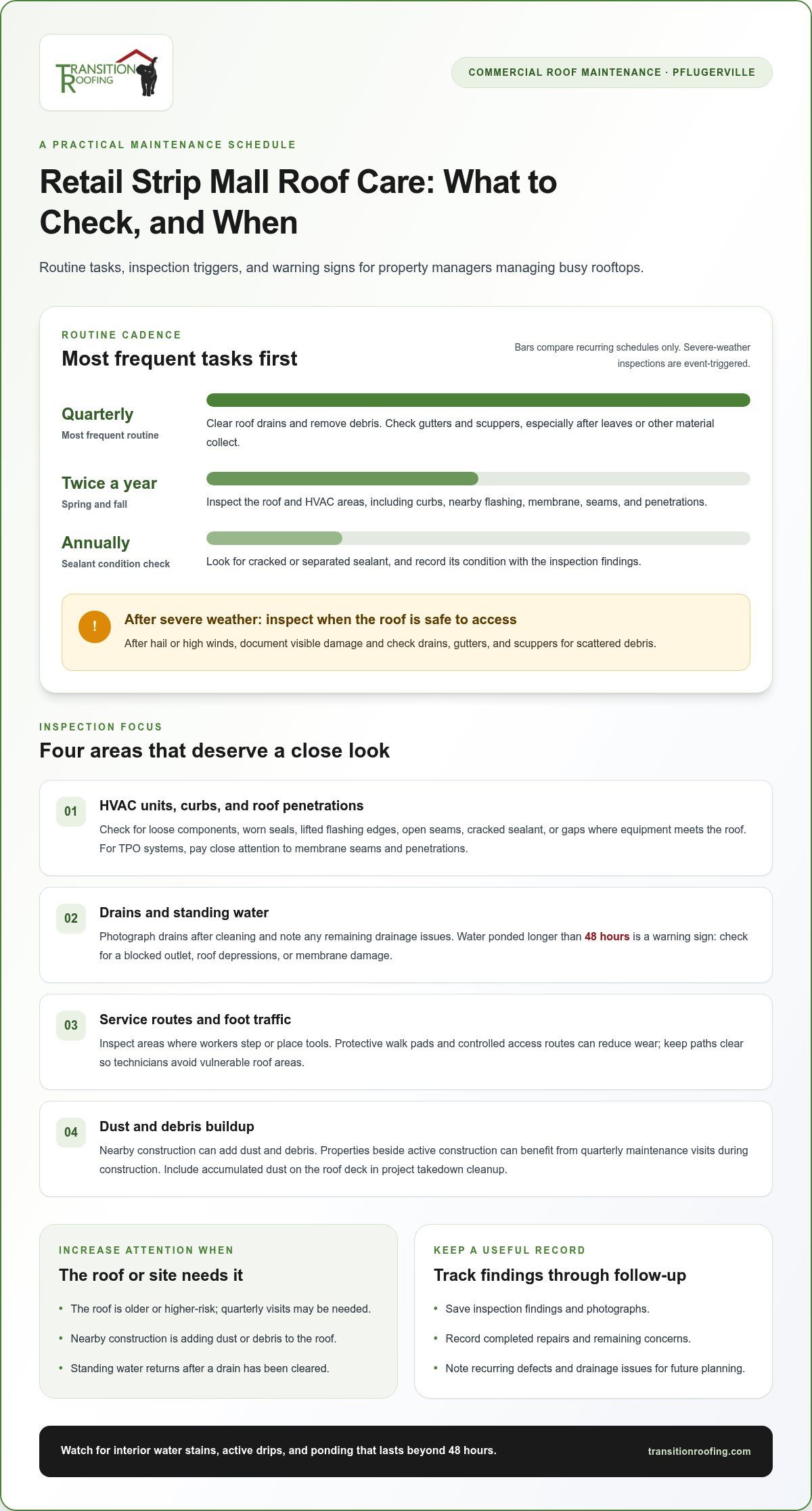
- Keep drains and roof surfaces clear on a quarterly schedule, and watch for water that remains ponded beyond 48 hours.
- Check HVAC areas twice yearly and inspect sealant annually to catch wear around roof penetrations before it leads to leaks.
- Keep records of inspection findings and completed repairs so property managers can track recurring issues and plan next steps.
Can Regular Maintenance Extend Your Roof’s Lifespan? In Austin, TX
Yes. Regular inspections help catch small defects before leaks disrupt tenants, damage interiors, or require more extensive repairs. For a Pflugerville retail center, schedule inspections in spring and fall, then after severe weather when the roof is safe to access.
See how planned roof care supports commercial properties:
Leak Prevention and Roof Lifespan
Scheduled inspection helps identify open seams, worn sealant, damaged flashing, and other leak paths before water reaches tenant spaces. Planned maintenance can reduce leaks by up to 70% and lifecycle costs by up to 40%; well-maintained roofs can last twice as long as neglected roofs. TPO roofs in Pflugerville last fifteen to twenty-five years, depending on membrane thickness, seam weld quality, and early repairs.
Before policy renewal, review the roof’s age and condition with your insurer. Ask your broker whether documented maintenance or roof condition affects underwriting.
Retail Roof Maintenance Activities
Keep a detailed record of inspection findings, photographs, repairs, and follow-up. Clear roof debris and clean drains quarterly; inspect sealant annually. After hail or high winds, arrange a safe inspection and document visible damage before scheduling repairs. Watch for interior water stains, active drips, and ponding water that remains longer than 48 hours.
During project takedown, remove accumulated dust from the roof deck. Dust can build up over time, so include the deck in the cleanup scope rather than leaving it behind.
Roof Types and Maintenance Needs
Pflugerville strip malls commonly have flat or low-slope commercial roofs, including TPO systems. TPO inspections should pay close attention to membrane seams and penetrations; other systems need checks suited to their materials and details. Focus on drainage, flashing, and areas around rooftop equipment during each inspection.
Texas code and local repair requirements depend on the scope of work. Establish applicable code and permit steps before repairs begin. Maintenance costs in Pflugerville or Austin depend on roof area, access, condition, and the work needed, rather than a single flat rate.
Maintenance Plans and On-Demand Repairs
A preventative maintenance plan for retail strip mall roofs in Pflugerville schedules recurring inspections and tracks repairs. On-demand repairs address visible problems, but they don’t replace routine checks that can reveal early wear. Set a schedule based on roof age, exposure, and operating needs; older or higher-risk roofs may need quarterly visits.
After each repair, document the work completed and any remaining concerns. These records help property managers track recurring defects, plan for replacement, and support insurance or warranty discussions.
Maintenance around HVAC units, curbs, drains, and service paths: Preventative maintenance for retail strip mall roofs in Pflugerville
Rooftop equipment, drains, and walkways concentrate activity on strip mall roofs. A focused maintenance routine checks these areas for debris, wear, and damage before small issues affect building operations.
Inspect HVAC areas twice a year, including unit curbs, nearby flashing, and the roof membrane. Look for loose components, worn seals, and damage where service workers step or place tools. Protective walk pads and controlled access routes can reduce wear from foot traffic. Keep service paths clear so technicians can reach equipment without crossing vulnerable roof areas.
Clear roof drains quarterly and remove roof debris on the same schedule. Check gutters and scuppers regularly, especially after weather scatters leaves or other material across the roof. A blocked drain can slow water flow and increase standing water on a flat or low-slope roof. Photograph each drain after cleaning, then record any remaining drainage issues for follow-up.
Water that remains ponded longer than 48 hours is a warning sign. Check whether debris blocks an outlet, then evaluate the surrounding roof for depressions or membrane damage. Clearing the drain may restore flow, but recurring ponding points to a drainage problem that needs correction. Don’t treat repeated standing water as a routine cleaning issue.
Nearby construction can increase maintenance needs. As Pflugerville grows, dust and debris may collect on roofs, so properties beside active construction can benefit from quarterly maintenance visits during construction. Remove loose material before it reaches drains, and record where buildup returns. These patterns can help managers adjust cleaning and inspection priorities.
After debris-producing weather, inspect drains, gutters, and scuppers when roof access is safe. If a blocked outlet or damaged membrane keeps causing drainage issues, commercial roof repair can address the source instead of repeatedly clearing symptoms.
Checking flashing and sealants around HVAC units and vents
Inspect HVAC areas twice a year, paying close attention to flashing around curbs, vents, and other roof penetrations. Look for lifted edges, open seams, cracked sealant, or gaps where equipment meets the roof. Water can enter through these details even when the surrounding membrane appears intact. Photograph each concern and note its location for follow-up.
Check roof sealant annually and record its condition alongside the inspection findings. Separated or cracked sealant may need attention before water reaches tenant spaces. During the same visit, inspect exposed fasteners and flashing transitions. Heat, weather, and service traffic can stress these connections and scuff nearby roofing. Keep equipment access clear and limit unnecessary foot traffic around penetrations.
A detailed inspection can include visual checks, photographs, moisture scanning, and a condition report. The report helps managers evaluate defects, prioritize repairs, and document completed work. Review the roof warranty’s maintenance requirements and keep service records; documented care can support warranties that require regular maintenance. Warranty compliance depends on following the requirements for that specific roof system.
Act promptly when a ceiling stain, drip, or damp area appears below an HVAC unit or vent. These signs may point to a flashing or sealant defect, although the roof opening may be offset from the interior mark. Arrange an inspection, trace the water path, and document affected spaces. If water is entering occupied areas, protect those spaces and treat the issue as urgent, not routine sealant upkeep.
Tailor the inspection schedule to equipment changes, service access, and previous defects. After HVAC work, check the curb and nearby flashing again, since disturbed roof details can create new entry points. Record the work date and findings in the property’s roof history. This gives managers a clear basis for maintenance decisions and warranty discussions.
Maintenance services for retail and commercial property managers
Quarterly roof inspections give retail property managers a consistent way to track wear, damage, and pooling water. For a strip mall, connect each finding to its location, tenant impact, priority, and follow-up action. This makes roof maintenance part of property operations rather than a response only after a leak.
Coordinate with tenants before roof access or repairs affect storefronts. Share the work area and timing, identify access needs, and assign one manager to collect tenant reports. If a tenant reports a ceiling stain or leak, log its location and date, then arrange an inspection. Clear communication helps limit avoidable disruption to business.
A useful commercial roofing visit turns observations into a practical work plan. Look for a condition report with photographs, moisture scanning where appropriate, repair recommendations, and clear priorities. The report should connect defects to specific areas, such as penetrations near rooftop equipment or drainage paths, and record completed repairs. Managers can use these records to track recurring issues and support warranty discussions.
- Prioritize active leaks that threaten tenant spaces or inventory.
- Schedule repairs for open seams, damaged flashing, or deteriorated roof details.
- Track follow-up with dated photos and notes showing the repair location.
When evaluating a commercial roofing contractor in Pflugerville, review the inspection scope, condition report, repair priorities, and documentation process. A detailed assessment should explain what needs attention now and what can be monitored, rather than treating every defect as equally urgent. If the roof has documented maintenance requirements, include warranty compliance in the review.
When inspection findings point to repair work or a broader roof concern, use commercial roofing support to plan the next step. A clear scope helps property managers coordinate work, keep tenants informed, and document the outcome.
Transition Roofing: Commercial Roof Installation
Transition Roofing helps Pflugerville property managers address roof damage and plan commercial roof installation when recurring repairs no longer fit the roof’s condition. Its commercial roof repair can address specific defects, while TPO Roofing Systems and Metal Roofing Systems offer installation options for commercial properties.
Consider a professional assessment when inspections show repeated leaks, widespread membrane wear, or repairs across multiple roof areas. A clear evaluation can help you compare targeted repairs with a larger installation project and identify the next practical step for the building.
For help with commercial roof concerns, contact Transition Roofing or visit Transition Roofing online.
Make Roof Care Part of Your Next Property Plan
Set a clear next step for your property: assign responsibility for inspection records, tenant reports, and repair follow-up. When someone owns these tasks, roof concerns are less likely to get lost between leasing, facilities, and daily operations. A written maintenance plan also gives decision-makers a useful starting point when reviewing future work.
Use the building’s current condition to guide the plan. If recurring defects or broader wear raise questions about repair versus replacement, an experienced roofing professional can assess the roof and outline practical options. That assessment makes preventative maintenance for retail strip mall roofs in Pflugerville easier to manage as part of a long-term property strategy.
Transition Roofing can help you discuss the roof’s needs and next steps. Contact Transition Roofing to discuss roof maintenance, and take a steady step toward better-planned care for your property.
Frequently Asked Questions
How often should a retail roof be inspected?
Schedule a professional inspection in spring and fall, and after severe weather when roof access is safe. Add an inspection if tenants report water stains, a leak, or unusual HVAC problems. Comparing dated photos from each visit helps property managers spot changes, such as an opening seam or a new stain, and decide which issue needs attention first.
Can hail damage a membrane roof if there is no visible hole?
Yes. Hail damage may not be obvious from the roof surface, so the absence of a hole doesn’t rule out a problem. After a hailstorm, look for changes around seams, flashing, rooftop equipment, and interior ceilings. Arrange a professional assessment if tenants report leaks or new stains, and keep photos and inspection notes with the property’s storm records.
How Often Should Commercial Roof Maintenance Be Performed?
Plan maintenance at least twice a year, then adjust the schedule to roof age, exposure, and site activity. An older roof or nearby active construction may need quarterly visits while that exposure continues. For a newer roof with low exposure, an annual maintenance contract may suit the property. Add the schedule to the building’s operations calendar so visits don’t depend on memory.
How does preventative maintenance impact insurance premiums for a retail center?
Maintenance records don’t guarantee lower premiums, but they can help document roof condition during an underwriting review. Before policy renewal, organize inspection reports, repair records, and dated photographs. Ask your broker whether the carrier considers roof condition or documented maintenance when reviewing the property. Clear records also help show when a defect appeared and what follow-up work addressed it.
What Does a Professional Maintenance Visit Include?
A professional visit can include a visual roof inspection, debris removal, exposed-fastener sealing, flashing checks, and photographs documenting conditions. Depending on the roof and concerns, an assessment may also include moisture scanning, a condition report, repair priorities, maintenance recommendations, and warranty review. Ask for findings that identify each concern’s location on the roof and the recommended next action.
How often should retail strip mall roofs in Pflugerville, Texas be inspected?
In Pflugerville, arrange inspections in spring and fall, with another assessment after severe weather when access is safe. Keep records in one property file, whether the center is in Pflugerville, Austin, Round Rock, Cedar Park, Lakeway, Hays, Bear Creek, San Leanna, Rollingwood, West Lake Hills, Buda, Kyle, or Bee Cave. A shared file helps managers track roof conditions across locations.