
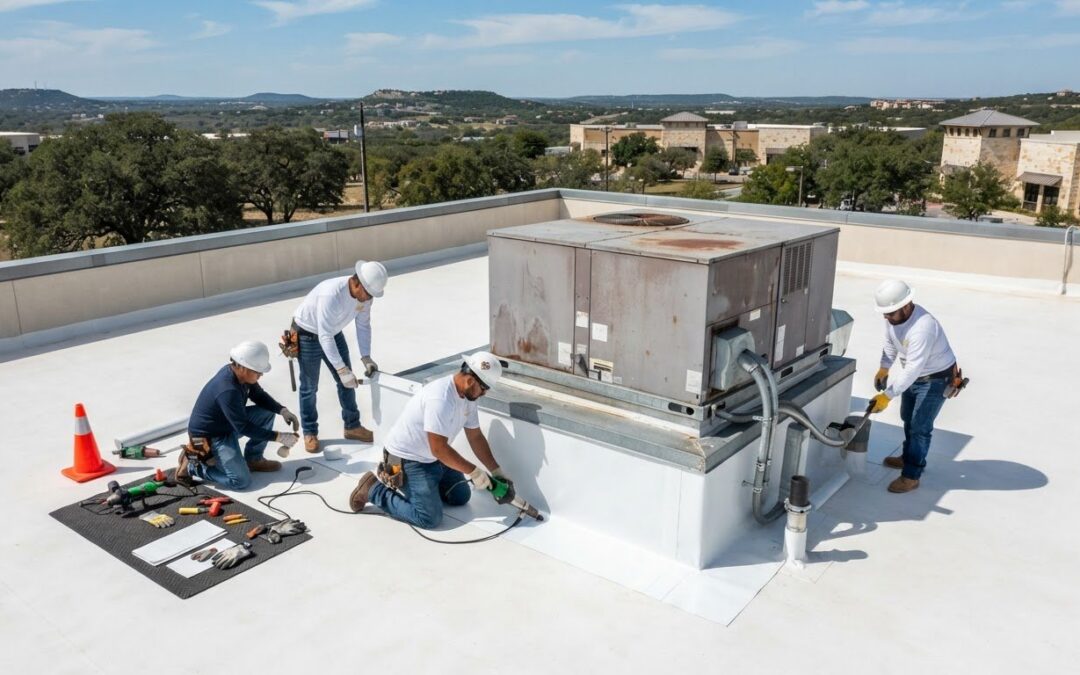
A leaking HVAC curb needs more than a bead of sealant. TPO flashing repair around HVAC units in Round Rock should restore a watertight connection between the curb and roof membrane, using heat-welded TPO flashing compatible with the roof system. If a unit is added, replaced, or resized, the curb and surrounding membrane may need to be rebuilt to fit.
In occupied buildings, roof work also needs to protect people and operations below. Coordinate the repair with HVAC work, limit odors and fumes, and keep facility staff informed, especially in sensitive spaces.
This guide covers how to assess and repair HVAC curb flashing, seal nearby rooftop lines and conduit, and decide when replacement is the better fix. It also explains how to phase work to reduce disruption and what to consider when planning commercial roof repairs in Round Rock.
Key Takeaways
- Check the HVAC curb and nearby membrane together; a leak that seems to move may still trace back to the rooftop unit.
- For lines, pipes, and conduit, the right flashing detail depends on how many penetrations are present and how closely they’re grouped.
- Watch for lifted flashing, damaged seams, loose sealant, or water stains below rooftop equipment, especially after storms or service work.
- Repair scope and cost depend on the condition of the membrane, curb, and penetrations, plus whether the HVAC unit has changed size or position.
HVAC curb flashing repair and replacement
In Austin and Central Texas, curb flashing repairs start by tracing the leak and inspecting the curb, flashing, and surrounding membrane. If an HVAC unit changes size or position, the roof opening and flashing must fit the new curb.
Watch this GAF Roofing video for a visual guide to TPO flashing details on curbs and walls.
Applicable Codes and Manufacturer Requirements
Round Rock roof work must meet applicable building requirements and follow the roof system’s manufacturer-approved details. Using compatible materials and approved methods helps protect the roof warranty. A qualified contractor should identify the installed membrane system and explain how the repair will tie into it. For facility managers evaluating service providers, resources like Contractor Stack can help connect teams with skilled trade specialists. Review the written scope for work on the curb, flashing, and surrounding membrane.
Signs of Flashing Failure
Look for lifted flashing, open seams, separated sealant, or water stains below the HVAC unit. A leak that seems to move may still originate near the closest rooftop unit. Delaying repairs can let moisture reach roof components and interior finishes. The U.S. Environmental Protection Agency notes that excess moisture can foster mold, dust mites, and some bacteria.
Repair Cost Factors
The repair scope depends on the damaged area, curb condition, access, and whether the surrounding membrane also needs work. A resized or replaced unit may require rebuilding the curb detail. On occupied buildings, phased work and coordination with facility staff can affect the scope. Austin’s heat and temperature changes also matter because membrane materials must be handled under suitable conditions.
Repairing Without Replacing the Membrane
Yes. If damage is limited to the curb flashing and nearby membrane is sound, a localized repair can avoid replacing the entire roof. TPO flashing is heat-welded to compatible membrane. If damage extends beyond the curb or the opening no longer fits the unit, the repair must address those conditions as well. Photographs can document the completed flashing work.
Sealing rooftop lines, pipes, and conduit in Austin, TX
HVAC equipment connects to several roof penetrations, including refrigerant lines, condensate drains, gas piping, and electrical conduit. Each opening interrupts the TPO surface and needs a compatible flashing detail. A loose seal around one pipe can let water beneath the membrane, even when nearby seams look sound.
First, identify each penetration and check its condition, spacing, and movement. A pipe boot designed to create a watertight seal may suit a single pipe. Closely grouped or irregular lines may need fluid-applied flashing, which can cover complex shapes more effectively than separate rigid details.
A TPO repair must be compatible with the existing roof system. Heat-welded TPO flashing can connect compatible membrane to the roof surface. Check whether a boot is split, a joint has shifted, or rooftop work has disturbed the surrounding membrane. Applying sealant over damaged flashing does not repair the underlying connection.
Plan work around operating equipment and building use. Lines may be moved or handled during HVAC service, so coordinate roof access with the mechanical work. In occupied or sensitive facilities, phase the work and tell staff where and when crews will be working. Choose application methods and materials that limit odors and fumes entering the building.
Manufacturer-approved details and materials help protect the roof warranty. After installation, review the completed seals and surrounding membrane, then document the work with photographs. If several penetrations need attention, commercial roofing guidance can help frame the repair scope around the existing system.
TPO flashing repair around HVAC units Round Rock: signs to watch in Austin, TX
Interior patterns can help determine whether water is entering near rooftop equipment. A ceiling stain that grows after rain points to a possible exterior leak, while moisture that appears during HVAC operation may also warrant checking condensate drainage. Keep a simple record of rainfall, equipment use, and when damp spots appear. This timeline gives an inspector useful context.
Look beyond a single ceiling mark. Peeling paint, warped ceiling tiles, damp insulation, or recurring moisture in the same room can signal water entry above. Water may travel along roof layers or building components before appearing indoors, so the visible spot may not be directly below the entry point. Note which rooms and surfaces are affected rather than assuming the HVAC unit above is responsible.
Round Rock property teams can make their observations more useful by comparing them with maintenance records. Note whether moisture appeared after heavy rain, a roof visit, or a change in HVAC operation. Check whether the same area has shown symptoms before and whether it is near a rooftop unit, drain, or connected line. This information can help distinguish a roof concern from a mechanical issue.
- Record the date and conditions each time moisture appears.
- Mark the affected room and the visible direction of water marks.
- Note any changes in HVAC use or recent rooftop work.
- Share the timeline and observations during the roof inspection.
Recurring indoor moisture deserves attention even when the roof looks unchanged from the ground. A roofing inspection can compare the interior pattern with the curb layout and nearby roof details. In Austin and Central Texas, clear observations help focus the inspection on likely leak sources without treating every HVAC-related stain as proof of flashing failure.

What does TPO HVAC unit flashing repair cost in Round Rock, Texas?
A TPO HVAC flashing estimate should reflect the work needed at the curb and surrounding roof. Key factors include the damaged area, membrane condition, curb shape, and access around rooftop equipment. A small weld repair differs from replacing flashing around a curb with torn or separated membrane.
The scope may expand if a unit has been moved, resized, or replaced. The roof opening and curb may need adjustment before new flashing can fit correctly. Nearby pipes, conduit, or refrigerant lines can add detail work, especially when penetrations are closely grouped. Ask for an estimate that separates curb repairs from work on the surrounding membrane or penetrations.
Access and building operations matter, too. Work may need to be planned around active HVAC equipment, roof access limits, and occupied spaces. Sensitive facilities may require phased work and careful coordination with staff. These considerations affect labor and scheduling, even when visible damage appears limited.
Before approving the work, review the inspection findings and written scope. It should explain:
- Which curb edges, seams, or membrane areas need repair.
- Whether existing TPO can be tied into the repair.
- Whether the curb or roof opening needs modification.
- How nearby lines, pipes, or conduit will be sealed.
- What materials and manufacturer-approved details will be used.
For example, a sound curb with one failed seam may need only localized flashing work. A replacement HVAC unit that does not fit the existing curb may require broader roof modifications. Comparing the scopes helps explain differences in the proposed work without relying on a generic price per unit. Round Rock’s heat and storm exposure also make timely inspections useful, since damage may extend beyond the first visible leak.
If a leak or damaged flashing needs a defined repair scope, request commercial roof repair guidance for the roof conditions and HVAC layout.
Transition Roofing: Commercial Roof Installation
Transition Roofing helps Round Rock property managers address damaged HVAC flashing through commercial roof repair and TPO Roofing Systems. Contact the team when a curb leak returns, roof penetrations need coordinated repairs, or an HVAC change calls for roofing work that fits the existing system. If damage extends beyond the flashing, a roof assessment can help determine whether repair or commercial roof installation better suits the building.
For occupied facilities, share operating hours, sensitive areas, and any planned HVAC work. This context helps shape a practical repair scope and coordinate roofing with building needs. Transition Roofing also offers Metal Roofing Systems for commercial projects where that option fits.
Contact Transition Roofing to discuss HVAC flashing or commercial roofing in Round Rock.
Plan the next step for your roof
Recurring leaks around rooftop equipment are a reason to turn repair findings into a clear roof plan. For property managers considering TPO flashing repair around HVAC units in Round Rock, the next step is to align the roofing scope with facility operations and planned HVAC work. This keeps decisions organized, especially when a localized repair may connect to broader roof needs.
Transition Roofing provides commercial roof repair, TPO Roofing Systems, and Commercial Roof Installation. These services can address a focused flashing problem or a larger roofing project. A site discussion can clarify which approach fits the roof’s condition and the facility’s priorities.
Contact Transition Roofing to discuss your commercial roof and take the next step toward a well-planned repair.
Frequently Asked Questions
How Should This Work Be Handled on Occupied and Sensitive Facilities?
Plan roof work around the facility’s operating needs. Before work begins, coordinate the schedule and work area with facility staff, then phase tasks to limit disruption. For sensitive spaces, choose application methods and materials that reduce odors and fumes entering the building. Crews should follow facility safety and operating procedures, while staff receive clear updates about access, timing, and equipment interruptions.
What Does HVAC Roof Repair Work Include?
HVAC roof repair may involve inspecting the curb, membrane, rooftop connections, and drainage near the unit. The scope can include flashing, a damaged seam, or penetrations for refrigerant lines, condensate drains, gas piping, and electrical conduit. If a unit is being replaced or resized, the roof opening and curb detail may also need adjustment to fit the equipment and restore the surrounding membrane.
Why Are HVAC Units Such a Common Source of Roof Leaks?
HVAC units sit on curbs that interrupt the roof surface, and their connected lines create additional penetrations. Rooftop service can bring foot traffic, tools, and equipment handling close to these details. For example, a technician moving a line or setting down a tool may disturb flashing or a sealant joint. Water can then enter at that weak point and travel before appearing indoors.
How is flashing repaired around HVAC units on a TPO roof?
A repair starts by locating the leak and inspecting the curb and nearby membrane. The damaged area is prepared, then compatible TPO flashing is fitted and heat-welded to the roof membrane to restore a continuous seal. If the HVAC curb or roof opening has changed, the flashing detail must fit the new layout. Review and document the finished work for facility records.
What TPO-compatible materials and repair methods are used for HVAC curb flashing?
Repairs use TPO membrane and flashing compatible with the existing roof system, with heat-welded seams connecting the materials. The right detail depends on the curb’s shape and condition. A pipe boot can seal an individual pipe, while fluid-applied flashing can suit closely grouped or irregular penetrations. Manufacturer-approved details help keep the repair aligned with the roof system’s requirements.
What steps are involved in inspecting and repairing TPO flashing around an HVAC curb?
Start by tracing the leak and examining each side of the curb, its flashing, and the surrounding membrane. Check nearby seams, rooftop lines, and drainage for related issues. Then determine whether the damage is limited to flashing or includes the curb or roof opening. Complete a compatible repair, inspect the finished connections, and photograph them. These records help facility teams track roof work and future changes.