
Commercial TPO roof replacement cost in Cedar Park has no single fixed figure. Roof size, tear-off needs, insulation, and roof-deck condition all affect the project total, so a limited repair and a full replacement are not comparable.
It’s reasonable to want a clear budget before committing to a major roofing project. A useful estimate covers the complete roofing system, not just the membrane: thickness, roof preparation, and warranty terms all affect the scope. This article explains how these choices shape commercial TPO replacement costs in Cedar Park and Austin, TX. Central Texas heat, hail, and storms also make roof condition and long-term protection important factors.
Key Takeaways
- Build a realistic budget around the full project scope, including tear-off, insulation, and any repairs to the roof deck.
- Compare TPO system options by membrane thickness, installation needs, and the protection each warranty covers.
- A recover may reduce project scope when the existing roof is sound and dry, but roof condition and system requirements matter.
- Use the roof’s size, condition, and exposure to Austin’s heat, hail, and storms to guide the replacement plan.
How much does commercial roofing cost in Austin, TX?
Commercial replacement budgets in Austin depend on roof area, the existing system, and the work needed beneath the membrane. For a Cedar Park property, an inspection defines the scope, including repairs, penetrations, insulation, and warranty requirements.
Watch this overview of TPO replacement cost factors and line items:
Tear-Off and Disposal Costs
Tear-off removes the existing roof, while disposal covers handling and hauling the removed material. These tasks add labor and debris costs to installation, but can expose wet insulation or damaged decking that needs attention. NOAA Storm Prediction Center recorded nickel-to-chicken-egg-size hail near Cedar Park for 20 minutes, underscoring why inspection should assess storm impacts before replacement scope is set.
Cedar Park TPO Replacement Pricing
Commercial TPO roof replacement cost in Cedar Park depends on roof size, tear-off, insulation, deck repairs, penetrations, and system design. Larger roofs need more membrane and labor, while concealed damage can add work. The project total is based on measured roof area and a documented scope, not roof size alone. Tax credits, rebates, and insurance coverage depend on applicable programs, policy terms, and the reason for replacement.
In Cedar Park, non-structural roof-covering work is exempt from a permit requirement. Structural work and applicable building-code requirements can affect the project scope, so the planned work matters.
Comparing Roofing System Costs
TPO, EPDM, PVC, and modified bitumen use different materials and installation methods, so compare proposals with matching scopes. TPO and PVC installation costs reflect roof preparation, insulation, flashing, and warranty choices, not just the membrane. Restoration coatings may suit eligible roofs, but the roof’s condition and required preparation determine the work. In Austin, TX, an assessment of the existing roof and specified materials makes system comparisons more useful than comparing material names alone.
See how a commercial roofing system is scoped for Austin properties.
Commercial roofing systems for flat and low-slope roofs in Austin, TX
A flat roof system includes the roof surface, insulation, membrane, and flashing around edges and penetrations. In Austin, heat, hail, and storms make material selection and roof condition important parts of the design.
Texas TPO Cost Ranges
Texas commercial TPO costs vary depending on whether the project is a recover or full replacement. A recover installs over one sound, dry, structurally suitable layer. A full replacement removes the existing system and may include insulation or deck work. Roof area, access, drainage, and flashing details shape the scope, so compare estimates only when they describe the same work.
For Austin’s Central Texas climate, owners should consider heat exposure, storm damage, and how the roof handles water. TPO seams are heat-welded, and a white surface reflects sunlight. The roof’s drainage and surface condition still matter: standing water or damaged insulation can change which system is suitable. TPO systems are estimated to last 15-25 years with proper installation and maintenance.
To compare proposals, line up the included work: membrane, insulation, edge details, penetrations, tear-off, repairs, and warranty terms. For example, one estimate may include deck repairs while another excludes them. A clear scope lets owners compare the work and responsibilities, not just material names. It also shows whether the proposed system suits the existing roof and building use.
Commercial Roofing and TPO Services
Commercial roofing services can address leaks with targeted repairs or replace a worn system with a new installation. The right scope depends on roof condition: a localized problem may call for repair, while widespread membrane or insulation damage may point to replacement. For Austin flat roofs, an inspection of seams, penetrations, drainage, and substrate helps define the work.
For a roof-specific plan, explore commercial roofing in Austin and the system options suited to your building.
Membrane thickness and warranty options in Austin, TX
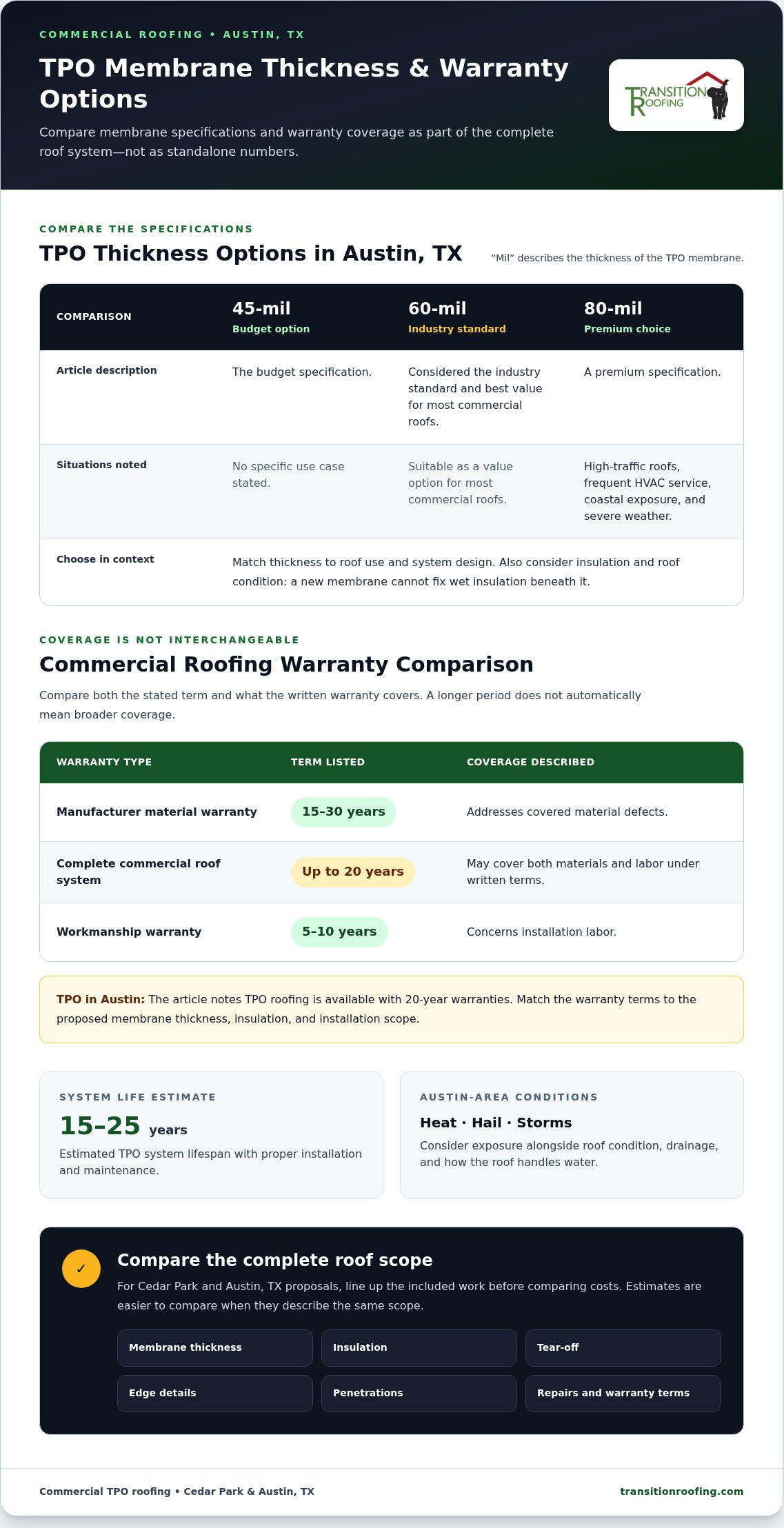
TPO membrane thickness and warranty terms affect the protection specified for a commercial roof. Compare them alongside insulation, roof use, and expected weather exposure before choosing a replacement system.
Choosing TPO membrane thickness
Common TPO membrane specifications are 45-mil, 60-mil, and 80-mil. The mil measurement describes membrane thickness. A 45-mil membrane is the budget option, while 60-mil is considered the industry standard and best value for most commercial roofs.
An 80-mil membrane is a premium choice for high-traffic roofs, frequent HVAC service, coastal exposure, and severe weather. For example, regular equipment access can make the heavier specification worth considering. The right choice depends on how the roof is used and the system design, not thickness alone.
Insulation and roof condition also matter during TPO replacement. A new membrane cannot fix wet insulation beneath it. If the existing assembly needs removal or repair, that work affects the replacement scope. Match the membrane specification to the complete roof assembly and the building’s use.
Understanding warranty options
Commercial roofing warranties can cover different parts of the project. Manufacturer material warranties listed for commercial roofing range from 15-30 years. Complete commercial roof systems may have warranties of up to 20 years covering materials and labor. Workmanship warranties for commercial roofing labor range from 5-10 years.
These warranty terms are not interchangeable. A material warranty addresses covered material defects; a workmanship warranty concerns installation labor. A system warranty may combine material and labor coverage under written terms. Compare the coverage period and what each warranty includes, rather than choosing by duration alone.
TPO roofing in Austin is available with 20-year warranties. Before selecting one, match its terms to the proposed membrane thickness, insulation, and installation scope. Clear alignment helps owners understand which parts of the completed roof receive coverage.
Austin-area commercial roof replacement cost ranges
Commercial roof replacement budgets in Austin vary with roof size and included work. For a useful comparison, separate membrane installation from tear-off, insulation, deck repairs, and upgrades. Central Texas heat, hail damage, and storm exposure also matter when selecting materials and planning long-term protection.
Labor typically accounts for 40-60% of commercial roof replacement costs in Austin. That share helps explain why access, roof layout, and penetrations matter alongside material selection. A complex roof with equipment, edges, and drainage details takes different work than a broad, open surface. For aging systems, budgeting a 5-15% contingency for unforeseen substrate repairs can help account for concealed damage.
Use a consistent scope to compare Austin-area estimates. Check whether each includes removal and disposal of the existing roof, insulation work, flashing, and repairs to damaged decking. Compare the specified membrane and warranty terms, too. A lower total may cover less work, while a more complete scope can include necessary preparation. Manufacturer requirements and roof condition help determine which system and details fit the building.
Energy goals can shape the choice, too. A reflective white TPO surface is estimated to reduce cooling costs by 15-20% in Austin’s climate. That benefit should be weighed alongside roof condition, drainage, and exposure to weather, not treated as a replacement for proper design. The takeaway: compare the scope, system, and included repairs before judging a total by its square-foot figure alone.
If hail or storms have damaged the roof, document visible issues and arrange an inspection before planning replacement. A clear assessment can distinguish localized repairs from wider system needs. Explore commercial roof replacement options for Austin-area buildings.
Transition Roofing: Commercial Roof Installation in Austin, TX
Transition Roofing provides commercial roof installation for property owners planning a new system or replacing a worn roof. Its TPO roofing systems suit flat and low-slope buildings, while commercial roof repair can address localized leaks or damage before they spread.
The right next step depends on the roof’s condition. Widespread membrane wear, recurring leaks, or damaged areas may call for a replacement plan and system comparison. If the issue is limited, commercial roof repair may be the more suitable starting point. Transition Roofing also installs metal roofing systems when another material better suits the project.
Discuss your building’s needs with Transition Roofing, from targeted repairs to full commercial roof installation. Contact the team to talk about your project or visit transitionroofing.com.
Move Forward With a Clear Roofing Plan
Understanding commercial TPO roof replacement cost in Cedar Park is one part of planning. The next step is defining a project scope around the roof’s condition, building operations, and the protection you want from the completed system. This gives property owners a practical basis for deciding whether to plan a replacement or address specific issues first.
Before work begins, gather roof observations, maintenance records, and details about leaks or storm damage. A focused discussion with Transition Roofing can clarify next steps for your property and help identify a suitable scope.
Transition Roofing can discuss commercial roof installation, TPO roofing systems, or commercial roof repair for your building. Contact Transition Roofing today to talk through your commercial roofing needs and take the next step with confidence.
Frequently Asked Questions
So, How Much Does a TPO Roof Cost?
TPO roof replacement costs depend on the building’s roof area and the work included. A roof with difficult access, multiple rooftop units, or damaged sections needs a different scope from a simple, open roof. Compare proposals by checking whether they include removal, insulation, flashing, and repairs. This makes differences in project totals easier to understand.
What Is TPO Roofing?
TPO stands for thermoplastic polyolefin, a single-ply membrane used on many commercial flat and low-slope roofs. Installers heat-weld the sheets together at the seams. The membrane forms the exposed roof surface, while insulation and other components beneath it complete the assembly. For example, a warehouse roof with rooftop equipment needs careful detailing around each unit to protect the seams.
Do You Offer TPO Roof Replacement in Austin?
Yes. Transition Roofing installs TPO roofing systems and provides commercial roof installation in the Austin area, including Cedar Park and Central Texas communities such as Round Rock, Pflugerville, Cedar Park, Lakeway, Hays, Bear Creek, San Leanna, Rollingwood, West Lake Hills, Buda, Kyle, and Bee Cave. A replacement plan should account for building operations, rooftop equipment, access needs, and areas where leaks have appeared. Sharing these details helps shape a scope around the property’s use.
Do You Offer Warranties on Commercial Roofing Work?
Yes. Transition Roofing offers manufacturer-backed warranties on materials and workmanship warranties, and many systems include a transferable lifetime warranty. Terms vary by system, so review the written coverage for the specific installation. A future property owner, for example, may value transferability, while a facilities manager may focus on the workmanship coverage.
Is TPO Worth the Investment?
TPO can suit a commercial building when the system design matches its roof, use, and maintenance needs. A property with a broad, low-slope roof may benefit from a single-ply system, while frequent rooftop service calls make access paths and equipment details important. Consider expected upkeep and written warranty coverage alongside the project scope when comparing options.
Is TPO Worth the Cost?
TPO is worth considering when its performance and maintenance needs align with the property’s long-term plans. A facility owner planning to keep the building may weigh durability and warranty terms differently from an owner preparing to sell. Review roof condition, maintenance needs, and operational demands together to determine whether TPO suits the building better than another system.