
What if water pooling on your commercial roof isn’t caused by a clogged drain? Fixing commercial roof drainage issues starts with finding the cause, whether it’s debris, a blocked outlet, or a roof surface that isn’t directing water toward the drain. In Austin, TX, heavy storms can expose drainage problems quickly, putting the roof, interior, and daily operations at risk.
Standing water or slow drainage after rain is a reason to investigate, but the right repair depends on what’s failing. This guide covers warning signs, how to distinguish a blockage from a slope or system problem, and practical steps to help protect your building.
Transition Roofing serves residential and commercial customers in Austin and Central Texas. With 15+ years of local experience and knowledge of Central Texas codes and climate, our insured, manufacturer-certified installers provide roofing guidance and service. Here’s what to look for and when to plan an inspection.
Key Takeaways
- Track where water collects, how long it remains, and whether drains or scuppers overflow to help pinpoint the trouble area.
- Fixing commercial roof drainage issues starts with finding whether debris, clogged components, or a broader system problem is interrupting water flow.
- Removing accessible debris can help with basic upkeep, but recurring ponding calls for a closer look at the roof and drainage system.
- Arrange an inspection if pooling returns, water enters the building, or drainage problems suggest the roof isn’t directing water properly.
How to spot commercial roof drainage issues in Austin, TX
Fixing commercial roof drainage issues starts with a careful look after rain, not a guess based on one puddle. Track where water collects, whether it drains away, and what happens at roof edges and inside the building. In Central Texas, heat, hail, and storms can affect roof surfaces and drainage components, so patterns over time matter.
Roof ponding is water that remains on the roof after rainfall has ended. Where it sits and whether it persists can point to a blocked drain or an area that isn’t draining properly. Slow drains, overflowing scuppers, and water marks on walls or ceilings are signs to record.
Routine inspections can help identify drainage concerns before they lead to interior leaks. This video offers another perspective on commercial roof maintenance:
What to record after rain
From a safe location, photograph standing water, overflow marks, and visible interior staining. Note where each pool forms, which drains appear slow, and whether overflow reaches a wall or runs toward an entrance. Don’t send staff onto a wet or unsafe roof. Record when you noticed the issue and whether it returns after later storms.
Which drainage components should be assessed?
Internal roof drains collect water from the roof surface and carry it into the drainage system. Scuppers are openings through a roof edge or parapet that let water flow out. Gutters catch water at the roof edge, while downspouts carry it away from the building. The Rain gutter Wikipedia article gives a general overview of gutter types and purpose.
Look for water marks below scuppers, overflowing gutters, or pooling near drain locations. A commercial roof assessment can check how these parts work together. Transition Roofing provides commercial roofing in Austin.
Why commercial roof drainage fails in Austin, TX
Drainage trouble often starts with a blockage. Leaves, dirt, and other debris can cover a drain basket, while buildup inside a drain can slow water flow. A blocked scupper can keep water from escaping over a roof edge. If gutters fill with debris or downspouts are obstructed, water may spill over instead of moving away from the building. These signs can indicate a maintenance need, but they don’t confirm the full cause.
Blockages versus slope or capacity problems
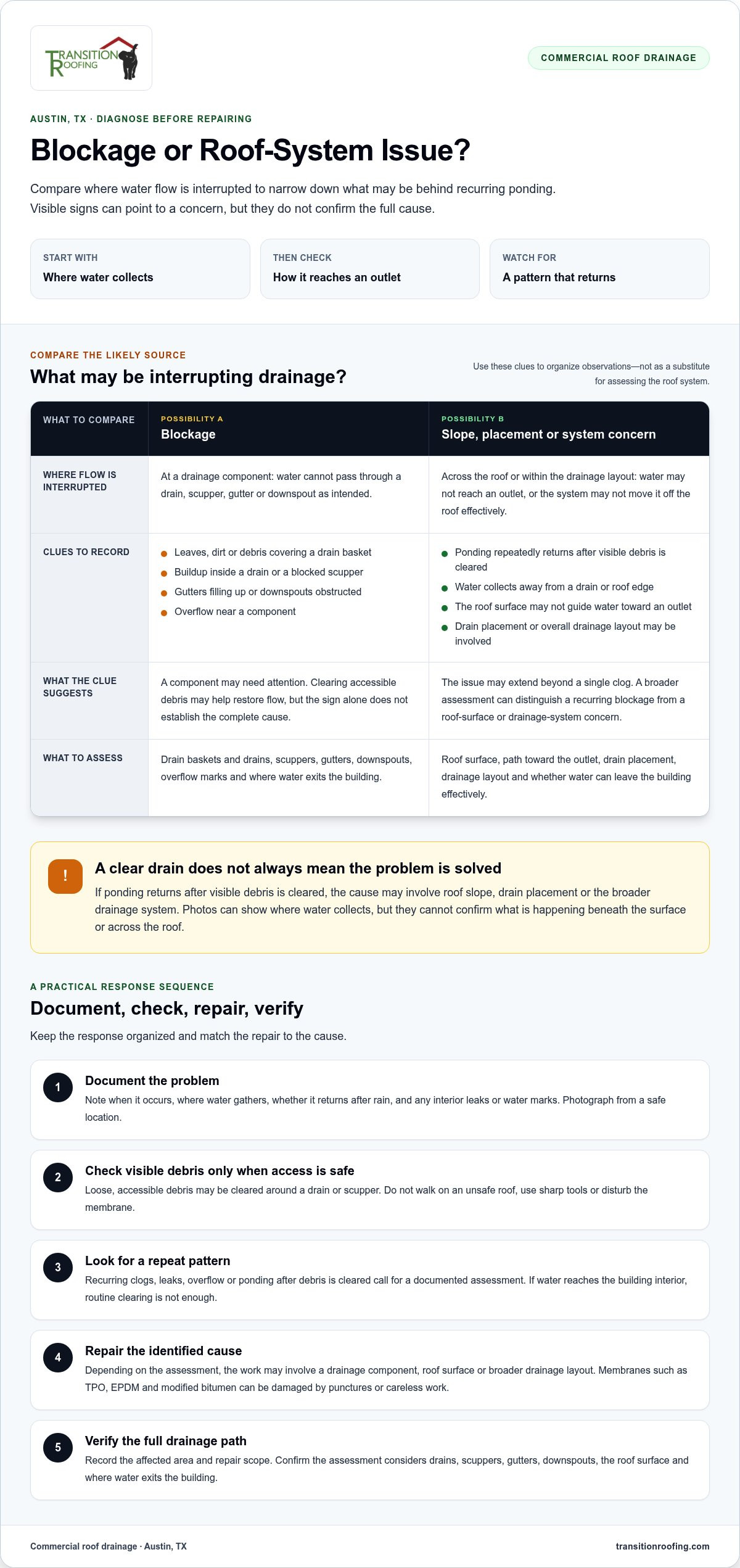
A blockage interrupts water at a drainage component, while a slope concern affects how water travels across the roof toward that component. Clearing visible debris may help, but if ponding keeps returning, the cause may involve drain placement, roof slope, or whether the system can move water off the roof effectively. Photos can show where water collects, but they can’t confirm what’s happening beneath the surface or across the roof. A broader assessment can distinguish a recurring clog from a roof-system issue.
How low-slope roofing systems move water
A low-slope roof isn’t perfectly level. Its surface should guide water toward drains or roof edges so it can leave the building. This is called positive drainage. If the slope directs water away from a drain, or a drain sits poorly for the roof layout, water may collect even when the drain itself is clear. The National Roofing Contractors Association offers roofing resources that can help owners understand sound roof practices.
Fixing commercial roof drainage issues means identifying whether water is being blocked or isn’t reaching the outlet. If ponding returns after visible debris is cleared, a professional assessment of commercial flat roof systems can help clarify the next step.
How to fix commercial roof drainage issues in Austin, TX
Fixing commercial roof drainage issues takes more than clearing the spot where water collects. Match the repair to the cause, then confirm that water can travel from the roof surface to a safe exit point. Use this workflow to keep the response organized and protect the roof from added damage.
- Document the problem. Note when it occurs, where water gathers, and whether the issue returns after rain. Save photos taken from a safe location and record any interior leaks or water marks.
- Check for visible debris only if access is safe. Clearing loose, accessible debris may restore flow around a drain or scupper. Don’t walk on an unsafe roof, use sharp tools, or disturb the membrane.
- Look for a repeat pattern. Recurring clogs, leaks, overflow, or ponding after debris is cleared call for a documented commercial roof assessment. If drainage problems return or water reaches the building interior, routine clearing isn’t enough.
- Repair the cause. Depending on the assessment, work may involve a drainage component, roof surface, or broader drainage layout. TPO, EPDM, modified bitumen, and other roof surfaces can be damaged by punctures or careless work, so membrane repairs need a suitable professional approach.
- Verify the drainage path. Record the affected area and repair scope for building maintenance files. Confirm the inspection considers drains, scuppers, gutters, downspouts, roof surface, and where water exits the building.
A DIY attempt may seem straightforward, but roof access creates safety risks, and membrane work can turn a drainage issue into a leak. Photos can help document symptoms, but they can’t establish the cause of recurring ponding. A commercial roof assessment in Austin can help distinguish a limited blockage from a repair or drainage-layout concern.
If your building has repeat ponding or leaks, contact Transition Roofing about commercial roof repair for a clear plan to address the drainage problem.
When to call for commercial roof drainage repair in Austin, TX
Arrange an inspection if ponding returns, leaks appear, a drain or scupper overflows repeatedly, or water seems unable to reach the outlets. These signs can come from a blocked or damaged component, but they may also point to slope, layout, or roof-surface concerns. Finding the cause helps define the repair scope before a small drainage issue causes more disruption.
What a commercial drainage assessment can lead to
Repair scope depends on what the inspection finds: the location and extent of damage, the components involved, roof access, and whether the work is a focused repair or calls for broader drainage changes. A drain or gutter repair differs from work involving the roof membrane or replacement. Transition Roofing provides free, no-obligation estimates with transparent pricing and no hidden fees, so you can review the work needed. Flexible financing is available.
Transition Roofing serves both residential and commercial customers in Austin and Central Texas. Commercial services include roof repairs and replacement, flat roofing, TPO, EPDM, modified bitumen and metal roofs, roof coatings, skylight installation, green and cool roofing, solar roofing integration, roof insulation, drain and gutter systems, emergency service, and maintenance programs. Energy-efficient commercial options are available.
Residential services include roof repairs, replacement, detailed inspections, routine maintenance, asphalt shingles, metal, tile and flat roofing, emergency roof repairs, storm-damage restoration, roof cleaning, gutter and downspout services, roof ventilation upgrades, chimney flashing, and roof warranty assistance. Transition Roofing also offers manufacturer-backed warranties on materials, workmanship warranties, and transferable lifetime warranties on many systems.
Local service includes Austin, Round Rock, Pflugerville, Cedar Park, Lakeway, Hays, Bear Creek, San Leanna, Rollingwood, West Lake Hills, Buda, Kyle, and Bee Cave. With 15+ years of local experience and knowledge of Central Texas codes and climate, Transition Roofing can assess the drainage system and explain a practical next step.
A clear local next step
For commercial drainage concerns, an assessment can clarify whether a component repair or a broader plan is appropriate. Learn about commercial roofing services in Austin and request a free, no-obligation estimate for your property.
Protect your building with a clear next step
A drainage concern can be a useful prompt to strengthen your roof maintenance plan. Once you understand what needs attention, prioritize repairs, keep a record of follow-up work, and plan around your building’s operating needs. That gives your team a clearer path forward instead of reacting to the same problem after each storm.
Fixing commercial roof drainage issues means restoring a reliable path for water and addressing the cause, not just the visible pooling. If your property is in Austin or Central Texas and you’re deciding what to do next, discuss a commercial roof repair plan with Transition Roofing. Request a free, no-obligation estimate and get a clear plan for your roof.
Frequently Asked Questions
Does standing water mean a commercial roof needs to be replaced?
No. Standing water alone doesn’t show that a commercial roof needs replacement. The key details are where it collects, whether it returns after rain, whether drains can carry water away, and whether leaks or interior damage are present. Water near one drain may call for a different response than recurring pooling across several roof areas. An inspection can clarify the next step.
Can building staff clear a clogged commercial roof drain?
Staff should only remove visible debris if roof access is safe and the work won’t touch or disturb the roof surface. Don’t use sharp tools or probe inside the drain, especially on a membrane roof. If staff can’t reach the area safely, the drain clogs again, or water remains after clearing, arrange a professional assessment. Clearing debris alone doesn’t confirm the drainage problem is resolved.
What happens if a commercial roof drain is blocked during a storm?
A blocked drain can leave water with nowhere to go, leading to pooling or overflow and potentially contributing to leaks or added stress on the roof system. Keep staff away from unsafe roof areas and document what’s visible from a safe location. If water enters the building, coordinating with property recovery specialists such as tbcrestoration.com can mitigate interior moisture damage while roofers address the drainage source before the next rainfall.
How often should a commercial roof drainage system be inspected?
There isn’t one schedule that fits every roof. Inspection frequency should reflect the roof’s design, nearby trees or other debris sources, past drainage problems, and exposure to Austin-area weather. Check for changes after major storms and keep dated notes so recurring issues are easier to spot. Transition Roofing offers commercial inspections and maintenance programs in Austin, Round Rock, Pflugerville, Cedar Park, Lakeway, Hays, Bear Creek, San Leanna, Rollingwood, West Lake Hills, Buda, Kyle, and Bee Cave.