
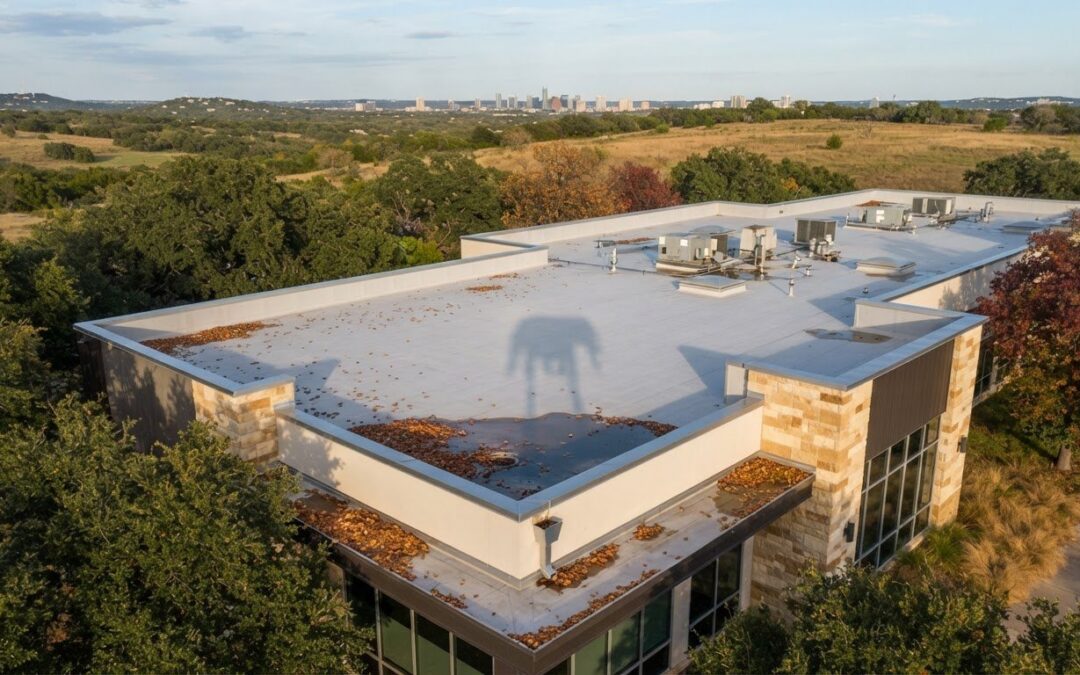
What if spring leaf drop is quietly putting your commercial roof’s drainage at risk? In Austin, live oaks shed many leaves as new growth emerges, and debris can collect around drains, scuppers, and gutters. Managing oak tree leaf debris on commercial roofs in Austin means treating buildup as a recurring maintenance issue, not a one-time cleanup.
Leaves can restrict drainage and hide seams or flashing from view. A safe inspection takes more than sending staff onto the roof with a rake. This guide explains where debris tends to collect, what property managers can observe safely, and how to plan maintenance around nearby trees, drainage design, and Central Texas storms.
Transition Roofing serves residential and commercial customers in Austin and Central Texas, including Round Rock, Pflugerville, Cedar Park, Lakeway, Hays, Bear Creek, San Leanna, Rollingwood, West Lake Hills, Buda, Kyle, and Bee Cave. With 15+ years of local experience and knowledge of Central Texas codes and climate, our insured, manufacturer-certified installers provide commercial inspections, repairs, and maintenance. Estimates are 100% free and no-obligation, pricing is transparent with no hidden fees, and flexible financing is available. We offer manufacturer-backed material warranties and workmanship warranties, and many systems include a transferable lifetime warranty.
Key Takeaways
- Managing oak tree leaf debris on commercial roofs in Austin starts with identifying how nearby tree canopies and wind create repeat buildup.
- Check for visible obstructions at drains and gutters, and note whether water appears to remain after rain. These signs call for assessment, but do not prove roof damage.
- Use a safe inspection process: observe from a safe access point, record what you see, and arrange a professional inspection when needed.
- Set maintenance timing based on tree proximity, observed buildup, drainage design, and storm conditions. Keep records so you can track recurring problem areas.
Managing oak tree leaf debris on commercial roofs in Austin, TX: Why It Needs Attention
For commercial property managers, managing oak tree leaf debris on commercial roofs in Austin is part of keeping drainage paths clear and roof conditions visible. Nearby oaks can drop leaves over an extended shedding cycle. As exterior cleaning specialists like Atlas Exterior Solutions point out, accumulated leaves and organic debris can quickly trap moisture against exterior surfaces if left unaddressed. Wind and rain can move debris across a roof, so it may collect in different spots depending on the building’s layout and exposure.
Austin’s heat, hail, and storms make it useful to record debris buildup alongside other visible roof conditions. Municipal yard-debris collection guidance covers disposal, not commercial rooftop inspection or maintenance. A curbside cleanup schedule is not a substitute for a roof maintenance plan.
For background on commercial roof materials, watch this overview of TPO roofing:
Where oak leaves collect on commercial roofs
Pay attention to drains, gutters, roof edges, scuppers, and areas around rooftop equipment. These spots can catch leaves carried by wind or washed across the roof. Roof shape, tree location, and wind exposure all affect where debris settles, so one clear area does not mean the whole roof is clear. Oak tree characteristics help explain why leaf shedding can create a recurring cleanup need near mature trees.
On flat and low-slope roofs, drainage points may not be visible from the ground. Transition Roofing’s commercial roofing services in Austin include professional roof inspections, repairs, and maintenance.
When leaf buildup deserves a closer look
Arrange an inspection if visible piles return to the same place, leaves cover a drainage path, or water appears to remain after rain. Record what you can observe safely, including where leaves collect and which drain or gutter may be affected. Leaves alone do not prove damage or a leak. A professional roof inspection can assess concerns that need a closer look.
How Oak Leaves Can Affect Commercial Roof Drainage in Austin, TX
Roof drainage is designed to move water toward drains, gutters, and other outlets. Oak leaves can gather at these openings and low points. If debris restricts a drainage path, water may remain on the roof longer instead of flowing toward an outlet. Leaves can also cover roof areas, making it harder to see what is happening underneath.
Keep drainage paths visible as part of routine roof maintenance. After rain, note whether outlets appear covered and whether water remains in areas where it would normally drain away. These observations help identify where a closer assessment may be useful.
Why roof drains and gutters need clear paths
Leaves around a drain or gutter can obscure the opening and make it difficult to see whether water can move through it. Exterior maintenance specialists like Gutter Wiz emphasize that routine gutter and roof clearing is essential to keep water moving freely. During routine checks, record visible obstructions and any standing water after rain. These signs call for a closer assessment, but do not confirm roof damage. Include drainage openings and water movement in regular maintenance checks.
What debris can hide on flat and low-slope roofs
On flat or low-slope roofs, leaves can cover roof surfaces, seams, flashing, and details around drains. This can make it harder to spot changes during an inspection. A visible pile may be the only sign from a safe viewing point, while the roof beneath it remains out of view. Managing oak tree leaf debris on commercial roofs in Austin should include keeping drainage details and roof surfaces visible for inspection. Learn more about flat roofing systems in Austin and the inspection needs of these roofs.
Leaves alone do not prove a leak or material failure. If debris repeatedly collects near the same drain or water appears to remain after rain, a professional inspection can assess the drainage components and nearby roof details. That gives property managers a clearer basis for maintenance decisions without assuming that leaves mean damage.
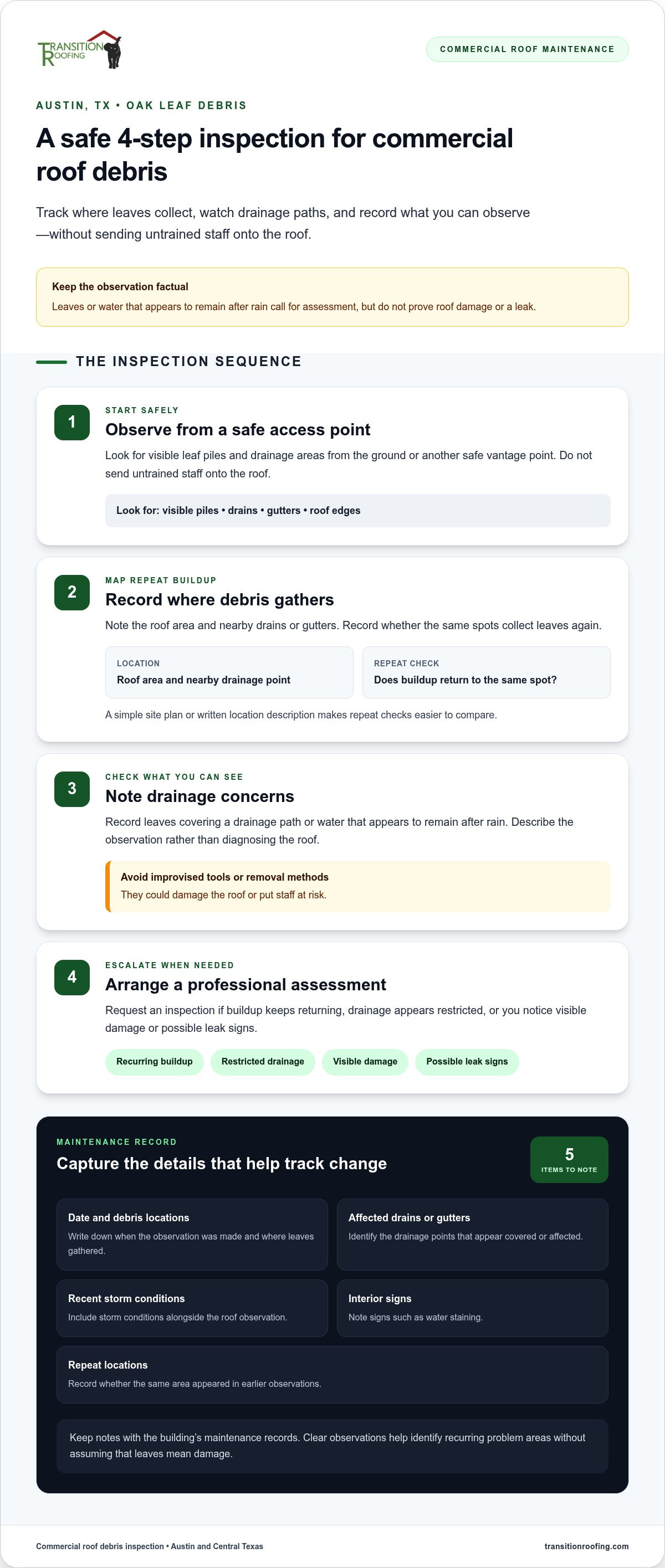
How to Inspect Oak Leaf Debris on Commercial Roofs in Austin, TX
Start with what your team can observe without stepping onto the roof. A consistent process helps property managers track buildup and decide when to arrange a closer assessment. Keep notes factual and specific, so anyone reviewing the maintenance record can understand what changed and where.
- Observe from a safe access point. Look for visible leaf piles and drainage areas from the ground or another safe vantage point. Do not send untrained staff onto the roof.
- Record where debris gathers. Note the roof area, nearby drains or gutters, and whether the same spots collect leaves again. A simple site plan or written location description makes repeat checks easier to compare.
- Note drainage concerns. Record visible leaves covering a drainage path or water that appears to remain after rain. Avoid improvised tools or removal methods that could damage the roof or put staff at risk.
- Arrange a professional assessment. Request an inspection if buildup keeps returning, drainage appears restricted, or you notice visible damage or possible leak signs.
A property-manager checklist before calling for roof service
Keep observations with the building’s maintenance records. Include the date, debris locations, affected drains, recent storm conditions, and any interior signs such as water staining. Note whether the same area appeared in earlier observations. Describe what you see rather than labeling a suspected issue as confirmed damage. These details give the roofing professional useful context for the inspection.
When to arrange a professional roof assessment
Arrange a professional review when leaves repeatedly collect in one area, a drainage path appears restricted, or you notice visible damage or possible signs of a leak. An inspection can distinguish a debris concern from a roof condition that may need repair and help guide the next maintenance step. It does not mean the whole roof needs replacement.
Request a free, no-obligation roof inspection to review recurring debris or drainage concerns.
Plan Commercial Roof Debris Maintenance in Austin, TX
Build debris checks into a maintenance plan that reflects the building’s surroundings. Set timing based on nearby oak canopies, how often buildup returns, drainage design, and recent storms. Record inspection dates, debris locations, drainage observations, and work completed. These notes help your team identify patterns and plan targeted maintenance. Recurring leaf buildup needs attention, but it does not automatically mean the roof needs replacement.
What Transition Roofing can address across commercial properties
Transition Roofing provides commercial roof inspections, repairs, and replacement, along with flat roofing systems including TPO, EPDM, and modified bitumen, and metal roofing. Commercial services also include roof coatings, skylight installation, drain and gutter systems, green and cool roofing, solar roofing integration, roof insulation, and energy-efficient commercial options. Emergency roof repairs, storm-damage restoration, roof cleaning, and maintenance programs are also available. An inspection helps identify which service fits the roof’s condition and the property’s maintenance needs.
A locally informed plan for ongoing roof care
Transition Roofing also serves residential customers with detailed roof inspections, repairs, full roof replacement, and routine maintenance. Residential roofing options include asphalt shingles, metal, tile, and flat roofing systems. Additional home-protection services include gutter and downspout work, roof ventilation upgrades, emergency roof repairs, storm-damage restoration, roof cleaning, chimney flashing, and roof warranty assistance.
Transition Roofing’s insured, manufacturer-certified installers bring 15+ years of local experience and knowledge of Central Texas codes and climate. Estimates are 100% free and no-obligation, pricing is transparent with no hidden fees, and flexible financing is available. Manufacturer-backed material warranties and workmanship warranties are offered, and many systems include a transferable lifetime warranty. Schedule a commercial roof inspection in Austin to review debris patterns and set a practical maintenance plan.
Build Roof Debris Checks Into Your Maintenance Plan
Use the next maintenance cycle to create a plan that fits the building’s surroundings. A roof beneath a broad oak canopy may need closer attention around certain drainage areas than one with little nearby tree cover. Set reminders for checks, then adjust the timing based on recurring buildup, drainage design, and storm conditions. Revisit the plan when your observations change.
Managing oak tree leaf debris on commercial roofs in Austin works best as part of ongoing property care, not just a response to visible trouble. Track where leaves collect and whether the same areas need attention again. If the roof cannot be assessed safely or drainage concerns keep returning, a professional inspection can help determine the next practical step.
Transition Roofing serves commercial and residential customers in Austin and Central Texas, with insured, manufacturer-certified installers and clear estimates with no hidden fees. Schedule a free, no-obligation commercial roof inspection to review recurring debris and build a maintenance plan for your property. Flexible financing is available, along with manufacturer-backed material warranties, workmanship warranties, and transferable lifetime warranties on many systems.
Frequently Asked Questions
Is oak leaf debris dangerous for a commercial roof in Austin?
Oak leaves do not automatically mean a commercial roof is damaged. The concern is whether buildup recurs, obstructs drainage, or makes roof details harder to inspect. For managing oak tree leaf debris on commercial roofs in Austin, note observable changes such as a drain that appears covered or water that remains after rain. A roofing professional can assess the condition without treating leaves alone as proof of damage.
How often should a commercial roof be checked for oak leaves?
There is no single inspection schedule for every commercial property. A building with oak branches close to the roof may need more frequent checks than one with little nearby tree cover. Consider the roof layout, drainage design, and how quickly leaves collect after weather changes. Use maintenance records to identify repeat buildup, then adjust inspection timing to match what your team observes.
What should I do if oak leaves are blocking a commercial roof drain?
Keep untrained staff off the roof and arrange a professional assessment if drainage looks restricted. From a safe access point, note which drain appears affected and whether water is moving as expected. Avoid improvised tools or removal methods that could damage the roof or create a safety risk. City curbside debris instructions cover ground-level disposal, not safe rooftop access or cleanup procedures.
Can Transition Roofing help with oak leaf debris on a commercial roof in Austin?
Yes. Transition Roofing serves commercial and residential customers in Austin and Central Texas, with commercial inspections, repairs, replacement, and maintenance programs. Our insured, manufacturer-certified installers bring 15+ years of local experience and knowledge of Central Texas codes and climate. We offer manufacturer-backed material warranties and workmanship warranties, and many systems include transferable lifetime warranties.