The brightest roof coating isn’t automatically the right one for your building. If the roof has trapped moisture, drainage problems, or a surface the coating won’t bond to, choosing by reflectivity alone can lead to trouble. The right commercial cool roof options Austin businesses should consider depend first on the roof’s material, condition, and drainage. Transition Roofing serves commercial properties in Austin and Central Texas with cool roofing and other commercial roofing solutions.
In Central Texas, intense heat, hail, and sudden storms all affect commercial roofs. A coating may suit a sound, compatible roof, while another building may need repairs or a different roofing system first. The decision should also account for access, business operations, and the roof’s maintenance needs.
With more than 15 years of local experience, Transition Roofing understands how Central Texas climate and codes shape roofing decisions. This guide compares reflective coating types, explains what to assess before work begins, and outlines when repair, maintenance, or replacement may be a better fit.
Key Takeaways
- Compare commercial cool roof options Austin businesses may consider by matching the coating to the existing roof surface and its condition.
- Check product compatibility, preparation needs, drainage, and repair requirements before choosing a coating.
- Review roof records, access, occupancy, and work-area planning to reduce disruption during a project.
- Consider coating alongside repair, maintenance, or replacement as part of a long-term roofing plan.
Commercial Cool Roofs in Austin: Coating Pros and Cons
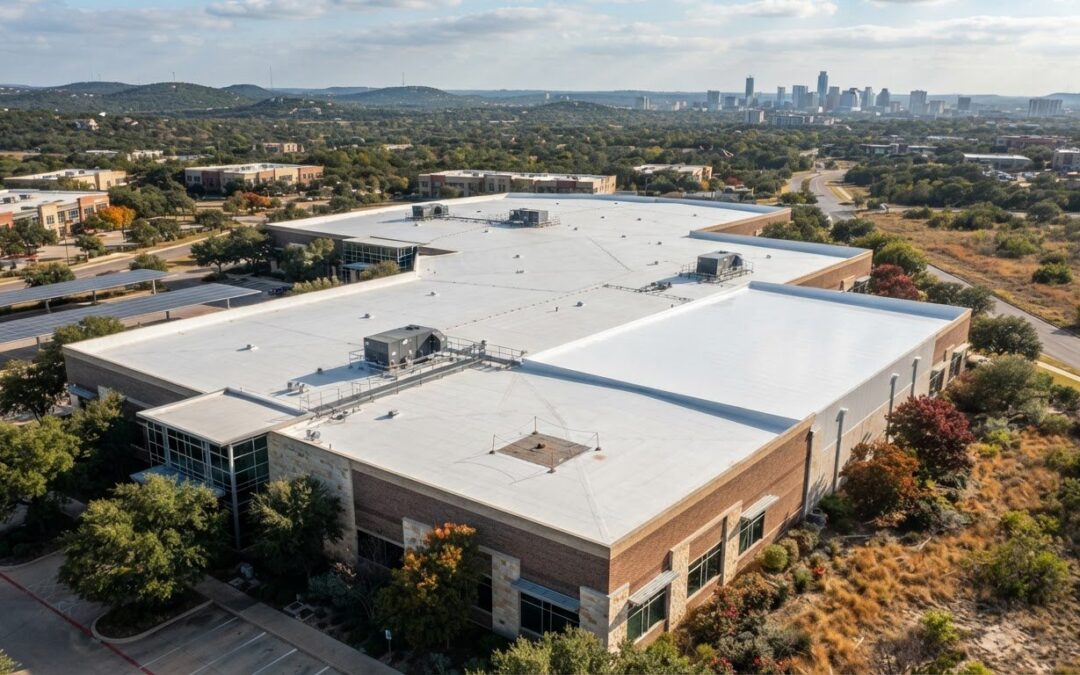
A cool roof coating is a reflective layer applied to a suitable existing roof. It reflects more sunlight and absorbs less heat than a less reflective surface. For Austin businesses, this can be worth considering because long periods of sun and heat warm roof surfaces and add to a building’s cooling needs. A coating may help limit heat absorption and UV exposure, but it does not guarantee lower energy bills or repair roof damage.
Start with the roof, not the coating color. The existing material, surface condition, past repairs, and drainage all affect whether a product can bond and perform as intended. Not every roof is compatible with every coating, so an inspection is a practical first step.
When reflective roof coatings may help an Austin business
A reflective coating may be appropriate when the roof is in sound condition and compatible with the selected system. It can reduce the sun’s impact on the roof surface, which may ease heat transfer into the building. The result also depends on the full roof assembly and building conditions, so reflectivity alone is not a reliable promise of a specific energy saving.
Austin Energy’s commercial guidance describes a rebate of $0.25 per square foot for qualifying reflective roof coating applied to a commercial property. The rebate applies to coating work, not full roof replacement, and has eligibility and application requirements separate from any building permit process. Review the utility’s current program guidance before factoring a rebate into project planning.
When a coating may not be the right first step
Address roof problems before applying a reflective layer. Active leaks, damaged areas, poor drainage, and incomplete repairs need attention. Coating over unresolved issues can conceal symptoms without fixing their cause. A coating also won’t correct standing water or restore a surface that cannot support the system.
Use inspection findings to compare coating, repair, and replacement. If the roof is sound and compatible, coating may be an option. If damage is extensive or the surface is unsuitable, another roofing solution may better protect the building. Transition Roofing serves commercial customers across Austin and Central Texas with repair, installation, and coating options. Explore commercial roofing services in Austin to see how these options fit into a broader roof plan.
Commercial cool roof options Austin Businesses Can Compare: Coating Types and Roof Fit
Choose a coating based on the roof surface and the project scope. The roof material, condition, and required preparation affect adhesion and system performance. Manufacturer instructions should support the specific roof assembly and coating combination.
Austin Energy names spray-on and paint-on reflective coatings, and lists asphalt, gravel, metal, and single-ply roofs as examples. These examples are useful starting points, not blanket approval for every roof. Check the coating manufacturer’s current instructions for the actual roof surface.
How coating categories differ
- Spray-on reflective coating: This is one application method identified in Austin Energy guidance. The suitable surfaces and preparation depend on the selected system and its manufacturer instructions.
- Paint-on reflective coating: Also identified in the guidance. The application method alone does not establish compatibility or expected service life.
Neither method has a universal performance or lifespan advantage. Compare the product’s documented warranty terms, maintenance requirements, and conditions that may affect coverage. A general lifespan estimate cannot account for every roof and coating system.
Match coating options to commercial roof surfaces
- Metal, asphalt, or gravel: These surfaces appear as examples in Austin Energy guidance. Confirm the coating’s compatibility and required preparation for the specific roof.
- TPO, EPDM, or another single-ply roof: Identify the membrane and follow coating-specific instructions. “Single-ply” does not mean every membrane accepts every coating. Review these commercial TPO roofing considerations as part of the assessment.
Project scope depends on roof area, access, preparation, repairs, and the selected system. Storm damage can change that scope. Document affected areas and review policy requirements with your insurer before deciding whether coating is appropriate. A coating is not a new membrane: restoration involves preparation and repairs, while replacement installs a new system. If damage is active or widespread, assess repair or replacement before scheduling coating work. Transition Roofing provides commercial roofing services in Austin, including repairs and installation.

How to Evaluate a Cool Roof Coating Project in Austin, TX
Build the coating plan around the roof’s condition and the building’s needs, not around a product chosen first. This four-step review helps Austin property managers compare commercial cool roof options and plan the work around site conditions and daily operations.
A four-step roof and project assessment
- Gather roof records. Note the roof type, installation or replacement history, previous repairs, and maintenance records. These details help identify materials and recurring problem areas.
- Inspect the roof surface. Review seams, penetrations, drains, and areas with signs of leaks or deterioration. Check whether repairs are complete and water drains as intended. A coating won’t resolve damage or poor drainage.
- Compare the right scope. Use the inspection findings to weigh coating against repair, restoration, or replacement. Confirm that the selected system is compatible with the roof surface and that its preparation requirements can be met.
- Plan access and operations. Map roof access points and consider equipment, occupied areas, and daily business activity. Plan how crews can reach work areas and how to manage any disruption to staff, tenants, or customers.
This sequence grounds the decision in the roof’s actual condition. It also separates urgent repairs from improvements that can be planned as part of a larger roofing project.
Austin Energy rebates and project planning
Austin Energy’s reflective-coating program has eligibility rules and application requirements separate from the roof assessment. Review the utility’s current official guidance before relying on rebate eligibility. Required documents and program steps may affect when work should be scheduled, so confirm that the planned coating and project meet current terms.
Transition Roofing has more than 15 years of local experience assessing commercial roofs in Austin and Central Texas, with knowledge of regional climate and codes. If you’re weighing coating against repairs or replacement, request a free, no-obligation commercial roof assessment and get a clear next step.
Commercial Cool Roofing in Austin, TX: Build a Long-Term Plan with Transition Roofing
A reflective coating is one option in a commercial roofing plan, not the right answer for every roof. The plan should account for roof condition, surface, drainage, and the building’s longer-term needs. Transition Roofing serves residential and commercial customers in Austin and Central Texas, including Round Rock, Pflugerville, Cedar Park, Lakeway, Hays, Bear Creek, San Leanna, Rollingwood, West Lake Hills, Buda, Kyle, and Bee Cave. The team brings more than 15 years of local experience and knowledge of Central Texas climate and codes.
Transition Roofing’s installers are insured and manufacturer-certified. Estimates are 100% free and no-obligation, with transparent pricing and no hidden fees. Flexible financing is available. The company offers manufacturer-backed warranties on materials and workmanship warranties, and many systems include a transferable lifetime warranty. Compare commercial cool roof options alongside repair, maintenance, and new roofing systems to choose a scope that fits the building.
Commercial roofing services and energy-efficient options
Transition Roofing provides commercial roofing solutions for building-specific needs, from targeted repairs to full roofing systems. Services include:
- Commercial roof repair and replacement, flat roofing, TPO, EPDM, modified bitumen, and metal roofing
- Roof coatings, green and cool roofing, solar roofing integration, roof insulation, and skylight installation
- Drain and gutter systems, emergency roof repairs, and preventative maintenance programs
These options help property owners consider roof condition, energy goals, and ongoing upkeep together. Explore commercial roofing in Austin as part of a long-term plan.
Residential services and practical next steps
Transition Roofing also provides residential roofing and home-protection services across the area, including:
- Roof repairs, full roof replacement, inspections, maintenance, and asphalt-shingle, metal, tile, and flat roofing
- Gutter and downspout services, roof ventilation upgrades, emergency roof repairs, and storm-damage restoration
- Roof cleaning, chimney flashing, and roof warranty assistance
For a commercial property, an assessment can clarify whether coating, repair, or replacement best fits the roof. Request a free, no-obligation estimate to discuss the options and get a clear plan.
Turn Your Roof Review into a Clear Next Step
Don’t choose coating or replacement on instinct. Use the assessment findings to set priorities: what needs attention now, what can be planned later, and which roofing approach fits the building’s condition and operations. A clear scope separates required preparation from coating work and identifies when another roofing system may make more sense.
For commercial cool roof options Austin businesses are weighing, manufacturer guidance matters alongside the roof inspection. Information from GAF, CertainTeed, Versico, and Dura-last can help frame system discussions around the building’s actual roof assembly. The goal is a practical plan, not a coating applied before the roof is ready.
Take the next step with a project-specific review. Schedule a free, no-obligation commercial roof assessment to discuss the roof’s needs and a sensible path forward.
Frequently Asked Questions
Is a cool roof coating a good fit for every commercial roof in Austin?
No. Suitability depends on the roof surface and condition, drainage, existing repairs, and the coating manufacturer’s compatibility guidance. Areas with recurring water buildup or unresolved patch repairs need careful review before coating is considered. An inspection helps distinguish a coating opportunity from work that calls for repair, restoration, or replacement.
What types of commercial roofs can receive reflective coating?
Austin Energy identifies asphalt, gravel, metal, and single-ply surfaces as examples for reflective coatings. These examples do not mean every roof is suitable. The specific roof assembly, surface condition, and coating manufacturer’s instructions determine compatibility. Single-ply membranes can differ, so the membrane type and preparation requirements matter. Assess the roof and follow the applicable system guidance before planning application.
Can a cool roof coating fix an existing roof leak?
No. A coating should not replace finding and repairing an active leak. Water may enter through damaged areas, seams, penetrations, or drainage problems that leave water sitting on the roof. Evaluate those conditions before planning a coating. Inspection findings can show whether the next step is a targeted repair, coating after preparation, broader restoration, or replacement.
Does Austin Energy offer a rebate for commercial reflective roof coatings in 2026?
Austin Energy has described a commercial reflective-coating program, but verify its current 2026 terms directly with the utility before relying on a rebate. Check eligibility, prerequisites, application steps, and required documents, since they may affect project timing. Confirm that the planned coating work fits current program rules before including an incentive in your budget or scheduling decisions.
How do I choose between a roof coating and a new commercial roof?
Base the choice on inspection findings, roof condition, surface compatibility, repair needs, and the building’s goals. A coating may suit an existing roof that can support the selected system, while extensive damage may call for another approach. Transition Roofing serves commercial properties in Austin and Central Texas and provides free, no-obligation estimates to help clarify the scope. Its insured, manufacturer-certified installers provide transparent pricing with no hidden fees, flexible financing, manufacturer-backed material warranties, workmanship warranties, and a transferable lifetime warranty on many systems.