
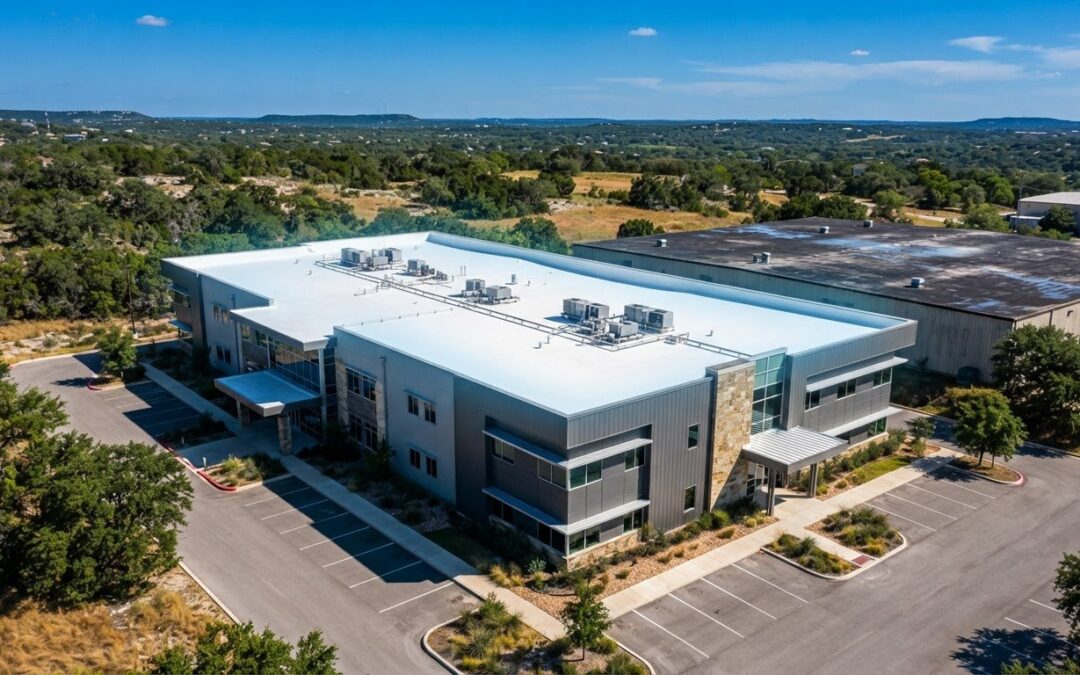
Could a roof that reflects Austin’s strong sunlight reduce a building’s cooling demand? A white TPO membrane can reflect more solar heat than a dark roof, but roof color alone does not determine energy use. The energy savings from a white TPO roof in Austin depend on insulation, HVAC performance, roof condition, and how the building is used. Lawrence Berkeley National Laboratory reports that white roofing can reduce cooling energy use by up to 20% in warm climates like Texas. That figure is not a promise for every property.
If you’re weighing a commercial roofing project, this guide explains how reflectivity affects heat absorption, which building conditions shape the result, and what to review before deciding. Transition Roofing serves residential and commercial customers in Austin and Central Texas, with 15+ years of local experience and knowledge of regional codes and climate. Our insured, manufacturer-certified installers work with TPO and other commercial roofing systems. A roof assessment can consider the membrane alongside insulation, drainage, and the building’s condition.
Key Takeaways
- Reflective TPO can reduce roof heat absorption, but energy savings from a white TPO roof in Austin are not guaranteed by roof color alone.
- Insulation, roof condition, HVAC operation, and building use all affect how much a reflective roof may influence cooling demand.
- Review utility history, roof and insulation condition, HVAC operation, and building schedules to build a clearer picture of potential energy impacts.
- Compare energy use across similar periods, accounting for weather and occupancy changes, and connect energy goals to the roof system’s needs.
Energy savings from a white TPO roof in Austin, TX: What reflectivity can change
A white TPO roof is a reflective, single-ply membrane commonly used on flat and low-slope commercial buildings. Its light-colored surface reflects more sunlight than a dark roof, which may reduce the solar heat the roof absorbs. That can affect how much heat moves into the building and how often the cooling system needs to remove it. The energy savings from a white TPO roof in Austin depend on the full building, not just the membrane.
A reflective roof can limit solar heat absorption and potentially reduce cooling demand, but it cannot guarantee a specific utility-bill reduction. Transition Roofing serves residential and commercial customers in Austin and Central Texas, with 15+ years of local experience and knowledge of regional codes and climate. Our insured, manufacturer-certified installers work on commercial roofing systems suited to local conditions. For Austin properties, commercial roofing options can be considered alongside the building’s energy goals.
For a closer look at how a TPO membrane is installed, watch this commercial roofing project video:
How a reflective roof affects building heat
Sunlight reaches the roof surface. A reflective membrane sends more of that solar energy away, while the portion absorbed warms the roof. Some heat can then move through the roof assembly into the building, adding to the cooling system’s load. Reflectivity describes the roof surface, not the energy performance of the entire building. Insulation, HVAC operation, windows, and indoor heat sources also shape indoor conditions.
Why Austin’s climate makes roof reflectivity relevant
Central Texas heat and strong sun can put steady demand on commercial cooling systems, so limiting heat absorbed at the roof may help. But roof decisions also need to account for Austin storms and hail. Reflectivity alone does not address storm damage or show how a roof will perform over time. Consider roof condition and protection needs alongside energy goals instead of treating a white surface as a complete solution.
How a white TPO roof in Austin, TX can influence cooling demand
A reflective membrane is one part of a roof assembly, not a fix for every source of heat gain or high energy use. Insulation below it affects how easily heat moves through the roof. The roof’s condition matters too: damage, leaks, or gaps may affect how well the assembly performs. HVAC controls, equipment condition, and maintenance also influence how efficiently a building removes heat.
Energy outcomes depend on the roof assembly and the wider building, not on roof color alone. For that reason, energy savings from a white TPO roof in Austin cannot be judged by appearance. Reduced heat entering through the roof may ease one part of the cooling load, while total electricity use also includes lighting, equipment, ventilation, and other building systems.
Why insulation and HVAC performance matter
Roof insulation slows heat transfer between the roof and occupied space. If insulation is damaged, uneven, or insufficient for the building’s needs, a reflective surface cannot correct that issue by itself. The HVAC system must also be able to manage the building’s cooling demand. Operating or control problems can continue to drive energy use even when the roof absorbs less heat. Review the membrane, insulation, and cooling equipment together.
How building use changes the result
A warehouse with limited operating hours has a different energy profile from a busy facility that runs cooling through the evening. Occupancy, operating schedules, machinery, lighting, and other indoor heat sources all affect cooling demand. Changes in these patterns can also shift utility use, making a simple before-and-after bill comparison misleading. Review building schedules and major equipment alongside roof conditions to understand what may be driving consumption.
If you’re considering a roof project, a whole-system review can connect energy goals to practical roof needs. Explore commercial roofing and building considerations as you weigh the roof, insulation, and HVAC together.
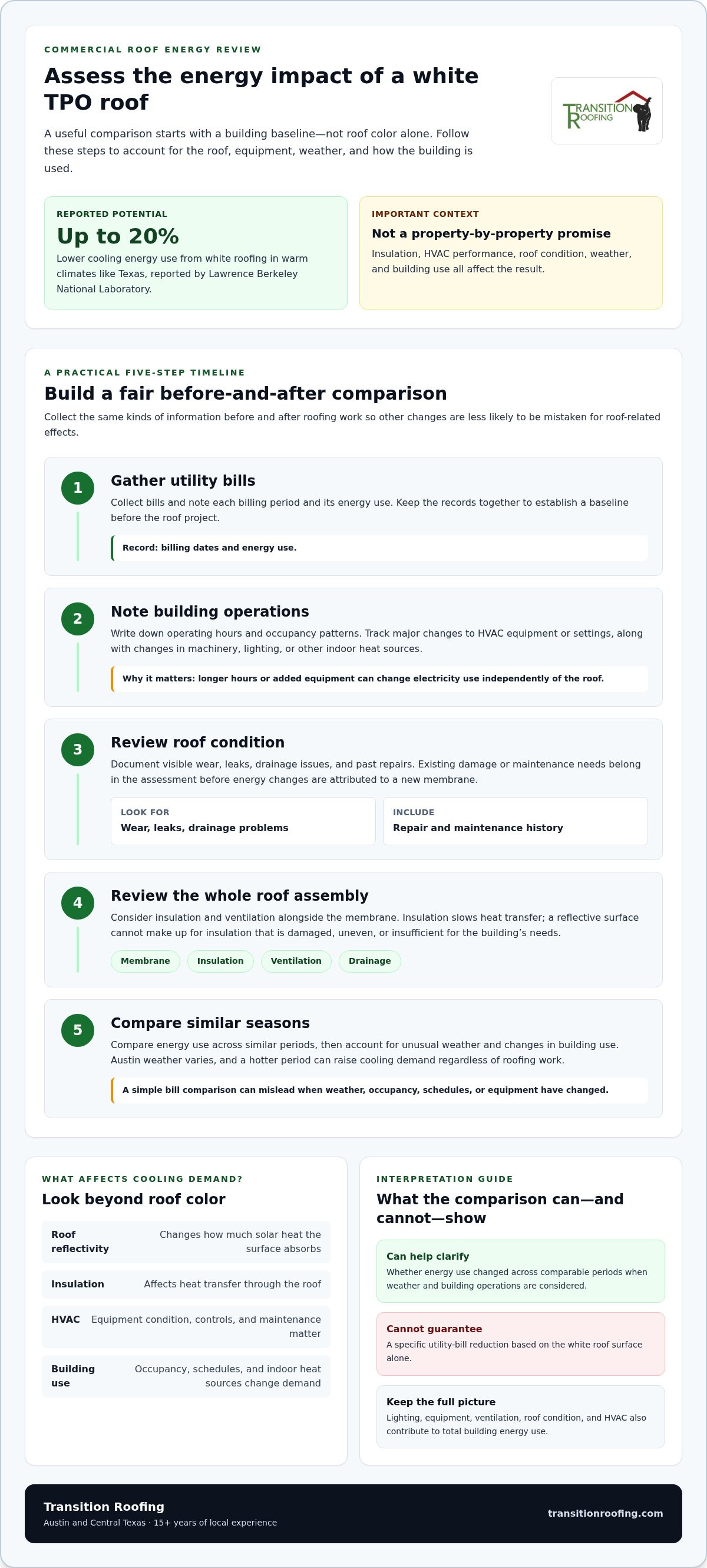
How to assess energy savings from a white TPO roof in Austin, TX
To judge whether a roofing project changes energy use, build a baseline before work begins. The goal is to separate roof-related effects from weather, schedule changes, and other building upgrades. Use this process to organize the information:
- Gather utility bills and note the billing periods and energy use.
- Record operating hours, occupancy patterns, and major changes to HVAC equipment or settings.
- Review the roof’s condition, including visible wear, leaks, drainage issues, and past repairs.
- Review the insulation and ventilation as part of the roof assembly.
- Compare energy use across similar seasons, accounting for unusual weather and changes in building use.
What records help establish a baseline?
Keep utility bills together with notes on building operations. Extended hours or added equipment can increase electricity use even if the roof has not changed. Compare similar seasons rather than unrelated billing periods. Austin’s weather varies, so a hotter period may raise cooling demand independently of roofing work. This context makes the comparison more useful and helps avoid attributing every change to the roof.
What a roof assessment should consider
A practical review looks beyond membrane color. Check roof condition, insulation, drainage, ventilation, and visible signs of leaks. Existing damage or maintenance needs can affect roof performance and should be considered before attributing changes in energy use to a new system. For a low-slope property, Austin flat roofing options can be evaluated in light of the building’s condition and project goals.
Regular repairs and maintenance also help establish the roof’s current condition. If a leak, damaged area, or drainage concern is present, address it as part of the assessment rather than treating energy use as a separate issue. A project review can connect these findings with utility history and building schedules. Austin commercial roofing services include project assessment for commercial roofing needs. For a building-specific review, request an Austin commercial roof assessment.
Choosing an Austin, TX commercial roofing plan for energy performance
A sound roofing plan connects energy goals with the roof’s condition and the building’s needs. An assessment can help identify whether repair, maintenance, or replacement makes sense, and which parts of the system need attention. Austin commercial roofing services include options for properties with different roof requirements.
Commercial systems and services include TPO, EPDM, modified bitumen, metal roofs, roof coatings, skylight installation, drain and gutter systems, roof insulation, green and cool roofing, solar roofing integration, emergency service, and maintenance programs. These energy-conscious options can be considered alongside the practical needs of the building.
What Transition Roofing brings to Central Texas projects
Transition Roofing serves residential and commercial customers in Austin and Central Texas, including Round Rock, Pflugerville, Cedar Park, Lakeway, Hays, Bear Creek, San Leanna, Rollingwood, West Lake Hills, Buda, Kyle, and Bee Cave. With 15+ years of local experience and knowledge of Central Texas codes and climate, our insured, manufacturer-certified installers provide roofing solutions for local properties. Estimates are 100% free and no-obligation, pricing is transparent with no hidden fees, and flexible financing is available. Systems include manufacturer-backed material warranties and workmanship warranties, with transferable lifetime warranties on many systems.
Residential services include roof repair, full roof replacement, routine maintenance, detailed inspections, asphalt shingle, metal, tile, and flat roofing, plus gutter and downspout services, ventilation upgrades, emergency roof repairs, storm-damage restoration, roof cleaning, chimney flashing, and roof warranty assistance. Commercial services include roof repairs and replacement, flat roofing and TPO systems, EPDM, modified bitumen, metal roofs, coatings, skylight installation, green and cool roofing, solar roofing integration, insulation, drain and gutter systems, emergency service, and maintenance programs. These include energy-efficient commercial options.
A practical next step for an Austin property
Use the assessment to connect energy goals with the roof system’s condition and project needs. Transition Roofing can review your commercial roof and discuss an energy-conscious plan without promising a specific bill reduction. Request a free, no-obligation roof estimate to take the next step.
Make your next roofing decision with a clear plan
Set a clear project goal before choosing a roofing system. Decide whether the priority is addressing roof wear, planning a replacement, or improving energy performance, then use that goal to guide the scope of work. This keeps the potential energy savings from a white TPO roof in Austin in perspective and helps align the project with the building’s long-term needs.
A focused roof review can turn those priorities into a practical plan for your property. Request a free, no-obligation roof estimate to discuss your commercial roofing needs and next steps.
With a clear scope, you can make a decision that fits your building. Transition Roofing provides residential and commercial roofing services across Austin and Central Texas, with transparent pricing, flexible financing, and warranty coverage on many systems.
Frequently Asked Questions
Can a white TPO roof lower energy bills in Austin?
It may help, but lower bills are not assured. A reflective surface can reduce heat absorbed at the roof and may ease cooling demand. Actual utility costs also reflect insulation, HVAC operation, building use, weather, and the roof’s starting condition. To assess a project, compare bills from similar periods and note changes such as new equipment or different operating hours before attributing a change to the roof.
How does a white TPO roof help keep a commercial building cooler?
The white surface reflects more sunlight than a darker roof, so it absorbs less solar heat. That can limit heat moving from the roof toward the space below. The effect on occupied rooms still depends on the full roof assembly and how the building operates. For example, a facility with different cooling schedules in separate areas may not experience the same change throughout the property.
Is a white TPO roof a good choice for every Austin commercial building?
No. TPO is commonly considered for flat and low-slope roofs, but the right choice also depends on the roof’s current condition, drainage, insulation, and building use. A property with ponding water or areas needing repair may require those concerns to shape the project scope. Evaluate the full roof system and the owner’s priorities before selecting a membrane based on color or reflectivity alone.
What should I compare before replacing a commercial roof with white TPO in Austin?
Compare the existing roof’s condition with the proposed assembly, including insulation and drainage. Review utility records alongside HVAC changes and operating schedules, then compare similar seasons rather than unrelated billing periods. Austin weather and shifts in occupancy can affect the comparison. Transition Roofing serves properties in Austin and nearby communities, including Round Rock, Pflugerville, Cedar Park, Lakeway, Hays, Bear Creek, San Leanna, Rollingwood, West Lake Hills, Buda, Kyle, and Bee Cave.
Does roof insulation matter if I install a white TPO roof?
Yes. The membrane affects how much sunlight the roof absorbs, while insulation affects heat transfer through the roof assembly. One does not replace the other. If insulation is damaged or uneven, changing the roof surface alone may not address the assembly’s performance. Include insulation condition in the project review, along with HVAC operation and building needs, so the proposed work reflects the property rather than a single material feature.