

A commercial roof warranty doesn’t automatically transfer when a building changes hands. The commercial roof warranty transfer process in Austin depends on the warranty terms, including any transfer deadline and required approval.
That uncertainty matters when a roof leak, repair, or future claim could affect the building budget. This guide explains how manufacturer coverage differs from a contractor’s workmanship warranty and which records buyers and sellers should review before ownership changes hands.
Key Takeaways
- Separate the manufacturer’s material coverage from the contractor’s workmanship warranty; each may have different transfer terms.
- Look for clauses on transfer approval, inspections, repair records, and any fee before assuming coverage will continue.
- Find out whether a transfer changes the available remedies or limits coverage to the remaining warranty period.
- Keep sale documents, maintenance records, and warranty paperwork together to make the ownership handoff easier to manage.
Are Roofing Warranties Transferable? Commercial roof warranty transfer process in Austin
Some commercial roof warranties transfer to a new owner, but the transfer is not automatic. The written terms of each warranty determine what coverage carries over after a sale.
Manufacturer and Workmanship Warranty Types
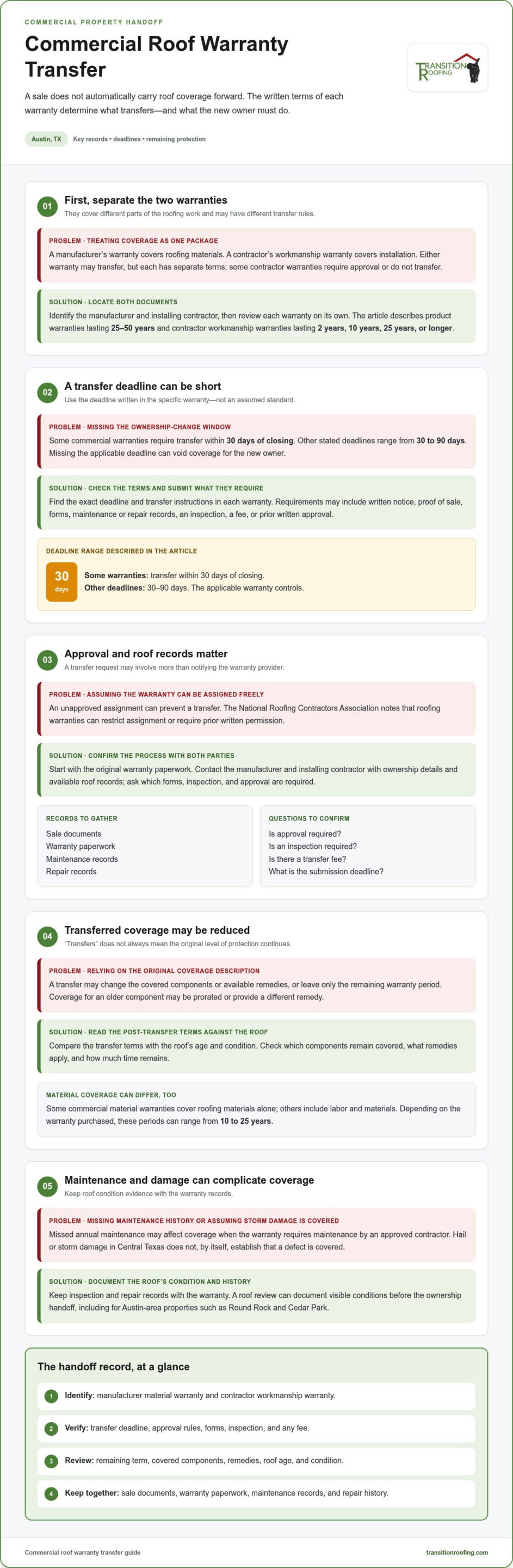
A manufacturer warranty covers roofing materials, while a workmanship warranty covers installation. Either may transfer, but each has separate terms; some contractor warranties require approval or don’t transfer. Product warranties may last 25 to 50 years. Contractor workmanship warranties may last two years, ten years, 25 years, or longer. Buyers should identify both documents before relying on coverage.
Warranty Terms and Transfer Requirements
Transfer requirements can include forms, deadlines, and conditions tied to the ownership change. Some commercial warranties require transfer within 30 days of closing; other deadlines range from 30 to 90 days. The manufacturer may request written notice, proof of sale, maintenance or repair records, an inspection, a fee, or prior written approval. The National Roofing Contractors Association notes that roofing warranties can restrict assignment or require prior written permission.
Contacting the Contractor or Manufacturer
Start with the original warranty paperwork to identify the manufacturer, installing contractor, and transfer instructions. Contact both parties with ownership details and available roof records, then ask about forms, inspection, and approval. For Austin-area properties, including Round Rock and Cedar Park, a roof review can document visible conditions before the handoff. Commercial roofing services in Austin can help record those issues.
Reasons Transferred Coverage May Be Voided
Missing a transfer deadline can void coverage for the new owner, and an unapproved assignment can prevent a transfer. Missed annual maintenance may also affect coverage if the warranty requires maintenance by an approved contractor. Hail and storms in Central Texas can damage a roof, but damage alone does not establish that a defect is covered. Document the roof’s condition and keep inspection and repair records with the warranty.
Transferability of commercial roofing warranties and guarantees in Austin, TX
A transferred warranty can preserve some roof protection, but not necessarily the original level of coverage. Transfer terms may change which components remain covered, what remedies are available, and how much coverage time remains. For buyers in Austin, these details help distinguish a roof with continuing protection from one with limited coverage.
Roof age can affect the coverage available for certain components. After a transfer, coverage may be prorated, offer different remedies, or continue only for the remaining term of the original warranty. For example, a warranty may still cover the roof system but provide a reduced remedy for an older component. Review the transfer terms alongside the roof’s age and condition.
Commercial material warranties also differ in what they cover. Some cover roofing materials alone; others include labor and materials. Depending on the warranty purchased, these periods can range from 10 to 25 years. That distinction matters if a future issue requires both replacement materials and installation work.
For a buyer evaluating a commercial property, the useful question is not simply whether a warranty transfers. It is what protection remains for the specific roof system and which remedies apply. A roof review can help put those terms in context, particularly after Austin heat, hail, or storms. Commercial roofing services in Austin can help assess the roof system’s condition.
Transition Roofing: Commercial Roof Installation
Transition Roofing provides commercial roof installation and repair when an Austin building needs more than a warranty handoff. If inspection records show damage or an aging system, addressing the roof’s condition can help the new owner plan practical next steps.
For a replacement, Transition Roofing installs commercial roofing systems, including TPO and metal options. For localized damage, commercial roof repair can address the affected area without assuming the entire system needs replacement. The right scope depends on the roof’s condition and the work required.
If a transferred warranty leaves you planning repairs or replacement, contact Transition Roofing to discuss your commercial roofing needs.
Plan the Roof’s Next Chapter
A property transfer is a good time to align roof records with the building’s maintenance plan. Keep warranty documents, inspection notes, and repair history together so future owners can make informed decisions about the roof system. If the roof needs work, match the next step to its condition, whether that means commercial roof repair or planning a replacement.
Transition Roofing offers Commercial Roof Installation, TPO Roofing Systems, and commercial roof repair. These services can address different needs, from a new system to localized damage. For guidance on the commercial roof warranty transfer process in Austin and the roof work that may follow, contact Transition Roofing. A clear plan helps you move forward with confidence.
Frequently Asked Questions
Is It a One-Time-Only Transfer?
Many manufacturers allow a roof warranty to transfer once, but the specific warranty controls. Before a commercial property changes hands, find out whether a previous owner has already used that transfer. A manufacturer warranty and a contractor’s workmanship warranty may follow different rules, so review each separately. This helps buyers avoid mistaking an already-used transfer right for continuing protection.
Is there a deadline for the transfer?
Yes. Some commercial warranties set a deadline for transferring coverage after a property closes, and the warranty document states which deadline applies. In Austin, buyers and sellers can avoid a last-minute scramble by identifying the required forms and responsible party before closing. Note the closing date and plan the submission around the deadline in the applicable warranty.
What Should You Do Before Selling or Buying a Commercial Property?
Before a sale, identify the roof system and check whether its warranty was registered and previously transferred. Buyers should compare the roof’s visible condition with its records, noting open leaks or repairs that may need follow-up. In Austin, hail and severe storms can make a recent roof assessment useful context. Keep unresolved concerns separate from warranty coverage in the transaction records.