

The obvious choice between TPO and modified bitumen may not be the right one for a restaurant roof. With TPO vs Mod-Bit for an Austin restaurant with grease vents, the deciding factor isn’t just the membrane. Grease exposure, exhaust fan access, roof penetrations, drainage, and the condition of the existing roof all affect how the system should be planned and maintained.
Durability and leak prevention matter, especially with Austin heat, hail, and heavy storms putting stress on low-slope roofs. Restaurants in Round Rock, Pflugerville, Cedar Park, Lakeway, Buda, Kyle, Bee Cave, and other Central Texas communities face similar roof and exhaust details. This guide compares how TPO and modified bitumen are built, repaired, and inspected. It also explains what to document before an assessment, so the discussion starts with your roof’s layout and operating needs rather than a one-size-fits-all answer.
Key Takeaways
- For TPO vs Mod-Bit for an Austin restaurant with grease vents, start with the roof’s condition and exhaust layout rather than choosing by membrane name alone.
- Compare how each system is assembled, joined, repaired, and inspected as part of the complete roof system.
- Document vent locations, curb condition, nearby seams, and drainage to help identify details that need attention.
- Assess the roof, exhaust layout, and maintenance needs before comparing project scope and future upkeep.
TPO vs Mod-Bit for an Austin Restaurant with Grease Vents: Start with the Roof Conditions
TPO is a flexible, single-ply roofing membrane. Modified bitumen, or Mod-Bit, is an asphalt-based roof system built in layers. For a restaurant, the choice isn’t just about the material. The existing roof, exhaust layout, drainage, and maintenance needs all affect which system fits the building and what work the project requires.
Grease exposure deserves attention, but it doesn’t make either membrane an automatic winner. Choose a system based on documented roof conditions, not the material label alone. A useful assessment checks how the roof, vents, curbs, seams, and access paths work together. In Austin, commercial roof planning should also account for drainage and the restaurant’s daily operations.
What makes a restaurant roof different in Austin, TX?
Kitchen exhaust fans, rooftop equipment, curbs, and service paths create roof details that need to be inspected together. Every penetration requires a transition between the roofing system and the equipment. Grease residue and repeated access for cleaning can also affect upkeep. Austin’s Central Texas climate adds heat, hail, and storms to the planning picture, so drainage and the condition of seams and flashing deserve attention. Transition Roofing’s commercial roofing in Austin accounts for building needs alongside roof details.
What do TPO and modified bitumen mean?
TPO is installed as a single membrane layer, while modified bitumen uses multiple layers of asphalt-based roofing material. Those differences affect how each system is assembled and how its seams and transitions are handled. The Flat Roof overview provides background on common flat-roof materials, including TPO and modified bitumen. For a restaurant, compare the proposed system with the existing roof, vent locations, drainage paths, and expected maintenance access.
How TPO and Modified Bitumen Differ on Austin, TX Restaurant Roofs
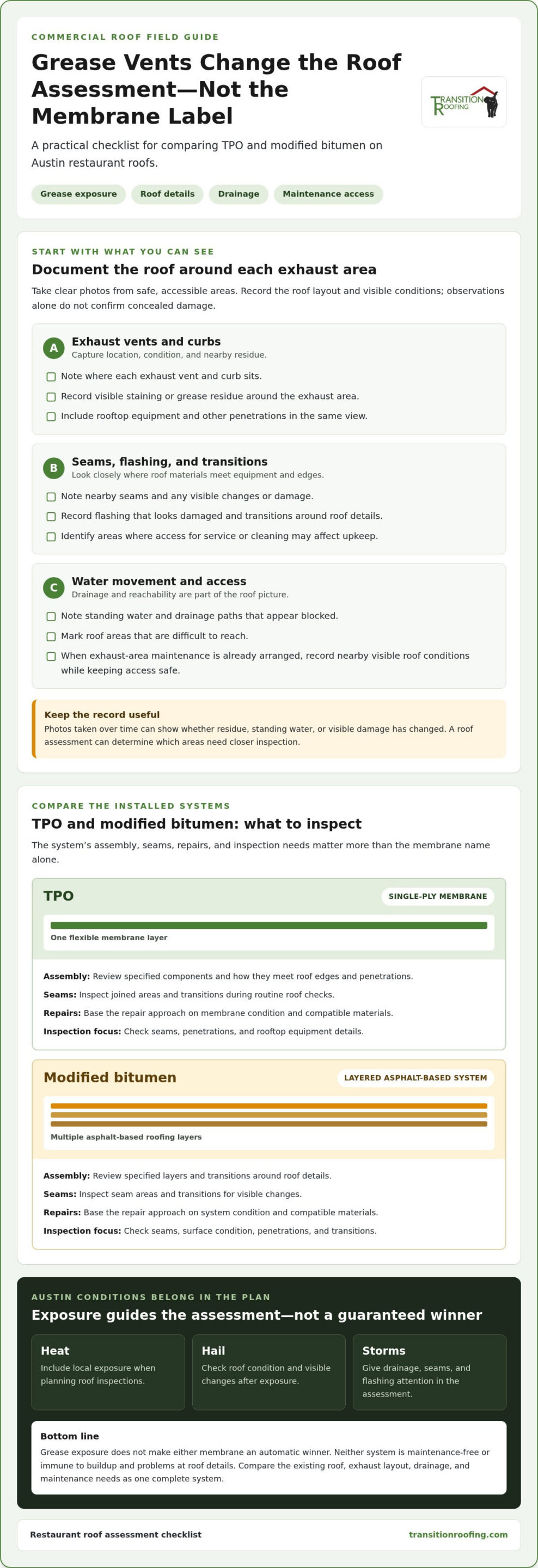
With TPO and modified bitumen, practical differences show up in the specified assembly, seam details, repair approach, and inspection needs. For TPO vs Mod-Bit for an Austin restaurant with grease vents, compare the project details rather than relying on the membrane name. Neither system is maintenance-free, and the installation details affect how the finished roof performs.
| Consideration | TPO | Modified Bitumen |
|---|---|---|
| Assembly planning | Review the specified components and how they meet roof edges and penetrations. | Review the specified layers and how the system transitions around roof details. |
| Seams | Inspect joined areas and transitions during routine roof checks. | Inspect seam areas and transitions for visible changes. |
| Repairs | Choose a repair approach based on membrane condition and compatible materials. | Choose a repair approach based on system condition and compatible materials. |
| Inspection focus | Check seams, penetrations, and rooftop equipment details. | Check seams, surface condition, penetrations, and transitions. |
How do the membrane systems handle seams and repairs?
What should Austin heat, hail, and storms change in the comparison?
Heat, hail, and storms should inform inspection planning, but they don’t prove that one system will perform better in every situation. Local exposure should guide the roof assessment and inspection plan. Restaurant exhaust adds its own maintenance considerations. The NFPA 96 standard covers commercial cooking ventilation and fire protection.
Transition Roofing provides commercial roofing in Austin, including project planning that considers the roof assembly and its details.
Grease Vents, Curbs, and Drainage: Austin, TX Details That Can Decide the Roof
A grease vent can affect more than the roof area directly below it. The vent location, curb condition, nearby seams, and drainage paths all help show how the roof is performing as a system. Grease residue can make nearby areas harder to maintain and may add to upkeep needs. Neither TPO nor modified bitumen should be treated as immune to buildup or problems at roof details.
Review exhaust details as part of the full roof assembly. Note what is visible around the vent and how water moves across nearby areas instead of judging the membrane on its own. For a restaurant comparing TPO vs Mod-Bit for an Austin restaurant with grease vents, these observations help make the assessment specific to the building.
What roof conditions should be documented around restaurant exhaust?
Take clear photos from safe, accessible areas and note where each exhaust vent and curb sits. Record visible staining or grease residue, nearby seams, damaged-looking flashing, roof transitions, and other penetrations. Also note standing water, drainage paths that appear blocked, or areas that are difficult to reach. These are observations, not proof of concealed damage. A roof assessment can determine which areas need closer inspection.
How can a restaurant plan inspections around grease vents?
Coordinate roof observations with the restaurant’s exhaust-area maintenance planning. When access is already arranged for exhaust work, record visible roof conditions nearby while keeping roof access safe. Photos taken over time can show whether residue, standing water, or visible damage has changed. This creates a useful record without assuming a cause or applying a universal inspection schedule.
- Note vent and curb locations.
- Photograph visible residue, flashing concerns, and nearby seams.
- Record drainage issues and areas that are hard to access.
If you’re seeing buildup, standing water, or worn details near restaurant exhaust, schedule a commercial roof assessment with Transition Roofing. We can review the visible conditions and outline practical next steps.
Choosing Between TPO and Mod-Bit for an Austin, TX Restaurant
There’s no single membrane that fits every restaurant roof. Make the choice after reviewing the existing roof, exhaust layout, and work involved in each option. For TPO vs Mod-Bit for an Austin restaurant with grease vents, compare the full project scope and expected maintenance needs, not just the membrane name.
- Document the roof condition. Note visible damage, leak history, and existing membrane details.
- Map the exhaust layout. Mark vents, curbs, penetrations, and areas needed for service access.
- Review drainage. Record standing water or other visible drainage concerns.
- Compare system scope. Review what work each option includes and how future maintenance will fit restaurant operations.
What information helps shape a project-specific recommendation?
Gather the roof age, if known, past leak records, and any information about the existing membrane. Note planned equipment changes, operating constraints, and access needs so roof work can be planned around the restaurant. A flat roofing system assessment can review the existing assembly and the work needed at its details, rather than treating the membrane as a stand-alone choice.
Budget discussions are more useful when each option covers the same scope, including preparation, roof details, and expected upkeep. A lower initial scope may leave out work or maintenance considerations included in another option. Compare the details line by line and keep the decision tied to the building’s needs.
When should an Austin restaurant schedule a roof assessment?
Arrange an assessment if you see leaks, visible membrane damage, standing water, or recurring concerns near exhaust vents. These signs deserve attention, but appearance alone may not reveal the full cause. Transition Roofing handles commercial roof installation and repair with a project-specific review, rather than a universal recommendation for TPO or modified bitumen.
If you’re planning roof work or seeing recurring problems, request an Austin commercial roof assessment through Transition Roofing.
Set Up the Next Step with a Clear Roof Record
Turn what you’ve observed into a practical starting point for a roof assessment. Gather available roof records, note recurring concerns, and keep photos of visible conditions near exhaust areas. This gives the conversation a clear focus: what the roof needs now, how the restaurant operates, and which system scope best fits those needs.
Choosing TPO vs Mod-Bit for an Austin restaurant with grease vents calls for a project-specific review, not a one-size-fits-all answer. Transition Roofing is an Austin-based commercial roofing contractor serving Central Texas, with commercial roof installation and TPO roofing systems among its offerings. The company serves businesses in Austin, Round Rock, Pflugerville, Cedar Park, Lakeway, Hays, Bear Creek, San Leanna, Rollingwood, West Lake Hills, Buda, Kyle, and Bee Cave.
If you’re planning roof work or have concerns around restaurant exhaust, request a commercial roof assessment in Austin. Transition Roofing can review the roof and help you plan the next step.
Frequently Asked Questions
Can grease vents damage a TPO roof?
Grease residue can raise maintenance concerns, but it doesn’t make TPO automatically unsuitable or immune to roof problems. If residue keeps appearing, note when it becomes visible and whether it is concentrated near the exhaust fan or spread across a wider area. Share those observations during a roof assessment. They can help focus the review without assuming grease caused a visible change.
Is modified bitumen better than TPO for a restaurant roof?
Neither system is automatically better for every restaurant. For a useful comparison, look beyond the membrane and review what each proposed scope includes, such as preparation of the existing roof and treatment of roof edges and transitions. Make sure both options address the same project needs before weighing them. A side-by-side scope comparison is more useful than choosing by material name alone.
How should a restaurant roof be checked around grease exhaust vents?
Keep a simple record that connects roof observations with restaurant reports. For example, note the date a leak was reported, the area below it, and whether staff noticed a change after rain or nearby roof work. These details can guide a commercial roofing assessment, but they don’t prove where water entered or whether damage is hidden. A visual check alone cannot establish that.
Can an Austin restaurant replace its roof without closing?
Whether a restaurant can remain open during roof work depends on the project, access, work areas, and operating needs. Before work begins, identify sensitive areas such as delivery routes, customer entrances, and times when roof access could affect daily operations. Review the project sequence and communication plan for the property. Plan for possible disruption rather than assuming business can continue unchanged.
What matters most when comparing TPO and Mod-Bit for an Austin restaurant?
For TPO vs Mod-Bit for an Austin restaurant with grease vents, focus on whether each proposal explains the work clearly enough to compare. Check that the documents identify the system being proposed, the areas included, and how roof details will be addressed. Keep questions and decisions in one project record. This makes it easier for owners and managers to review options and share the same scope with stakeholders.