A roof claim is not strengthened by asking for a predetermined overhead and profit percentage. It is strengthened by showing why the work needs coordination and documenting the full repair scope. If you’re negotiating overhead and profit on a roof insurance claim in Kyle, it can be frustrating when the insurer’s estimate appears to leave out tasks or contractor coordination.
Overhead and profit, often shortened to O&P, refers to general business costs and profit that may apply when a project requires contractor coordination. It is not automatically included or guaranteed. A useful request connects the proposed work to the documents that support it. This guide explains what O&P may mean in an estimate, which records can clarify a request, and how to respond if the insurer asks for more information. A roofer can describe observed roof conditions and proposed work. Questions about policy terms or coverage should go to the insurer or a qualified insurance professional.
Key Takeaways
- Understand what overhead and profit may cover and where it could appear in an insurer’s estimate.
- When negotiating overhead and profit on a roof insurance claim in Kyle, focus on documented scope and coordination needs, not a guaranteed percentage.
- Compare the insurer’s estimate with an itemized roofing estimate, photos, and a written explanation of scope differences.
- If the insurer questions the request, ask what documentation is missing and direct policy-specific concerns to the insurer or a qualified insurance professional.
Negotiating overhead and profit on a roof insurance claim in Kyle, near Austin, TX: start with the estimate
Begin by checking what each estimate includes. Overhead and profit (O&P) are a contractor’s business operating costs and return for managing work, not a guaranteed insurance payment. Overhead may include general expenses that are not tied to one roofing task. For a basic explanation of overhead costs, see the business definition of the term.
What does overhead and profit mean on a roof claim?
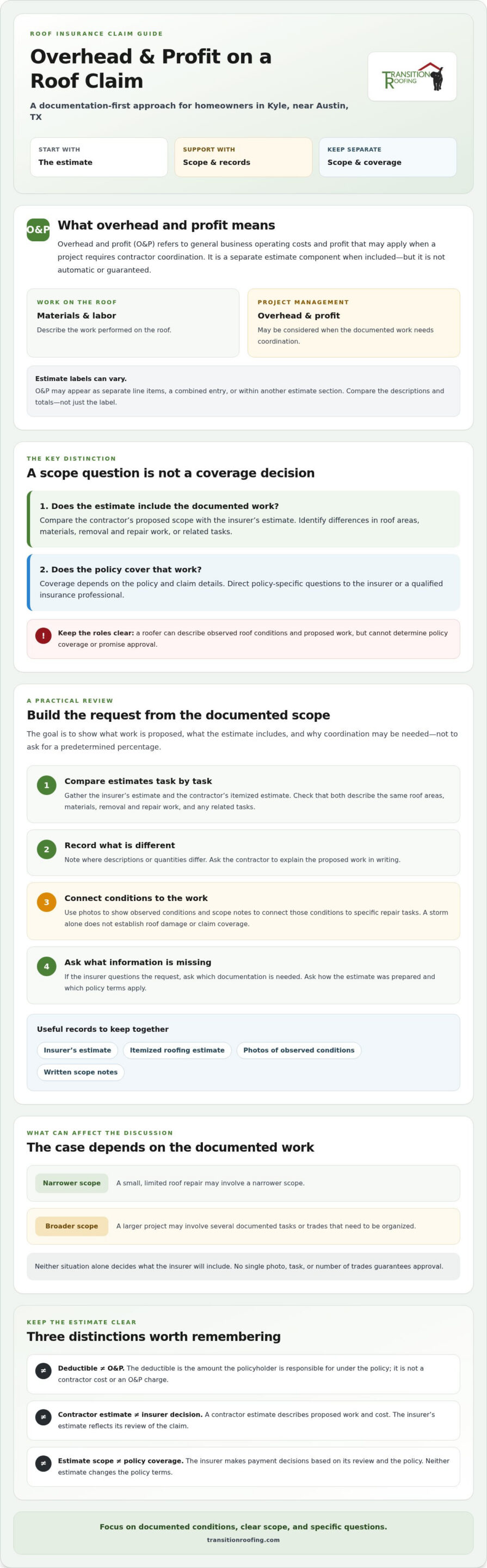
Materials and labor describe work performed on the roof. O&P is a separate estimate component when included, but its presentation can vary. It may appear as separate line items, a combined entry, or within another estimate section. Compare the descriptions and totals rather than relying on a label alone. The deductible is different: it is the amount the policyholder is responsible for under the policy, not a contractor cost or an O&P charge.
A roofing contractor’s estimate describes proposed work and its cost. The insurer’s estimate reflects its review of the claim. Neither document changes the policy terms or confirms what will be paid. The insurer makes payment decisions based on its review and the policy. If wording or coverage is unclear, ask the insurer or a qualified insurance professional.
Why Kyle roof claims can involve several parts of a repair
Hail and storms are part of life in Central Texas, but a storm does not automatically mean a roof is damaged or that a claim is covered. If an inspection identifies damage, the repair scope may extend beyond the roofing material. For example, documented conditions could involve related work such as gutters or other exterior repairs. Whether those tasks belong in the scope depends on the observed conditions and the estimate.
When negotiating overhead and profit on a roof insurance claim in Kyle, focus on the work that is documented and whether it needs coordination. A local roofer can describe visible roof conditions and the proposed repair scope, but cannot determine policy coverage or promise approval. For broader local storm context, see the Central Texas storm recovery guide.
When overhead and profit may fit a Kyle roof claim in the Austin, TX area
O&P is a fact-specific estimate question, not an automatic addition or a fixed formula. The relevant issue is whether the documented work and coordination needs support including it. A small, limited roof repair may involve a narrower scope. A larger project may involve several documented tasks or trades that need to be organized. When complex repairs span multiple specialties, general contracting firms like OTS Construction demonstrate how proper scheduling and trade management help define the full scope of work. Neither situation alone determines what the insurer will include.
What project details can support an O&P review?
Compare the insurer’s estimate with the contractor’s itemized scope, task by task. Check whether both documents describe the same roof areas, materials, removal and repair work, and any related tasks. Note where the descriptions or quantities differ, and ask the contractor to explain the proposed work in writing. Photos can show observed conditions, while scope notes connect those conditions to specific work. These details can make a request clearer, but no single photo, task, or number of trades guarantees approval.
How policy terms and estimate differences affect the discussion
Ask the insurer how it prepared the estimate and which policy terms apply. Keep two questions separate: does the estimate include the work the contractor says is needed, and does the policy cover that work? The first is a scope discussion. The second is a coverage question for the insurer or a qualified insurance professional. Texas insurance claim guidance can help you prepare questions, but your policy and claim details still matter.
If a roof replacement is part of the documented scope, review the company’s residential roofing services. For help understanding roof conditions and estimate differences, see Transition Roofing’s roofing and claim assistance. A roofer can explain the proposed roofing work, but cannot promise an insurer’s decision.
How to negotiate roof-claim overhead and profit in Kyle, TX, near Austin
Keep the discussion tied to documented work and specific questions. Use this process when negotiating overhead and profit on a roof insurance claim in Kyle:
- Review: Gather the insurer’s estimate, the contractor’s itemized estimate, relevant policy information, and claim correspondence.
- Compare: Match the proposed repair tasks to the insurer’s estimate. List missing items or differences in scope without assuming they are covered.
- Document: Organize dated roof photos and inspection notes by repair area. Ask the contractor to explain the proposed work in writing. Do not alter damaged areas or describe damage as storm-related unless that cause has been verified.
- Ask: Send the adjuster a concise question: “Could you explain in writing how overhead and profit was considered in the estimate, and what estimate or policy basis supports that decision?”
- Follow up: If the response does not address a scope difference, send the relevant estimate items and supporting photos. Ask whether a reinspection is appropriate.
What to do if the insurer declines O&P
Request the reason and the estimate or policy basis for the decision. Then send a focused clarification that connects each disputed repair task to the contractor’s scope and supporting records. A contractor can describe roof conditions and proposed work, but policy-specific or disputed coverage questions belong with the insurer or a qualified insurance professional.
Keep copies of everything you send and the responses you receive. If you need help understanding roof observations or an itemized scope, review Transition Roofing’s roof-scope services. A roofing review can clarify the proposed work, but it cannot promise a particular claim outcome.
Choose a clear next step for your Kyle roof insurance claim
Take the steps in order: understand the insurer’s estimate, verify the proposed repair scope, document differences, then ask focused questions. If you’re negotiating overhead and profit on a roof insurance claim in Kyle, a roofer can add useful detail about observed roof conditions and proposed work. An itemized written estimate is easier to compare than a verbal total because it shows which repair tasks are included.
When to ask a roofer to review the roof and estimate
Consider a roofing review if visible damage, a proposed repair, or an estimate line item is unclear. Ask the roofer to connect observations to specific work areas and explain differences from the insurer’s estimate. Photos and written scope notes make the comparison easier to follow. For tips on evaluating a contractor, see this Austin roofing contractor guide.
Central Texas heat, hail, and storms can affect roof conditions, but only observed conditions should guide the repair discussion. A roofer can document roof observations and explain a proposed scope. The insurer makes coverage and payment decisions based on policy terms and claim facts. For policy-specific questions or a disputed coverage decision, speak with the insurer or a qualified insurance professional.
Keep the claim process focused on a sound repair
Focus on a complete, documented repair plan that addresses the roof conditions, not a promised claim result. Clear records help everyone discuss the same work and identify where estimates differ. Transition Roofing offers roofing services and insurance claim assistance. Its team can help explain roof observations and the proposed scope, while the insurer remains responsible for coverage and payment decisions.
Move forward with a clear roof-claim plan
Negotiating overhead and profit on a roof insurance claim in Kyle starts with a careful estimate review, not an assumed percentage. Compare the insurer’s estimate with an itemized roofing scope, and use photos and written notes to explain differences. O&P is not guaranteed, and coverage decisions depend on the policy and claim facts.
A roofer can document observed roof conditions and explain proposed repair work. The insurer decides what the policy covers. Keep those roles clear, and direct policy-specific questions to the insurer or a qualified insurance professional. A calm, well-documented discussion can help identify what remains unclear and guide your next step.
Transition Roofing offers insurance claim assistance as well as roof installation, repair, and maintenance services. If you need help understanding roof observations or a proposed scope, contact Transition Roofing for a roof and scope review.
Frequently Asked Questions
Is overhead and profit automatically included in a roof insurance claim?
No. Overhead and profit is not automatically included in every roof claim. Whether it appears in an estimate depends on the policy terms, claim facts, documented repair scope, and insurer review. Ask the insurer how it handled O&P and what estimate or policy basis supports its decision. Treat any percentage discussed as a point to review, not guaranteed payment or approval.
Can I negotiate overhead and profit on a roof insurance claim in Kyle?
Yes. As the property owner, you can ask questions and submit relevant documents, though a request does not guarantee payment. When negotiating overhead and profit on a roof insurance claim in Kyle, compare the insurer’s estimate with the contractor’s itemized scope. Explain documented coordination needs, then ask the insurer to clarify its decision in writing. Keep the discussion tied to the actual roof work and your policy.
What documentation can support an overhead-and-profit request?
Gather the insurer’s estimate, the contractor’s itemized estimate, relevant policy information, claim correspondence, and inspection notes. Add clear photos of the roof areas and repair tasks in question. The documents should show observed conditions and explain the proposed work. Do not treat unverified damage as storm-related or include tasks that are not supported by the inspection and repair scope.
What should I do if the insurer denies overhead and profit?
Ask the insurer for the reason and the estimate or policy basis for its decision. If the contractor’s scope identifies work that the insurer’s estimate does not address, send a brief written clarification with relevant photos or notes. You can also ask whether a reinspection is appropriate. For a coverage dispute or policy-specific question, speak with the insurer or a qualified insurance professional. No response guarantees a reversal.
Does a Kyle roofing contractor decide whether my insurer pays overhead and profit?
No. A roofing contractor can document roof conditions, explain proposed repairs, and provide a written estimate. The insurer evaluates the claim under the policy and decides what it will pay. Keep those roles separate: a contractor’s scope can clarify the work, but a roofer cannot guarantee coverage, claim approval, or payment. Ask the insurer or a qualified insurance professional about policy-specific decisions.