In most leased commercial properties, the landlord or property owner is responsible for roof maintenance and repairs, though the lease may assign some costs to tenants. Commercial roofs should generally be inspected annually and after major storms. A practical approach to commercial roof maintenance to reduce tenant complaints in Austin starts with clear responsibility and timely attention to leaks.
Responsibility can feel unclear when water appears in several places or a tenant is unsure who should arrange an inspection. The lease matters, as does the roof’s condition. Austin’s heat, hail, and storms can expose drainage problems, worn seams, and other issues that need attention before they disrupt tenants.
This article explains how lease terms affect roof duties, when multiple leaks may still be repairable, and why clearing debris from drains and roof areas helps manage water. You’ll also learn which signs to report and how regular maintenance can support a more dependable building.
Key Takeaways
- Review the lease to understand who handles roof repairs and how maintenance costs are assigned.
- Use inspection photos and written notes to connect leak locations with the roof’s overall condition.
- Learn why leaks in several areas may still be repairable, and what signs point to a larger roofing issue.
- See how clear drains and gutters can help limit ponding water, while roof condition and repair scope shape maintenance costs.
Who Is Responsible for a Commercial Business Roof? Commercial Roof Maintenance to Reduce Tenant Complaints Austin
For most leased commercial properties, the landlord or owner handles roof maintenance and repairs. The lease may assign some costs to tenants, so review its maintenance and repair terms. In multi-tenant office parks and retail centers, the landlord typically manages structural components, including the roof.
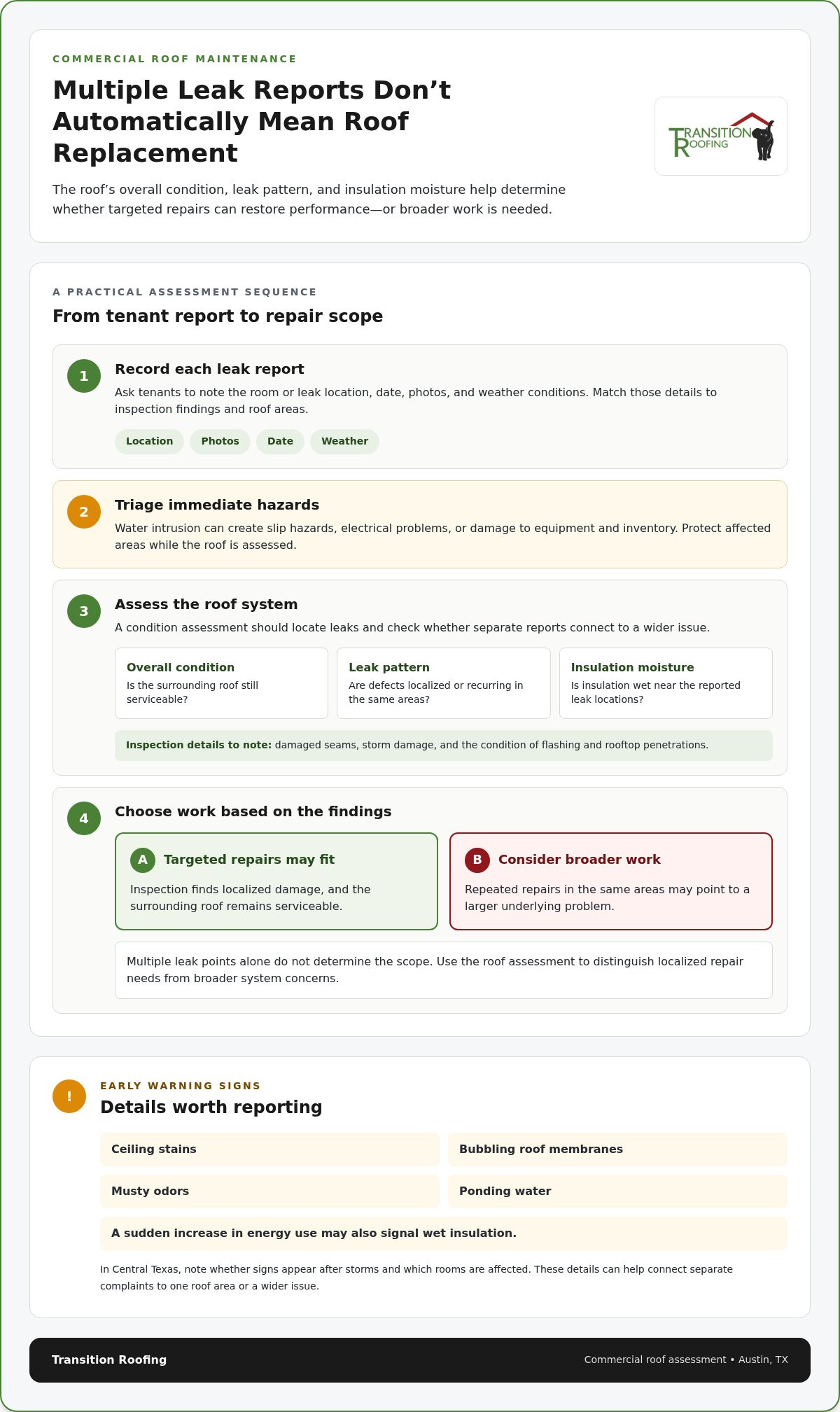
Clear records and prompt communication help reduce roofing complaints. Tenants should report leaks in writing, including photos, the location, date, and weather conditions. Owners can share inspection findings, planned work, and updates on reported issues, creating a useful record for both sides.
Schedule inspections annually and after major storms, then adjust the plan to the roof’s condition and applicable warranty or risk-management schedules. There is no universal inspection interval for every Austin building. Tenants can request or suggest inspections every six months, especially when recurring leaks or visible wear raise concerns. A commercial roof inspection in Austin can help document the system’s condition.
A professional condition assessment should identify leak locations, include photos, and note whether insulation is wet. Inspectors should check seams, flashing, and rooftop penetrations, where water can enter. The report helps owners compare repairs with broader work and clarify responsibility under the lease. Review the warranty before work begins because notice, documentation, and authorized repairs may affect coverage.
- Record the inspection date, roof areas reviewed, and visible defects.
- Match tenant reports to photos, leak locations, and weather conditions.
- Keep maintenance records with warranty documents and repair details.
Condition-based maintenance can extend a roof’s service life. Coatings may extend an aging system by 10-20 years when its condition supports restoration. Regular inspections help owners spot changes early and plan work before complaints repeat.
Can a commercial roof be repaired if it leaks in more than one place?
Yes, leaks in several places can often be repaired. The roof’s overall condition, leak pattern, and insulation moisture help determine the right scope. Commercial roof maintenance to reduce tenant complaints in Austin starts by finding out whether separate leaks share an underlying cause.
Early Leak Warning Signs
Early warning signs indoors can point to water entering the roof assembly. In Central Texas, watch for ceiling stains, bubbling roof membranes, musty odors, or ponding water. A sudden increase in energy use can also signal wet insulation, which may reduce thermal performance. Note the affected rooms and whether signs appear after storms. These details help owners connect separate complaints to one roof area or a wider issue. Addressing concerns early can help prevent repeated disruptions.
Leak Complaint Triage and Response
Complaint triage means recording each report, identifying immediate hazards, and arranging a timely roof assessment. Ask tenants to provide the room location, photos, date, and weather conditions. Owners should respond promptly, explain next steps, and follow up in writing. Water intrusion can create slip hazards, electrical problems, and damage to equipment or inventory. Clear communication helps staff protect affected areas and limit disruption while roof repairs are assessed.
Repair Scope, Maintenance, and Disruption
Multiple leak points don’t automatically mean the roof needs replacement. Repairs can address separate defects when an inspection finds localized damage and the surrounding roof remains serviceable. Repeated repairs in the same areas may point to a larger underlying problem. A condition assessment should locate leaks and check for wet insulation, damaged seams, or storm damage. Those findings help determine whether targeted repairs can restore performance or broader work is needed.
Proactive maintenance usually causes less disruption than waiting for emergency work. An emergency response may involve temporary protection, labor, water removal, drying, and interrupted tenant operations. Regular inspections help owners find defects early, plan repairs, and reduce unexpected interruptions. Many commercial repairs can proceed while a business remains open, with work coordinated around tenant operations. A plan for commercial roof maintenance to reduce tenant complaints in Austin helps property teams organize work before concerns build.
If leak reports keep returning, a focused assessment can clarify the repair scope. Understanding commercial roofing in Austin can help owners distinguish localized repair needs from broader system concerns.
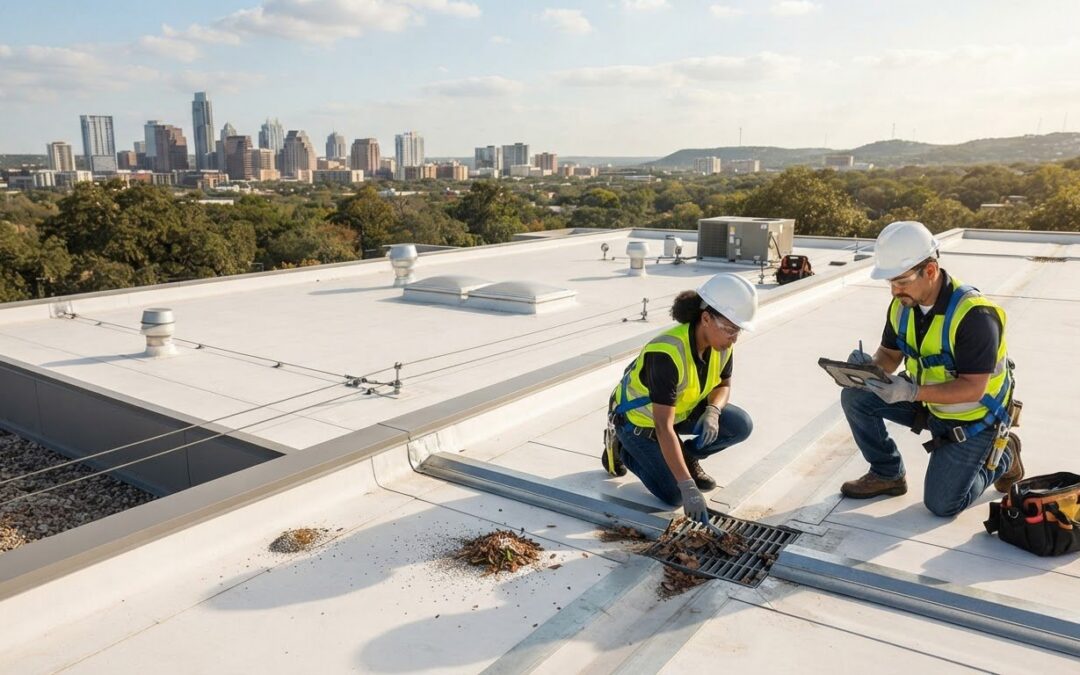
Debris removal from drains, gutters, and roof areas
On Austin flat roofs, leaves, branches, and windblown debris can block drains and slow runoff. After storms, managers should check for clogged drains, full gutters, and debris near roof penetrations. Clear drainage gives rainwater a path off the roof and makes it easier to spot damaged flashing or membrane seams during an inspection.
Standing water on a flat or low-slope roof can stress the membrane, worsen seams, and shorten the roof system’s life. If water remains a day or two after rain, arrange professional attention. Persistent ponding can damage protective coatings, add weight, and increase leak risk. Clearing a blocked drain may limit water buildup, but it won’t fix poor drainage or a damaged roof area.
- Record where water collects and whether nearby drains are blocked.
- Note debris, damaged gutters, or visible flashing defects after storms.
- Keep photos with maintenance records so managers can track recurring spots.
Drainage and flashing address different problems. A clear drain moves water away; sound flashing seals roof edges and penetrations. If a leak continues after debris is removed, a roofing contractor can assess the flashing and surrounding roof assembly. That inspection helps distinguish a localized defect from wider damage that could affect repair or replacement decisions.
Roof access matters, too. Businesses should use contractors trained in rooftop safety and single-ply membrane handling when servicing rooftop equipment. A maintenance visit can include clearing debris, checking drains and gutters, and documenting ponding or membrane concerns. These steps help the roof shed water instead of holding it over occupied spaces.
For Austin property managers, the key is to connect cleanup with condition checks. Clear drainage after storms, then record whether ponding returns. Water that remains a day or two after rainfall signals that the drainage path or roof system needs attention. Addressing a blocked drain or documented flashing defect may limit water accumulation or entry, depending on the cause.
What does commercial roof maintenance cost in Austin, Texas?
Commercial roof maintenance costs in Austin depend on the work required, not just the building type. A clear estimate separates inspection, debris removal, minor repairs, and larger corrective work. Clearing a blocked drain differs from repairing a failed seam or addressing wet insulation. Inspection findings and a written scope clarify what the proposed work covers.
Key cost drivers include roof size, access, roofing material, and the condition of drainage details. A flat roof with clogged drains may need cleanup and a drainage assessment. A roof with recurring leaks may need closer checks of seams, flashing, and insulation. Austin heat, hail, and storms can also affect the type and extent of repairs needed.
- Ask for findings and proposed work to be itemized.
- Separate routine maintenance from repairs caused by visible damage.
- Compare the documented roof condition with warranty requirements.
The scope matters more than a generic maintenance label. Clearing debris is different from correcting ponding caused by a drainage defect. Repairing localized flashing damage also differs from addressing widespread membrane deterioration. A written assessment helps property managers understand why each task is included and which condition it addresses.
Regular maintenance helps owners identify developing issues and plan roof expenses before urgent work disrupts tenants. It can also reveal when repeated repairs point to a larger problem. The roof’s condition, repair history, drainage, and insulation findings all help determine whether maintenance or broader corrective work is appropriate.
For a building-specific roofing scope in Austin, explore commercial roofing services and plan work around the roof’s documented needs.
Transition Roofing: Commercial Roof Installation
Transition Roofing helps Austin property owners address commercial roof damage through repairs and installation. Turn to its commercial roof repair service when inspection findings point to a repairable defect, such as a leak around a seam or flashing. If the roof needs a new system, commercial roof installation can provide a path forward.
Material choice should suit the building’s needs and existing roof conditions. Transition Roofing offers TPO Roofing Systems and Metal Roofing Systems for commercial projects. A clear assessment helps property managers understand whether repair or installation fits the roof’s condition and the building’s long-term plans.
For help with a commercial roof concern in Austin, contact Transition Roofing.
Build a More Predictable Roof Care Plan
A steady maintenance plan helps property teams move from complaint-driven decisions to planned work. Set a clear process for recording roof concerns, assigning follow-up, and sharing updates with tenants. This routine keeps communication organized as building needs change through the year.
For commercial roof maintenance to reduce tenant complaints in Austin, start with a practical review of your building’s current needs. Use documented concerns to set priorities, then keep the plan accessible to the people who manage tenant communication. Clear ownership makes it easier to act on new issues and keep everyone informed.
If you’re ready to discuss the roof’s next steps, contact Transition Roofing. A clear plan can help your team move forward with confidence.
Frequently Asked Questions
Do commercial roofs in Austin need winter maintenance?
Yes. Winter maintenance matters in Austin because temperature changes can widen small cracks or lift seams. A check after winter weather can catch these changes before water reaches occupied areas. Ask the inspector to compare current seam conditions with earlier photos. The comparison can show whether movement or aging has changed a known trouble spot.
Should I get an inspection before deciding?
Yes. An inspection helps distinguish a localized defect from damage affecting a larger roof area. An interior stain, for example, may appear far from the roof entry point, so the visible ceiling mark alone can’t define the repair scope. A written assessment with photos, leak locations, and insulation findings gives owners clearer evidence for planning repairs or replacement.
What’s Really Causing Your Commercial Roof Leak?
Common entry points include seams, flashing, drains, and rooftop equipment. Water can travel through the roof assembly before appearing inside, so a ceiling stain may not be directly below the defect. A useful investigation traces the moisture pattern and checks nearby roof details. Recording the indoor location and conditions helps connect the symptom with the roof assessment.
What commercial roof maintenance tasks help prevent leaks and tenant complaints?
Keep drainage paths clear, inspect flashing and seams, and document changes after storms or equipment work. These tasks help identify small defects before water reaches tenant spaces. For example, a manager can note whether a leak follows rainfall and whether it returns near the same roof feature. That record helps focus follow-up instead of treating each report as unrelated.
How often should commercial roofs in Austin be inspected and maintained?
Commercial roofs should generally be inspected annually and after major storms. The right maintenance schedule also depends on roof condition and applicable manufacturer, warranty, or risk-management schedules, since one interval won’t suit every building. Tenants can request or suggest inspections every six months. Owners should use inspection findings to focus attention on areas showing wear or recurring problems.
What are the signs of roof problems tenants are most likely to report?
Tenants may report ceiling stains, bubbling roof membranes, musty odors, or ponding water. A sudden increase in energy use can also signal a roof concern. Ask the reporter to describe the affected room and when the sign appeared. A stain that grows after rain or a musty odor near a ceiling gives managers useful context for assessing the issue.