
A roof repair may be exempt from a permit, but calling the work a “repair” doesn’t settle the question. For the commercial building roof permit process in Hays County, both the scope of work and the local jurisdiction reviewing it matter, along with whether a licensed contractor is required.
It’s reasonable to want a clear answer before work begins. Permit rules may treat routine maintenance differently from a replacement or changes to the roof, and building and zoning reviews may involve separate checks. Understanding the process helps you plan ahead and avoid preventable delays.
This guide explains how to identify the authority reviewing the project, how applications and contractor roles fit together, and which routine repairs may qualify for an exemption. It also covers factors that can change the permit path, helping you plan commercial roof work with a clearer view of the next steps.
Key Takeaways
- Find out why the project’s location and scope matter when building-code and zoning reviews are involved.
- See what information may be needed for a commercial roofing application and how contractor roles can affect who submits it.
- Learn why routine patching and maintenance may follow a different permit path from roof replacement or structural changes.
- Explore how commercial roof repair, installation, TPO, and metal roofing services can support your next project.
Commercial Building Roof Permit Process Hays County: Building-Code and Zoning Review in Austin TX
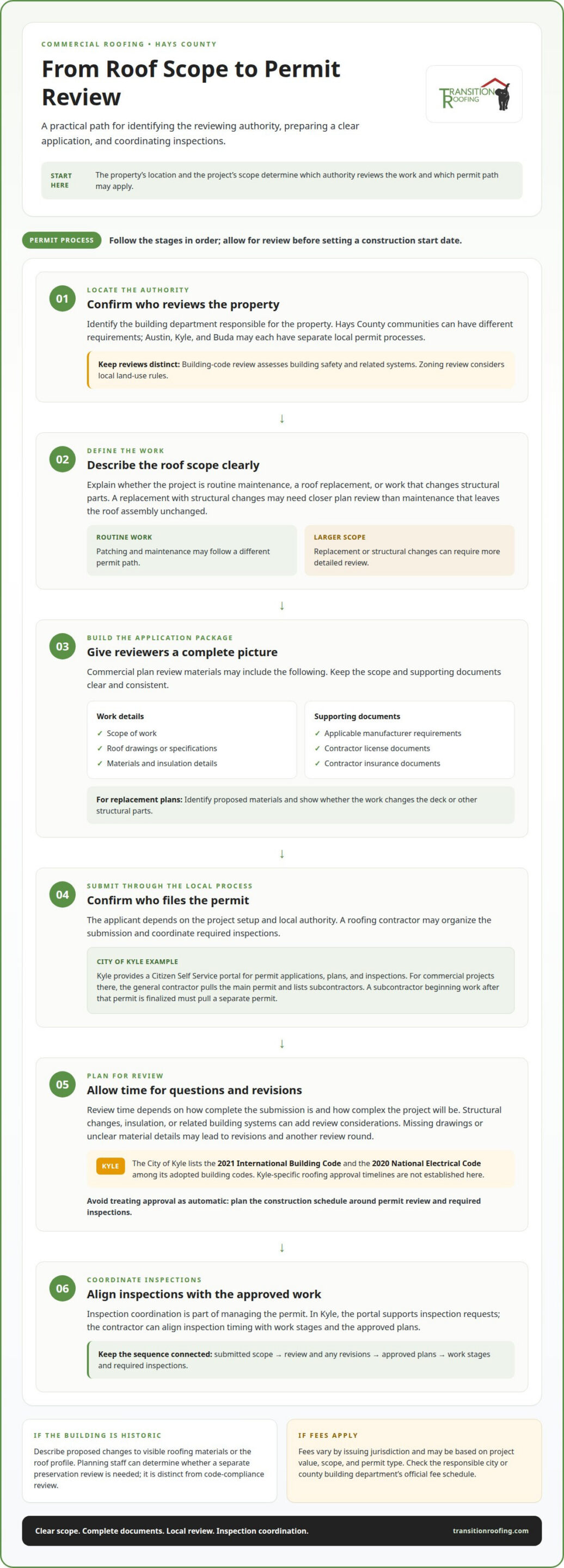
For a commercial roof project, review begins with the property’s jurisdiction and the work’s scope. Building-code review considers whether the proposed roof assembly and structural work meet applicable standards. Zoning review considers whether the project fits local land-use rules. Requirements can differ between Hays County communities, so the reviewing authority depends on the property’s location.
The City of Kyle lists the 2021 International Building Code and the 2020 National Electrical Code among its adopted building codes. These adopted codes give reviewers a framework for evaluating building safety and related systems. A roof replacement with structural changes may need closer plan review than maintenance that leaves the roof assembly unchanged.
A commercial plan review package typically describes the work and materials. Clear, consistent documents help reviewers understand the proposed scope:
- Scope of work and roof drawings or specifications
- Roofing materials and insulation details
- Applicable manufacturer requirements
- Contractor license and insurance documents
Historic status can add a planning consideration. If a building has a historic designation, describe proposed changes to visible roofing materials or the roof profile in the project information. Planning staff can determine whether those exterior changes need a separate preservation review, which is distinct from a code-compliance review.
Review time depends on how complete the submission is and how complex the project will be. A straightforward roof plan may require fewer steps than work involving structural changes, insulation, or related building systems. Missing drawings or unclear material details can lead to revisions and another review round. Allow for review time before setting a construction start date.
Commercial Roof Permit Applications and Approval Timelines in Austin TX
A complete application gives reviewers a clear picture of the roof work, materials, and systems involved. A roofing contractor can organize the submission and coordinate required inspections.
Applicable Codes
Applicable codes are the local rules reviewers use to assess building, energy, and fire-safety details. They matter because a roof plan must fit the project’s location and scope, not just the roofing material. Insulation information supports energy review, while roof details and related systems help reviewers assess safety. The City of Kyle lists the 2021 International Building Code among its adopted codes.
Building permit application submission by your roofing contractor
A roofing contractor prepares and submits project details through the permitting system used by the local jurisdiction. The City of Kyle provides a Citizen Self Service portal for permit applications, plans, and inspections. For commercial projects there, the general contractor pulls the main permit and lists the project’s subcontractors. A clear scope, roof plans, material and insulation details, and contractor documents help explain the work.
Inspections and Approval Timelines
Inspection coordination is part of managing the permit, not a separate afterthought. The City of Kyle portal supports inspection requests, while the contractor can align inspection timing with the work stages and the approved plans. Review time depends on the submission and the questions raised by its scope; Kyle-specific roofing approval timelines are not established here. Accurate documents help reviewers assess the project without avoidable clarification rounds. Plan the construction schedule around permit review and required inspections, rather than treating approval as automatic.
Who Pulls Commercial Roofing Permits in Austin TX?
For Hays County commercial properties, the responsible permit applicant depends on the project setup and local authority. The commercial building roof permit process in Hays County begins by identifying the building department with jurisdiction over the property.
Permit Requirements for Commercial Roofing
Permit requirements depend on the planned work: a roof replacement is different from a localized repair. For commercial projects in Kyle, the general contractor pulls the main permit and lists subcontractors. If a subcontractor begins work after that permit is finalized, the City of Kyle requires the subcontractor to pull a separate permit. Residential roofing follows the rules of the property’s jurisdiction, so don’t assume commercial requirements apply to a home.
Project Plans and Documentation
Project documents describe the proposed roof work so the reviewing authority can assess its scope. Commercial applications may call for a work description, roof drawings or specifications, a materials list, insulation details, applicable manufacturer requirements, and contractor license and insurance documents. Replacement plans, for example, should identify the proposed materials and show whether the work changes the deck or other structural parts.
City-Specific Rules and Unpermitted Work Risks
Austin, Kyle, and Buda may each have separate local permit processes because the responsible authority depends on the property’s location. Permit fees vary by issuing jurisdiction and may be based on factors such as project value, scope, and permit type. Check the official fee schedule from the city or county building department responsible for the property, then confirm which fee category applies to the proposed roof work. Work that requires a permit but proceeds without one bypasses plan review and inspection, which can leave gaps in project records and complicate closeout. For Hays County projects, identify the local authority, check its fee schedule, and document the work before it begins.
Routine Commercial Roof Repairs and Permit Exemptions in Austin TX
A small repair can differ from replacing a roof system, but the word “repair” alone doesn’t establish an exemption. For a commercial roof in Hays County, the work’s scope and the property’s jurisdiction determine how the permit question is handled.
Routine maintenance usually preserves the existing roof rather than changing its structure or design. Examples include resealing a small area of flashing, patching a localized membrane puncture, or clearing debris from a roof drain. These examples can help describe the work, but they don’t guarantee a permit exemption. A larger replacement area or work that changes roof components needs closer review.
- Describe the exact repair area and affected roof material.
- Separate patching from replacement of broader roof sections.
- Note whether the work changes the deck, structure, drainage, or roof layout.
Those details help distinguish routine upkeep from a project with a wider scope. They also give the reviewing office a clear basis for explaining whether its permit rules apply. Be specific: “patch membrane puncture near a drain” says more than “roof repair.”
A localized leak repair that leaves the roof deck and layout unchanged has a different scope from replacing roofing across a large area. If a storm-damaged section needs more than patching, describe the affected materials and planned work accurately. Don’t assume a small job is exempt; the responsible jurisdiction’s rules still apply.
Clear takeaway: Routine patching and maintenance may be exempt, but exemptions are not automatic across Hays County. Define the work precisely, identify the property’s jurisdiction, and establish the permit path before scheduling a repair. This helps reduce avoidable review delays.
Commercial Roofing Services from Transition Roofing in Austin TX
Transition Roofing helps Austin-area property owners move from permit questions to a roofing plan that fits the building. With over 15 years of local experience, the team understands Central Texas roofing needs and uses insured installers with certifications from GAF, CertainTeed, Versico, and Dura-Last. When a leak, aging roof, or planned replacement calls for professional work, the first step is to define the scope and select a suitable system. Permit requirements still depend on the property’s jurisdiction and proposed work.
A full replacement involves installing a commercial roof system as a whole. TPO and metal roofing systems are available options for commercial projects. The right approach depends on the building and project goals, not a one-size-fits-all recommendation. A clearly defined scope also helps keep the roofing plan consistent with the documents submitted for review.
When damage is limited, commercial roof repair can address a specific problem rather than treating every leak as a full replacement. In Austin and Central Texas, heat, hail, and storms can expose weak points or cause new damage. Prompt attention helps property managers determine whether an issue is localized or part of a wider roofing concern.
Transition Roofing serves commercial customers with roof installation, TPO systems, repairs, and metal roofing. The practical starting point is a clear account of the building’s condition, the planned work, and any permit or inspection questions already raised. This gives the roofing discussion a useful direction without assuming every project follows the same path.
If you’re planning commercial roof work or dealing with a leak, contact Transition Roofing to discuss the project.
Frequently Asked Questions
How long is my permit good for after being issued?
Most City of Kyle permits expire 180 days after issuance or the date of the last inspection, according to the City of Kyle. Keep the permit expiration and inspection dates on the project schedule. If the work is delayed, track the latest inspection date so the team can plan around the permit’s active period and avoid relying on an outdated approval.
What commercial roofing projects require a permit in Hays County?
The authority responsible for the property determines whether the proposed commercial roof work needs a permit. Describe the full scope, including whether the work replaces roofing, changes the roof deck, or affects structural elements. These details help distinguish a limited repair from a broader project. Requirements can differ by jurisdiction, so the same scope may follow different review paths in different local areas.
What documents and plans are required for a commercial roof permit application?
A typical application package includes a description of the work, roof plans or specifications, roofing material details, insulation details, and contractor documents. The plans and documents should clearly show the proposed work and how it relates to existing conditions. Keep the submitted version aligned with the construction plan; if field conditions change the scope, the difference can affect review and project records. The responsible authority may require additional documents or details.
How can my roofing contractor apply for a commercial roof permit in Hays County, and can the application be submitted online?
The contractor submits the application to the permitting authority responsible for the property. Online submission is available where that jurisdiction provides an online system. The contractor can organize the application materials and coordinate inspection requests through the applicable process. Because Hays County properties may fall under different local authorities, the submission route depends on the project address.
How long does commercial roof permit approval take in Hays County?
Approval timing depends on the reviewing authority and the scope of the proposed work. Clear plans may move through review differently from plans that need revisions or additional review steps. Allow for review time in the construction schedule, including time to respond to reviewer comments before setting a firm start date.
What roofing codes and wind-load requirements apply to commercial buildings in Hays County?
The authority responsible for the building determines the applicable roofing codes and adopted requirements. Wind-load criteria address how the roof is designed to resist local wind forces, and project documents should address the criteria that apply to the building. Requirements can vary by jurisdiction and project design, so don’t assume one code set covers every Hays County property.