

Roofing solutions that don’t disturb hotel guests in Lakeway start with a work plan built around the property’s layout and daily operations. In Austin and Central Texas, heat, hail, and storms can also affect when roof work can proceed. Clear communication helps hotel teams prepare for construction while prioritizing guest comfort.
It’s reasonable to ask how construction could affect guest access and the hotel experience. This guide covers how to plan hotel roofing projects, what can affect their scope and schedule, and how a contractor’s process can help reduce avoidable disruption.
You’ll learn what to weigh when choosing repairs or replacement, so you can plan the next step with confidence.
Key Takeaways
- Match the roofing system to the hotel’s building design and operational needs before setting a work plan.
- Phased repairs can help keep parts of a hotel in use, with work zones and guest routes planned around the project.
- Roof type, repair scope, and site conditions affect both the project budget and timeline.
- Look for a clear plan for communication, debris cleanup, and protecting guest access during roofing work.
Commercial roofing services in Lakeway, Austin TX, for roofing solutions that don’t disturb hotel guests in Lakeway
Hotels, offices, and event venues in Lakeway need roofing materials suited to each building’s design and use. Residential roofing choices differ from the flat roof systems common on commercial properties. Roof layout, slope, and the areas beneath it all help determine which system fits.
Roof-Over and Replacement Options
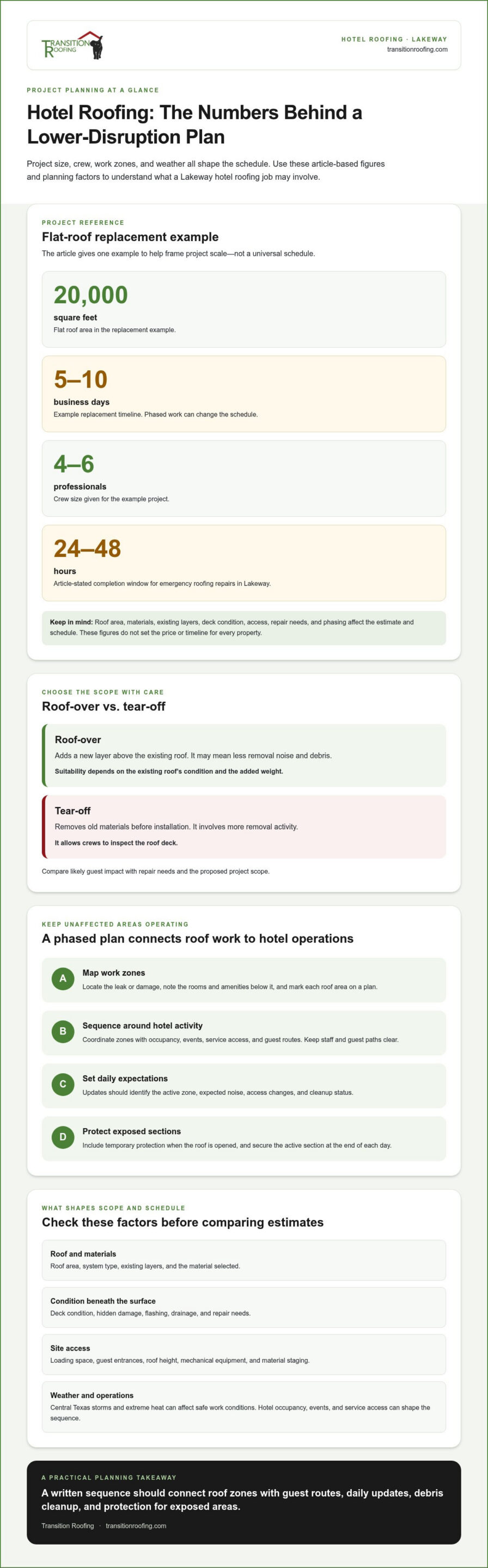
A roof-over adds a new layer above the existing roof, while a tear-off removes old materials before installation. A roof-over may involve less removal noise and debris, but the existing roof’s condition and the added weight determine whether it’s suitable. A tear-off involves more removal activity but allows crews to inspect the roof deck. Compare the likely guest impact with the repair needs and the proposed scope.
Hotel Roofing Requirements
Permit and building-code steps depend on the project scope and the building. For a Lakeway hotel, identify applicable requirements before scheduling work. TPO and PVC are single-ply membrane roofing types; modified bitumen suits flat roofs and offers water and impact resistance. Material, fire-rating, and energy-efficiency decisions should be reviewed against the project’s applicable requirements, not assumed from the product name.
Project Costs and Timelines
Roofing costs depend on roof area, selected roofing materials, existing layers, deck condition, access, and repair needs. Those factors also shape an estimate, so a universal price would not reflect a specific Lakeway roof. For a 20,000-square-foot flat roof replacement, the project timeline is 5-10 business days with a crew of 4-6 professionals. Phased work can change the schedule.
Phased Repairs and Contractor Fit
Phased repairs divide the roof into defined work areas, helping hotel staff keep unaffected rooms and amenities in use. At an event venue, crews can plan zones around scheduled functions; at an office, they can keep staff entrances clear. Request a written sequence that covers access, debris cleanup, and daily work areas. A phased plan also helps owners compare repairs with replacement and schedule work around guest activity.
Can hotel roof repairs be completed in phases to keep rooms and amenities open in Austin, TX?
Yes. A phased repair plan divides the roof into work zones, allowing hotel teams to keep unaffected areas operating. In Lakeway, map each zone to the rooms, entrances, and amenities below it. This helps staff plan guest access and gives the roofing crew clear work boundaries.
Set the Work Zones
First, locate the leak or damaged section and note what’s beneath it. A repair above a meeting room may need different timing from one above a guest-room corridor. Mark each work zone on a roof plan, then sequence repairs to limit overlap with busy hotel areas. Keep guest and staff routes clear, and specify where crews will handle materials and debris.
Coordinate Daily Operations
Before work starts in each zone, hotel staff can share event schedules, room occupancy patterns, and service-access needs. Crews can then avoid staging materials near an active entrance, while staff direct guests around the work area. Daily updates should state the active zone, expected noise, access changes, and cleanup status. These practical details help front-desk teams keep guests informed.
Protect the Building During Repairs
Phasing doesn’t mean leaving an exposed area unattended. The work sequence should include temporary protection if crews need to open the roof, with the active section secured at the end of each day. If a storm damages several areas, prioritize leaks and exposed sections before less urgent repairs. After hail, document visible damage when safe and arrange an inspection to define the repair zones.
Ask for a written sequence that connects roof zones with guest routes, daily updates, and cleanup. For a Lakeway property planning commercial roof repairs, a commercial roofing work plan can help set out the repair scope and project stages.
Emergency roofing repairs in Lakeway are stated to be completed within 24-48 hours; contractors should coordinate with insurance companies to help make repairs affordable.
What are the typical costs and timelines for low-disruption hotel roofing in the Lakeway area?
Hotel roofing costs and schedules depend on roof area, materials, access, and the work needed beneath the surface. A Lakeway estimate should distinguish repairs from replacement and explain how guest access affects each phase. This detail helps owners compare project scopes, not just totals.
What Shapes the Project Cost?
Start with the roof system. TPO, metal, and asphalt shingle roofs involve different materials and installation steps. The estimate should also account for tear-off, disposal, roof-deck repairs, flashing, and drainage work where needed. Hidden deck damage, for example, may expand the scope after old roofing is removed. Ask for affected areas and work items to be listed separately so it’s clear what shapes the project.
Access matters, too. A hotel with limited loading space or guest entrances close to the work zone may need careful material staging. Moving roofing materials across active walkways can affect crew access and cleanup. The building layout, roof height, and location of mechanical equipment also shape the work sequence.
How to Plan the Timeline
Ask the roofing contractor to map the project from inspection through final cleanup. The plan should identify the first work area, the next areas, and how crews will protect exposed sections between stages. Central Texas weather, including storms and extreme heat, can affect roof work. The schedule should account for safe working conditions and explain how weather-related changes affect the next task.
For lower disruption, coordinate the work calendar with hotel occupancy, events, and service access. A busy meeting room below a repair area may call for a different sequence than an unoccupied service wing. Before approving an estimate, compare its material scope, repair allowances, work zones, and cleanup steps. These details help owners understand both the project cost and the operational impact without relying on a single broad figure.
Which Lakeway roofing contractors specialize in occupied commercial or hotel properties?
Roofing work at an occupied hotel must account for guest access, staff routines, and active amenities. The contractor’s plan should show how crews will reach each roof area without blocking entrances or service routes. A work zone above a ballroom, for example, needs a different access plan from one above a back-of-house corridor. The schedule should also specify daily cleanup and who will coordinate updates with hotel staff.
Commercial roofing experience matters because hotels may have flat roof sections, rooftop equipment, and areas requiring different repair methods. A useful project sequence connects each roof section with its access route, material staging area, and cleanup plan. This helps staff understand where work will take place and what temporary changes guests may notice. The plan should explain how crews will protect the building if they open the roof during work.
For clients who prefer it, roofing work can be planned for evenings or weekends when the project and property operations allow. This may suit a hotel with daytime events or busy guest areas, but the timing should fit the work. For example, scheduling loud removal outside a planned function can reduce conflicts. Staff can then share clear updates about active work zones and guest routes.
Look for a project plan that names the roof areas, access points, debris handling, and daily closeout steps. These details matter more than a general promise to minimize disruption. A hotel team can use them to coordinate room assignments, events, deliveries, and maintenance access. If roof leaks or storm damage need attention, a defined repair scope also helps crews prioritize affected areas. A commercial roofing plan can lay out the work scope and sequence for an occupied property.
Roofing options should also match the building: for commercial properties, the roofing style is likely to depend on the building’s architecture. PVC and TPO are types of single-ply membrane roofing used on commercial properties, while commercial metal roofing is presented as suitable for impact and fire resistance. In Lakeway, Texas, a roof evaluation begins with a 15-minute call with a roofing specialist.
Regular roof maintenance helps keep a property in good condition through stormy weather. Properly maintained gutters and downspouts also help direct water away from the roof, siding, and foundation.
Transition Roofing: Commercial Roof Installation
Transition Roofing helps Lakeway property teams plan commercial roof installation and repairs around the building’s needs. Contact the team when an aging roof, recurring leak, or storm damage calls for a clear scope of work. Depending on the roof’s condition and affected areas, the right approach may be a targeted commercial repair or a new system.
For hotels with flat roofs, Transition Roofing installs TPO and other flat roof systems. Metal roofing may suit other commercial building designs. A project plan can define work areas and task sequences, giving hotel staff practical details to coordinate guest access and daily operations. The aim is durable roof protection and an organized process, while recognizing that construction noise cannot always be eliminated.
Contact Transition Roofing to discuss commercial roofing needs for your property.
Plan Your Hotel’s Next Roofing Step
A roofing project is also an operations decision. Before work begins, hotel leaders can identify key priorities: protecting occupied areas, keeping staff routes usable, and maintaining a clear guest experience. That focus turns roofing solutions that don’t disturb hotel guests in Lakeway into a practical project plan, not just a material choice.
Transition Roofing offers Commercial Roof Installation, TPO Roofing Systems, and commercial roof repair for properties addressing roof damage or planning a replacement. The next step is to discuss the building’s needs and determine which service fits the work ahead. A clear scope gives your team a useful starting point for planning around hotel operations.
Contact Transition Roofing today to discuss your hotel’s commercial roofing needs and take the next step with confidence.
Frequently Asked Questions
Which roofing methods minimize noise and disruption for occupied hotels?
Targeted repairs and carefully staged work can limit disruption by focusing activity on the roof area that needs attention. For roofing solutions that don’t disturb hotel guests in Lakeway, coordinate noisy tasks with hotel operations and keep guest routes clear of active work zones. For example, schedule work above a meeting room outside a planned event, then tell staff about access changes in advance.
What low-noise roofing materials and installation systems are suitable for hotels in Lakeway, Texas?
TPO Roofing Systems, Flat Roof Systems, and Metal Roofing Systems are commercial options suited to different roof designs. The material alone doesn’t determine noise; removal work, tools, roof access, and installation steps also matter. For a Lakeway hotel with a flat roof, discuss TPO as an option and plan how crews will stage materials and manage work near occupied rooms.