
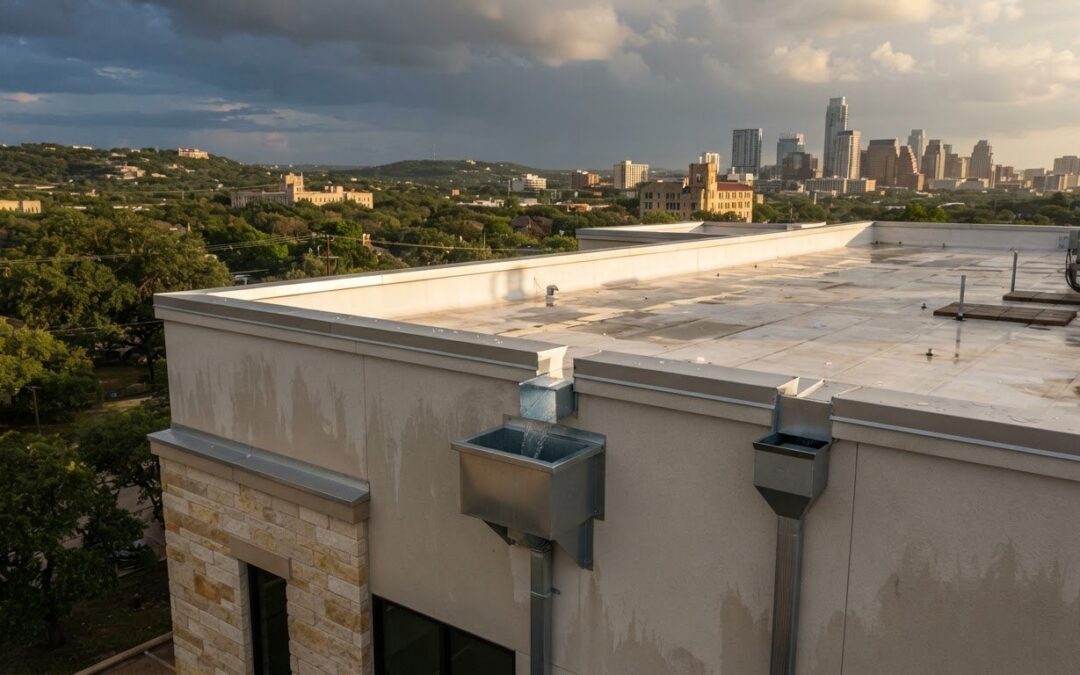
What if the collector box is the least complicated part of your roof drainage project? The cost to install commercial roof scuppers and collector boxes Austin building owners face depends on more than the hardware. The number and placement of outlets, parapet construction, roof condition, access, and connection to the existing drainage route all shape the work.
A useful estimate should explain the labor and roof work involved, not just list the components. On a low-slope roof, worn materials or an unclear drainage path may change the scope once the area is inspected. Careful planning and properly integrated flashing help protect the roof around each opening, especially through Central Texas heat, hail, and heavy rain.
This guide explains what affects installed cost and what a thorough assessment should cover. You’ll learn how to review the roof assembly, trace water flow, identify access limits, and separate drainage installation from nearby repairs. These details give property managers in Austin and nearby Central Texas communities a practical basis for planning the work.
Key Takeaways
- The cost to install commercial roof scuppers and collector boxes Austin projects require depends on the full scope: components, labor, roof tie-ins, access, and related repairs.
- Scuppers let water pass through a parapet wall. Collector boxes catch and direct runoff toward a downspout or another discharge point.
- A useful assessment inspects the roof, traces the drainage route, documents access, and identifies related work, including damage from Central Texas heat, hail, and storms.
- Documented roof conditions help shape a drainage and installation plan suited to the building’s commercial or flat-roof system.
What Drives the Cost to Install Commercial Roof Scuppers and Collector Boxes Austin Projects Face?
The cost to install commercial roof scuppers and collector boxes Austin projects require is based on the complete scope, not just the visible metal parts. The number of outlets, parapet construction, roof condition, and connection to the existing roofing and drainage systems all affect the work. A site-specific assessment is more useful than a generic price range because it identifies the conditions that shape the project.
On a low-slope roof, drainage components need to work with the roof assembly to move water out without creating weak points at the wall. A general overview of rain gutters also explains their role in managing runoff from roof areas.
A short video shows an example of custom scupper fabrication:
Which project conditions change an Austin installation estimate?
Access and the layout of the work area affect how crews reach each opening and complete the roof tie-in. The condition of the existing membrane matters as well. Loose, worn, or damaged roofing around a proposed opening may need repair before the new components are installed. The number and location of outlets, parapet construction, and the route for runoff all influence the scope. Hail or storm damage may also reveal problems during a closer inspection.
Why the box price is only one part of installed cost
A collector box or scupper is only one component. Installation also involves preparing the roof opening, fitting the components, and integrating the flashing and roofing around the connection. If nearby materials are damaged or the drainage route needs adjustment, that work can add to the project scope. Installed cost reflects the complete drainage job, from the components to the roof tie-in and any related repairs.
Transition Roofing assesses commercial and flat-roof conditions to define the work before planning an installation. Property managers can learn about commercial roofing in Austin as part of planning drainage work for a building.
How Commercial Roof Scuppers and Collector Boxes Move Water in Austin, TX
A roof scupper is an opening that lets water pass through a parapet wall, the raised wall along a roof’s edge. The opening gives runoff a way out of the roof area. A collector box sits outside the wall below the scupper. It catches the water and guides it toward a downspout or another discharge point.
What is the difference between a scupper and a collector box?
Think of the scupper as the passage through the wall and the collector box as the receiver on the other side. During rain, water moves across the roof toward the scupper, passes through the parapet, and enters the box. From there, it continues toward its discharge point. The parts connect but do different jobs. The right arrangement depends on the roof layout and the route runoff needs to follow.
A collector box receives water from a roof scupper and directs it toward a controlled discharge point. The route matters because the components need to work together from the roof edge to the place where runoff leaves the building.
How parapet walls and low-slope roofs shape drainage
A parapet blocks water from flowing directly over the roof edge, so outlet location is part of the drainage plan. Low-slope roofs still guide water toward drainage points, even when the slope is difficult to see. Roof shape, wall placement, and outlet location help determine where runoff collects and exits.
One roof section may direct water toward an outlet in a parapet, while another section may send runoff elsewhere. The drainage route should carry water away from the roof edge and building wall. If you want to understand how your commercial roof manages runoff, Transition Roofing can assess your commercial roofing needs and clarify the drainage layout.
What an Austin, TX Roof Assessment Should Check Before Installation
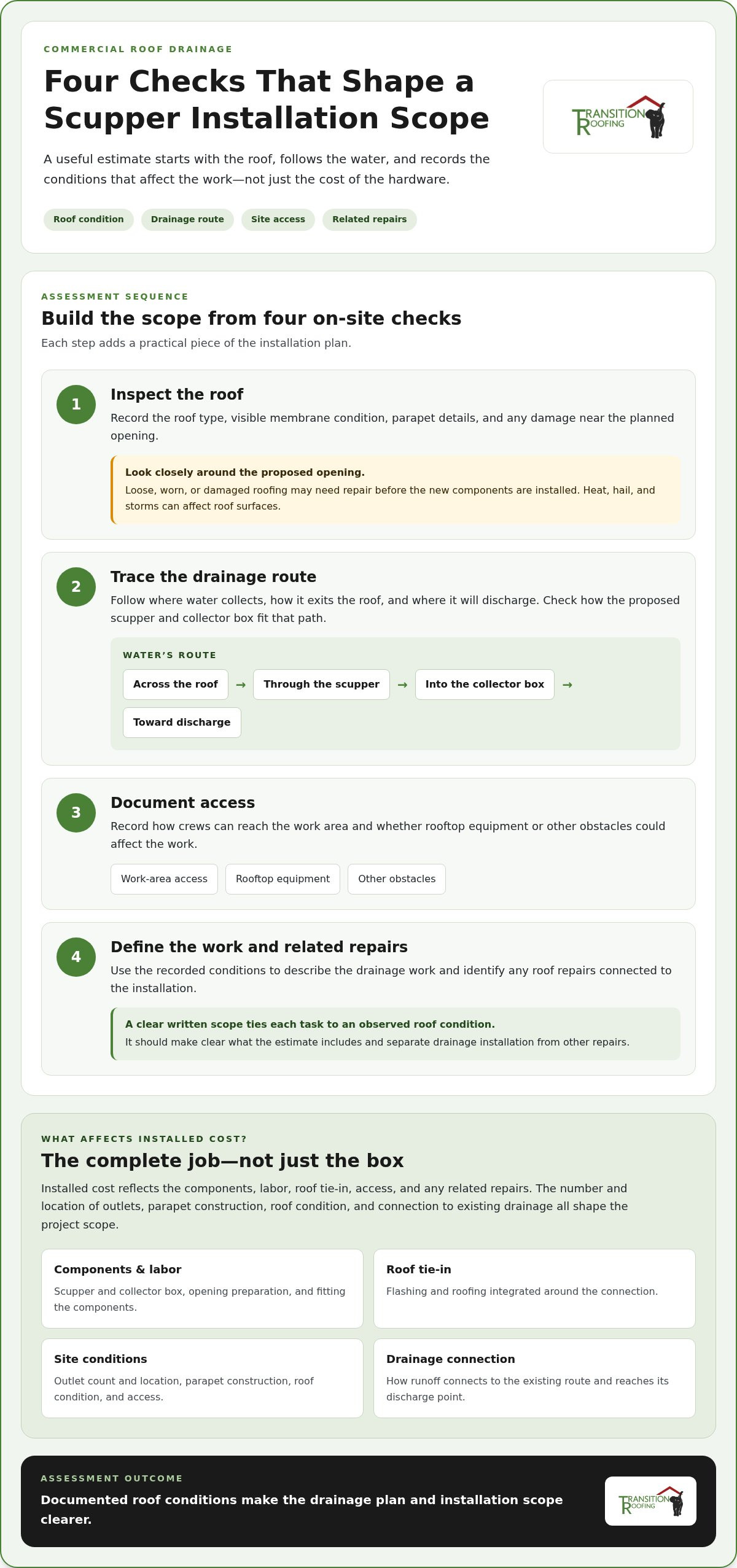
A clear plan for the cost to install commercial roof scuppers and collector boxes Austin buildings need starts with an inspection of the roof and drainage route. The assessment should establish what is in place, where water flows, and whether the roof is ready for a new opening. In Central Texas, heat, hail, and storms can affect roof surfaces, so document visible wear or damage before deciding on the installation scope.
- Inspect the roof. Record the roof type, visible membrane condition, parapet details, and any signs of damage near the planned opening.
- Trace the drainage route. Follow where water collects and how it exits. Note how the proposed scupper and collector box would connect to that route and where the water would discharge.
- Document access. Record how crews can reach the work area and whether rooftop equipment or other obstacles could affect the work.
- Define the scope. Use the recorded conditions to describe the drainage work and identify any related roof repairs.
What should the contractor document on site?
Useful inspection notes cover the roof system, parapet construction, existing drainage route, and membrane condition around the planned opening. They should also record access limits and nearby rooftop equipment. These details help explain the work plan and separate drainage installation from other repairs. Ask for a written scope that connects each task to an observed roof condition, so it is clear what the estimate includes.
When may the drainage project involve roof repairs?
Damage near an opening or roof transition can affect how the area is prepared and tied into the roofing system. Keep those repair needs distinct from choices about scupper or collector-box fabrication. For a broader commercial roofing assessment or a review of flat-roof conditions, consider how the drainage work fits the full roof system.
If you’re planning drainage work or have noticed roof damage, contact Transition Roofing to discuss an assessment and develop a project plan based on documented conditions.
Plan Commercial Roof Scupper and Collector Box Installation in Austin, TX
A practical plan turns roof observations into defined work. For the cost to install commercial roof scuppers and collector boxes Austin property owners are reviewing, documented conditions help explain what the project includes and what needs separate attention. Transition Roofing’s commercial and flat-roof work considers drainage as part of the roof system, rather than treating each component as a standalone fix.
Turn assessment findings into a clear project scope
Start with the recorded roof condition and drainage route. Then define the scupper and collector-box work, the roof tie-ins needed to keep the assembly weatherproof, and any access requirements. If the inspection finds worn or damaged roofing nearby, list those repairs separately from the drainage installation. A clear scope helps property managers see which tasks are included and which address existing roof conditions.
Installation planning should follow the inspection findings. For example, if water reaches the intended outlet but the membrane around it is deteriorated, the plan should address that condition instead of treating the opening alone as the full job. If the drainage route is unclear, resolve that before finalizing the scope. The right work depends on the roof’s observed condition and layout.
When to bring in a commercial roofing team
Arrange an assessment if water is not leaving through the intended drainage path, leaks keep returning near an outlet, or you can see deterioration around a drainage opening. These signs do not establish a single cause, but they do warrant a closer look at the drainage details and surrounding roof. Transition Roofing’s commercial roofing in Austin work provides the roof-system context needed to plan the project.
Once the conditions and scope are documented, the installation plan can address the specific roof, drainage route, and related repairs. Schedule an Austin commercial roof assessment with Transition Roofing to review your drainage concerns and get a project plan based on your building’s observed conditions.
Set Up Your Austin Roof for Reliable Drainage
Good drainage planning gives your property team a clear basis for deciding what to address and what to monitor. If water is backing up, leaking near a roof opening, or taking an unexpected path, a focused assessment can help identify the next practical step. It also makes the cost to install commercial roof scuppers and collector boxes Austin project-specific, rather than based on assumptions that may not fit your building.
Transition Roofing serves commercial and residential properties across Austin and Central Texas, including Round Rock, Pflugerville, Cedar Park, Lakeway, Hays, Bear Creek, San Leanna, Rollingwood, West Lake Hills, Buda, Kyle, and Bee Cave. Its work includes commercial roof installation, flat roofing, TPO systems, repairs, and preventative maintenance. That broader roofing experience helps put drainage needs in the context of the roof system and its observed condition.
Schedule a commercial roof assessment in Austin to review your building’s drainage and discuss a plan based on what the roof needs. If you’re dealing with standing water, a leak, or a drainage opening that needs attention, Transition Roofing can assess the roof and help define the next steps.
Frequently Asked Questions
How much does it cost to install commercial roof scuppers and collector boxes in Austin?
The cost depends on the building’s drainage design and the work needed to connect the components to its roof system. For the cost to install commercial roof scuppers and collector boxes Austin property managers should consider, an assessment can clarify whether the project involves one outlet or several, what roof conditions affect the work, and whether nearby repairs belong in the estimate. Request a scope tied to observed conditions rather than a generic figure.
How many scuppers does a commercial roof need?
There isn’t one scupper count that suits every commercial building. For example, two roof sections separated by a raised wall may need separate drainage paths, while another layout may direct water toward different outlets. Roof area alone doesn’t settle the question. An assessment should consider how water travels during rain and whether existing outlets serve the roof areas around them.
Can a collector box be installed on an existing commercial roof?
It may be possible, depending on the roof assembly and the planned route for runoff. A collector box should work with the existing outlet and carry water toward its intended discharge point. For example, a box added beneath a scupper may not solve the problem if runoff has no clear path away from the wall. An assessment should identify that route and note any worn roofing around the opening.
What is the difference between a roof scupper and a roof drain?
A scupper lets water leave through a roof edge or parapet, while a roof drain carries water into a drainage route within the building. The distinction matters when considering a change: an edge outlet and an internal drain connect to different paths. The roof layout and existing drainage system determine which arrangement fits the building, so don’t select a replacement based on the component alone.
What can cause leaks around a commercial roof scupper?
Leaks may result from deterioration or separation where roofing meets the scupper, or from damage in the surrounding area. Water can travel beneath the roof surface before appearing indoors, so a ceiling stain may not be directly below the entry point. Note when and where the leak appears, especially after storms, and have the roof and drainage area inspected to locate the source before planning a repair.