

Can you install a new TPO roof over an existing flat roof in Austin, TX? Sometimes. A TPO overlay can be an option when the existing roof is in suitable condition and the proposed roofing assembly fits the building. But covering an old roof without checking for moisture, damage, or drainage problems can leave issues hidden beneath the new system.
It’s reasonable to want to avoid unnecessary removal while making sure the new roof has a sound base. A roof assessment helps compare an overlay with tear-off based on the roof’s condition, layout, and project needs, not just on which option seems simpler.
This guide explains what affects overlay suitability, what to compare before choosing, and what a roof assessment should cover. The same considerations matter for flat-roof properties in Austin, Round Rock, Pflugerville, Cedar Park, Lakeway, Bee Cave, Buda, Kyle, Hays, Bear Creek, San Leanna, Rollingwood, and West Lake Hills.
Key Takeaways
- Can you install a new TPO roof over an existing flat roof? Sometimes. The roof’s condition and the proposed system need a project-specific assessment.
- Trapped moisture, visible damage, drainage issues, and structural concerns can affect whether an overlay is suitable.
- Compare what an overlay leaves in place with what a tear-off exposes before weighing the options for your Austin property.
- A useful assessment documents the roof’s key details, explains its findings, and identifies the next step.
Can You Install a New TPO Roof Over an Existing Flat Roof in Austin, TX?
Sometimes. Whether can you install a new TPO roof over an existing flat roof is the right approach depends on the existing roof and the proposed roofing assembly. A TPO overlay places a new roofing system over an existing one when the roof is suitable for that approach. It is not a repair, automatic approval, or a way to skip checking for concealed problems.
What does a TPO roof overlay involve?
TPO, short for Thermoplastic Polyolefin, is a single-ply roofing membrane, a sheet-like material that forms part of a roof system. The Thermoplastic Polyolefin (TPO) material is used in several applications, including roofing. In an overlay, the new roof assembly goes over the existing system instead of replacing it. The specific assembly and preparation depend on the building and the roof’s condition. Austin property owners considering flat-roofing services in Austin should base the decision on the roof itself, not simply on the possibility of leaving existing materials in place.
Why does the existing flat roof matter?
A sound assessment considers the roof’s condition, signs of trapped moisture, visible damage, drainage, and whether the structure can support the proposed system. Moisture under the surface can remain hidden beneath an overlay. Damaged or unstable areas may need attention before new roofing goes on. A quick look from the ground cannot confirm what is happening within the roof assembly.
Heat, hail, and storms are part of the Central Texas climate, so past weather exposure is relevant to the inspection. However, weather alone does not determine whether an overlay will work. The roof’s actual condition and the proposed system determine whether an overlay is appropriate. The assessment should connect its findings to the requirements of the new assembly before recommending a path forward.
What Makes a Flat Roof a TPO Overlay Candidate in Austin, TX?
A useful assessment looks at how the roof is built and how a new system would meet the building. It should document the roof layout and identify details that affect the project scope, rather than relying on a quick visual impression. For property owners, those findings make it easier to understand what work the proposed system involves and why.
Which conditions can rule out an overlay?
Some findings may show that an overlay needs more investigation or is not a suitable option. Past leaks, soft or damaged areas, trapped moisture, poor drainage, or several layers of patchwork are reasons to look more closely. For example, old patches may hide the condition of the roof below or make transitions between sections harder to plan. The assessment should explain which conditions are known, what needs further evaluation, and how those findings affect the project plan.
What should an Austin roof assessment examine?
The review should map important roof details, including seams, edges, drains, penetrations, and transitions where the roof meets walls or equipment. These areas show how the existing system is arranged and where the new work needs careful planning. The assessment should also consider drainage by noting where water flows and whether low areas or signs of standing water need attention.
For commercial buildings, commercial roofing services in Austin involve considering how the proposed system fits the property’s layout and project requirements. A clear assessment separates visible observations from questions that need additional evaluation. It should explain how each finding affects the recommended scope.
If you’re planning a flat-roof project, talk with Transition Roofing about an assessment and practical next steps for your property.
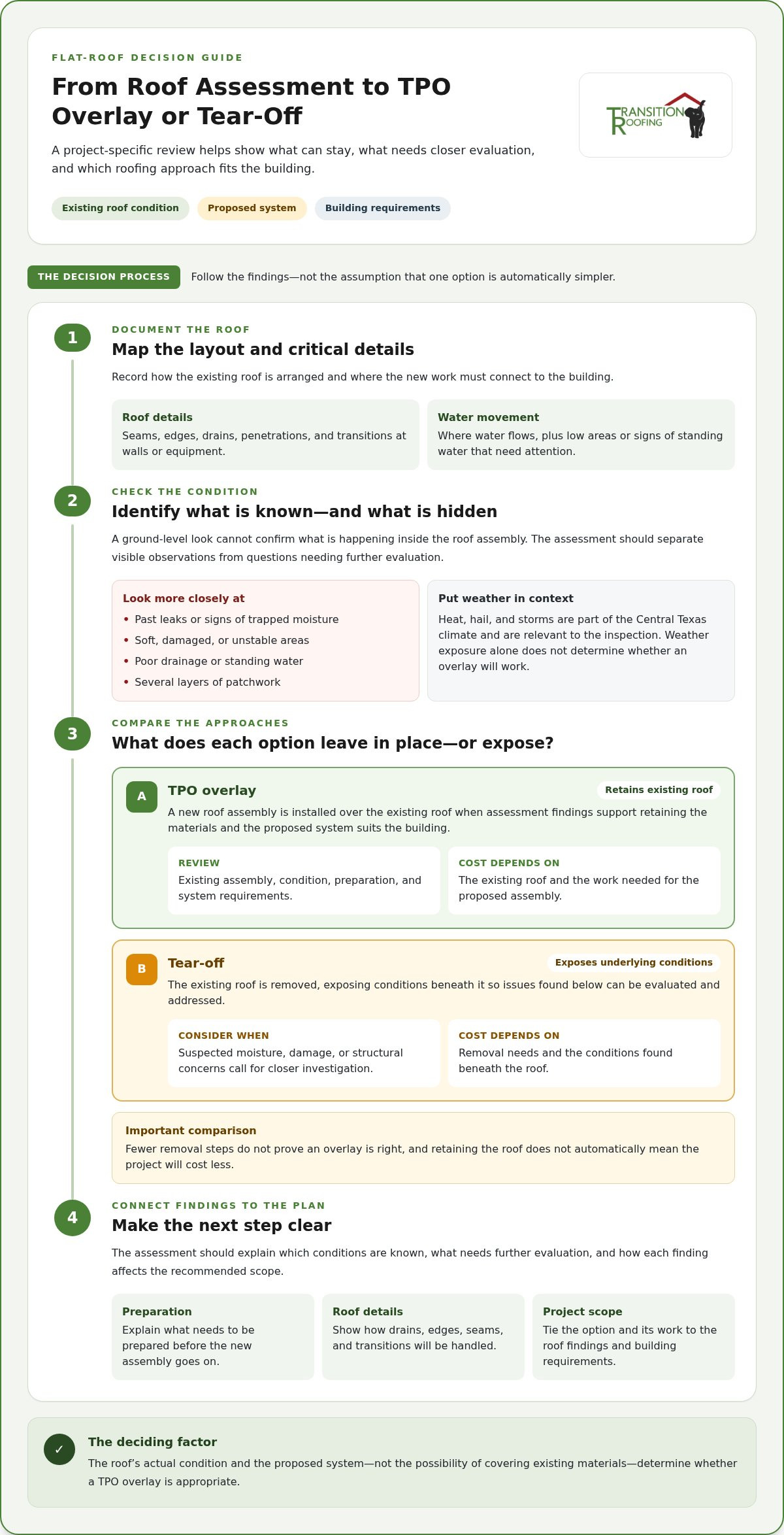
TPO Overlay vs. Tear-Off: How to Compare the Options in Austin, TX
The answer to “can you install a new TPO roof over an existing flat roof” depends on the assessment and how each option fits the building. Compare what each approach leaves in place, what it exposes, and what work it requires. Cost depends on the roof’s condition and the project scope. For a useful comparison, look at the work included in each plan, such as removal, preparation, repairs, and the new roofing assembly.
| Consideration | TPO overlay | Tear-off |
|---|---|---|
| Existing roof condition | Considered when assessment findings support retaining the existing materials. | Considered when concealed conditions need to be exposed and addressed. |
| What the approach involves | A new roof assembly is installed over the existing roof. | The existing roof is removed, exposing underlying conditions. |
| Project-specific review | Review the existing assembly, its condition, and the proposed system requirements. | Review what removal reveals, including conditions needing attention. |
| Cost considerations | Depends on the existing roof and the work needed for the proposed assembly. | Depends on removal needs and the conditions found beneath the roof. |
When might retaining the existing roof make sense?
An overlay may be worth considering when the assessment supports keeping the existing materials and the proposed assembly suits the building. Ask for the project scope to explain how the roof will be prepared, how key details such as drains and edges will be handled, and what existing conditions must be addressed first. Fewer removal steps do not prove an overlay is right, and retaining the roof does not automatically mean the project will cost less. Experienced contractors like MD Roofing Company Mcr similarly emphasize that a detailed scope of work is essential when determining whether retaining an existing flat roof is structurally sound and cost-effective.
When should tear-off be considered?
Tear-off may be appropriate when suspected moisture, damage, or structural concerns call for closer investigation. Removing the existing roof exposes conditions an overlay would leave covered and allows the project team to address problems found below. The assessment should make clear what is already known and what removal may reveal.
Choose the approach that addresses the roof’s actual condition, not a presumed shortcut. Transition Roofing helps Austin property owners plan flat-roof solutions based on the building’s needs through its flat roof services in Austin.
How a TPO Roof Assessment Leads to the Right Next Step in Austin, TX
A clear assessment moves from what is on the roof to what the building needs. It answers “can you install a new TPO roof over an existing flat roof” by reviewing the current conditions and the proposed project, rather than assuming one approach will fit every building.
What should the property owner expect from the evaluation?
The review should focus on the existing roof and the work being considered. Before the assessment, share what you know about past leaks, repairs, ponding water, and storm damage. Note where leaks appeared inside the building and whether they returned after repairs. This history can help connect visible conditions with the roof’s performance over time.
The assessment should separate observed facts from issues that need further evaluation. A visible damaged area is a finding; moisture concealed within the roof may need closer investigation. A useful summary explains what the inspection showed, what remains uncertain, and how those points affect the choice between an overlay and tear-off.
What happens after the assessment?
Next, the findings are considered alongside the project requirements. The recommendation may be an overlay, tear-off, repair, or further evaluation, depending on the roof and proposed assembly. Each step should have a clear reason tied to the conditions found. For commercial properties, commercial roof installation in Austin planning should account for the building’s needs and the assessment findings.
This process gives property owners a practical basis for comparing options without treating an overlay as an automatic choice. In Central Texas, where heat, hail, and storms affect roof exposure, a project-specific review helps turn observations into a sound next step. This is true for buildings in Austin and nearby communities such as Round Rock, Pflugerville, Cedar Park, and Lakeway.
If you’re weighing a TPO overlay or tear-off, schedule a roof assessment with Transition Roofing in Austin for a clear plan based on your roof’s condition.
Plan the Next Step for Your Austin Roof
The question “can you install a new TPO roof over an existing flat roof” is best answered with evidence from the roof itself. Use the assessment to make a sound project decision, not simply to choose the option that seems easiest. A clear plan helps address the building’s needs now and supports informed choices about long-term roof care.
Transition Roofing provides commercial roof installation, TPO systems, flat-roof services, and repairs for Central Texas properties. For property owners in Austin, Bee Cave, Buda, Kyle, Hays, Bear Creek, San Leanna, Rollingwood, and West Lake Hills, a local assessment can put the roof’s condition and the project options into clearer terms.
If you’re ready to understand your roof’s condition and discuss a project-specific path, schedule a roof assessment in Austin. Transition Roofing can help you compare the options and plan the next step.
Frequently Asked Questions
Can you install TPO over an existing flat roof?
Sometimes, if the existing roof and proposed system are suitable for an overlay. The question “can you install a new TPO roof over an existing flat roof” does not have a yes-or-no answer for every building. The assessment should account for the roof’s layers, condition, drainage, and structural capacity. If the available information does not show what is beneath the surface, further evaluation may be needed before choosing an overlay.
Does an existing flat roof need to be dry before a TPO overlay?
Yes. The existing roof assembly should not have trapped moisture before it is covered. A dry-looking surface alone cannot confirm that the materials below are dry. If the roof has had leaks or areas that stay damp, share that history during the assessment. The findings can help determine whether the roof is suitable to cover or needs more investigation before new materials go on.
Is a TPO overlay better than tearing off an old flat roof?
Neither approach is automatically better. The right choice depends on the building and the roof findings. An overlay may retain existing materials when they are suitable, while tear-off provides access to concealed conditions. Compare the need to inspect or address what lies below, the work included in each project scope, and the conditions found. The recommendation should explain why the selected approach fits the roof.
Can a TPO roof overlay hide leaks or damage?
Yes. An overlay can cover signs of a leak or damage if the existing roof is not assessed first. Share clues such as interior stains or repeated leaks before work is planned. Those signs do not reveal the full cause on their own, but they help direct the evaluation. Covering the roof without addressing known concerns can leave unresolved problems out of view.
How do Austin, TX weather conditions affect a TPO overlay decision?
Austin heat, hail, and storms affect a roof’s exposure and make its condition worth reviewing, but local weather alone does not determine whether an overlay is suitable. A roof that has weathered several storms still needs an assessment of its actual condition, while weather exposure by itself does not prove damage. Share known storm impacts or leak history so the project review can account for them.