

What should a private school roof maintenance plan Buda campus leaders can rely on actually cover? More than a quick check for leaks. Administrators need clear findings, practical repair priorities, and a plan that works around classes, events, and campus operations. When roof conditions or maintenance needs are unclear, staff may struggle to decide what needs attention first.
A useful plan brings scheduled inspections, minor upkeep, and documented reports together. The records help school decision-makers budget, prioritize follow-up, and organize work around campus needs. In Buda, intense sun, hail, and sudden storms can stress commercial roofing systems, so maintenance priorities should reflect the Central Texas climate. This guide explains what a school-focused plan should cover, how to compare scopes, and what to look for in inspection records.
Key Takeaways
- A private school roof maintenance plan Buda campus leaders can use should connect inspection findings to clear priorities and follow-up.
- Review whether the inspection scope covers drainage, flashing, roof penetrations, seams, debris, and visible membrane concerns where applicable.
- Compare plans by their reporting, repair follow-up, campus coordination, and fit for your roof system.
- Organize roof records and known concerns before setting priorities, then use documented findings to plan work around campus operations.
Private School Roof Maintenance Plan Buda: Why Austin, TX Campuses Need a Clear Scope
A school roof maintenance plan is a documented process for inspecting the roof, recording observed conditions, and completing upkeep based on those findings.
For a private school, this gives facilities staff a practical way to separate routine upkeep from conditions that need repair assessment. In Buda and Austin, heat, hail, and storms can put stress on roof surfaces, drainage paths, flashing, and seams. A clear scope directs attention to what inspectors actually observe instead of relying on assumptions. That is the purpose of preventive maintenance (PM): regular checks and service can help identify issues before they become more disruptive.
For a visual guide to commercial roof inspections, watch this overview:
Which private school roof risks deserve attention in Buda?
Inspectors may note ponding water, damaged flashing, debris near drains, visible membrane concerns, or signs of leaks inside the building. The findings depend on the roof system, its condition, and what is visible during the review. For example, debris blocking a drain may call for routine upkeep, while a damaged seam or recurring ponding needs a repair assessment. Ask that each reported concern include its location and a clear next step. This makes it easier to distinguish a one-time observation from a condition that needs follow-up.
How can roof work fit around school operations?
Plan roof access, work areas, and material movement around campus activity and safe circulation. Coordinate with school staff in advance to identify sensitive areas and busy times, so inspection or repair work can be organized with fewer avoidable interruptions. A clear report also helps staff understand where follow-up is needed. Transition Roofing’s commercial roofing services include preventative maintenance programs with scheduled inspections, minor upkeep, and documented reports.
What a Buda School Roof Maintenance Plan Should Cover in Austin, TX
A useful school roof maintenance plan should include inspections, documented conditions, minor upkeep, and recommended follow-up based on the roof’s actual needs. For a private school roof maintenance plan Buda administrators can use to guide decisions, reports should state what was observed, where it was found, and what action makes sense next.
A school-ready inspection record should include specific notes and photos where available, along with clear priorities. It should separate conditions to monitor from items that call for repair or further assessment. For example, debris in a drainage path points to upkeep, while a damaged seam may need repair assessment. These records give facilities staff a practical basis for planning work and sharing updates with school leadership. The National Center for Education Statistics offers guidance on effective maintenance programs for educational facilities.
What should a useful inspection report show?
Look for specific observations, roof locations, supporting photos when available, and a clear next step. Reports should cover drainage, roof penetrations, flashing, seams, debris, and visible membrane concerns where those features apply. After hail or storms, documented observations help the school track conditions and decide whether follow-up is needed. If a report uses broad terms such as “wear” or “damage,” ask for the location and details that explain the recommendation.
How do TPO and other commercial roofs affect upkeep?
Inspection priorities vary with the roof material, system details, and existing condition. TPO is one commercial roofing system, but a school’s roof may use another system. The plan should match inspection points and upkeep to the roof on site, not apply one checklist to every building. For more on low-slope systems, see Austin flat roofing services.
Transition Roofing’s preventative maintenance programs include scheduled inspections, minor upkeep, and documented reports. If your campus needs a clearer process for tracking roof findings, explore Transition Roofing’s maintenance programs.
How to Compare Private School Roof Plans in Buda and Austin, TX
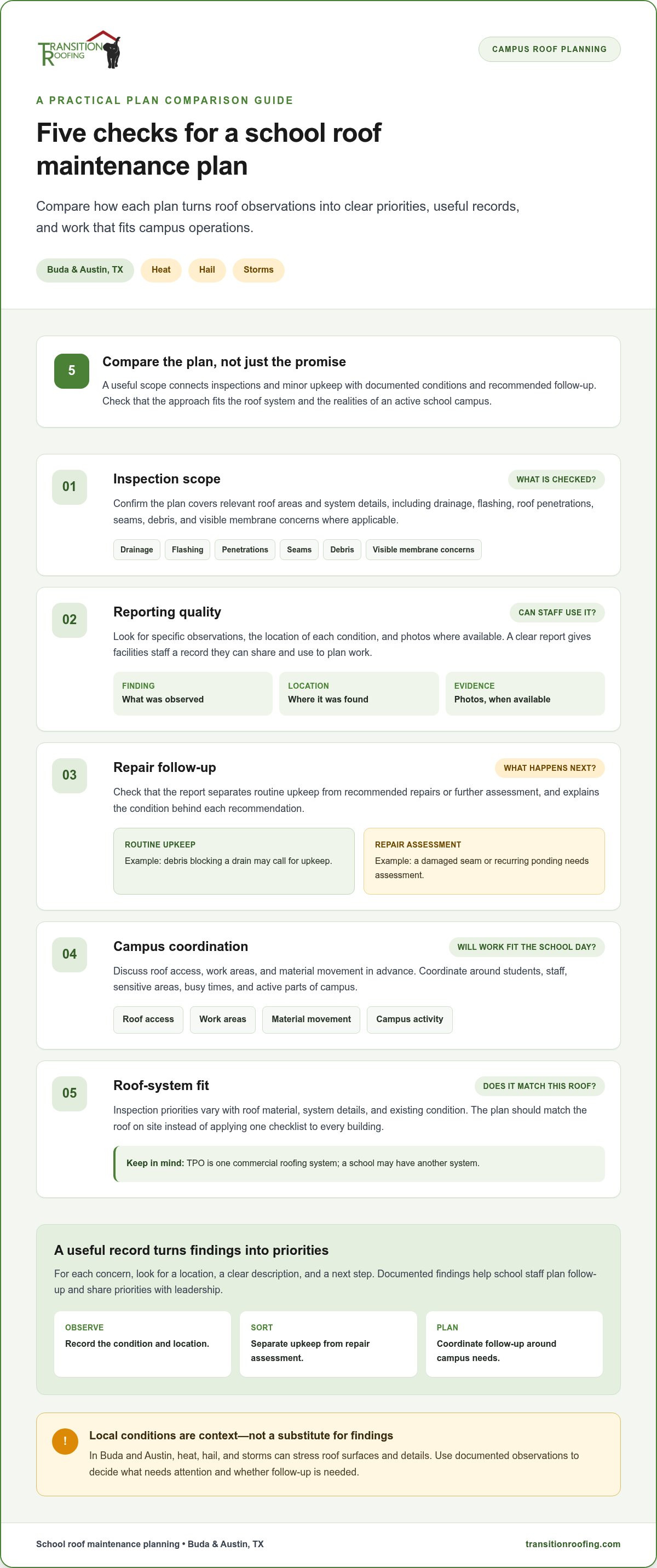
Compare plans by how well they turn roof observations into practical decisions for your campus. A private school roof maintenance plan Buda administrators can assess should make the scope, documentation, and follow-up clear before work begins. Use these questions to compare what each plan actually covers:
- Review the scope. Check which roof areas and system details are covered, and what minor upkeep is included. Confirm that the inspection addresses drains, flashing, penetrations, seams, and other relevant features.
- Look at the reporting. Findings should identify locations and observed conditions, with photos where available. This gives facilities staff a record they can share and use when planning work.
- Clarify repair follow-up. Make sure the report separates routine maintenance from recommended repairs or further assessment. Check that each recommendation explains the condition behind it.
- Plan for campus activity. Discuss roof access, work areas, and how planned tasks can be coordinated around students, staff, and active parts of campus.
- Check roof-system fit. The inspection approach should reflect the roof material, details, and condition rather than apply the same checklist to every building.
These criteria connect roof decisions to broader facility planning. The National Center for Education Statistics’ school facilities maintenance plan offers guidance for organizing maintenance and repairs in educational settings. Clear documentation also helps administrators explain priorities internally and track what needs attention next.
How should schools weigh local weather and roof condition?
In Buda and Austin, heat, hail, and storms are important context, but inspection evidence should guide the response. Consider weather exposure alongside observed wear, drainage, and the roof system. Avoid relying on a fixed, generic schedule without considering these conditions. For local context on commercial roofing, see commercial roofing services in Austin.
If you’re comparing scopes or organizing roof priorities, discuss a commercial roof maintenance approach with Transition Roofing.
Set Up a Practical School Roof Maintenance Plan in Buda, TX
A clear plan starts with available roof records and current conditions, then turns findings into prioritized upkeep and follow-up. For a private school roof maintenance plan Buda campus leaders can put into practice, account for how roof access and planned work fit the school day. Buda schools and Austin, TX facilities teams can use the same process while tailoring priorities to each roof.
What should facilities teams prepare for an initial review?
Gather available roof plans or records, previous repair notes, known leak locations, and information about building access. Share campus areas or calendar periods that may affect inspection or repair work, such as busy entrances or scheduled school events. These details help organize the review around the building and its daily use.
Then assess conditions on site and document priorities. A past leak is useful context, but it doesn’t prove that the same issue is still active. Roofs on separate buildings may also have different systems or wear. Use observed conditions to decide what needs routine upkeep, monitoring, repair assessment, or follow-up instead of assuming every roof needs the same work.
Where can Buda schools take the next step?
Transition Roofing serves Buda and Central Texas with commercial roof maintenance programs that include scheduled inspections, minor upkeep, and documented reports. The service area includes Austin, Round Rock, Pflugerville, Cedar Park, Lakeway, Hays, Bear Creek, San Leanna, Rollingwood, West Lake Hills, Kyle, and Bee Cave. Documented findings give facilities teams a practical record for planning work and sharing priorities. Learn more about commercial roofing services in Austin and the systems they support.
With records gathered and campus needs identified, the next step is to build a maintenance approach around the roof’s actual condition. Request help with a school roof maintenance plan from Transition Roofing for your Buda campus.
Put a Clear Roof Maintenance Plan in Motion
A dependable private school roof maintenance plan Buda campus leaders can use starts with documented conditions, clear priorities, and follow-up that fits the roof system and daily campus operations. Inspection records help facilities teams decide what needs routine upkeep, what should be monitored, and what calls for a repair assessment. In Buda, heat, hail, and storms make it especially useful to base decisions on current roof observations.
Transition Roofing serves Buda and Central Texas with preventative maintenance programs that include scheduled inspections, minor upkeep, and documented reports. These services give school teams a practical starting point for organizing roof care around the building’s observed needs.
If your campus needs clearer findings and a practical path from inspection to follow-up, request help with a school roof maintenance plan. Transition Roofing can help your Buda school develop a clear, documented approach to roof upkeep.
Frequently Asked Questions
What should a private school roof maintenance plan include?
A practical plan includes scheduled inspections, documented findings, minor upkeep, and clear recommendations for follow-up. Reports should note where conditions were observed and distinguish routine tasks, such as clearing debris from drainage areas, from concerns that may need repair assessment. For a private school roof maintenance plan in Buda, the scope should reflect the roof system, its condition, and how campus access will be coordinated.
How often should a private school roof be inspected in Buda?
Set inspection timing based on the roof’s condition, system, and exposure, and consider extra attention after severe weather. The National Roofing Contractors Association recommends inspections at least twice a year and after severe weather events. In Buda, heat, hail, and storms make it useful to document observed changes and discuss whether the roof needs follow-up beyond planned inspections.
Can roof maintenance work be scheduled around school hours?
Yes, planned work can be coordinated with school operations. Share the campus calendar, building access details, and areas with student or staff activity so roof access and work areas can be planned with the school team. Inspection and repair needs differ, so set timing and coordination around the task and site conditions rather than assuming all work follows the same schedule.
How does a roof maintenance plan help a school manage repair needs?
A maintenance plan gives facilities teams documented observations to help prioritize the next step. The report can show which conditions need monitoring, which call for routine upkeep, and which may require repair assessment. This makes it easier to share findings, track follow-up, and plan work based on evidence instead of waiting for a concern to become more disruptive. A maintenance plan doesn’t replace repairs when defects need correction.
Does a private school roof maintenance plan cover TPO roofing?
Yes, a maintenance plan can be tailored to a TPO roof, a commercial roofing system used on some buildings. The inspection focus should match the roof’s material, details, and observed condition, including seams, penetrations, flashing, and drainage where applicable. Transition Roofing works with commercial roof systems, including TPO, and its preventative maintenance programs include scheduled inspections, minor upkeep, and documented reports for Buda and Central Texas campuses.