

What if a denied roof claim isn’t the end of the process, but a sign that the insurer needs clearer evidence? If you’re wondering how to appeal a denied roof insurance claim in Texas, start by matching the denial reason to your policy and the facts about your roof.
A denial can leave you unsure what your policy covers, how to document hail or wind damage, and when to respond. In Austin and Central Texas, hail, strong storms, and intense heat can all affect a roof, so it helps to keep a clear record of what you observed and when. This guide explains how to read the denial, review the relevant policy language, and organize photos, inspection findings, and repair records for a reconsideration request.
You’ll also learn what a roofing professional can document, when repairs shouldn’t wait, and when a coverage dispute may call for qualified claims or legal help. A clear record can support your next steps, but it can’t guarantee the insurer will change its decision.
Key Takeaways
- To understand how to appeal a denied roof insurance claim in Texas, compare the denial letter with the policy language that applies to your loss.
- Respond to the insurer’s stated reason with roof-specific evidence and clear records, not general claims about storm damage.
- Follow the instructions in your insurer’s correspondence and check your policy for any response dates before submitting a reconsideration request.
- A roofing assessment can document visible damage and repair needs, helping you organize your next steps without guaranteeing a change to the insurer’s decision.
How to Appeal a Denied Roof Insurance Claim in Texas: Start With the Denial
A roof claim denial can be stressful, especially when you’re dealing with a leak or unsure about repair costs. To understand how to appeal a denied roof insurance claim in Texas, begin with the insurer’s letter and your policy. The letter explains the decision, while the policy shows which terms the insurer says apply.
A roof claim appeal is a request for the insurer to review its decision using relevant policy language and evidence about the roof. A review may not change the outcome, but a focused response can address what the insurer says is missing or excluded. First, identify the type of decision you received:
- Full denial: The insurer says it won’t cover the claimed damage.
- Partial payment: The insurer accepts some damage but not all of it.
- Scope dispute: You and the insurer disagree about which repairs are needed.
- Excluded damage: The insurer says a policy exclusion applies.
What the denial letter tells you
Look for the stated reason, the policy language cited, inspection findings, and claim reference details. Separate observations, such as a reported shingle condition, from conclusions about coverage. A roofing inspection can document visible conditions and repair needs. Interpreting policy terms or disputing coverage may require qualified claims or legal guidance. This property damage overview offers general context, not an interpretation of your policy.
Why Central Texas storm context matters
Hail and wind can affect different parts of a roof, while severe storms may also bring debris or water intrusion. In Austin and Central Texas, local weather can help establish when damage may have occurred, but it doesn’t prove what caused a particular roof condition. Connect storm-related concerns to evidence from your property, such as dated photos, inspection notes, or repair records. This keeps the review focused on what was observed at your home rather than assumptions about a storm.
Why Roof Claims Are Denied in Austin, TX, and What Evidence Can Address Each Reason
A denial reason tells you what the insurer says it found, but it may not describe the full history of your roof. To understand how to appeal a denied roof insurance claim in Texas, compare the insurer’s explanation with records about your specific home. Your policy, the inspection findings, and the denial letter determine which issues apply. A general list can’t establish coverage.
Use this evidence map to sort the records you have. The documents may help clarify the facts, but they don’t predict the insurer’s decision.
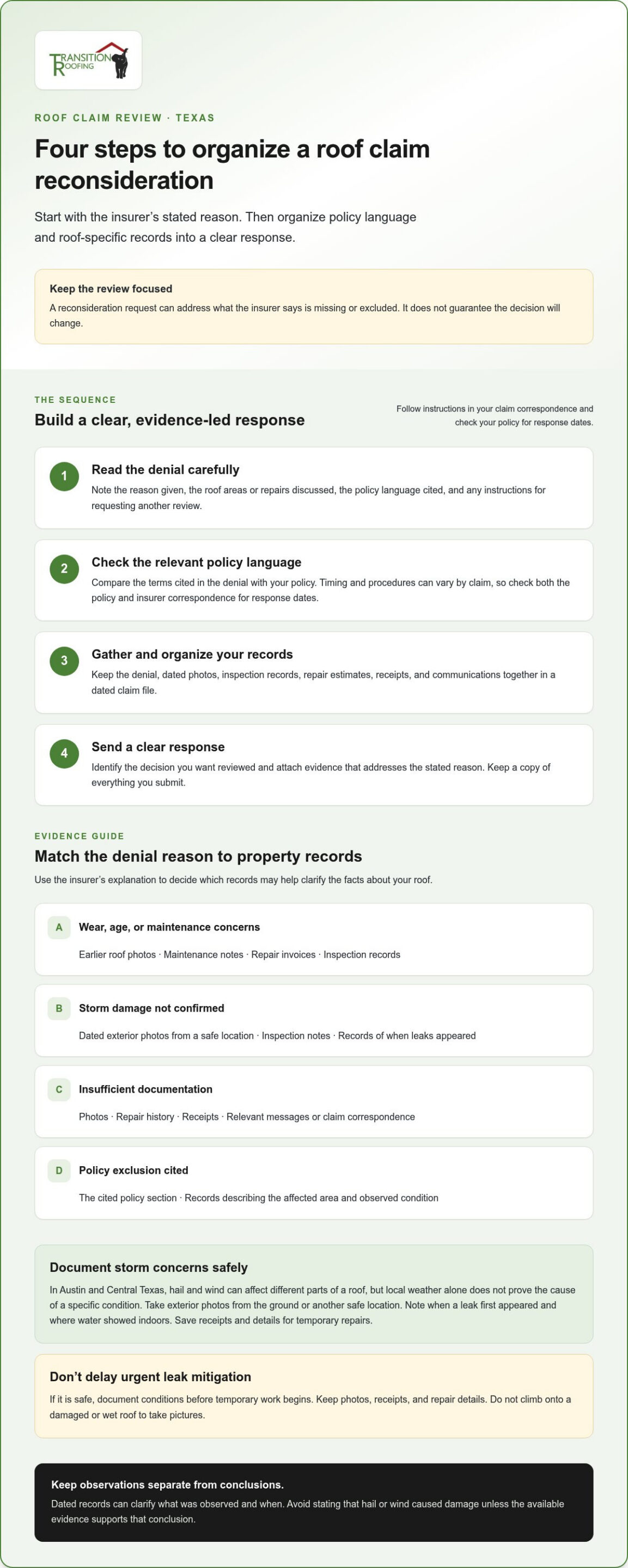
| Stated reason | Records that may help clarify it |
|---|---|
| Wear, age, or maintenance concerns | Earlier roof photos, maintenance notes, repair invoices, and inspection records |
| Storm damage not confirmed | Dated exterior photos taken from a safe location, inspection notes, and records of when leaks appeared |
| Insufficient documentation | Photos, repair history, receipts, and relevant messages or claim correspondence |
| Policy exclusion cited | The cited policy section and records describing the affected area and observed condition |
Match the explanation to property-specific records
Compare the denial letter with dated photos, inspection notes, repair history, and communications. Build a simple timeline so the sequence is clear. A prior repair record or older photo may show what the roof looked like before the reported loss. Separate visible observations from assumptions about age, wear, or storm damage. Don’t state that hail or wind caused damage unless the available evidence supports that conclusion.
Document storm damage safely in Austin
Hail and wind can affect roofs across Austin and Central Texas, but each home needs its own record. Take exterior photos from the ground or another safe location. Note when you first saw a leak, where water appeared indoors, and whether the condition changed after a storm. Save receipts and records for temporary repairs. Don’t climb onto a damaged or wet roof to take pictures.
If you need help documenting visible roof conditions and repair needs, Transition Roofing’s roof assessment and insurance claim assistance can help you organize the roofing information for your next steps.
How to Appeal a Denied Roof Insurance Claim in Austin, TX: A Practical Sequence
A focused response is easier to review than an unorganized collection of documents. If you’re deciding how to appeal a denied roof insurance claim in Texas, let the denial reason guide each step and follow the instructions in your claim correspondence.
- Read the denial carefully. Note the reason given, the areas or repairs discussed, and any instructions for requesting another review.
- Check the relevant policy language. Compare the cited terms with your policy. Check your policy and the insurer’s correspondence for response dates, since timing and procedures can vary by claim.
- Gather and organize your records. Keep the denial, dated photos, inspection records, repair estimates, receipts, and communications together in a dated claim file.
- Send a clear response. Identify the decision you want reviewed and attach evidence that addresses the stated reason. Keep a copy of everything you submit.
Don’t postpone urgent leak mitigation while preparing paperwork. If it’s safe, document conditions before temporary work begins, then save photos, receipts, and repair details. These records help show what work was done, but they don’t guarantee reimbursement.
Prepare a clear reconsideration request
Keep the request factual and specific. Summarize the denial reason, list the records attached, and state what you want the insurer to review, such as a documented roof condition or repair item. Describe what was observed without asserting an unsupported cause or making legal conclusions about coverage.
When the disagreement needs another kind of review
An appraisal provision, an insurer’s complaint process, and legal advice are different paths that may address different disputes. Review your policy terms and current Texas Department of Insurance guidance to understand what may apply. For roofing documentation, request a roof assessment and claim assistance from Transition Roofing.
Next Steps After a Roof Claim Denial in Austin, TX: Get the Roof Assessed
A roofing assessment can clarify what’s visible on the roof and what repairs may be needed. It can’t decide whether your policy covers the damage or guarantee that an insurer will change its decision. As you consider how to appeal a denied roof insurance claim in Texas, keep those roles distinct: a roofer documents roof conditions, while coverage decisions depend on the policy and insurer’s review.
What a roofing assessment can contribute
A roofer can inspect accessible areas, record visible conditions, take photos, and describe a repair scope. For example, an assessment might identify damaged shingles or an area that needs attention to address a leak. These findings can help you understand the roof and organize claim records, but they aren’t legal advice or a promise of insurance payment. Transition Roofing provides roofing and insurance claim assistance for homeowners in Austin, Round Rock, and Central Texas, including Pflugerville, Cedar Park, Lakeway, Hays, Bear Creek, San Leanna, Rollingwood, West Lake Hills, Buda, Kyle, and Bee Cave.
If the assessment identifies needed work, review residential roofing repair and replacement options as you plan how to protect your home.
Protect the property while the disagreement continues
Address active leaks promptly and keep people away from unsafe areas. Don’t climb onto a damaged roof. Take photos from a safe location, note when you observed the problem, and save receipts and records for temporary repairs. These documents help maintain a clear timeline while the claim is under review. Keep copies with your other claim records, but don’t assume temporary work will be reimbursed.
If you’re dealing with roof damage after a storm or need a clearer picture of repair needs, request a roof inspection from Transition Roofing. We can assess visible conditions, organize relevant documentation, and give you a clear plan for the roof. An inspection can support your next steps, but it can’t guarantee a claim outcome.
Take the Next Step Toward a Clear Roof Plan
A denied claim doesn’t tell the whole story of your roof. Start with the insurer’s stated reason, then organize records that address that concern. Photos, inspection notes, repair history, and a clear timeline can help you prepare a focused request for review. Follow the instructions in your policy and claim correspondence, and address urgent leaks safely.
Knowing how to appeal a denied roof insurance claim in Texas also means understanding what a roofing assessment can and can’t do. A roofer can document visible conditions and repair needs, but can’t decide what your policy covers or guarantee an appeal result. Founded in 2015, Transition Roofing provides roofing and insurance claim assistance in Austin and Central Texas to support property-specific assessment and documentation.
If you’re unsure about your roof’s condition or needed repairs, schedule a roof inspection in Austin today. A clear assessment can help you make informed next steps and move forward with greater confidence.
Frequently Asked Questions
Can I appeal a denied roof insurance claim in Texas?
Yes, you can request that your insurer review a denied roof claim. The policy terms and reason for denial shape the process, so read the letter closely and follow its submission instructions. Gather records that address the stated concern, such as inspection notes or dated photos. A review request doesn’t guarantee the insurer will change its decision or provide coverage.
How do I dispute an insurance adjuster’s roof damage decision?
Compare the adjuster’s written findings with dated photos, inspection notes, repair history, and other relevant records. A roofer can document visible conditions and repair needs, but doesn’t decide policy coverage. Send a concise, factual response that points to evidence related to the disputed findings. Keep copies of your submission and all claim communications so you can track what was shared and when.
What evidence do I need to appeal a denied roof claim?
Gather the denial letter, relevant policy sections, dated roof and interior photos, inspection records, repair history, estimates, and insurer communications. The most useful records depend on the reason given. For example, repair records may help clarify concerns about maintenance, while dated photos may document observed conditions. Take photos from a safe location and avoid claiming when or how damage occurred unless your records support it.
How long do I have to appeal a denied roof insurance claim in Texas?
There isn’t one universal appeal deadline to assume applies to every roof claim. Timing may depend on your policy, the insurer’s correspondence, and other applicable requirements. Review your documents promptly and verify any response date directly with the insurer or a qualified Texas insurance professional or attorney. Don’t rely on a general online timeline for your specific claim.
Should I repair my roof while an insurance claim appeal is pending?
Address immediate safety concerns and take reasonable steps to limit further water intrusion. If it’s safe, photograph conditions before and during temporary mitigation, then save receipts and dated repair records. Don’t climb onto a damaged roof. Keep your insurer informed as directed in its correspondence, and review your policy for coverage-specific guidance. These steps don’t guarantee reimbursement for temporary or permanent repairs.