
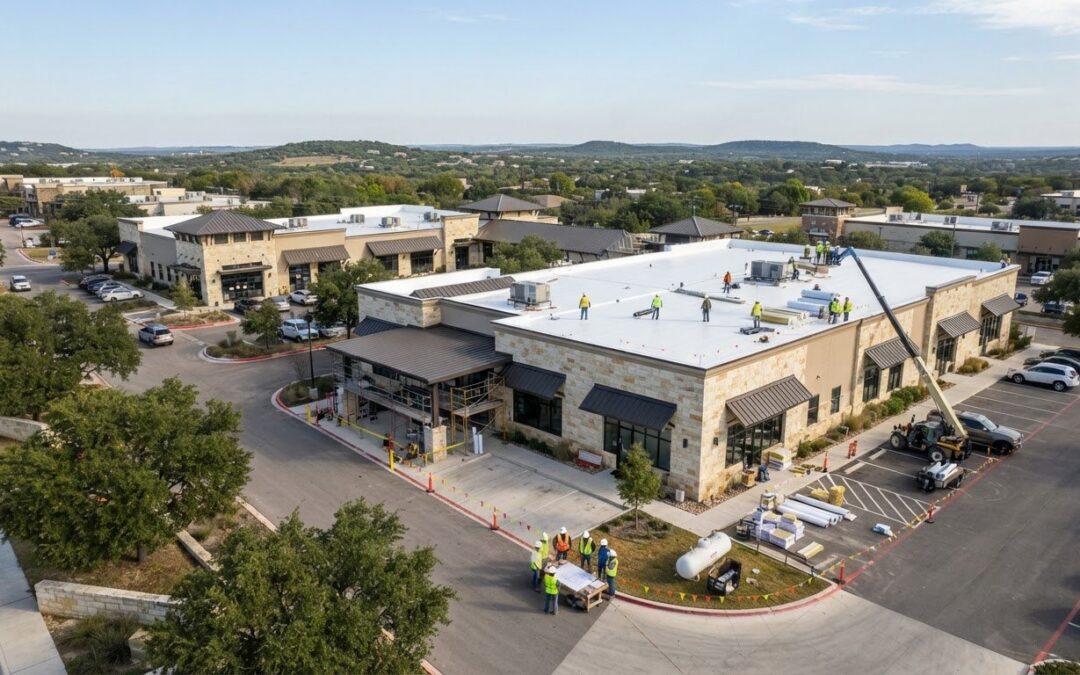
What if the biggest disruption during a commercial reroof isn’t the work itself, but not knowing which entrance is open, where deliveries should go, or when crews will be on site? Minimizing business disruption during commercial reroofing in Round Rock starts with planning those details before tear-off begins.
Staff, tenants, and customers may be able to keep using parts of the property while roofers work, but that depends on the building, the project scope, and how work zones and access are coordinated. No plan can remove every interruption. Clear communication can help people prepare for changes.
This guide explains how to plan work around essential operations, coordinate access and material staging, and prepare for schedule changes related to Central Texas heat, hail, or storms. It also covers what to discuss with a commercial roofer so the work sequence and communication plan fit your site.
Key Takeaways
- Start minimizing business disruption during commercial reroofing in Round Rock by identifying essential operations before setting work dates or roof zones.
- Ask whether phased reroofing fits your roof layout, project scope, safety needs, and building operations.
- Plan access, work zones, and staff updates in advance, with room to respond to Central Texas heat, hail, and storms.
- Compare commercial roofers by how clearly they explain project sequencing, site protection, schedule changes, and communication with your team.
Minimizing business disruption during commercial reroofing in Round Rock and Austin, TX starts before tear-off
Commercial reroofing can affect entrances, parking, deliveries, staff routines, and the noise customers hear. People are better prepared when they know what to expect and where to find current instructions. Minimizing business disruption during commercial reroofing in Round Rock starts by identifying essential operations before choosing work dates or roof zones.
For a useful overview of the planning approach, see this guide to a business continuity plan.
This video offers another perspective on how a commercial roof supports business operations:
Which business operations need protection first?
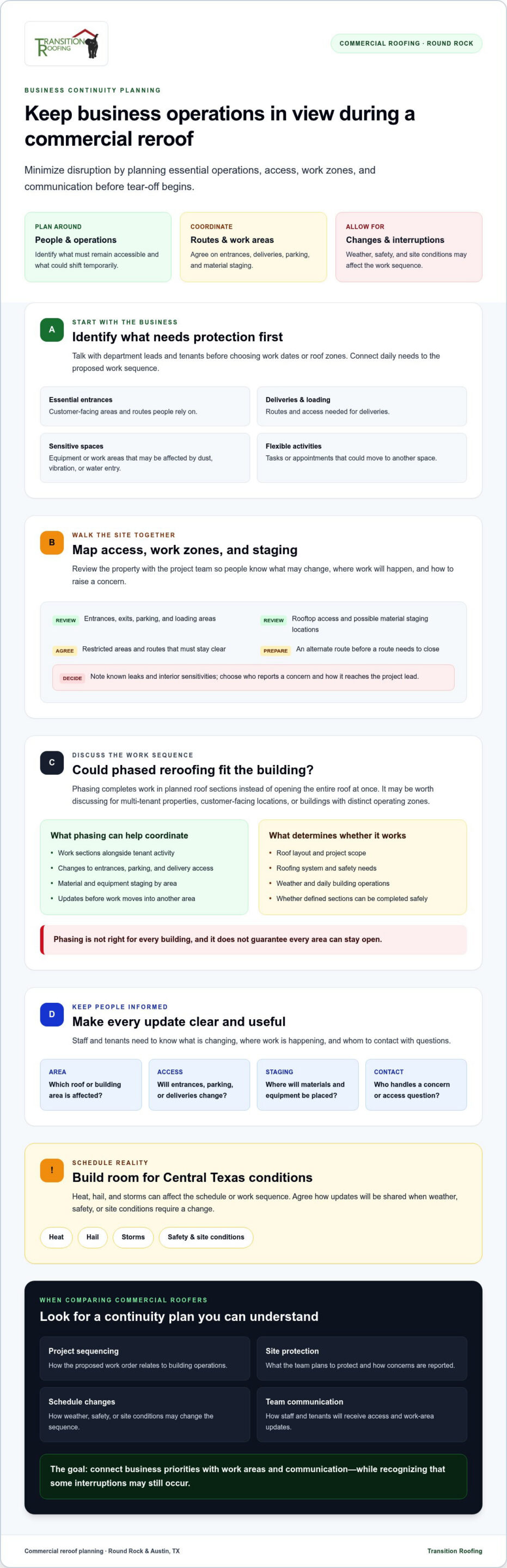
Before setting dates, ask department leads and tenants what must stay accessible and what could shift temporarily. Check busy periods, important dates, mobility needs, and equipment or work areas that could be affected by dust, vibration, or water entry. List priorities such as:
- Essential entrances and customer-facing areas
- Delivery routes and loading access
- Sensitive equipment or work areas
- Tasks or appointments that can move to another space
This information gives the roofer a practical basis for discussing the work sequence. Transition Roofing provides commercial roofing services and can discuss project needs for Round Rock properties.
What should a pre-roofing site review cover?
Walk the property with the project team and review entrances, exits, parking, loading areas, rooftop access, and possible material staging locations. Identify restricted areas and agree which routes must stay clear. If a route may need to close, discuss an alternate before work starts. Note known leaks and interior sensitivities, then decide who should report a concern and how it will reach the project lead.
A useful disruption plan connects business priorities with work areas and communication. Staff and tenants should be able to see what may change, where work will happen, and whom to contact with questions.
How phased commercial reroofing can keep businesses operating in Round Rock and Austin, TX
Phased reroofing completes work in planned roof sections instead of opening the entire roof at once. At a multi-tenant property, for example, the team might coordinate one roof area with nearby suites before moving to another zone. Mapping each phase against entrances, tenant activity, and delivery routes helps occupants understand which areas may be affected.
Phasing is not suitable for every building, and it does not guarantee that all areas can stay open. The roof layout, scope of work, roofing system, weather, safety needs, and daily operations all affect what is practical. Ask the contractor to explain the proposed work boundaries and any limits on access or use of occupied spaces.
When does a phased work plan make sense?
A phased plan may be worth discussing for multi-tenant properties, customer-facing locations, or buildings with distinct operating zones. The key question is whether crews can complete defined sections safely while managing exposure to the rest of the building. Ask how each phase relates to occupied areas, where access could change, and whether the sequence needs to account for the roof layout or project scope.
What should each phase communicate to occupants?
Give tenants and staff clear details before work moves into their area. Each update should cover:
- Which roof or building areas are affected
- Any changes to entrances, parking, or delivery access
- Where materials and equipment will be staged
- Who to contact with a concern or access question
Agree how updates will be shared if weather, safety, or site conditions affect the sequence. This coordination supports minimizing business disruption during commercial reroofing in Round Rock, while recognizing that some operating impacts may still occur. To discuss your building’s work scope, review Transition Roofing’s commercial roofing services in Austin.
Plan a Round Rock and Austin, TX reroofing schedule around access, weather, and people
A workable schedule accounts for how the property operates, not just how crews move across the roof. In Central Texas, heat, hail, and storms are planning factors that may affect work conditions or require schedule changes. Their impact is not certain, so agree in advance how the team will respond if conditions change.
A target schedule shows the intended sequence. A weather-ready schedule also explains how changes will be communicated.
- Identify constraints. Note busy periods, important deliveries, tenant needs, and areas that cannot close.
- Review access. Map entrances, loading routes, parking, and rooftop access.
- Agree on work zones. Confirm where crews, materials, equipment, and waste containers may be placed. Identify alternate routes if normal access is affected.
- Set updates. Decide who shares schedule changes, how often updates go out, and how staff, tenants, customers, and delivery teams will receive them.
- Confirm contingencies. Discuss how weather or unexpected site conditions could affect sequencing, access, and the timing of the next update.
How should managers coordinate access and staging?
Walk the property with the roofing project lead before work begins. Check that planned staging will not conflict with a loading area, customer entrance, or accessible route. If a delivery route may change, agree on an alternate arrangement and notify the people who use it. For low-slope roof work, review the building’s needs alongside the proposed flat roofing service information.
What schedule questions should a Round Rock business ask?
Confirm planned working hours, the phase sequence, how often updates will be shared, and who to contact with urgent concerns. Ask who will notify occupants if weather affects the plan and how revised access or delivery instructions will reach them. If you are comparing schedules, discuss your commercial roofing project with a local contractor who can review the scope and site needs.
Choose a commercial roofer in Round Rock with a clear continuity plan
When minimizing business disruption during commercial reroofing in Round Rock, compare more than the proposed roofing system. Look for a written scope that explains the work sequence, phase boundaries, access needs, site protection, and how updates will reach your team. This helps you assess how the project may affect tenants, deliveries, and daily operations before work begins.
Questions to ask before approving a commercial reroof
Ask who will lead the project and act as your main contact. Confirm how schedule or scope changes will be reviewed, who will approve them, and how unexpected roof conditions will be reported. Ask how staff or tenant concerns will reach the project lead and how the team will respond. These answers help you understand whether communication is part of the plan from the start.
- What work sequence and site logistics are proposed?
- Who shares updates, and how often?
- What happens if site conditions require a change?
- How will concerns be recorded and followed up?
What a useful reroofing proposal should make clear
Check that the proposal defines the work scope, proposed schedule, access assumptions, site protection approach, and coordination responsibilities. It should also explain how the roofing system discussion relates to the existing roof and the building’s needs. TPO, metal, and flat roofing systems may each be part of a commercial roofing discussion. The suitable option depends on the property and project scope.
Transition Roofing provides commercial roof installation and repair in Round Rock and the wider Central Texas area. Review the commercial roofing service overview to discuss your building, operating needs, and proposed project plan.
Build a Clear Reroofing Plan for Your Round Rock Property
Minimizing business disruption during commercial reroofing in Round Rock starts with knowing what your business needs to keep moving. Identify essential access, delivery routes, tenant needs, and sensitive areas before setting work zones. Then ask whether phased work fits the roof and building, and agree how schedule or access changes will be shared.
A written scope should make the sequence, site logistics, responsibilities, and communication process clear. Weather can affect the plan, so confirm who will provide updates if Central Texas heat, hail, or storms change the schedule. No plan removes every interruption, but clear expectations help staff and tenants prepare.
Transition Roofing serves Round Rock and the wider Central Texas area with commercial roof installation and repair, including TPO, metal, and flat roofing systems. The appropriate system depends on the existing roof and the building’s needs. Discuss a commercial reroofing plan for your Round Rock property and ask for a clear outline of the proposed work. Transition Roofing also serves businesses in Austin, Pflugerville, Cedar Park, Lakeway, Hays, Bear Creek, San Leanna, Rollingwood, West Lake Hills, Buda, Kyle, and Bee Cave. Contact the team to discuss your property and project needs.
Frequently Asked Questions
Can a business stay open during commercial reroofing in Round Rock?
Sometimes, parts of a business can keep operating while roof work moves through planned sections. Whether that is practical depends on the roof layout, project scope, access, site conditions, and activity inside the building. Before work starts, ask the contractor to identify affected zones, explain access changes, and flag operations that may need temporary adjustments. Do not assume every space can remain open.
How does phased commercial reroofing reduce business disruption?
Phased reroofing divides roof work into planned sections, allowing the contractor and property team to coordinate each area in sequence. This may help preserve access to spaces outside the active work zone, but it cannot guarantee uninterrupted operations. Ask how each phase relates to entrances, tenants, equipment, and deliveries, and whether the proposed sequence fits your Round Rock building.
What should a Round Rock business do before commercial roof work starts?
Before work begins, list essential operations, busy periods, tenant needs, delivery routes, and areas that need controlled access. Review site logistics and the communication plan with the contractor. Agree on one project contact, how schedule changes will be shared, and how concerns should be raised. For minimizing business disruption during commercial reroofing in Round Rock, clarify these details before crews arrive.
Can weather delay commercial reroofing in Central Texas?
Yes, weather can affect when roof work is practical. Heat, hail, and storms are planning factors in Central Texas, but their effect depends on the project and conditions at the time. Ask who will share weather-related updates, how schedule changes will reach staff and tenants, and what areas could be affected if work pauses. Confirm how revised access or delivery plans will be communicated.