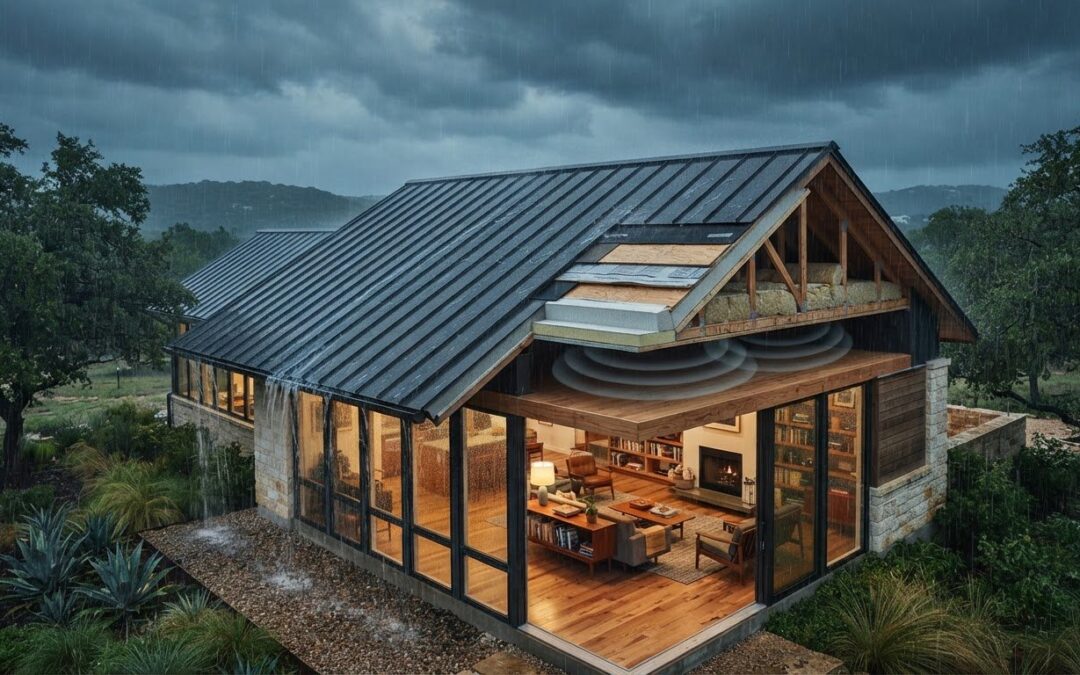
Will a standing seam roof make every Austin rainstorm sound like a drum solo? It’s a fair concern, but standing seam metal roof soundproofing depends on more than the panels. The underlayment, roof deck, insulation, attic space, ceiling, and installation details all affect how much sound reaches the rooms below.
This guide explains what can make roof noise more noticeable, which parts of the assembly may help reduce it, and what to consider after installation. Adding insulation or changing panels is not automatically the right fix. In Austin and nearby communities such as Round Rock, Pflugerville, Cedar Park, and Lakeway, a roof inspection can help clarify how the assembly is built and what options may suit the home. That gives you a better basis for comparing approaches and asking useful questions before work begins.
Key Takeaways
- Standing seam metal roof soundproofing depends on how the roof and ceiling layers work together, not just on the metal panels.
- Trace the sound path from the roof panels to the interior ceiling to help identify where noise may be getting through.
- Compare options during a reroof with possible changes to an existing roof, since access and limitations differ.
- Ask your roofer to identify the existing assembly and explain which layers, penetrations, and transitions are included in the proposed scope.
Standing Seam Metal Roof Soundproofing in Austin, TX: What Causes Indoor Noise?
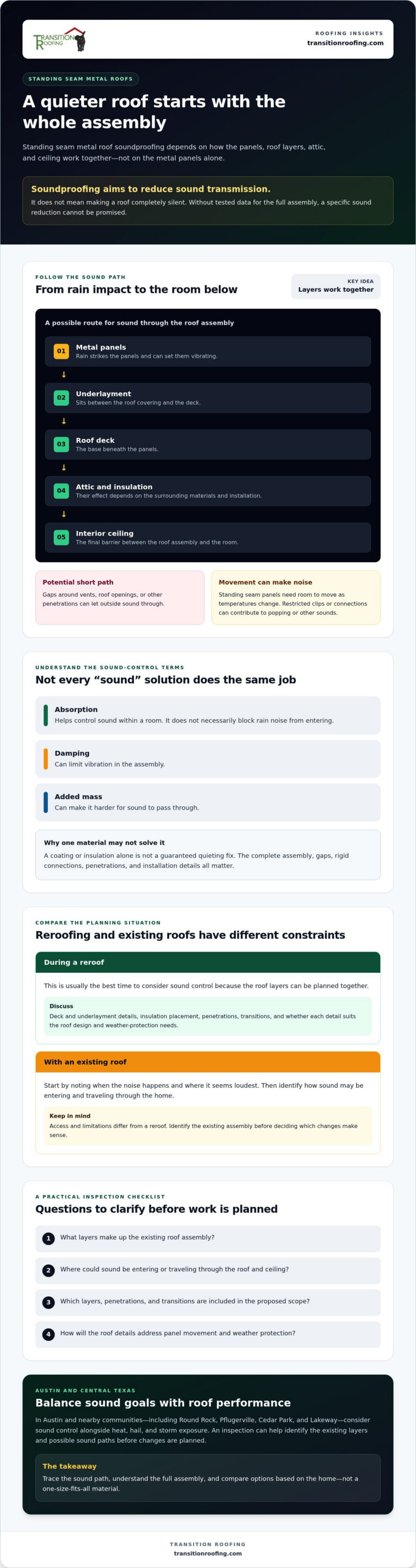
Standing seam metal roof soundproofing means reducing how much sound passes into the rooms below, not making the roof completely silent. Rain can strike the panels and set them vibrating. Sound may then travel through the roof deck, attic, insulation, and ceiling. What you hear indoors depends on how these parts work together, as well as the room’s interior surfaces.
Rain impact is only one possible sound path. Gaps around vents, roof openings, or other penetrations can let outside noise through. Sound may also travel through connected building parts, so adding a soft material inside a room won’t necessarily address noise coming through the roof. Soundproofing principles distinguish between absorbing sound in a space and limiting its transmission through building materials.
Does a standing seam metal roof always sound loud?
No. Metal panels alone don’t determine indoor noise. The roof deck, insulation, ceiling construction, and installation details all affect what reaches the room. Interior finishes can change how sound behaves once it’s inside, too. A bare or lightly finished space may feel different from a room with more sound absorbing furnishings, even when both have the same roof assembly.
What does roof soundproofing aim to change?
The goal is to reduce sound transmission through the assembly. Absorption helps control sound within a room, but doesn’t necessarily block rain noise from entering. Damping can limit vibration, while added mass can make it harder for sound to pass through. Results depend on the complete assembly, so don’t assume a coating or insulation alone will make the roof quiet. Without tested data for the full assembly, a specific reduction can’t be promised.
In Austin, roof choices also need to suit local heat, hail, and storm exposure. An inspection can help identify the existing layers and possible sound paths before you plan changes. Transition Roofing serves Austin and Central Texas; you can also learn about its commercial roofing services in Austin.
How a Standing Seam Roof Assembly Affects Sound in Austin, TX
Sound travels through connected layers, so follow the path from the exterior inward: metal panels, underlayment, roof deck, attic, insulation, and interior ceiling. Each layer can affect vibration or sound transmission, but its role depends on the surrounding materials and how the roof is installed. A gap at a vent or other penetration may create a more direct path for outside sound.
The panels make the first contact with rain, but the complete roof assembly determines how much of that sound reaches the rooms below. Standing seam panels also need room to move as temperatures change. Clips or connections that restrict movement can contribute to popping or other sounds. This overview of sounds from weather and movement explains how panel movement and attachment details can play a part.
Which roof components can influence sound transmission?
The deck provides the base beneath the panels. Underlayment sits between the roof covering and deck, primarily as a protective layer. Insulation in or below the roof assembly may affect sound traveling toward the living space, while the ceiling forms the final barrier. No layer works in isolation. Gaps, rigid connections, and poorly handled penetrations can undermine the overall result.
Why consider the whole roof system in Austin?
Sound control is only one part of a sound roof plan. The assembly also needs to meet the project’s weather protection and structural needs. In Central Texas, discuss heat, hail, and storm exposure alongside acoustic goals. Don’t trade a reliable roof detail for an untested promise of quiet. If you’re unsure which layers are in place, an inspection can help identify them. Explore roofing services from Transition Roofing as you plan what to discuss with a qualified contractor.
Standing Seam Metal Roof Soundproofing Options in Austin, TX Compared
The best time to plan sound control is usually during a reroof, when the roof layers can be considered together. For an existing roof, first note when the noise happens and where it seems loudest, then identify how sound may be entering and traveling. The right approach to standing seam metal roof soundproofing depends on the home’s construction, not a one size fits all material.
| Measure | Where it belongs | When to discuss it | Limitations |
|---|---|---|---|
| Deck and underlayment details | Below the metal panels | During a reroof | Must suit the roof design and weather protection needs. |
| Insulation | At or below the roof deck | During a reroof or attic evaluation | Results depend on placement and the existing assembly. |
| Attic or ceiling changes | Inside the roof and living space boundary | After identifying the sound path | Access and existing construction may limit options. |
| Assembly detailing | At connections, openings, and transitions | During installation or targeted repair | Details must preserve proper roof performance. |
What can be planned during a new roof installation?
A reroof can provide access to coordinate the deck, underlayment, insulation, and ceiling plan. Ask the roofing professional to confirm that the proposed materials work together and clarify which layers and details are included in the project scope. Sound goals should not take priority over weather protection or structural requirements.
What can be assessed after a roof is installed?
Start by noting when and where the noise occurs, including whether it happens during rain or at other times. Then have the roof and attic checked for likely sound paths. Depending on site conditions, attic insulation or interior ceiling changes may be worth evaluating. These steps won’t suit every home, so get an assessment before choosing a fix.
To discuss your roof assembly and possible next steps, contact Transition Roofing.
Planning a Quieter Metal Roof in Austin, TX: Questions for Your Roofer
A clear plan starts with the sound itself, not a product recommendation. Note when the noise occurs, where it seems loudest, and whether you see any roof concerns. Then ask the roofer to inspect the assembly, trace possible sound paths, compare practical options, and define the work before you approve it. This approach keeps standing seam metal roof soundproofing focused on the home’s actual construction.
What should you ask before approving roof work?
Ask the contractor to explain the proposed assembly in plain language. Which layers will change, and how will the work address the suspected sound path? Ask how roof openings, penetrations, edges, and transitions will be handled. Confirm what the written scope includes, what remains outside it, and whether the proposed changes affect weather protection or other roof requirements. For local context, review this guide to commercial roofing in Austin.
When is a professional roof assessment useful?
Arrange an assessment if noise is new, seems concentrated in one area, or occurs alongside visible roof concerns. A professional can help identify the existing roof layers and whether sound may be traveling through the roof, attic, or another building element. Transition Roofing offers residential roofing services for homeowners considering whom to contact.
Before scheduling work, ask whether the roofer can evaluate the existing assembly and explain which options fit the site. Transition Roofing serves Austin and Central Texas, including Round Rock, Pflugerville, Cedar Park, Lakeway, Buda, Kyle, Bee Cave, Rollingwood, West Lake Hills, San Leanna, Bear Creek, and Hays County. If roof noise is troubling you, discuss an assessment and possible next steps for your property.
Make Your Next Roof Decision With Confidence
Standing seam metal roof soundproofing starts with the full roof assembly, not the panel material alone. The deck, underlayment, insulation, ceiling, and installation details all affect how much sound reaches the rooms below. A quieter result begins with finding the sound path, then comparing options that suit the home’s existing construction.
During a roof project, ask which layers are included and how openings and transitions will be handled. After installation, an assessment can help identify whether noise may be coming through the roof assembly or another part of the building. Be wary of promises of silence without tested information for the complete assembly.
Transition Roofing offers metal roofing systems and residential and commercial roofing services in Austin and surrounding Central Texas communities. If you’re concerned about roof noise, schedule a roof assessment in Austin to discuss the existing assembly and possible next steps. A clear plan can help you make an informed decision about your roof.
Frequently Asked Questions
Is a standing seam metal roof louder than a shingle roof?
Not always. Indoor sound depends on the full roof and ceiling assembly, including the deck, insulation, attic, and interior finishes. Rain impact may be more noticeable in one home than another, but the panel material alone doesn’t determine what you’ll hear. For a fair comparison, ask a roofer to consider both roof assemblies and how each is installed.
Can you soundproof an existing standing seam metal roof?
Some existing roofs may be improved, but the right steps depend on the building. Start by identifying where the noise seems to enter and checking the roof and attic assembly. Insulation or ceiling changes may be options if site conditions allow. If noise is new, localized, or paired with visible roof concerns, request a professional assessment before choosing a fix.
Does insulation stop rain noise from a metal roof?
Insulation may help reduce sound traveling through parts of the roof assembly, but it doesn’t guarantee that rain noise will stop. Its effect depends on its type, location, installation, and the other roof layers. A contractor should assess whether sound is traveling through the roof deck, attic, or another path. Adding insulation without finding the source may not address the problem.
What should I ask a roofer about standing seam roof noise?
Ask the roofer to identify the existing roof layers and explain how sound may travel from the panels to the rooms below. Clarify what the proposed work includes, including the deck, underlayment, insulation, penetrations, and transitions. Ask about tradeoffs and whether any sound reduction claims apply to the complete assembly, not just one material. Get the scope in writing before approving work.
Is standing seam metal roof soundproofing best planned before installation?
Usually, planning during a reroof gives the contractor a chance to consider the deck, underlayment, insulation, and ceiling as one assembly. That doesn’t mean an existing roof can’t be assessed. Options after installation may include attic or interior changes, depending on access and construction. In Austin and Central Texas, discuss sound goals alongside heat, hail, and storm protection.