
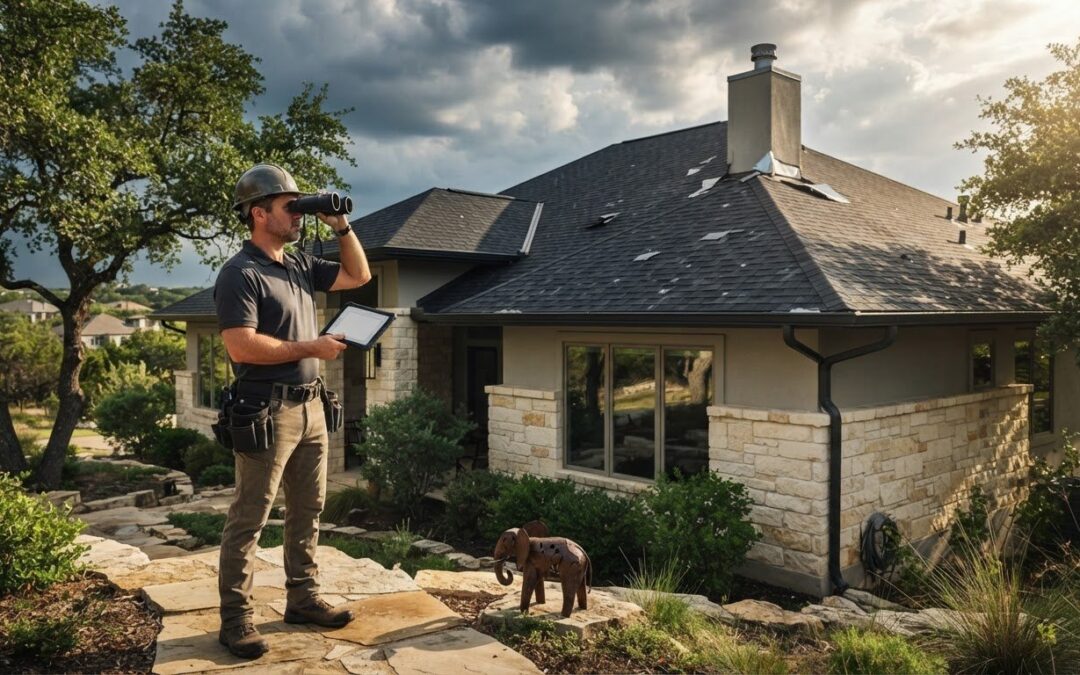
Could your roof look fine from the driveway and still have storm damage? In Rollingwood, hail and strong storms can leave marks or loosen shingles that aren’t easy to see from the ground. It’s reasonable to wonder whether a roof mark or new leak is storm-related, and climbing up to check can be unsafe.
A storm damage roof assessment Rollingwood homeowners can rely on starts with observable evidence, not assumptions. This checklist explains what you can safely document from the ground, what a professional assessment should examine, and how to choose a practical next step based on the findings. You’ll also learn what details can help distinguish possible storm damage from existing wear, without deciding the cause from a photo or a single roof mark alone.
We’ll walk through signs to look for around your home, questions to ask during an assessment, and how to leave with a clear plan for repair or follow-up. The goal is a steady, evidence-based picture of your roof’s condition, without taking unnecessary risks or rushing into a decision.
Key Takeaways
- A storm damage roof assessment Rollingwood homeowners can use should review installed roofing materials, flashing, penetrations, drainage, and visible roof edges where applicable.
- Document signs from a safe location, then share the storm date, when any leak began, prior repairs, and accessible photos with the roofer.
- Review the findings alongside the repair rationale, unanswered questions, and proposed next action before deciding how to proceed.
- Ask the roofer to explain the work scope, materials, and assessment limits in plain language so you can make an informed follow-up plan.
Storm Damage Roof Assessment Rollingwood: What to Check First in Austin, TX
A storm damage roof assessment Rollingwood homeowners arrange can help clarify what happened, but visible signs alone don’t confirm the roof’s full condition. Central Texas storms can bring hail, wind, and heavy rain. Hail can affect roofing materials, but a mark seen from the ground doesn’t establish its cause or whether repairs are needed. For background on how hail forms, see this overview of hail damage.
This training video shows a roof inspection for wind damage. Watch from a safe location, and don’t try to copy a roof-level inspection yourself.
Which storm clues can you safely check from the ground?
From a safe spot, look at roof edges, gutters, downspouts, siding, and the yard. Note displaced or missing shingles, debris, damaged gutters, and fallen branches. Indoors, check for new water stains on ceilings or walls. Record when stains or leaks appeared and which rooms are affected. Don’t climb onto a wet, steep, or visibly damaged roof. No obvious damage from the ground doesn’t rule out concealed concerns.
What should you document before requesting an assessment?
Take dated photos from safe locations. Include affected ceilings, exterior sides of the home, and visible debris. Record the storm date and any changes you noticed afterward, such as a new leak or shingle movement. Safe documentation helps connect observed symptoms with the assessment. Share your notes and accessible photos with the roofer so they can consider what you observed alongside their inspection.
What a Professional Storm Roof Assessment Covers in Rollingwood and Austin, TX
A professional storm damage roof assessment Rollingwood homeowners arrange should be a systematic review of accessible roof areas and related signs, not a guaranteed diagnosis based on photographs alone. The roofer considers the installed roofing material, the reported storm and symptoms, and the conditions visible during the visit. Access and inspection scope depend on site conditions and safety. If an area can’t be checked, the assessment should say so.
What should the roofer record and explain?
Look for findings that connect specific observations to a clear next step. A useful assessment documents:
- Where visible conditions appear, such as shingles, flashing, roof openings, drainage areas, and roof edges where applicable.
- Photos or notes showing the observed condition and any related interior signs, such as a new ceiling stain.
- Areas that could not be assessed and why.
A ceiling stain is a symptom, not proof by itself of storm damage to the roof. Ask the roofer to separate observed facts from recommended repairs, and explain how each recommendation relates to the findings. A useful assessment is documented observations plus a specific next-step recommendation. Owens Corning’s roof storm damage checklist offers another reference for understanding storm-related signs.
How do roof type and property use affect the assessment?
Inspection details vary by roof system. An asphalt-shingle roof has different materials and details to review than a commercial or low-slope roof. Transition Roofing works with residential and commercial properties, including asphalt shingles, metal, TPO, and flat-roof systems. For a home, see its residential roofing services. Ask the roofer to explain the scope and any limits in plain language before you decide on follow-up.
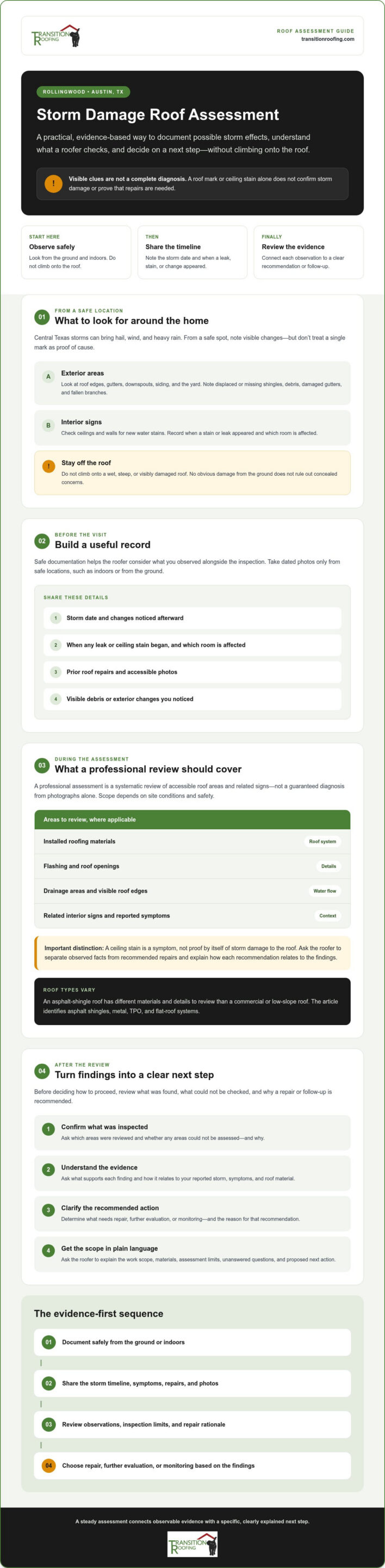
Rollingwood Storm Roof Checklist: Before & After Visit
Use this sequence to keep a storm damage roof assessment Rollingwood practical and evidence-based:
- Document safely: Take photos from the ground or indoors. Don’t climb onto the roof.
- Arrange an assessment: Share the storm date, when any leak or stain began, prior roof repairs, and accessible photos.
- Review the findings: Ask which areas were inspected and what evidence supports each finding.
- Choose follow-up: Clarify what needs repair, further evaluation, or monitoring, and why.
For a commercial property, note the affected areas and any operational concerns, such as a leak near a work area. This information helps explain the situation, but it can’t guarantee a business-continuity outcome.
Which questions help you evaluate the assessment?
Ask what damage the roofer observed, where it appears, and which findings remain uncertain. Request written findings and ask whether the recommendation is repair, further evaluation, or monitoring. If a roofing term is unfamiliar, ask for a plain-language explanation. You should understand how the evidence supports the proposed next step before deciding how to proceed.
What should you do if you notice an active leak?
Protect belongings if you can do so safely, and photograph interior water signs. Don’t enter areas with unsafe conditions or approach exposed roof sections. Contact a qualified roofing professional promptly if water is entering or roofing materials are exposed. For broader repair context, see the Austin roofing resource.
If you’re dealing with a leak or storm-related roof concern in Rollingwood, contact Transition Roofing to discuss an assessment and a clear follow-up plan.
Rollingwood Storm Damage Roofer: Austin, TX Next Steps
Use the assessment findings to compare evidence with the proposed work, not with pressure or assumptions. Ask for a written estimate that matches the documented repair scope and identifies the materials and work included. The cost depends on the roof conditions and work proposed, so compare estimates by scope rather than total alone. Clarify what happens if additional damage appears during work and how any change will be documented and priced before proceeding.
| Review point | What to confirm |
|---|---|
| Documented findings | Where was a concern observed? What photos or notes support it? |
| Repair rationale | How does the proposed repair address the documented condition? |
| Unanswered questions | Which areas or findings remain uncertain, and why? |
| Next action and estimate | Does the written scope match the findings, and what work and materials are included? |
How can you avoid rushed or unclear repair decisions?
Request written findings and an estimate before approving work. If a recommendation doesn’t connect clearly to an observed condition, ask the roofer to explain the reason. Clarify the work limits, materials, and how the roofer will handle newly discovered damage. For related storm-recovery decisions, use the documented findings to guide the next step rather than assuming every roof needs the same repair.
When should a Rollingwood property owner contact Transition Roofing?
Consider an assessment if you’ve noticed a new leak, visible roof changes, or storm-related concerns that need a closer review. Homeowners can learn about residential roofing services. For a business property, ask about commercial roofing assessment options. Insurance-claim guidance can help organize information, but it can’t guarantee coverage or claim approval.
If you’re weighing repair options, request help with a storm-damage roof assessment. Transition Roofing can review the roof and explain a practical next step based on its findings.
Take the Next Step Toward a Clear Roof Plan
A storm damage roof assessment Rollingwood homeowners arrange should turn safe observations into documented findings and a practical next step. Ground-level clues can help explain what changed after a storm, but they don’t confirm the full roof condition. A professional assessment should make clear what was observed, what remains uncertain, and why repair or follow-up is recommended.
Keep your storm date, leak timing, prior repair details, and accessible photos together. If you’re considering an insurance claim, organized information can help support the process, but no assessment can guarantee coverage or approval.
Transition Roofing serves Rollingwood and the wider Central Texas area with roof repair, storm-damage repair, and insurance-claim assistance. Request a clear plan for your storm-damaged roof. If you’re seeing storm-related concerns, Transition Roofing can assess the roof and explain a practical plan based on its findings.
Frequently Asked Questions
What does a storm-damage roof assessment include?
A storm-damage roof assessment reviews accessible roofing materials and related areas for visible concerns. In Rollingwood, a roofer may check shingles or other installed materials, flashing, roof openings, drainage, and visible roof edges, as site conditions allow. They may also consider reported leaks or new ceiling stains. Ask for photos, observed locations, areas they couldn’t assess, and a clear explanation of recommended next steps.
Can hail damage a roof without leaving obvious signs?
Yes. Possible storm-related concerns may not be clear from the ground, and a roof can have areas that need closer review even when you don’t see missing shingles or debris. Don’t climb up to look for damage. Note the storm date and any changes you observe, then arrange a professional assessment if you’re concerned. Visible marks alone don’t confirm hail damage or show the roof’s full condition.
How soon should I get my roof assessed after a storm in Rollingwood?
Arrange an assessment promptly if you notice a new leak, exposed roofing, displaced materials, or other concerns after a storm. Don’t wait to document changes, but stay off the roof, especially if it’s wet or visibly damaged. If you plan to contact your insurer, check your policy for its reporting instructions and timelines. A prompt assessment can help clarify roof conditions, but it can’t determine insurance coverage.
Should I contact a roofer before filing a roof insurance claim?
You can contact a roofer for an assessment and documented observations before deciding how to proceed with a claim. A roofer can explain visible conditions and help organize information, while your insurer determines how the policy applies. Transition Roofing offers insurance-claim assistance, but no roofer can guarantee coverage or claim approval. Review your policy’s reporting instructions and contact your insurer promptly if you believe storm damage occurred.
Does storm damage mean I need a full roof replacement?
No. Storm damage doesn’t automatically mean a roof needs full replacement. The next step depends on the roof’s condition and the specific findings, which may support repair, further evaluation, or monitoring instead. Ask the roofer to connect each recommendation to documented observations and explain the proposed scope and materials. A clear storm damage roof assessment in Rollingwood helps you understand the evidence before choosing a repair or replacement plan.