
The roof work is planned, but a rebate can depend on details you confirm before installation begins. If you’re applying for Austin Energy cool roof rebate support, first check whether the current program covers your property type and the specific work you’re considering.
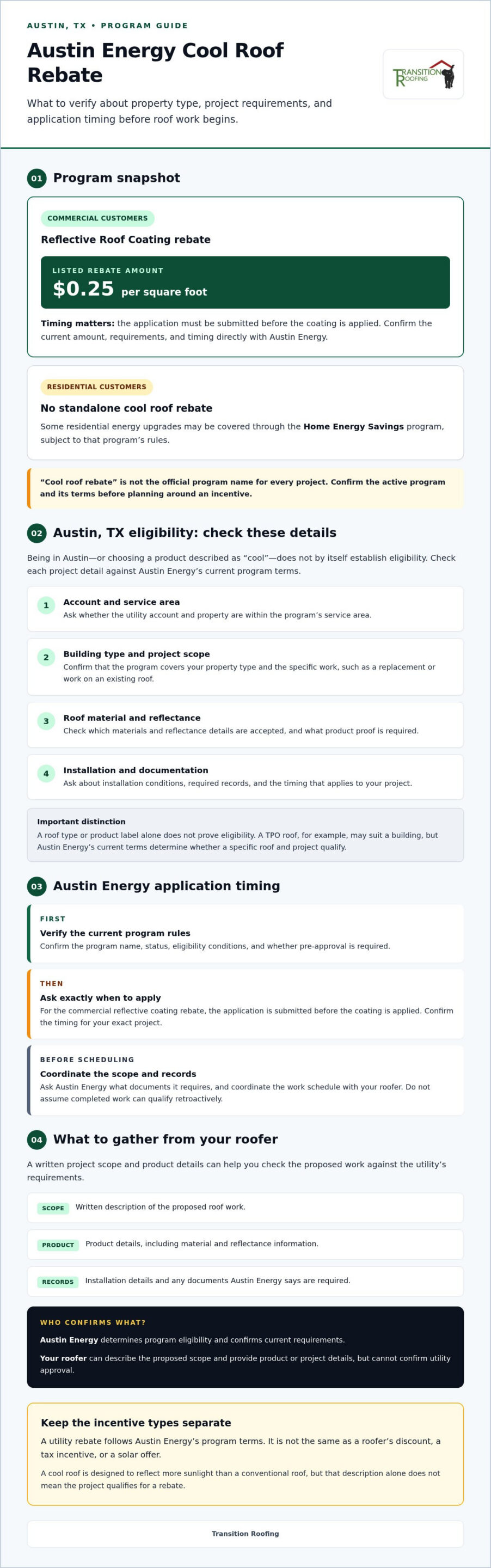
It’s reasonable to be unsure: Austin Energy’s options differ for commercial and residential customers, and “cool roof rebate” isn’t the official program name for every project. As of September 2026, commercial customers may qualify for a reflective roof coating rebate, with the application submitted before the coating is applied. Residential customers don’t have a standalone cool roof rebate, though some energy upgrades may be covered through the Home Energy Savings program.
This guide explains how to verify current eligibility and service-area requirements, what information to gather, and what to discuss with your roofer before scheduling work. It also explains why roof type, project scope, and application timing matter, so you can plan without relying on outdated rebate details.
Key Takeaways
- Before applying for Austin Energy cool roof rebate support, confirm the current program name, status, and rules with Austin Energy.
- Check whether your project is residential or commercial. Available programs and potential roof-related incentives differ by property type.
- Verify material, building, and installation requirements before choosing a roof or scheduling work.
- Gather a written project scope and product details from your roofer, then confirm what records and timing Austin Energy requires.
Applying for Austin Energy Cool Roof Rebate in Austin, TX: Confirm the Program First
Program terms can change, so check Austin Energy’s current 2026 rules before choosing materials or setting a work date. A cool roof is designed to reflect more sunlight than a conventional roof, but that description alone doesn’t show that a roof or project qualifies. If you’re applying for Austin Energy cool roof rebate support, start with the utility’s current program information.
As of September 2026, Austin Energy lists a commercial Reflective Roof Coating rebate, while residential customers don’t have a standalone cool roof rebate. Residential energy upgrades may instead fall under broader programs, subject to their own rules. A utility rebate is an incentive offered under current program terms. It isn’t the same as a roofer’s discount, a tax incentive, or a solar offer.
For a quick overview of the application topic, watch this video, then confirm its guidance against Austin Energy’s current rules:
Is the Austin Energy cool roof rebate currently available?
Check Austin Energy’s active program page before planning around a rebate. Its current commercial offering is called the Reflective Roof Coating rebate, not a general cool roof incentive. The program information lists $0.25 per square foot for commercial reflective coating and says to apply before the coating is applied. Confirm the latest amount, timing, and conditions directly with Austin Energy before work begins.
Does your Austin-area property qualify for the program?
Being in Austin alone doesn’t establish eligibility. Confirm that your utility account, property type, service area, and proposed project meet the current rules. Ask Austin Energy which reflectance, material, and installation details apply to your project. A roofer can help describe the proposed scope, but the utility determines program eligibility. For relevant commercial work, review commercial roofing in Austin after confirming the program requirements.
Austin, TX Cool Roof Rebate Eligibility: Check the Roof and Project Details
A roof type or product label isn’t enough to establish eligibility. A TPO roof, for example, may suit a building, but that alone doesn’t prove it meets a rebate’s conditions. Only Austin Energy’s current program terms can confirm whether a specific roof and project qualify. The U.S. Environmental Protection Agency explains broader Benefits of Cool Roofs, but those benefits are separate from utility program approval.
Which roof and building details should applicants verify?
Before applying for Austin Energy cool roof rebate support, check each project detail against current Austin Energy guidance. Use the questions below to organize your review, and treat each requirement as unconfirmed until the utility verifies it for your property and scope.
| Eligibility question | Source to check | Answer to confirm |
|---|---|---|
| Does the account and property fall within the program’s service area? | Austin Energy | Account and service-area eligibility |
| Does the program cover this building type and project, such as a replacement or work on an existing roof? | Current program terms | Eligible property and project category |
| Are the proposed roof material and reflectance accepted? | Austin Energy; product documents from the roofer | Required material, reflectance, and proof |
| Are there installation or documentation conditions? | Austin Energy | Required installation details and records |
Should you apply before replacing the roof?
Confirm whether the program requires an application, pre-approval, or approval before work starts. Don’t assume there is a deadline or that completed work can qualify retroactively. Ask Austin Energy what timing applies to your exact project, then coordinate the schedule with your roofer. A contractor can document the proposed system and scope for your review, but cannot confirm utility approval. If your project involves a flat roof, review Austin flat roofing options after checking the program rules.
How to Apply for an Austin Energy Cool Roof Rebate in Austin, TX
Once you’ve confirmed the current program and basic eligibility, follow Austin Energy’s instructions in order. These steps can help you organize the process, but they don’t replace the utility’s current checklist or confirm approval.
- Verify the rules. Confirm the program is active, which property types and projects it covers, and whether timing or approval conditions apply.
- Check your eligibility. Confirm your account, service area, building type, and proposed roofing work directly with Austin Energy.
- Document the project. Ask your roofer for a dated estimate and a clear scope. Keep product details and any material or reflectance information Austin Energy says it needs.
- Apply as instructed. Use the current program checklist to confirm how and when to submit. For the commercial reflective roof coating rebate, Austin Energy says the application must be submitted before the coating is applied. Residential Home Energy Savings projects require an assessment and application process before work begins.
- Keep your records. Save the submitted application, communications, estimate, product documents, invoices, and completion records. Provide records Austin Energy requests and retain copies for your files.
What information might an application request?
Check Austin Energy’s current checklist for account, property, product, contractor, and project details. An estimate, product information, invoice, or completion record may be relevant, but treat each as a possible document rather than a required form unless Austin Energy confirms it. Before submitting, compare the application details with your roofer’s written scope so the proposed work is described consistently.
How can you avoid delays or a rejected application?
Make sure the product and project details you submit match the final installed roof and the current program terms. Check that the property and project type are described accurately, and keep copies of communications and submitted records. If a requirement is unclear, ask Austin Energy before moving ahead rather than assuming a particular material or installation method will be accepted.
After the rules are clear, a roofer can help describe the proposed scope and materials. Discuss your Austin roofing project with Transition Roofing before finalizing the work plan.
Choosing an Austin, TX Roofer After Confirming Rebate Requirements
Once Austin Energy confirms the program terms, choose a roofer who can explain the proposed work clearly and document the project scope. In Central Texas, heat, storms, and hail can all affect roof condition and project planning. Those conditions may guide decisions about durability and timing, but they don’t prove that a roof qualifies for a rebate.
Compare written proposals using the same details: the proposed roof system and materials, available product records, project schedule, and any rebate-related information. If one proposal uses a different system or scope, ask the contractor to explain the difference before comparing costs or making a selection. For a relevant commercial project, review commercial roofing services in Austin as you assess your options.
Questions to ask a roofing contractor before work starts
Keep the discussion specific. Ask:
- Does the written scope name the proposed system and materials clearly enough for Austin Energy to review?
- Can you provide product details or other records the utility may request?
- Who will supply installation records, if the current program requires them?
- Does the schedule leave time for any application or approval steps Austin Energy requires?
For flat-roof work, make sure the proposal describes the system and scope in terms you can compare with the program’s current criteria. Don’t rely on a general statement that a roof is reflective or energy efficient. If you’re applying for Austin Energy cool roof rebate support, the exact project details must line up with current utility requirements, and only Austin Energy can confirm eligibility.
When to seek local roofing guidance in Austin
Get a roof assessment if leaks, visible damage, or replacement needs affect your project timing. A contractor can explain the roof’s condition, document the proposed work, and help you compare scope and schedule. Confirm program questions directly with Austin Energy, especially if a requirement or document is unclear.
If you’ve checked the current program terms and need help planning the roof work, Transition Roofing can assess the roof and explain a clear project scope. That guidance does not guarantee rebate approval.
Plan Your Austin Roof Project With Confidence
Before applying for Austin Energy cool roof rebate support, verify the active program, your property’s eligibility, and any application timing directly with Austin Energy. A roof material or “cool roof” label alone doesn’t confirm that a project qualifies. Keep the utility’s current requirements in view as you compare written scopes, product details, and schedules with your roofer.
Good planning also accounts for the Central Texas climate. Heat, storms, and hail can affect roof condition and project timing, so address urgent damage while checking program rules rather than assuming rebate approval. Transition Roofing serves Austin and nearby communities, including Round Rock, Pflugerville, Cedar Park, Lakeway, Hays, Bear Creek, San Leanna, Rollingwood, West Lake Hills, Buda, Kyle, and Bee Cave. Its residential and commercial roofing work includes roof installation and systems such as TPO and flat roofing. The company can help clarify roofing scope and options, but Austin Energy determines rebate eligibility and approval.
Once you’ve confirmed the program terms, take the next step with a clear project plan. Request a clear roofing plan for your Austin property, then move forward knowing what work is proposed and which program questions still need the utility’s answer.
Frequently Asked Questions
Is the Austin Energy cool roof rebate available in 2026?
Yes, Austin Energy offers a commercial Reflective Roof Coating rebate as of September 2026. It’s not a general cool roof rebate for every property or roof replacement. Residential customers don’t have a standalone cool roof rebate, though some energy upgrades may be covered through other programs. Check Austin Energy’s current program information before planning work, since eligibility and terms can change.
How do I apply for the Austin Energy cool roof rebate?
Start by checking current program rules, your account and property eligibility, and the requirements for your project. For a commercial reflective coating project, Austin Energy says to submit the application before the coating is applied. Gather the details the utility requests, follow its current instructions, and keep copies of your submissions. Confirm any unclear requirements directly with Austin Energy.
What roof materials qualify for an Austin Energy cool roof rebate?
Austin Energy’s commercial rebate applies to reflective roof coating, but don’t assume a roof material qualifies based on its name or category. A TPO system, metal roof, or other roof type isn’t automatically eligible. Ask Austin Energy to confirm the coating, reflectance, product documentation, and installation conditions for your specific project before selecting materials or scheduling work.
Can I apply for the rebate after my roof has been installed?
Don’t count on receiving a rebate retroactively. For the commercial Reflective Roof Coating rebate, Austin Energy requires the application before the coating is applied. Residential Home Energy Savings projects require an energy assessment and application process before work begins. If work is already underway or complete, contact Austin Energy to ask whether it can still qualify under current terms.
Can a commercial property in Austin qualify for a cool roof rebate?
Yes, a commercial property may qualify for Austin Energy’s Reflective Roof Coating rebate if it meets current program requirements. The rebate is for applying reflective coating, not automatically for replacing a roof or installing any particular roof system. Confirm account and project eligibility, accepted materials, documentation, and application timing with Austin Energy before work starts.
Once you’ve confirmed the current program terms, request a clear roofing plan for your Austin property. Transition Roofing can help assess the roof and explain the project scope, but Austin Energy determines rebate eligibility and approval.