
What if a roof issue that disrupts guest areas began as a small defect nobody noticed after the last storm? Leaks can interrupt hotel operations, while missed damage may grow between inspections. A hotel roof maintenance plan Round Rock property teams can use helps organize scheduled inspections, minor upkeep, and clear records, so concerns don’t get lost in the daily rush.
A practical plan should account for Central Texas conditions, including intense heat, hail, high winds, and heavy rain. It should also help staff coordinate roof visits and repairs around hotel activity. In this guide, you’ll learn what a commercial maintenance program can cover, how to plan work with less disruption, and what to look for in a qualified local roofing contractor. We’ll also explain how inspection findings and completed work can be documented, giving your team a clearer basis for prioritizing repairs and planning ahead.
Key Takeaways
- A hotel roof maintenance plan Round Rock teams can rely on organizes inspections, written findings, and follow-up so roof concerns are easier to track.
- Review roof history and condition before setting inspection timing; age, past leaks, drainage, and recent storms can shape the schedule.
- Clear records help hotel teams prioritize repairs and coordinate roof work with guest areas and daily operations.
- Compare contractors by their written scope, reporting, repair approval process, communication, and experience with your roof system.
Hotel Roof Maintenance Plans in Round Rock: What They Should Prevent
A hotel roof maintenance plan Round Rock property teams can use is a process for checking roof conditions, recording findings, and prioritizing follow-up. It helps staff spot concerns before they become harder to manage, but it can’t prevent every leak or remove the need for repairs. Clear findings give facilities teams in Round Rock and Austin, TX, a better basis for planning work and communicating its potential effect on guest areas, room availability, and daily operations.
Which hotel roof areas deserve routine attention?
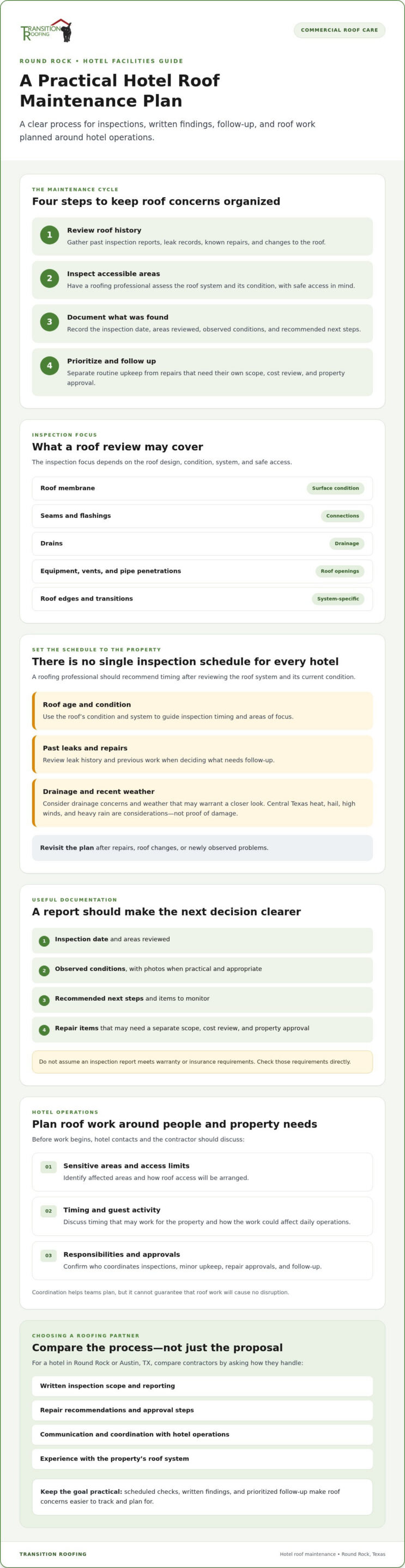
A review may cover the roof membrane, seams, flashings, drains, and visible areas where equipment, vents, or pipes pass through the roof. Priorities depend on the roof’s design, condition, and safe access. For a useful foundation, see this overview of roof functions and materials. A written report can identify observed concerns and help the team decide what needs follow-up.
A documented maintenance plan combines scheduled roof checks, written findings, and prioritized follow-up actions. Ask what the contractor will inspect and how the report will distinguish a condition to monitor from a repair that needs attention.
Why Round Rock weather belongs in the maintenance discussion
Central Texas heat, hail, and storms are conditions to consider, not proof that a roof has been damaged. After concerning weather, arrange a review if there are signs of a problem or a change in roof condition. Record observations and follow-up decisions so the property team has a clear history to reference when planning repairs.
For a hotel, that record can support steadier facilities planning. If a concern may affect occupied areas, the team can discuss repair priorities and coordinate next steps. A commercial roofing contractor familiar with the roof system can help assess its condition; learn more about commercial roofing services in Austin.
How a Round Rock Hotel Roof Maintenance Plan Works
A hotel roof maintenance plan Round Rock teams can manage should follow a clear sequence: review roof history, inspect accessible areas, document findings, and prioritize next steps. Start with past inspection reports, leak records, and known repairs. The contractor can then assess accessible roof areas and recommend follow-up based on the roof’s condition and system.
There isn’t one inspection schedule for every hotel. Frequency should reflect the roof system, its condition, and the contractor’s assessment. The National Institute of Building Sciences offers technical guidelines for roof maintenance as a reference, but a contractor should tailor recommendations to the specific property.
What should an inspection report record?
A useful report identifies the inspection date, areas reviewed, observed conditions, and recommended next steps. Photos can help show where an issue was found, when they’re practical and appropriate. The report should also make clear which items are routine upkeep and which may need a separate repair scope, cost review, and property approval. Don’t assume a report will meet warranty or insurance requirements; check those requirements directly.
How to coordinate roof work around hotel operations
Before work begins, hotel contacts should identify sensitive areas, access limits, and operating concerns. Discuss which roof areas are involved, how access will be arranged, and what timing may work for the property. This conversation helps the contractor and hotel team plan around guest activity, but it can’t guarantee that work will cause no disruption.
For scheduled inspections, minor upkeep, or repair work, confirm responsibilities and approval steps in advance. If you’re comparing options, review commercial roofing services in Austin and ask how the proposed scope and reporting fit your hotel’s needs.
Choosing a Hotel Roof Maintenance Schedule in Round Rock
Set the schedule with a roofing professional after they review the roof system and its current condition. A hotel roof maintenance plan Round Rock property teams can rely on should account for the roof’s age, past leak history, drainage concerns, and any recent weather that may warrant a closer look. Revisit the plan after repairs, roof changes, or newly observed problems, since those can affect what needs attention and when.
How roof type and condition affect the plan
Low-slope and flat roofs need attention to areas such as seams, drains, and rooftop penetrations. Pitched roofs have different areas to assess, including roof edges and transitions. The right focus depends on the specific system, its condition, and safe access. For context on flat roofing systems, review the company’s flat roofing services. ARMA’s guide to developing a roof maintenance program focuses on commercial asphalt roofs, so use it as a reference for planning and records, not as a schedule for every roof type.
When should hotel staff request an earlier review?
Don’t wait for the next planned inspection if staff notice a visible leak, drainage concern, displaced material, or new signs of water inside. Record where and when the issue appeared, then report it promptly to the property contact responsible for roof maintenance. If storm damage is suspected, include that context when requesting an assessment. A roofing professional can review the concern and recommend whether repair work is needed.
If you’re reviewing maintenance options for a hotel roof, talk with a commercial roofing contractor about the system, its condition, and a schedule that fits the property.
Selecting a Hotel Roof Maintenance Partner in Round Rock and Austin, TX
A strong proposal explains what the contractor will inspect, what the report will include, how findings will be ranked, and how the team will communicate with hotel staff. Compare written scopes, not just broad promises of “regular maintenance.” Ask whether the contractor has experience with your roof system and commercial properties where work needs to be coordinated with daily operations.
Transition Roofing serves Round Rock and Central Texas with commercial roofing and contract-based preventative maintenance programs. Ask for the current program scope in writing, including what scheduled inspections, minor upkeep, and reports cover. You can also review its commercial roofing services for relevant service information.
Questions to ask before agreeing to a maintenance plan
Before signing, confirm which roof areas are included, what documentation you’ll receive, and how the contractor prioritizes findings. Clarify what counts as minor upkeep and what requires a separate repair scope and your approval. If credentials or years of experience factor into your decision, verify those claims directly and confirm any manufacturer certifications are current and apply to the roof system involved.
What a clear next step looks like for a Round Rock hotel
Gather roof records, known leak locations, system details, and recent repair history before discussing a hotel roof maintenance plan Round Rock property teams can use. These details help the contractor understand the building and prepare a scope for discussion. Ask what information they need to assess the roof and explain how they’ll present findings and recommended next steps.
If you’re ready to discuss your hotel’s roof and maintenance needs, discuss a commercial roof maintenance plan with Transition Roofing.
Build a Clear Plan for Your Hotel Roof
A dependable hotel roof maintenance plan Round Rock teams can manage starts with a schedule based on the roof’s system and condition. It should also give staff clear inspection records, prioritized findings, and a process for approving repairs. That structure helps property teams track concerns and plan next steps without assuming maintenance will prevent every leak.
Transition Roofing serves Round Rock and Central Texas with contract-based preventative maintenance programs for commercial roofs. Its commercial offerings include TPO and flat roof systems. Ask what the maintenance program covers, what documentation your team will receive, and how recommendations will be communicated for your property.
If you’re ready to discuss your hotel’s roof and maintenance needs, discuss a commercial roof maintenance plan. A clear conversation is a practical first step toward making informed decisions and supporting your property with a plan that fits.
Frequently Asked Questions
How often should a hotel roof in Round Rock be inspected?
Inspection timing should reflect the roof system, age, condition, leak history, and the hotel’s maintenance needs. Ask a commercial roofing professional to review those details and recommend a practical schedule for your property. After a storm, report visible damage or new water intrusion promptly rather than waiting for the next planned inspection. A hotel roof maintenance plan Round Rock teams can follow should make that process clear.
What does a hotel roof maintenance plan include?
A useful plan sets out scheduled inspections, observations, documentation, and recommended follow-up. Its scope should match the roof system, condition, access, and hotel operations. Ask which areas will be checked and what your team will receive after each visit. The contractor should also explain which tasks count as routine upkeep and which findings may need a separate repair scope and approval.
Can roof maintenance help prevent hotel leaks?
Planned inspections can help identify visible concerns, such as blocked drainage or deteriorating roof details, before they go unnoticed. They can’t guarantee that leaks will never occur. Weather, hidden conditions, and other factors may still lead to water intrusion. A clear report and follow-up process helps hotel staff understand what was found and respond when a repair or closer assessment is recommended.
What should a hotel manager do after a storm in Round Rock?
Report any leak, water staining, or visible roof concern promptly to the property contact responsible for maintenance. Note where and when the issue appeared, and take photos from a safe location if practical. Don’t send staff onto the roof unless they’re qualified and authorized to access it. A commercial roofing professional can assess the concern and recommend appropriate next steps.
How do I compare commercial roof maintenance plans for a hotel?
Compare the written inspection scope, report details, communication process, and how the contractor prioritizes findings. Ask how routine upkeep differs from repair work requiring separate approval. Confirm the contractor has experience with your roof system and commercial properties where work must be coordinated with hotel operations. Verify any certification or experience claims directly before relying on them in your decision.