
What if a small drainage problem becomes the first sign of a leak inside your building? In Austin, heat, hail, and heavy storms can put stress on commercial roofing systems, and early warning signs are easy to miss. A commercial roof preventative maintenance checklist gives your team a consistent way to record what is visible and decide what needs attention.
You do not need to diagnose roofing problems yourself. Start with safe observations from accessible areas, note changes after storms or roof work, and leave hands-on checks to a roofing professional. This checklist covers roof and drainage observations, what details and photos to document, and when to monitor a change or request a professional assessment. It also explains why next steps should fit your roof system, whether it is a flat or low-slope roof such as TPO. A clear record helps you plan follow-up around Central Texas conditions and address developing concerns before they disrupt your business.
Key Takeaways
- Use a commercial roof preventative maintenance checklist to make consistent observations without attempting repairs or unsafe roof access.
- Record where you notice a change, when you found it, and photos from a safe viewpoint so follow-up is easier to plan.
- After hail or storms, note roof changes or interior symptoms and seek professional assessment for active water intrusion.
- Keep roof system details, past reports, repair records, and warranty documents together to support informed maintenance planning.
Commercial Roof Preventative Maintenance Checklist: Why Austin, TX Properties Need a Routine
A commercial roof preventative maintenance checklist gives your team a practical, safety-conscious way to record visible conditions and plan follow-up. In Austin, heat, hail, and storms can bring new changes to a roof. Routine observations may help you spot concerns early, but they cannot prevent every leak or replace a professional inspection.
What a commercial roof maintenance checklist can and cannot do
Preventative maintenance for a commercial roof is a repeatable process of recording observable conditions and deciding what follow-up they need. The record can note where you noticed a change, when you saw it, and include photos taken from a safe viewpoint. Over time, it can help your roofing professional understand what has changed. For general background on examining a building’s condition, see this overview of home inspection.
Keep staff observations to areas they can view safely, such as accessible interior spaces or the ground. Do not walk on the roof, test materials, clear drains, or attempt repairs as part of a checklist. Those tasks may require professional assessment and guidance specific to the roof system. A checklist supports that work, but it does not replace it.
Why Central Texas weather belongs in the maintenance record
Austin’s heat, hail, and storms provide useful context when reviewing roof conditions. After a notable weather event, record the date, the area where you noticed a visible change, and any interior signs such as water staining. Share these observations with a roofing professional rather than trying to determine the cause yourself.
System type and condition affect what follow-up makes sense, so ask a professional to help set review timing and explain which changes need attention. For local support, learn about Central Texas commercial roofing services and flat roofing in Austin.
Austin, TX Commercial Roof Checklist: Inspect the Surface, Drains, and Penetrations
Use the same observation sequence each time, and keep the commercial roof preventative maintenance checklist with your property records. Staff should note what they can see safely, not diagnose damage or perform repairs. Roof system instructions and any existing warranty requirements should guide maintenance decisions. For broader industry context, a National Institute of Building Sciences document references the National Roofing Contractors Association (NRCA) Roofing Manuals.
What to record on flat and low-slope roof areas
From a safe location, note visible changes such as punctures, open seams, displaced materials, or areas where water appears to remain. Do not enter unsafe roof areas or approach an edge to get a closer look. Describe what you see without naming a cause. Photos from a safe viewpoint can help a professional compare conditions over time. Learn more about Austin flat roofing systems.
Check drainage, edges, and rooftop penetrations
Look for visible debris or possible blockages at drains, scuppers, and gutters only where you can observe them safely. Also note changes around roof edges, seams, flashing, HVAC equipment, vents, and other penetrations. These details can help a roofing professional assess what needs attention without guessing at a repair.
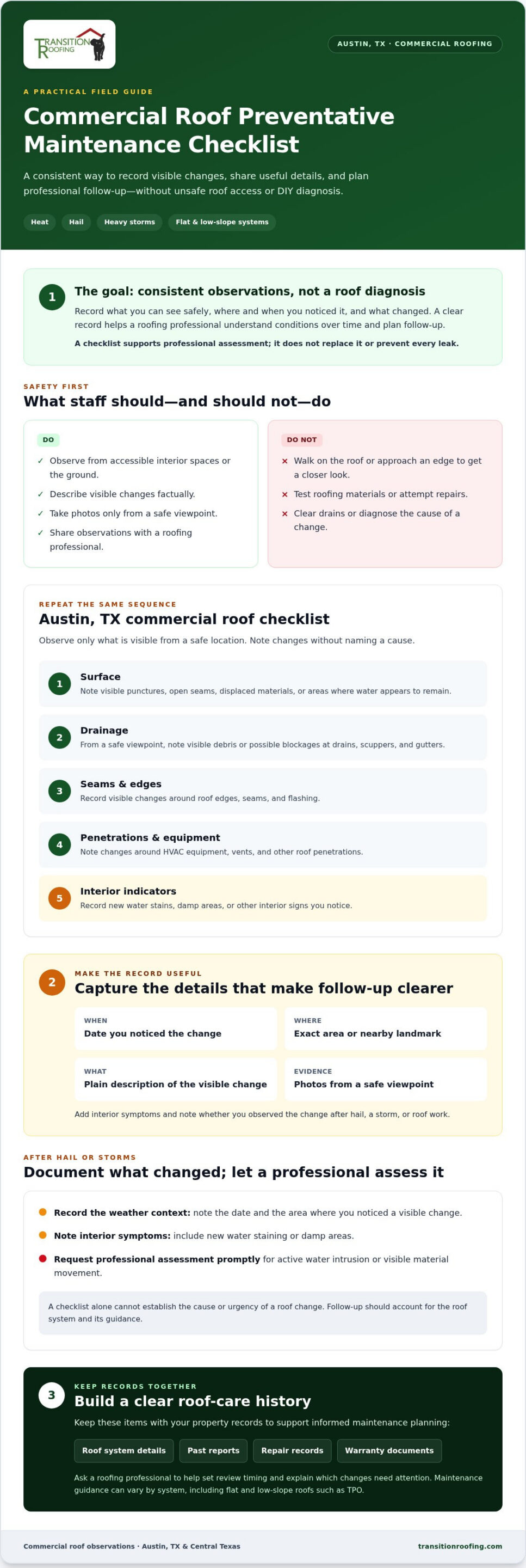
Checklist sequence: surface, drainage, seams and edges, penetrations, then interior indicators.
- Record the date and exact area or landmark.
- Take photos from a safe viewpoint and describe the change.
- Note interior signs, such as a new stain or damp area, and request professional review if they appear.
Keep observations factual, and share them with a professional who can assess the roof system and its guidance. If you need help interpreting what you have recorded, learn about Transition Roofing.
After Hail or Storms in Austin, TX: Document Findings and Prioritize Follow-Up
After hail or a strong storm, note what changed before routine observations fade from memory. A commercial roof preventative maintenance checklist can help connect a weather event to a specific area or new interior symptom. It cannot show the cause or urgency on its own. A roofing professional should assess active water intrusion and visible material movement promptly.
How to document a roof concern for a contractor
Keep the record factual and useful. Include the building area, the date you noticed the concern, the weather context, and photos taken from safe viewpoints. Note interior symptoms such as a new stain, dampness, or water entry, along with when they appeared. Add your notes and the contractor’s findings to the property’s maintenance records so future reviews have context.
Do not climb onto a roof or test a surface to gather more evidence. A photo from inside or another safe location is better than risking access to a potentially unsafe area.
When a checklist finding needs professional attention
Active leaks, visible material movement, or a concern that keeps returning deserve professional assessment. Avoid applying a temporary patch or making other changes before the roof system has been evaluated. An unsuitable fix can hide the source or affect the roofing materials. Repair priority depends on the observed condition, roof construction, and professional evaluation.
For a separate example of disaster-response roof covering, the U.S. Army Corps of Engineers outlines its Operation Blue Roof program. For local commercial roofing support, see commercial roofing in Austin.
If a storm has exposed a leak or visible roof change, contact Transition Roofing about commercial roof repair and professional assessment.
Austin, TX Maintenance Plan: Turn the Checklist into Documented Roof Care
A checklist becomes more useful when its findings are kept in one roof file. Include the roof system and known installation details, prior inspection reports, repair records, dated photos, and warranty documents. After a professional assessment, add the findings and agreed follow-up steps. This record helps property managers track changes and gives the roofing professional useful context at the next review.
What to ask about a commercial maintenance program
Program details can vary, so ask what the proposed service includes before setting expectations. Find out whether it covers scheduled inspections, minor upkeep, and written reports. Ask how the provider will rank findings, explain recommended next steps, and share updates with your property manager. Keep review timing specific to your building. Work with a roofing professional to set it based on roof condition, system guidance, and site needs.
A commercial roof preventative maintenance checklist supports the process, but it does not set the schedule or determine which work is appropriate. Follow the roof system’s instructions and review any warranty requirements before making maintenance decisions. Do not assume a program guarantees savings, a longer roof life, or a particular warranty outcome.
Choosing a local commercial roofing partner
Look for a provider with experience in your building’s roof system and a clear way to document findings. Reports should identify the area observed, explain the concern in plain language, and distinguish urgent issues from items to monitor. Clear communication matters: property managers need to know what was found and what follow-up is recommended.
Transition Roofing serves Austin and Central Texas with commercial roofing and preventative maintenance programs. Its local service area includes Austin, Round Rock, Pflugerville, Cedar Park, Lakeway, Hays, Bear Creek, San Leanna, Rollingwood, West Lake Hills, Buda, Kyle, and Bee Cave. If you need a professional assessment or a documented maintenance plan, request help with commercial roofing in Austin.
Put a Clear Roof Care Plan in Place
A repeatable commercial roof preventative maintenance checklist helps your team turn observations into useful records and informed next steps. Keep notes and photos with the building’s roof documents, and use professional guidance to set review timing for the roof system and site. After Austin heat, hail, or storms, those records can help explain what changed and where follow-up may be needed.
When a concern is beyond a safe visual check, a commercial roofing professional can assess the condition and discuss appropriate next steps. Transition Roofing serves Austin and surrounding Central Texas communities with commercial roof installation, repair, and preventative maintenance programs.
If you would like a professional look at your commercial roof, schedule a commercial roof assessment in Austin. A clear plan can help you move forward with confidence and keep roof care organized.
Frequently Asked Questions
How often should a commercial roof be inspected in Austin?
For professional roof inspections, the National Roofing Contractors Association recommends at least two a year, typically in spring and fall, plus checks after significant weather or work by other trades. Treat this as a starting point to discuss with your roofing professional, not a schedule for every building. Roof condition, system guidance, warranty terms, and site activity can affect the timing.
What should be included in a commercial roof preventative maintenance checklist?
A commercial roof preventative maintenance checklist should cover visible roof surfaces, seams and edges, drains and other drainage points, rooftop equipment and penetrations, and interior signs such as new stains. Record the date, location, weather context, photos from safe viewpoints, and any changes you have noticed. Keep observations factual. A roofing professional can assess what they mean for your specific roof system.
Can building staff inspect a commercial roof themselves?
Building staff can make safe visual observations from accessible areas, such as inside the building or from the ground. Note visible changes and signs of water entry, but do not climb onto a roof, approach an edge, test materials, clear drains, or attempt repairs. A qualified roofing professional should assess roof conditions that are difficult to view safely or need interpretation.
What should I do if I find a leak during a roof inspection?
Arrange prompt professional assessment for active water intrusion. Record when and where you noticed it, note any weather context, and take photos from a safe location. If there is a new interior stain or damp area, include that in your report. Do not access the roof or apply a temporary patch, since it could conceal the source or affect the roofing system.
Does a commercial roof maintenance program include repairs?
Not necessarily. Program scope can vary, so ask whether scheduled inspections, minor upkeep, written reports, and repair work are included or handled separately. Confirm how findings are ranked and shared with your property manager. Transition Roofing serves Austin and surrounding Central Texas communities, including Round Rock and Cedar Park, and offers commercial roof repair and preventative maintenance programs. Request clear scope details before enrolling.