You wake up to the rhythm of a Central Texas thunderstorm, but instead of the soothing sound of rain on metal, you hear a steady drip hitting your bedroom ceiling. It’s a frustrating reality for many homeowners in Kyle who discover that a single backed-out fastener can compromise their entire property. We know how stressful it is to see water damage spreading while you wonder if you’re looking at a minor fix or a massive bill. This guide will show you exactly how to stop a metal roof from leaking around screws in Kyle by addressing the root causes like thermal expansion and UV degradation.
We’ll walk you through the specific steps to identify failing washers, explain why the intense heat in Austin, TX wears down your roof, and provide a clear plan to seal these leaks for good. You’ll also learn the critical difference between a simple screw replacement and a job that requires a seasoned contractor who understands the unique demands of our local climate. By the end, you’ll have the technical knowledge to protect your home from the next storm.
Key Takeaways
- The intense Central Texas heat causes metal panels to shift, which eventually cracks the EPDM rubber washers on your roof fasteners.
- Learning how to stop a metal roof from leaking around screws in Kyle involves backing out old fasteners cleanly and replacing them with oversized, high-grade screws.
- Regular preventative maintenance helps you catch loose screws before they fail during a heavy storm, saving you from expensive interior repairs.
- While quality metal roofs in Austin, TX can last 70 years, you’ll learn how to determine if your leaks are isolated or signs of widespread panel failure.
Why Metal Roofs Leak Around Screws in Kyle and Austin, TX
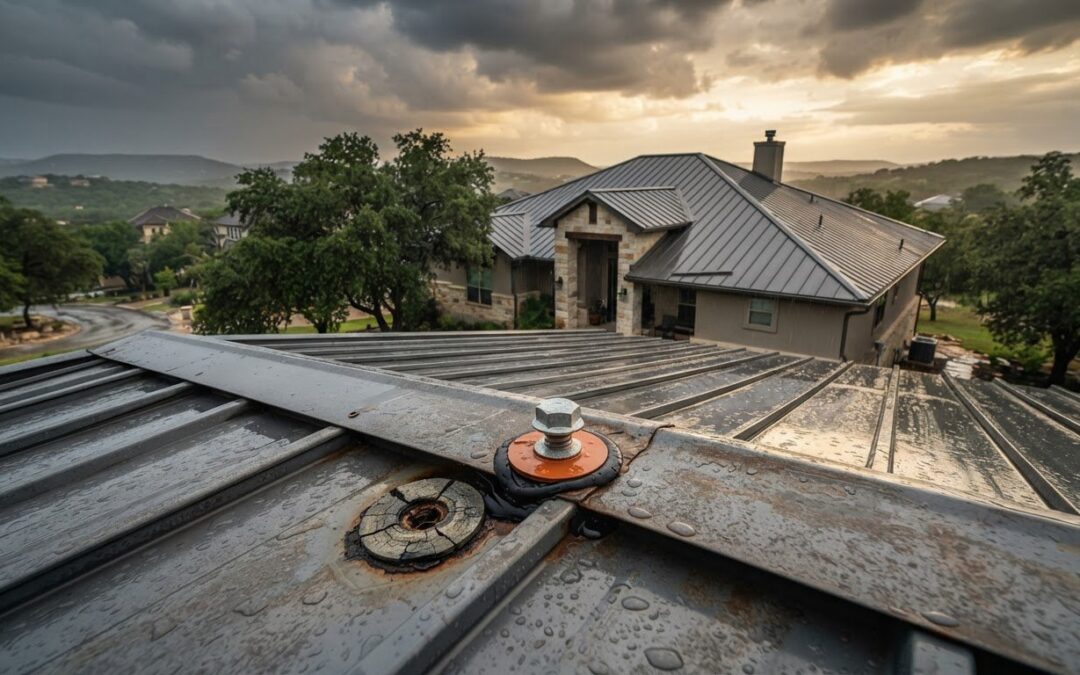
Every Metal roof system relies on a small but critical component: the EPDM rubber washer. These washers sit directly under the head of each screw to block moisture from entering the fastener hole. In Kyle, the relentless sun and high temperatures put these seals under immense pressure. Over time, the rubber becomes brittle and loses its ability to stay watertight.
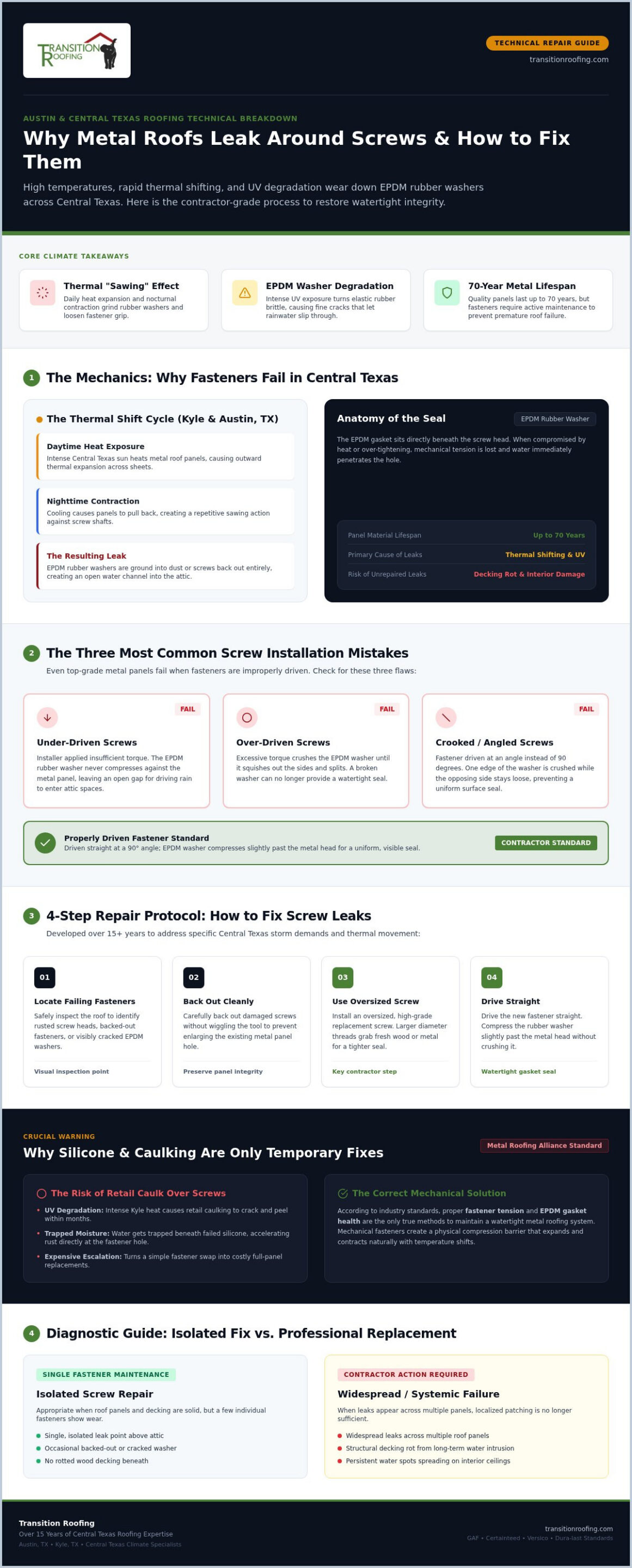
The Central Texas climate is particularly harsh on fasteners. When the sun beats down on your home, the metal panels heat up and expand. At night, they cool and contract. Thermal shifting is the primary cause of fastener leaks in Kyle. This daily movement creates a sawing effect that eventually backs the screws out or grinds the rubber washers into dust. Understanding these mechanics is the first step in knowing how to stop a metal roof from leaking around screws in Kyle.
To better understand why these fasteners fail and how to address them, watch this helpful video breakdown:
The Three Most Common Screw Installation Mistakes
We often see leaks during a roof repair that stem from poor initial installation. Even high-quality materials will fail if the fasteners aren’t driven correctly. If you’re trying to figure out how to stop a metal roof from leaking around screws in Kyle, check for these three common errors:
- Under-driven screws: If the installer didn’t apply enough torque, the rubber washer won’t compress against the metal. This leaves a gap where water can slide right into your attic during a heavy downpour.
- Over-driven screws: Too much force is just as bad. It crushes the EPDM washer until it squishes out the sides and cracks. Once the washer is compromised, it can no longer repel water.
- Crooked screws: Fasteners must be driven perfectly straight. If they go in at an angle, one side of the washer stays loose while the other is crushed, preventing a flat, uniform seal.
How to Stop a Metal Roof From Leaking Around Screws: The Repair Steps in Austin, TX
Fixing a leak isn’t about slapping on a quick patch. It’s about restoring the mechanical integrity of your roof. If you’re wondering how to stop a metal roof from leaking around screws in Kyle, you need a methodical approach that addresses the specific wear patterns found in Central Texas. We’ve spent over 15 years refining this process to ensure long-term protection against heavy storms.
- Step 1: Safely locate the leaking fasteners by looking for rusted heads or washers that have visibly cracked under the sun.
- Step 2: Back out the old, damaged screw cleanly. Don’t wiggle the tool, as you want to avoid widening the existing metal hole any further.
- Step 3: Replace the old fastener with an oversized metal roofing screw. The larger diameter ensures the threads grab fresh wood or metal, creating a tighter seal than the original.
- Step 4: Drive the new screw straight. You want the EPDM washer to compress slightly past the metal head, creating a visible, uniform seal without crushing the rubber.
Why Caulking and Silicone Are Only Temporary Fixes
Many homeowners try to seal leaks by applying silicone over a loose screw. In the intense Kyle heat, this is a mistake. UV exposure causes most retail caulking to peel and crack within months. According to the Metal Roofing Alliance buyer’s guide, proper fastener tension and gasket health are the only ways to maintain a watertight system. Trapped moisture under silicone can actually accelerate rust around the fastener hole, turning a simple screw replacement into a costly panel repair.
When to Call a Professional Metal Roofing Contractor in Austin, TX
If you’re dealing with widespread leaks across multiple panels, individual repairs won’t be enough. This often indicates a systemic failure of the fasteners or the panels themselves. You should also call an expert if the structural decking under the metal has begun to rot from long-term water intrusion. If you’re seeing water spots on your ceiling, contact Transition Roofing for a professional look and a clear plan to secure your property.
Preventing Future Fastener Leaks in the Central Texas Climate and Austin, TX
Stopping a leak is a victory, but preventing the next one is the real goal. The Central Texas climate is relentless, so you should schedule a regular preventative maintenance check to stay ahead of the weather. These visits allow us to catch loose screws or backing-out fasteners before they cause major interior damage to your home or business. It’s much easier to tighten a fastener than it is to replace a rotted ceiling.
When you perform repairs, ensure your roofing contractor uses high-grade, UV-resistant fasteners. These parts are specifically designed for high-thermal movement areas where metal panels expand and contract significantly. Maintaining your gutters is another simple but vital step. Clogged gutters cause water to back up under the lower eave fasteners. This leads to rust and leaks in the most vulnerable part of the roof. Finally, always perform a quick visual scan after major hail or wind events in Kyle to check for impact damage or shifted panels that might have compromised the seal. This is a key part of how to stop a metal roof from leaking around screws in Kyle for the long haul.
The Value of Preventative Maintenance Programs in Austin, TX
Routine checks extend the lifespan of commercial and residential metal roofing systems by decades. Instead of waiting for a drip, a professional inspection covers everything from flashing details to individual screw torque checks. We look for signs of “thermal backing,” where the screw has literally worked itself out of the hole. For property managers, our Transition Roofing Commercial Services provide a documented history of care. This record is invaluable for insurance claims and long-term budgeting.
A well-maintained roof moves your property from a state of vulnerability to total security. If you want to ensure your building stays dry throughout the next storm season, schedule a roof inspection in Austin today.
Choosing Between Metal Roof Repair and Total Replacement in Kyle and Austin, TX
Deciding between a targeted repair and a full replacement comes down to long-term value and structural safety. High-quality metal systems in Central Texas can last between 40 and 70 years, so age alone doesn’t always justify a new roof. We evaluate the condition of the metal panels and the underlying substrate before recommending a path forward. Knowing how to stop a metal roof from leaking around screws in Kyle is often a matter of determining if the problem is isolated or systemic.
Contractor Logic: When Is a Repair Sufficient?
We typically recommend a repair when leaking screws are localized to specific areas, such as a single valley or along an eave. If the metal panels show no signs of severe rust, pitting, or structural warping, replacing the fasteners is a highly effective solution. This approach protects your budget while ensuring your property stays dry. For homeowners using Transition Roofing Residential Services, this targeted maintenance can add years of life to a maturing roof.
Signs that Your Kyle Property Needs a Full Roof Replacement
A full replacement is usually the better investment when the damage covers a large surface area. If we find widespread rust around more than 30% of the roof fasteners, the metal panels have likely reached the end of their functional life. You should also consider a new system if previous leak patches continue to fail due to shifting structural decking or severe insulation damage. These conditions suggest that the roof can no longer provide the total security your home deserves. We use our 15 years of experience to help you choose the most durable option for your specific situation.
Don’t guess about the health of your structure. Schedule a thorough metal roof inspection in Kyle today with the team at Transition Roofing.
Secure Your Property Against the Next Central Texas Storm
Understanding the mechanics of thermal shifting helps you move from reactive repairs to long-term structural security. You now know that simple silicone patches fail under the intense sun and that mechanical replacement with oversized fasteners is the only way to achieve a permanent seal. By prioritizing preventative maintenance and checking your roof after major wind events, you protect your investment from the inside out. Our team brings over 15 years of local experience and certified expertise to every project. We provide transparent, honest assessments based on contractor logic rather than high-pressure sales tactics. If you’re struggling with how to stop a metal roof from leaking around screws in Kyle, let a seasoned expert handle the climb. We’ll identify every vulnerable point and give you a clear, actionable plan to keep your ceiling dry for decades to come. Schedule a professional metal roof inspection with Transition Roofing today. You can rest easy knowing your home is in safe, capable hands.
Frequently Asked Questions
Can I just tighten a loose metal roof screw to stop a leak?
Tightening a loose screw usually won’t solve the problem if the EPDM washer is already cracked or degraded. In fact, over-tightening can crush the washer further and widen the leak. The best approach for how to stop a metal roof from leaking around screws in Kyle is to replace the old fastener with an oversized screw that has a fresh, flexible seal to ensure a watertight fit against the metal.
What kind of caulk should be used on a metal roof around screws?
You should avoid standard retail caulk and instead use high-grade silicone or polyurethane sealants specifically designed for metal roofing. However, sealant is a temporary measure in the Central Texas sun. UV rays break down these materials within months, leading to recurring leaks. A permanent fix involves replacing the fastener itself rather than relying on topical sealants that peel away during extreme summer heat cycles or heavy rain events.
How long do the rubber washers on metal roof screws last in Texas?
In the harsh Central Texas climate, EPDM rubber washers typically last between 10 and 15 years before they show signs of significant degradation. The intense UV exposure and extreme temperature fluctuations cause the rubber to become brittle and crack. We recommend scheduling a preventative maintenance check every few years once your roof reaches the decade mark to identify failing washers before they lead to interior water damage in your home.
Will a leaking roof screw cause the entire metal panel to rust?
Moisture trapped under a failing screw head or a poorly applied silicone patch can lead to localized rust that eventually spreads. If left unaddressed, this corrosion eats through the protective coating of the metal panel. This compromise reduces the lifespan of your roofing system and can turn a simple fastener replacement into a much larger project involving full panel swaps to maintain the structural integrity of your Kyle property.
How much does it cost to replace leaking metal roof screws in Kyle?
The total investment for repairing leaks around fasteners varies based on the number of screws involved and the height of your roof. While minor repairs are generally affordable compared to a full replacement, professional contractors provide project-based fees after a thorough inspection. Investing in a professional fix ensures the work meets local building codes and prevents the recurring costs associated with failed DIY attempts or generic fixes that fail during the next storm.
Can hail storms loosen the screws on my metal roof?
Hail storms and high winds are major factors in fastener failure throughout Austin, TX. Large hail impacts can shift metal panels, creating enough force to pull or back out screws from the underlying decking. Even if the panels look fine, these vibrations often break the watertight seal of the washers. We always suggest a visual scan for loose fasteners after any significant storm event in the Kyle or Buda area.