
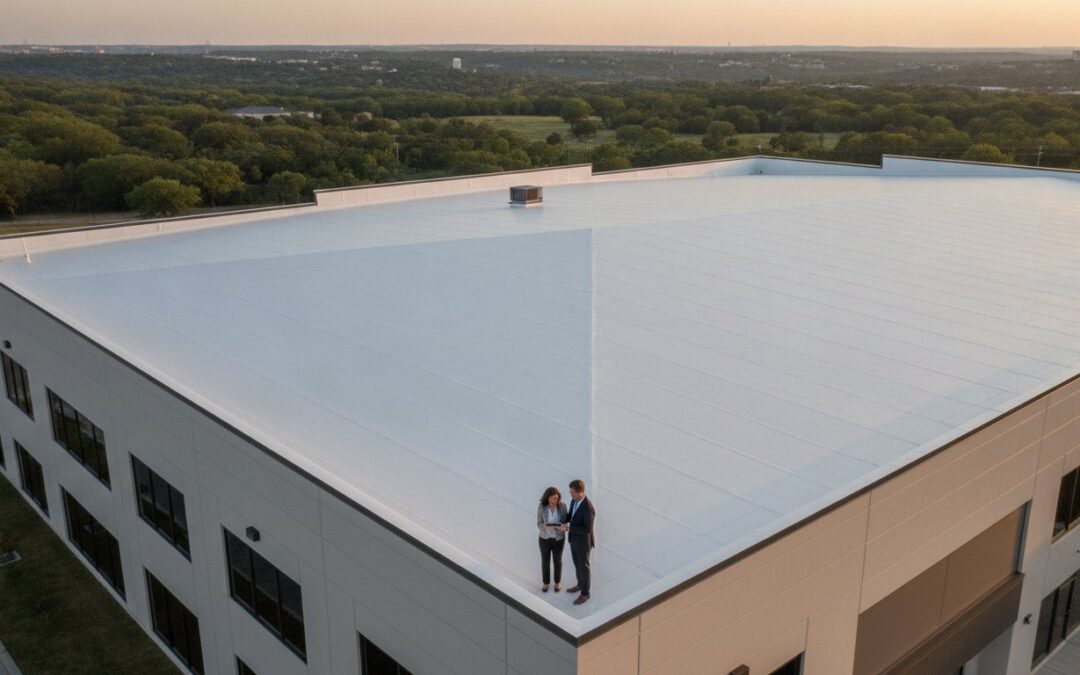
Did you know that installing a TPO roofing Austin system can lower your commercial building’s cooling costs by nearly 22%? In the intense heat of Central Texas, your roof is more than just a cover. It’s your first line of defense against skyrocketing utility bills and the sudden flash floods that characterize our local climate. We understand the pressure property managers face when balancing a tight maintenance budget against the need for long-term security. It’s exhausting to worry about leaks every time a storm rolls up the I-35 corridor.
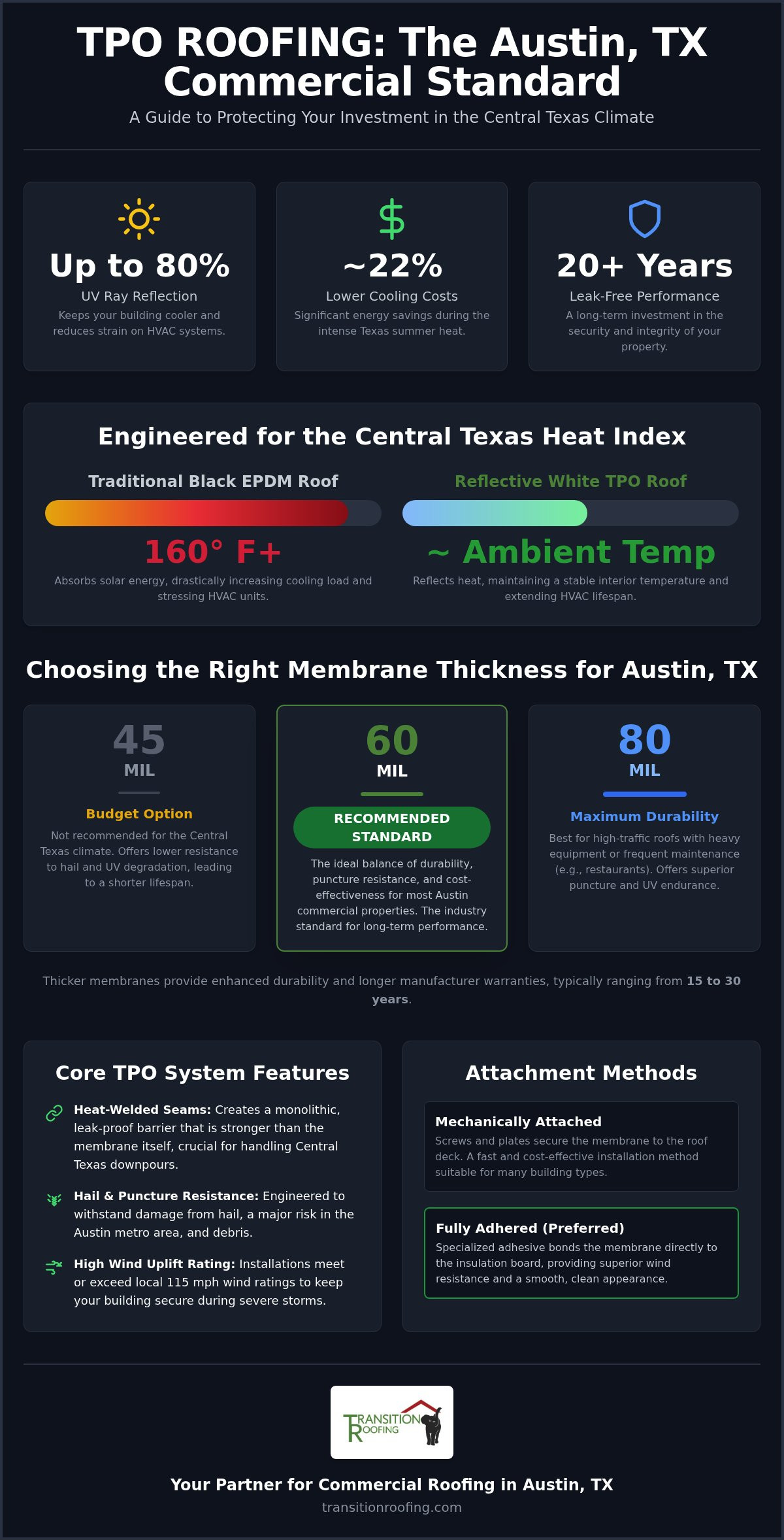
This guide explains how these durable membranes protect your investment while providing peace of mind. You’ll learn exactly how these systems reflect up to 80% of UV rays to keep your interior comfortable. We’ll also compare the benefits of 60-mil and 80-mil options so you can make an informed choice. From meeting the latest 2021 energy codes to preparing for Austin’s high hail risk, we’ve outlined everything you need to ensure your building stays leak-free for the next 20 years.
Key Takeaways
- Understand how white TPO membranes reflect up to 80% of UV rays to significantly reduce your commercial cooling load.
- Learn why we recommend 60-mil TPO roofing Austin systems as the durable standard for resisting punctures and Central Texas weather.
- Identify common failure points like seam bridging and flashing leaks that need immediate attention from a specialized contractor.
- See how a certified team with 15+ years of local experience ensures your property remains leak-free for two decades or more.
Why TPO Roofing is the Standard for Austin TX Commercial Buildings
Understanding What is TPO (Thermoplastic Polyolefin) is the first step toward securing your facility. It’s a single-ply reflective membrane that has become the primary choice for commercial roofing in Austin. Unlike older materials, TPO is engineered to handle the intense thermal expansion cycles common in our region. It stays flexible while providing a robust shield for your inventory and equipment.
White TPO membranes reflect up to 80% of UV rays. This is vital for combating the “Urban Heat Island” effect in Austin, TX, where developed areas trap heat far more than the surrounding Hill Country. By reflecting solar energy instead of absorbing it, these systems keep your building’s core temperature stable and predictable.
To better understand this concept, watch this helpful video:
The real strength of TPO roofing Austin systems lies in the weldable seams. Using a specialized hot-air welder, we create a monolithic, leak-proof barrier. These sheets are fused together to withstand heavy Central Texas downpours, ensuring water doesn’t find a path inside. It’s also 100% recyclable, which helps reduce your building’s overall carbon footprint.
Combating the Central Texas Heat Index
On a typical August afternoon, a black EPDM roof can reach 160 degrees. A white TPO roof stays much closer to the ambient air temperature. This massive difference reduces the cooling load on your rooftop HVAC units. It extends their lifespan and prevents the mid-summer failures that often plague property managers during heat waves.
Durability Against Austin Storms and Wind
Austin ranks among the top U.S. metros for hail damage risk, so puncture resistance is a priority. TPO roofing Austin systems are built to resist chemicals and debris common in industrial zones. In Travis County, we ensure every installation meets local wind-uplift ratings of 115 mph to keep your structure safe during severe weather events.
Choosing the Right TPO Membrane Thickness in Austin TX
Selecting the right thickness for your TPO roofing Austin system is a long-term financial decision. Membranes typically come in three standard sizes: 45-mil, 60-mil, and 80-mil. While 45-mil is the most budget-friendly, “contractor logic” dictates that 60-mil is the minimum baseline for Central Texas. The thinner 45-mil option often struggles with our intense hail season and rapid thermal shifts, leading to a shorter overall lifespan.
Your choice also dictates your protection level. Thicker membranes offer longer manufacturer warranties, often ranging from 15 to 30 years. If your building has heavy rooftop equipment or requires frequent HVAC maintenance, the extra material provides a necessary buffer against accidental damage. You can review detailed TPO roofing system specifications to see how these layers are engineered for industrial use.
The 60-Mil vs. 80-Mil Comparison
The jump to 80-mil is about puncture resistance and UV endurance. We recommend 80-mil for high-traffic environments, such as restaurant roofs where grease traps and heavy maintenance are common. It handles the scuffing of boots and tools much better than thinner alternatives. If you aren’t sure which fits your building, we can help you evaluate your roof’s specific needs with a professional assessment.
Attachment Methods: Fully Adhered vs. Mechanically Attached
Performance also depends on how the membrane stays on the deck. Mechanically attached systems use screws and plates, making them quick to install. However, fully adhered systems use specialized adhesives to create a smooth, wind-resistant surface. In high-wind zones across Travis County, fully adhered systems often provide superior uplift resistance. They also offer a cleaner look without the fluttering sound that can occur with loose-laid sheets during a storm.
TPO Roof Repair and Maintenance in Austin TX
Even the best TPO roofing Austin systems eventually show signs of wear. Common failure points include “bridging,” where the membrane pulls away from wall transitions, and seam delamination. These issues often lead to interior leaks during Central Texas flash floods. Because TPO is a specialized plastic, Austin roof repair must be handled by technicians with heat-welding tools. Standard roofing cements or caulks won’t bond permanently to the membrane. As a leading flat roofing company Austin property managers rely on, we use robotic welders to ensure every patch is as strong as the original install.
Preventative maintenance is the most effective way to protect your budget. Our programs can extend a flat roof’s life by 10 years or more by catching small punctures before they rot the decking. With over 15 years of local experience, we know that clear drains and secure scuppers are your best defense against standing water. This methodical care transforms a vulnerable structure into a secure asset.
Handling Hail Damage on TPO Membranes
Austin ranks 9th in the U.S. for hail damage risk. While TPO is durable, older membranes lose their flexibility over time. Heavy hail can create microscopic fractures in weathered sheets that aren’t visible from the ground. These fractures allow moisture to seep into the insulation board, destroying your R-value and causing structural decay. A professional inspection after a major Central Texas storm is essential to verify the integrity of your system.
The Role of Roof Coatings in Restoration
A full replacement isn’t always the only answer. If your insulation is dry and the seams are mostly intact, a silicone roof coating can defer a full TPO replacement in Austin TX for a decade. These coatings restore the original reflectivity of the roof, lowering your utility costs immediately. They also seal minor surface cracks and provide a seamless layer of protection. If you’re dealing with persistent leaks, we can take a look and give you a clear plan to fix the problem for good.
The Transition Roofing Process for Austin TX Property Owners
Our team follows a methodical timeline to move your building from a state of vulnerability to total security. We start with meticulous deck preparation, ensuring the surface is clean and structurally sound. Next, we install high-performance insulation to meet Austin’s R-25 to R-30 energy requirements. The TPO roofing Austin membrane is then precisely laid and fused using robotic heat welders. We finish with a rigorous seam test to guarantee a monolithic barrier against the elements.
With over 15 years of local experience, we maintain elite certifications with GAF, Certainteed, Versico, and Dura-last. This expertise allows us to offer superior warranties that generic contractors cannot match. We also prioritize a business-first philosophy. We coordinate our work to avoid blocking entrances or disrupting your daily operations. If you need a reliable partner for your next project, visit our commercial roofing Austin page for a clear, transparent estimate.
Expert Insurance Claim Assistance
Navigating commercial insurance in Texas is increasingly complex as carriers retreat from high-risk hail markets. We assist Austin TX property managers by providing the technical documentation adjusters require. Our team identifies subtle hail fractures and wind-uplift damage that untrained eyes often miss. This level of detail ensures your claim covers the full scope of work needed for long-term warranty compliance and structural integrity.
Your Next Steps for a Secure Commercial Roof
If you’re noticing ponding water, rising utility bills, or interior ceiling stains, it is time for a professional evaluation. Catching these issues early prevents expensive structural rot and premature system failure. We’re proud to serve our neighbors with grounded, honest advice and high-quality craftsmanship. Schedule a comprehensive TPO inspection in Austin today to protect your commercial asset for the next 20 years.
Securing Your Austin Commercial Asset for the Next Two Decades
Investing in a TPO roofing Austin system is a strategic move that pays dividends through lower utility bills and reduced structural risk. By choosing a 60-mil or 80-mil membrane, you ensure your property can withstand the intense UV exposure and heavy hail common in Central Texas. Whether you are dealing with persistent leaks or planning a full replacement, having a certified expert by your side makes the process transparent and stress-free.
At Transition Roofing, we bring over 15 years of local experience to every project. As a GAF Master Elite and Certainteed Certified contractor, we specialize in high-performance Versico and Dura-last systems that stand the test of time. We’ve seen how the right material choice transforms a vulnerable building into a secure, energy-efficient asset. Schedule your professional TPO roof inspection in Austin today to get a clear plan for your facility. We look forward to helping you protect your investment with craftsmanship you can trust.
Frequently Asked Questions About TPO Roofing Austin TX
How long does a TPO roof typically last in the Austin TX climate?
A high-quality TPO roof typically lasts between 20 and 25 years in the Central Texas climate. While the intense sun can degrade lower-grade materials, TPO is engineered to resist UV damage. You won’t reach this lifespan without regular maintenance and prompt repairs after hail events. Choosing a thicker 60-mil or 80-mil membrane also provides extra protection against the thermal expansion cycles that occur during our city’s rapid temperature shifts.
Can a TPO membrane be installed over an existing flat roof system?
You can often install a new membrane over an existing system, provided there is only one existing roof layer. This process is called a recover; it saves on tear-off costs. However, it depends on the condition of the underlying deck. If we find trapped moisture or structural rot during our inspection, a full tear-off is mandatory to ensure your new TPO roofing Austin system remains secure and leak-free.
Does the white color of TPO really lower my building’s energy bills?
The white surface of a TPO membrane reflects up to 80% of solar radiation, which significantly reduces heat transfer. In the Austin heat, this can lower cooling costs by nearly 22% compared to traditional dark roofs. By keeping the roof surface temperature lower, your HVAC units don’t have to work as hard to maintain a comfortable interior. This lowers your monthly bills and extends the life of your expensive cooling equipment.
How do I know if my TPO roof needs a repair or a full replacement?
Deciding between repair and replacement depends on the age of the membrane and the extent of any internal damage. If leaks are isolated to specific seams or flashings, a targeted repair is usually sufficient. However, if the insulation board is saturated or the TPO has become brittle from decades of UV exposure, a replacement is the better long-term investment. We use thermal imaging to identify hidden moisture before making a recommendation.
What is the difference between TPO and PVC roofing for Austin businesses?
TPO is generally more cost-effective and offers excellent UV resistance, while PVC is better for roofs exposed to chemicals or grease. For most retail or warehouse facilities, TPO roofing Austin provides the best balance of durability and value. PVC is the standard for restaurants because it resists damage from animal fats and kitchen exhaust. Both systems use heat-welded seams, but TPO is the more common choice for standard commercial buildings.