Is your current roof a ticking financial clock or a long-term energy hedge for your business? Many Austin property managers are feeling the pressure of 2026 price fluctuations and the confusion of RCV versus ACV insurance policies. It’s frustrating to plan a budget when the market feels like it’s shifting under your feet. We understand that you need more than just a quote. You need a strategy to protect your investment from the Central Texas heat and unpredictable hail storms.
This guide gives you a realistic look at the commercial roof replacement cost Austin owners should expect this year. We’ve spent over 15 years helping local businesses transition from vulnerable structures to secure, energy-efficient assets. As GAF and Versico certified experts, we’ll break down which materials offer the best cooling for our climate and how to navigate the 2026 budgeting process. You’ll get a clear timeline and the technical insights needed to make an informed decision for your facility’s future.
Key Takeaways
- Learn the current commercial roof replacement cost Austin property managers are seeing for TPO, PVC, and metal systems to set a realistic 2026 budget.
- Discover how high-efficiency “cool roof” materials like TPO can lower your cooling expenses and help your building meet updated Central Texas energy codes.
- Understand how building height, downtown density, and specific insulation R-value requirements impact your total project investment and long-term ROI.
- Get a clear 5-step project timeline and learn how a preventative maintenance program can protect your asset and extend your new roof’s life by 10 or more years.
Estimating Commercial Roof Replacement Cost in Austin TX (2026)
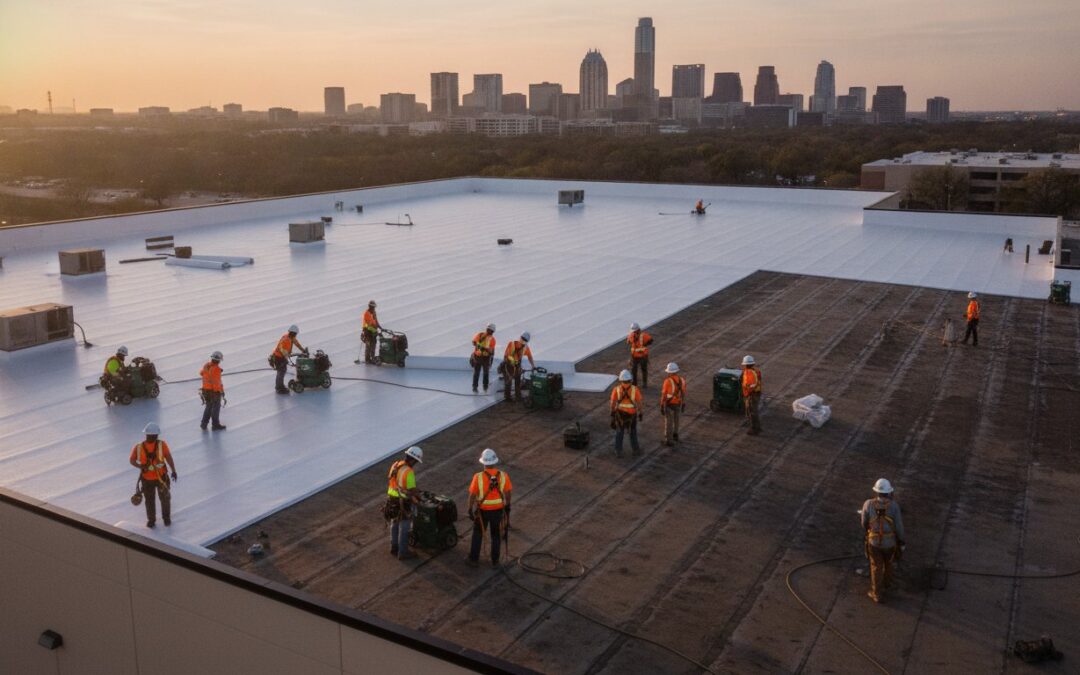
Commercial projects are measured in “squares,” which represent 100 square feet of roof surface. Estimating a commercial roof replacement cost Austin involves more than just surface area; it accounts for the complex shifts in labor and material availability we’re seeing in 2026. Unlike residential jobs, commercial systems require heavy equipment like cranes and specialized safety rigging to manage the scale of the structure. The final price usually depends on the deck’s condition and whether your building currently meets the updated Austin energy codes.
To better understand how these factors come together, watch this breakdown of local pricing variables:
Commercial estimates differ from residential quotes because of multi-layered insulation and intricate drainage systems. We’ve seen many property managers surprised by the logistics required for downtown Austin density or high-rise staging. These projects demand a hands-on approach to ensure the building remains operational while we move the structure from a state of vulnerability to total security.
Average Cost Per Square Foot by System
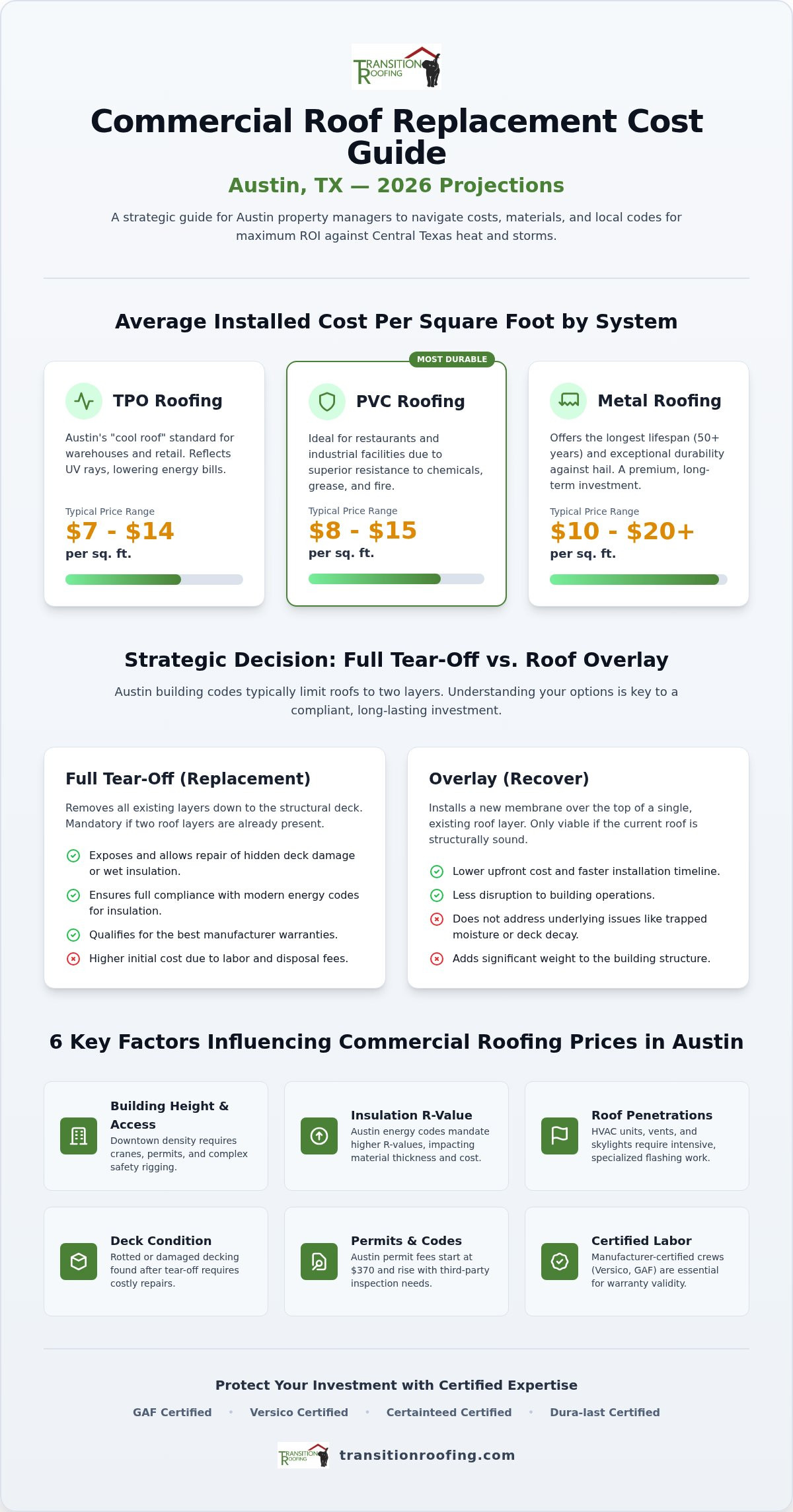
Choosing from the various commercially available roofing materials requires balancing upfront investment with long-term performance. TPO is the current “cool roof” standard for Austin warehouses, while PVC is often preferred for retail centers with restaurant tenants. In 2026, supply chain lead times for specific fasteners and adhesives are influencing local bids more than the membrane prices themselves. Our 15+ years of experience helps us navigate these logistics to keep your project on schedule.
Tear-off vs. Overlay: The Financial Impact in Austin TX
Austin building codes generally limit a structure to two roofing layers. If your building already has two, a full tear-off is mandatory. This process often reveals hidden issues, such as wet insulation that must be removed to prevent deck rot. If we find saturated materials during an inspection, we provide a clear plan to address the structural integrity before the new commercial roofing Austin system is installed. This transparency prevents budget surprises mid-project.
Key Factors Influencing Commercial Roofing Prices in Austin TX
Building height and urban density significantly shift the budget. In downtown Austin, crane placement and street closure permits add layers of logistical cost that suburban warehouses don’t face. Beyond access, the number of roof penetrations, like HVAC curbs, skylights, and vents, requires specialized flashing work. Every transition point is a potential leak site. We’ve spent over 15 years navigating these specific structural challenges in Central Texas.
The Central Texas heat factor is a primary driver for insulation upgrades. Modern building codes in Austin now require higher R-values, which means thicker insulation layers. While this increases the initial commercial roof replacement cost Austin owners pay, it serves as a long-term cost saver by reducing HVAC load. Investing in cool roofing for the Austin climate ensures your building stays protected against extreme thermal expansion.
Austin Building Codes and Permit Fees
Navigating the City of Austin Development Services Department requires precision. As of 2026, the city enforces the 2021 International Building Code with local amendments. The standard commercial roof replacement permit fee is $370, but specialized installations may require third-party inspections to verify compliance with high-wind or energy standards. If you’re unsure about your building’s current code status, we can help you evaluate your compliance needs during a site visit.
Labor Rates in the Growing Central Texas Market
Austin’s rapid growth has tightened the pool of skilled roofing crews. It’s no longer just about finding a team; it’s about finding one certified by Versico or Dura-last. These certifications aren’t just badges. They ensure the crew follows manufacturer-specific protocols required for long-term warranty protection. Hiring uncertified labor often leads to denied claims when storm damage occurs.
Material ROI: Choosing for the Austin TX Climate
Selecting the right membrane directly impacts the long-term commercial roof replacement cost Austin property owners face. TPO (Thermoplastic Polyolefin) has become the standard for retail and industrial spaces because its white reflective surface handles the intense Texas sun with ease. For restaurant facilities, we typically install PVC roofing. It’s engineered to resist the chemical degradation and grease runoff from kitchen exhaust vents that would otherwise destroy a standard membrane.
Energy Efficiency and Reflectivity
During those long stretches of 100-degree Austin days, a “cool roof” is your primary defense. Systems from GAF and Certainteed offer high solar reflectance, which prevents the building from absorbing excessive heat. This reflectivity significantly reduces HVAC strain and lowers monthly utility bills. In 2026, many Austin businesses are also qualifying for federal tax credits by choosing high-reflectivity materials that meet modern energy conservation standards.
Hail Resistance and Insurance Premiums
Hail is a recurring reality in Central Texas. We recommend Class 4 impact-rated materials to protect your asset from storm damage. These systems are tested to withstand 2-inch hail without compromising the structure. Many Texas insurance carriers provide substantial premium discounts for buildings with standing seam metal or Class 4 membranes. If your roof has sustained damage, our team offers expert Insurance Claim Assistance to help you navigate the RCV versus ACV payout process.
With 15+ years of experience, we’ve seen how the right material choice moves a building from vulnerability to total security. If you’re dealing with a failing roof system, we can take a look and give you a clear plan for a high-efficiency replacement.
Planning Your Commercial Roof Replacement in Austin TX
If you’re seeing signs of ponding water or repeated leaks, it’s time to move from a reactive repair mindset to a strategic replacement plan. Repairs often become a financial drain that masks deeper structural vulnerability. By planning ahead, you can manage the commercial roof replacement cost Austin property owners face without the pressure of an active emergency. We follow a methodical 5-step timeline that begins with thermal imaging to detect moisture and ends with a comprehensive manufacturer walk-through.
Long-term protection doesn’t end when the crew leaves. Implementing preventative maintenance programs can extend your new roof’s life by 10 or more years. This proactive approach keeps drainage clear and ensures small issues don’t turn into major capital expenditures. With over 15 years of local experience, we’ve seen how consistent care transforms a building’s durability and protects your bottom line.
Vetting Austin Commercial Contractors
Lowest bids often hide high risks. When vetting teams, ask for specific safety records and verify their general liability insurance limits. It’s essential to hire crews certified by Versico or Dura-last to ensure your warranty remains valid. A local Austin TX office provides the reassurance that your contractor will be available for long-term support, not just until the check clears. This community trust is the foundation of a successful project.
Securing Your Investment
We recommend pursuing NDL (No Dollar Limit) warranties for commercial properties. Unlike standard warranties, NDL agreements cover the full cost of labor and materials for future repairs, providing total security for your asset. This high-level technical proficiency is what keeps your property safe for the next two decades. If you’re ready to start your project, schedule a professional commercial roof inspection in Austin today. We’ll provide a clear plan to move your structure to a state of total security.
Protecting Your Commercial Investment in Central Texas
Managing the commercial roof replacement cost Austin businesses face requires a balance of immediate budgeting and long-term performance. We’ve explored how 2026 material shifts, local building codes, and high-efficiency TPO or metal systems define your total investment. By choosing impact-rated materials and planning for preventative maintenance, you move your property from a state of vulnerability to total security. This strategic approach prevents the stress of emergency repairs and protects your operational bottom line.
With 15+ years of Central Texas expertise, our A+ rated team understands how to navigate the specific heat and hail stressors of our region. We are Versico and Dura-last certified, ensuring every installation meets the highest industry standards and manufacturer warranty requirements. If you’re dealing with persistent leaks or ponding water, it’s time to act before small issues become structural failures. Schedule a comprehensive commercial roof assessment in Austin today. We’re here to provide the steady, expert guidance your business deserves. Your facility is in safe, capable hands.
Frequently Asked Questions About Commercial Roofing in Austin TX
How much does a TPO roof replacement cost per square foot in Austin?
TPO pricing varies based on the thickness of the membrane and the complexity of the building’s layout. While market averages exist for the material itself, the total installation involves labor, insulation R-value upgrades, and specialized fasteners. Our 15+ years of experience shows that a detailed on-site assessment is the only way to provide an accurate commercial roof replacement cost Austin owners can rely on for their 2026 budgets.
Can I install a new commercial roof over an existing one in Texas?
You can often perform an overlay if the building currently has only one roof layer and the deck is structurally sound. However, Austin building codes generally prohibit a third layer. If we find moisture in the existing insulation during our thermal imaging inspection, a full tear-off is required. This ensures the new system bonds correctly to a dry, stable surface, moving your structure from vulnerability to total security.
How long does a commercial roof replacement take for an average Austin building?
A typical project for a 10,000 to 20,000 square foot building usually takes between one and two weeks. This timeline accounts for material staging, tear-off, and the installation of new insulation and membranes. When calculating the commercial roof replacement cost Austin facility managers must also account for weather delays. We provide a transparent project timeline upfront to ensure your business operations face minimal disruption during the transition to a new system.
Does commercial property insurance cover roof replacement after an Austin hailstorm?
Most policies cover replacement if the damage is caused by a sudden event like a hailstorm or wind event. The payout depends on whether your policy is Replacement Cost Value (RCV) or Actual Cash Value (ACV). We offer specialized Insurance Claim Assistance to help property managers document damage properly. Having a Versico and Dura-last certified contractor inspect the roof ensures that all structural compromises are identified for the adjuster’s report.
What is the best commercial roofing material for the Central Texas heat?
White TPO membranes are widely considered the best choice for the Austin climate due to their high solar reflectivity. These cool roofs significantly reduce the amount of heat absorbed into the building, which lowers HVAC strain during our triple-digit summers. For facilities with chemical or grease exposure, PVC is a superior alternative. Both systems, when installed by an expert with 15+ years of experience, provide long-term protection and energy efficiency.