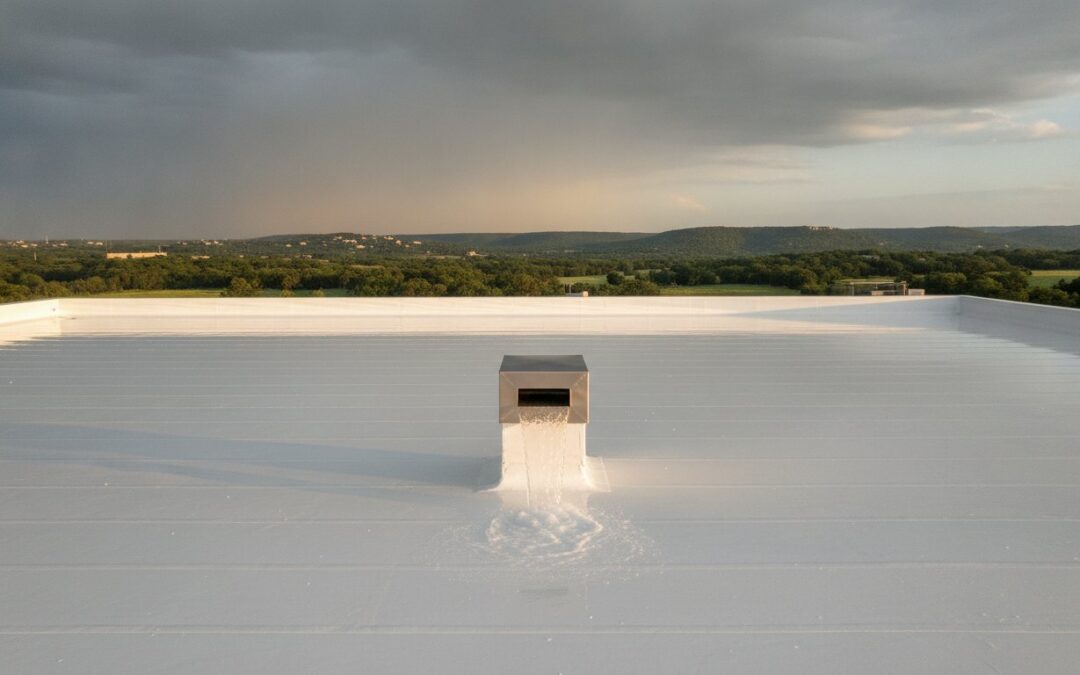
In Central Texas, a single afternoon downpour can dump several inches of rain in minutes, turning your flat roof into a high-pressure swimming pool. If you’ve ever stood in a mechanical room during an Austin flash flood watching water drip near expensive equipment, you know that standard gutters often fail when it matters most. You need commercial roof drainage solutions that are engineered for “Flash Flood Alley” rather than a generic climate. With over 15 years of experience installing Versico and GAF systems across the region, we’ve seen how quickly debris and poor slope can compromise a building’s integrity.
It’s a common stress for property managers to deal with recurring leaks and the structural weight caused by ponding water. You want a roof that performs without constant oversight, and we’re here to help you achieve that. This guide will show you how to protect your commercial investment with drainage systems designed specifically for the unique Central Texas climate. We’ll look at the 2021 building code requirements and explain which systems, from secondary overflows to heavy-duty scuppers, will keep your facility dry and your maintenance costs low.
Key Takeaways
- Understand why Austin’s high-volume rainfall requires specialized drainage to prevent structural stress and interior water damage.
- Learn the differences between internal drains and scuppers to determine which setup best fits your building’s architecture and parapet walls.
- Discover the most reliable commercial roof drainage solutions designed to handle Central Texas flash floods and prevent long-term structural damage.
- Identify “The Austin Clog” and other warning signs like plant growth or wall stains before they turn into costly emergency repairs.
- See why working with certified contractors who use GAF and Versico materials is essential for maintaining your roof’s warranty and structural integrity.
Why Effective Commercial Roof Drainage Solutions Matter in Austin, TX
A commercial roof drainage system is a critical network of components designed to direct water away from a flat or low-slope surface. In Austin, TX, we deal with intense weather patterns often referred to as “Flash Flood Alley.” When a storm hits, your roof has to handle several inches of rain in a very short window. Without effective commercial roof drainage solutions, that water stays on the roof, creating immediate and long-term risks for your property. It isn’t just about preventing a drip in the warehouse; it’s about protecting the structural integrity of the entire building.
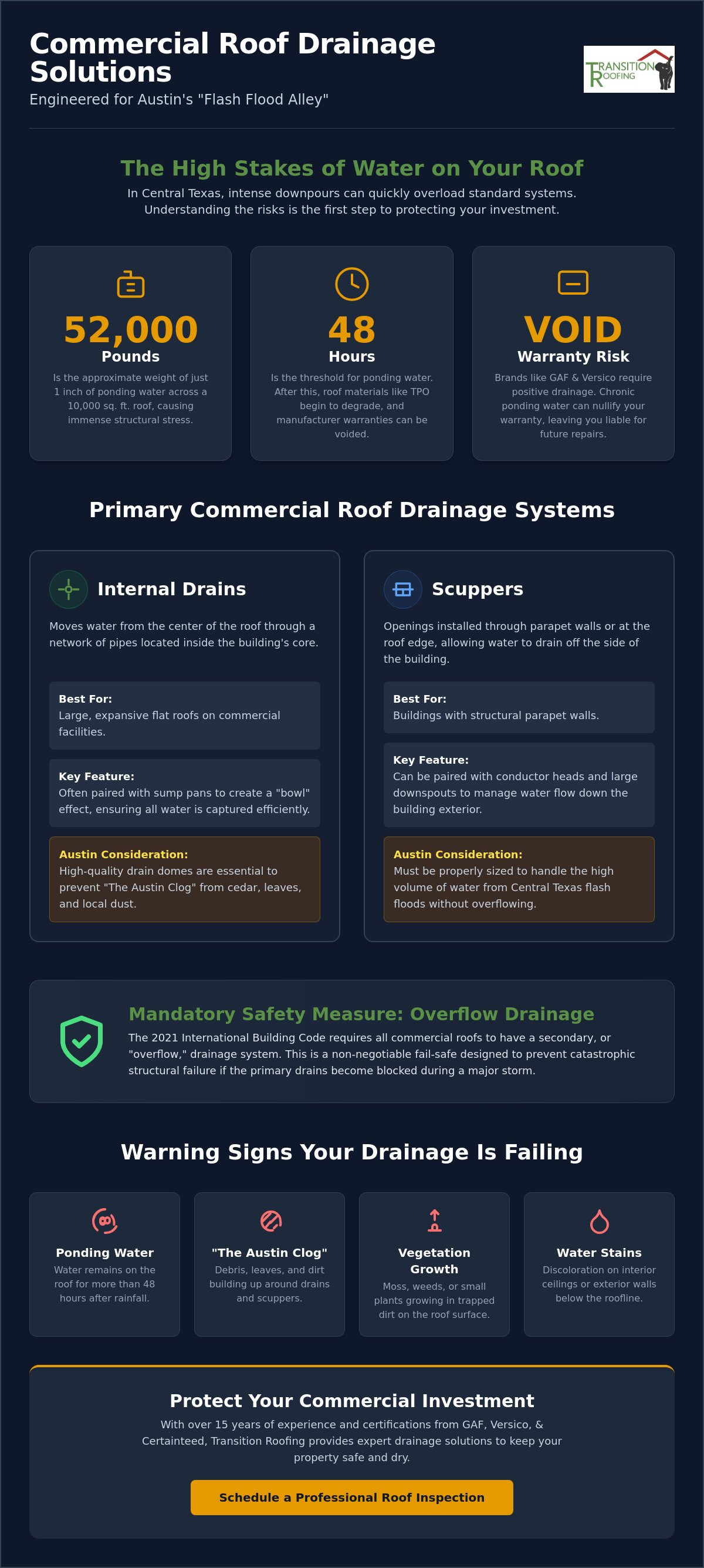
Ponding water is the #1 enemy of flat roof longevity in Austin. If water sits for more than 48 hours, it begins to degrade materials like TPO and adds immense weight to the building’s frame. For context, just one inch of water across a 10,000-square-foot roof weighs approximately 52,000 pounds. This level of structural stress can lead to deck sagging or even catastrophic failure if the drainage isn’t moving the load off the building quickly enough. Most insurance policies and manufacturer warranties require proof of positive drainage to remain valid.
To better understand the technical side of how these systems are integrated, watch this helpful video on professional drain installation:
The Impact of Heat and Flash Floods on Austin Roofs
Austin’s 100+ degree summers create a cycle of thermal expansion and contraction that makes roofing membranes more vulnerable to water damage. When a flash flood hits a roof that’s been baking in the sun, the sudden cooling and water weight test every seam. Standard residential gutters often fail on large-scale buildings because they lack the volume capacity required by the 2021 International Building Code. High-quality commercial roofing in Austin relies on industrial-sized components to stay compliant and safe.
Maintaining your manufacturer warranty from brands like Versico, Certainteed, or GAF requires proof of positive drainage. If inspectors find evidence of chronic ponding, they may void your coverage for future leaks. To ensure your investment stays protected, you need to understand the Primary Types of Commercial Roof Drainage Systems and how they function under local stressors. Proper installation prevents the debris buildup that leads to the “Austin Clog,” a common issue where local dust and cedar debris trap water on your roof. This proactive approach is the key to achieving a dry, long-lasting roof.
Primary Types of Commercial Roof Drainage Systems in Austin, TX
Not every building uses the same method to shed water. The choice usually depends on the size of the roof and the architectural style. For large-scale facilities, internal drains are the industry standard. These systems move water from the center of the roof through a network of pipes located inside the building’s core. If you manage a structure with parapet walls, you likely rely on scuppers. Choosing the right commercial roof drainage solutions ensures that water doesn’t pool in the middle of your TPO or metal roof, which could lead to structural strain.
On low-slope metal roofs, you might see industrial gutters and downspouts. These aren’t your typical residential gutters. They are sized specifically for high-volume rainfall and are often made of heavy-gauge steel. Regardless of the primary system, secondary or “overflow” drainage is a legal requirement under the 2021 International Building Code. These emergency outlets sit slightly higher than the primary drains and provide a fail-safe to prevent catastrophic structural failure if the main system becomes blocked during a storm.
While the focus here is on Central Texas, the principles of high-quality installation are universal; for example, a SYNERGY ROOFING – ROOFING & SKYLIGHT SPECIALIST ensures that skylights and other penetrations are perfectly integrated into the drainage plan to prevent localized pooling and leaks.
Internal Roof Drains and Sump Pans
Internal drains work best when they are paired with sump pans. These metal plates create a slight “bowl” effect around the drain. This ensures water actually reaches the pipe instead of sitting just inches away. Because Central Texas has so many cedar trees and dust, high-quality drain domes or baskets are essential. These domes keep large debris from entering your internal plumbing. When we work as a flat roofing company austin managers trust, we always ensure sump pans are recessed correctly to prevent water from damming at the drain edge.
Scuppers and Parapet Wall Drainage
Scuppers are a low-maintenance favorite for Austin property managers because they are easy to inspect from the ground. They are essentially openings cut through the parapet wall at the roofline. Open scuppers have no top, which makes them almost impossible to clog with large debris. Closed scuppers are fully boxed in and often used for a cleaner aesthetic. Keeping these clear is a vital part of Common Drainage Problems and Maintenance. If you aren’t sure if your current system meets local codes, we can inspect your drainage layout and give you a clear assessment of its performance.
Common Drainage Problems and Maintenance in Austin, TX
Austin’s environment presents unique challenges for property managers. We often see “The Austin Clog,” a thick, organic sludge created when live oak leaves and cedar pollen mix with limestone dust. This mixture settles in sump pans and scuppers, effectively sealing off your commercial roof drainage solutions. If water can’t escape, it finds the path of least resistance, which is usually into your building’s interior. This is why regular cleaning is non-negotiable in Central Texas.
Keep an eye out for these specific warning signs on your facility:
- Dark water stains on interior ceiling tiles or walls.
- Visible plant growth or moss in roof corners and around drains.
- Sagging areas on the roof deck where water pools.
- Debris piles blocking scupper openings or gutter downspouts.
If you see “tide marks” or rings of dried dirt on your roof, your drainage is already failing. These marks indicate that water stood long enough to evaporate rather than draining away. This process leaves behind silt that can eventually eat through your roofing membrane.
The Role of Preventative Maintenance Programs in Austin
Bi-annual inspections in the Spring and Fall are critical for Austin commercial properties. These visits allow us to clear the “Austin Clog” before the heavy rain seasons of May and October. Our preventative maintenance programs extend the life of TPO and Metal systems by identifying small blockages before they cause structural stress. It’s much cheaper to clear a drain than to replace a water-damaged interior.
Troubleshooting Ponding Water on Flat Roofs
“Contractor logic” dictates that we move water with slope, not just suction. We often use “crickets”—small ridges made of tapered insulation—to direct water around mechanical units or toward existing drains. This is a highly effective way to fix dead spots where water collects. In some cases, adding a new drain line is necessary, but we always look for the most cost-effective way to achieve positive drainage first. If you are dealing with standing water after a storm, schedule a professional roof inspection to get a clear plan for your drainage.
Choosing and Installing the Right Solution with Transition Roofing in Austin, TX
At Transition Roofing, we treat the roof and the drain as a single, unified system. Over the last 15 years, we’ve seen many property managers install high-quality membranes only to have them fail because of poor commercial roof drainage solutions. Integrating your drainage with commercial roofing in Austin is the only way to ensure long-term performance. Working with a contractor who holds certifications from GAF, Certainteed, and Versico is vital. These manufacturers have strict requirements for drainage to keep your warranty valid. Our team understands the nuances of local building codes and the environmental stressors that only a Central Texas expert can anticipate.
Drainage for TPO and Metal Roofing Systems
Different materials require different technical approaches. For TPO systems, we focus heavily on the heat-welded boots around internal drains. A weak weld in this area is a common source of leaks during heavy storms. In contrast, metal roofing systems in Austin face extreme expansion and contraction due to the heat. If gutters and downspouts aren’t attached with the right hardware, the metal’s movement can pull the drainage system away from the building. We design our commercial roof drainage solutions to account for these physical changes, ensuring a secure fit year-round.
Schedule Your Commercial Roof Inspection in Austin Today
If you’re seeing standing water or “tide marks” on your facility, it’s time for a professional assessment. During a consultation with Transition Roofing, we walk your entire roof to identify low spots and blockages. We then provide a transparent estimate that covers everything from simple repairs to full system upgrades. Our goal is to move your building from a state of vulnerability to total security. Contact Transition Roofing today to get a clear plan for your commercial drainage and protect your investment for the long term.
Securing Your Commercial Asset Against Central Texas Storms
Your building’s roof is its first line of defense against our region’s unpredictable weather. By clearing the “Austin Clog” and ensuring your secondary systems meet the latest codes, you’re preventing the heavy structural stress caused by ponding water. Choosing the right commercial roof drainage solutions isn’t just about quick repairs; it’s about making sure your investment lasts for decades without the threat of structural failure.
Transition Roofing offers over 15 years of Central Texas experience. We’re GAF and Certainteed Certified specialists who focus on high-performance TPO and flat roof systems. Our team takes a hands-on approach to move your structure from a state of vulnerability to total security. We value community trust and provide the honest, expert guidance you need to manage your property effectively and with confidence.
Effective property management also extends to your business’s financial health; for specialized support with corporate filings and tax preparation, Apex Income Tax & Multiservice LLC offers the professional expertise needed to keep your operations organized and compliant.
If you’re noticing standing water or interior leaks, we’re ready to provide a steady, reliable assessment of your system. Schedule a commercial roof drainage inspection in Austin today. We’ll help you keep your property dry and your maintenance costs under control.
Frequently Asked Questions
How many roof drains does a commercial building need?
Under the 2021 International Building Code enforced in Austin, a commercial roof area of 10,000 square feet or less requires a minimum of two roof drains. For areas larger than 10,000 square feet, at least four drains are necessary. These requirements ensure that if one drain fails, the system can still manage high-volume rainfall. It is a critical safety measure for commercial roof drainage solutions to prevent structural overloading during Central Texas storms.
What is the difference between a primary and overflow drain?
A primary drain is the main outlet designed to handle everyday rainfall, while an overflow drain acts as an emergency fail-safe. Primary drains are located at the lowest point of the roof deck. Overflow drains are installed two inches higher. If the primary system clogs, water rises to the overflow inlet, directing water away before it reaches dangerous weight levels. This dual setup is mandatory for roofs with parapet walls that trap water.
Can I add more drains to an existing commercial flat roof?
Yes, you can add more drains to an existing roof, and it is a common solution for buildings with persistent ponding issues. This process involves cutting into the roof deck and connecting new lines to the building’s internal plumbing or exterior scuppers. While it is a significant project, it often costs less than repairing the structural damage caused by standing water. We often recommend this when existing commercial roof drainage solutions can’t keep up with Austin’s intense flash floods.
How often should commercial roof scuppers be cleaned in Austin?
You should clean your roof scuppers at least twice a year, ideally in the Spring and Fall. In Austin, the “cedar fever” seasons and heavy oak leaf drops can block scuppers quickly. If your building is surrounded by live oaks, you might need quarterly inspections to stay ahead of debris. Regular cleaning prevents the buildup of sludge and organic debris that leads to the “Austin Clog” and subsequent interior water damage.
Does commercial property insurance cover damage from clogged drains?
Insurance coverage for clogged drains depends on your specific policy, but many providers deny claims if they find evidence of neglected maintenance. Most commercial policies cover “sudden and accidental” damage, like a pipe bursting during a freeze. Damage caused by long-term ponding or debris buildup is often viewed as a maintenance failure rather than an accident. Keeping detailed records of your bi-annual inspections and cleanings is the best way to support a future insurance claim.