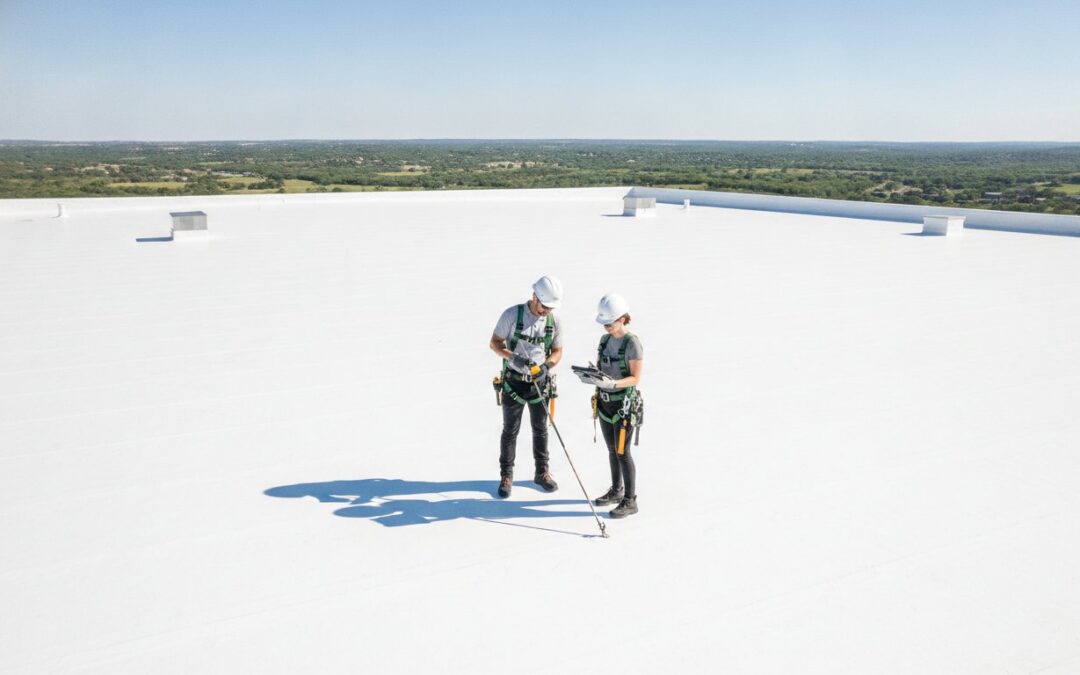
What if your building’s most expensive asset is currently baking under the Austin sun with no defense? In Austin, TX, a single summer afternoon can subject your commercial roofing system to temperatures exceeding 150 degrees. You likely already know that the punishing Central Texas sun and sudden hailstorms can turn a small oversight into a massive capital expense. It’s stressful to manage a large property when you aren’t sure if your roof will survive the next record-breaking summer or if a leak is damaging your inventory. We understand that your property deserves long-term protection and honest oversight.
This guide gives you a professional roadmap for selecting the best commercial roofing systems, maximizing your roof’s lifespan, and keeping your monthly overhead low. We will explore the performance of TPO and metal materials in our specific climate, explain how to set up a maintenance plan that prevents midnight emergencies, and show you how to handle insurance claims with confidence. You’ll learn how to move your building from a state of vulnerability to one of total security with a commercial roofing strategy that prioritizes durability. Our team at Transition Roofing is here to simplify commercial roofing so you can focus on running your business with peace of mind.
Key Takeaways
- Understand how the “Austin Heat Island” effect accelerates roof wear and why the local climate demands specialized, heat-reflective materials.
- Compare TPO and metal commercial roofing systems to find the right balance between energy efficiency and long-term storm protection.
- Learn a 4-step preventative maintenance plan designed to extend your roof’s lifespan by up to 25% in the Central Texas heat.
- Use professional diagnostic tools like infrared thermography to make clear, data-driven decisions between minor repairs and full replacements.
- Navigate the complex insurance claim process for large buildings with confidence to ensure your property is restored properly after a hail event.
The Reality of Commercial Roofing in Austin, TX: Heat, Hail, and Longevity
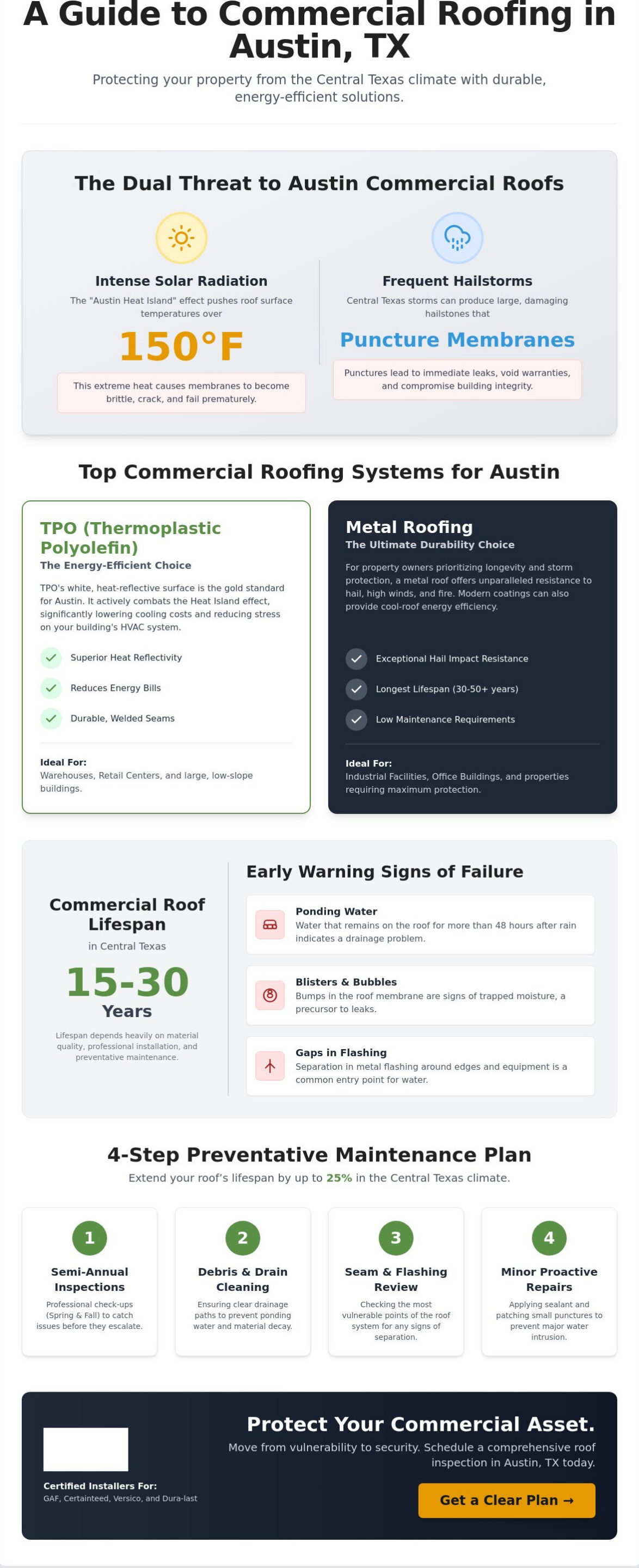
In its simplest form, commercial roofing refers to specialized systems designed for large-scale, low-slope, or flat industrial structures. Unlike residential steep-slope roofs, these systems must manage massive surface areas that are directly exposed to the elements for the entire day. In our region, the “Austin Heat Island” effect creates a unique challenge. Densely packed buildings and pavement trap heat; this often pushes roof surface temperatures well above 150 degrees. This intense heat causes inferior membranes to become brittle and crack long before their intended expiration date.
When you combine this extreme heat with the frequent hailstorms common in Central Texas, the risk of a total system failure increases. Large hailstones can puncture weakened membranes, which often voids warranties and compromises the structural integrity of your entire building. To choose the right protection, you need to understand the commercially available roofing materials that can withstand these local conditions. High solar reflectance is no longer a luxury; it’s a requirement for managing cooling costs and preventing structural fatigue in our climate.
To better understand this concept, watch this helpful video:
Why the Central Texas Climate Demands Specialized Systems
The Central Texas sun emits high levels of UV radiation that act like a slow burn on your roof. Standard materials often fail prematurely because they lack the chemical stability to resist this constant bombardment. Additionally, Austin experiences rapid temperature swings. A roof can heat up to 160 degrees in the afternoon and drop to 70 degrees after a sudden thunderstorm. This creates a cycle of thermal expansion and contraction that pulls at seams and fasteners. At Transition Roofing, we’ve spent over 15 years helping local businesses navigate these environmental stressors with commercial roofing systems built for longevity.
Understanding the Life Cycle of an Austin Commercial Roof
Under local conditions, a well-installed system typically lasts between 15 and 30 years. However, this lifespan depends heavily on regular inspections and the quality of the initial install. You should watch for early warning signs of failure, such as ponding water that remains 48 hours after rain. Other red flags include blistered membranes, which look like bubbles in the material, and gaps in the metal flashing around the edges. If you notice these issues, it’s time to act before a small leak turns into a structural emergency.
Learn about our commercial roofing services in Austin to see how we protect your investment.
Choosing the Best Systems for Commercial Roofing in Austin, TX
Selecting the right system for commercial roofing in Austin, TX, involves balancing upfront costs with long-term energy savings. Your choice should reflect the specific thermal demands of your building and your plans for the property. We often recommend Energy-Efficient Cool Roof Products to help offset the rising electrical costs associated with cooling large industrial spaces in Central Texas. A high-quality installation doesn’t just keep the rain out; it acts as a thermal shield for your business.
TPO and Single-Ply Membranes: The Energy-Efficient Choice
TPO (Thermoplastic Polyolefin) is the gold standard for local warehouses and retail centers. We utilize high-performance systems from GAF and Versico because they offer superior heat reflectivity. These white membranes are essential for reducing the Heat Island effect in downtown Austin. You can choose between mechanically attached systems, which are cost-effective for large areas, or fully adhered systems that provide extra wind resistance. Both options utilize Polyiso insulation boards to meet Austin’s strict energy codes, ensuring your building stays cooler for less. If you’re seeing high energy bills, this is usually when we recommend a transition to a reflective membrane.
Commercial Metal and Flat Roof Alternatives
If you’re looking for a 50-year investment, a standing seam metal roof is the premier choice. These systems are incredibly durable and resist the heavy hail that often hits Central Texas. While the initial cost is higher than single-ply membranes, the longevity and minimal maintenance requirements provide an excellent return on investment for high-end properties. Metal is also highly recyclable, making it a favorite for eco-conscious business owners.
For older buildings or those with specific structural needs, traditional options like modified bitumen or built-up roofing (BUR) remain viable. These multi-layer systems offer redundant protection against leaks. You can explore our flat roofing solutions in Austin to see which system provides the best security for your specific deck type. We can help you determine if your current structure can support a new material or if a full tear-off is necessary to ensure long-term stability.
Maintenance and Repair Strategies for Commercial Roofing in Austin, TX
A well-executed preventative maintenance plan can extend the life of your system by up to 25%. This is critical in the Central Texas climate where heat and hail act as constant stressors. Our 4-step approach includes clearing drainage paths, inspecting sealants around HVAC curbs, checking for membrane punctures, and verifying the integrity of parapet walls. These documented inspections are more than just good practice; they are usually a requirement to keep your GAF or Certainteed manufacturer warranties in good standing.
Deciding between a repair and a full replacement requires more than a visual guess. We use data-driven methods like core cuts to check for saturated insulation and infrared thermography to locate hidden moisture. If your roof is still structurally sound but needs an energy upgrade, you might qualify for federal tax deductions for energy-efficient roofs when choosing reflective materials. This financial incentive often makes the decision to replace more attractive than a cycle of endless patching on an aging commercial roofing system.
Proactive Maintenance Programs for Property Managers
We recommend bi-annual inspections for high-occupancy buildings in Austin, TX. These should occur in the spring before storm season and in the fall after the peak summer heat. Every professional inspection must cover these five priority items:
- Drainage efficiency in scuppers and gutters
- Seam integrity and membrane adhesion
- Flashing around all roof penetrations
- Sealant condition on HVAC curbs
- Surface degradation from intense UV exposure
Catching a failing seal today prevents a small leak from becoming a structural catastrophe during the next thunderstorm.
Emergency Repairs and Storm Recovery
After a Central Texas hail storm, your first priority is mitigation. We provide emergency tarping and leak mitigation to protect your interior assets while you coordinate with insurance. Check your rooftop HVAC units for coil damage and look for “bruising” on your membrane. If you need immediate help, follow our Guide to Austin roof repair and storm recovery to start the process correctly. This ensures your commercial roofing claim is documented properly from day one.
If you’re noticing new water stains or suspect storm damage, schedule a professional roof inspection today to get a clear plan for your property.
Investing in Your Asset: The ROI of Quality Commercial Roofing in Austin, TX
Investing in high-quality commercial roofing in Austin, TX, is a strategic move for your bottom line. It pays off. A durable system provides immediate energy savings by reflecting solar heat, which is vital in our climate. It also opens doors to potential tax incentives and significantly boosts property value. When you work with an expert who understands Austin’s specific building codes and permit requirements, you avoid the costly delays and fines that often plague out-of-town contractors. We focus on moving your building from a state of vulnerability to one of total security. For property owners interested in how commercial sites are further maximizing their energy potential through solar-ready infrastructure, visit SolarPorts Development to explore turnkey energy solutions.
Navigating Insurance and Warranties
Property managers must understand the difference between a manufacturer’s No Dollar Limit (NDL) warranty and a contractor’s workmanship warranty. An NDL warranty provides total coverage for material and labor defects without a financial cap. Conversely, a workmanship warranty covers the actual installation quality provided by your contractor. We utilize certifications from GAF and Certainteed to offer the highest levels of long-term protection. To maximize your insurance settlement after a hail event, keep detailed records of all preventative maintenance. This documentation proves the roof was in good condition before the storm, making it much harder for insurers to deny your claim.
Why Transition Roofing is the Local Authority
For over 15 years, we have served the business communities in Austin, Round Rock, and the surrounding Central Texas areas. Our approach is built on integrity and professional results rather than high-pressure sales tactics. We act as a protective authority for your assets. We value community trust and quality craftsmanship above all else. Our team understands the local landscape and is committed to the well-being of the area’s residents. If you are managing a property with a questionable roof, we can provide a clear assessment and plan to protect your investment for decades to come.
If you’re dealing with persistent leaks or suspect storm damage, we can take a look and give you a clear plan. Schedule a roof inspection in Austin today.
Securing Your Building’s Future in Central Texas
Managing a large property in Austin means staying ahead of an unpredictable local climate. We’ve covered how specialized TPO and metal systems act as thermal shields and why a proactive maintenance plan prevents structural catastrophes. Taking these steps moves your building from a state of vulnerability to one of total security. It ensures your commercial roofing investment provides a lasting return through energy savings and increased property value.
With over 15 years of Central Texas experience, our team understands the specific environmental stressors your roof faces every day. We are GAF and Certainteed certified installers specialized in TPO, metal, and flat roof systems. If you’re dealing with persistent leaks or simply need a clear plan for the next hail season, we’re ready to provide an honest assessment. Schedule a professional commercial roof inspection in Austin today to get started. We look forward to helping you protect your assets for the long haul.
Frequently Asked Questions
How much does a commercial roof replacement cost in Austin, TX?
The total investment for a roof replacement depends on several local factors; including the building’s square footage, the chosen material, and the complexity of the roof’s deck. Labor rates and Austin’s specific building codes also influence the final cost. We recommend a professional assessment to determine if a full tear-off is necessary or if a recovery membrane is a viable, budget-friendly option for your specific property.
What is the best type of roof for a flat commercial building in Texas?
TPO is widely considered the best choice for flat structures in the Central Texas climate. Its white, reflective surface repels intense UV rays; which significantly lowers cooling costs for warehouses and retail centers. For property managers seeking maximum durability against heavy hail, standing seam metal is a premier alternative. We often install GAF or Versico systems to ensure your building meets local energy efficiency standards.
How long does it take to install a new TPO roof on a commercial building?
Most commercial roofing installations for mid-sized buildings take between one and two weeks to complete. This timeline depends on the weather, the number of roof penetrations like HVAC units, and whether the project requires removing old materials. We follow a methodical workflow to minimize disruptions to your daily business operations. Our crews focus on securing the structure every evening to prevent vulnerability during sudden Austin thunderstorms, a standard of care also practiced by regional experts like Lone Star Roofing in Houston.
Can I repair a commercial roof leak without replacing the whole system?
You can often resolve leaks through targeted commercial roof repair if the underlying insulation remains dry. We use core cuts and infrared technology to verify that moisture hasn’t compromised the entire structural assembly. If the damage is localized to specific points like scuppers or HVAC curbs, a professional repair is a cost-effective way to extend the roof’s life. However; if a large percentage of the insulation is saturated, a replacement is usually the safer long-term plan.
Does insurance cover commercial roof damage from hail in Austin?
Most commercial policies in Austin, TX, cover sudden damage from hail or high winds. Success with these claims depends on having documented proof of the roof’s condition before the weather event. We provide detailed inspection reports and offer insurance claim assistance to ensure your property is restored properly. It’s important to act quickly after a storm; as many policies have strict filing deadlines for weather-related damage.