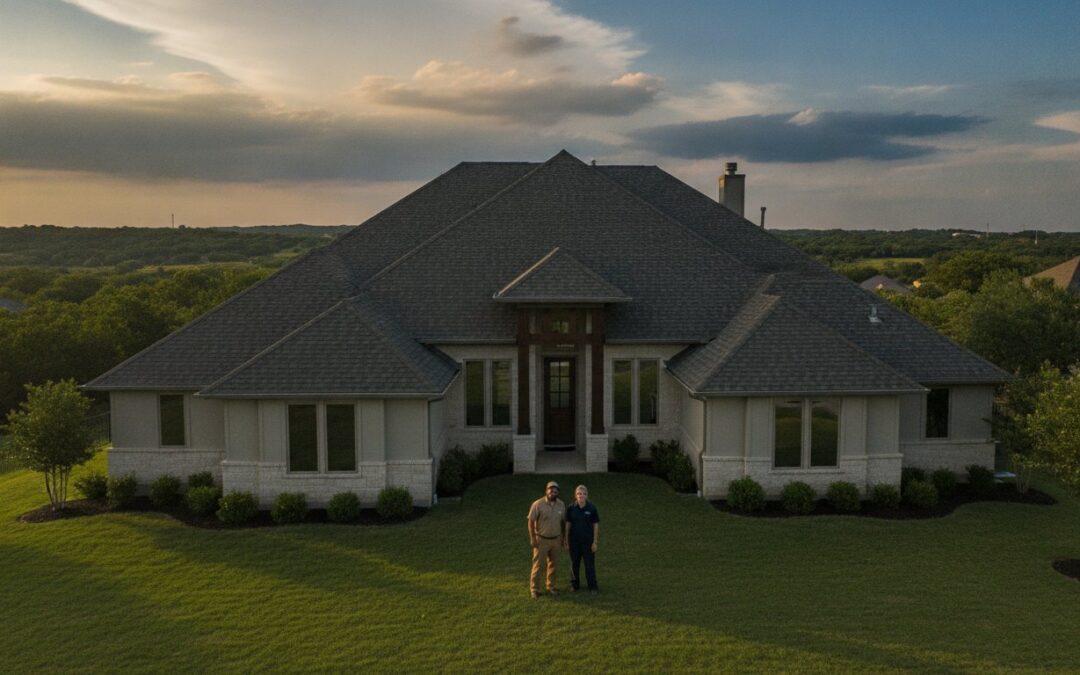
What if the contractor who knocked on your door after the last Austin hailstorm isn’t actually licensed to work in Texas? With the new mandatory state licensing requirements effective June 1, 2026, many homeowners are realizing that a professional roof installation requires more than just a hammer and some shingles. It’s a specialized defense system built to withstand 115 mph winds and the relentless Central Texas sun. We know the pressure you feel when facing “storm chasers” or rising energy bills; it’s why we focus on integrity and long-term protection for your property.
You deserve a home that remains leak-free and energy-efficient for decades. Drawing on over 15 years of local experience and certifications from manufacturers like GAF and Certainteed, we’ve built this guide to give you the facts. You’ll learn the exact steps, materials, and local Austin, TX building codes needed for a professional result. We’ll show you how to navigate insurance claims with ease and choose durable options like Class 4 impact-resistant shingles. By the end of this article, you’ll know exactly how to secure a roof that lowers your cooling costs and provides total peace of mind through every storm season.
Key Takeaways
- Learn why a professional roof installation in Austin must be treated as a multi-layered defense system to survive extreme UV radiation and 100-degree heat.
- Identify the critical layers of a high-quality roof, including the essential leak barriers needed to protect valleys and chimneys from Central Texas storms.
- Compare the lifespan and fire resistance of materials like asphalt shingles and metal roofing to make an informed investment for your home.
- Understand the professional 5-step process and why we always recommend a full “tear-off” instead of risky “roof-overs” to protect your warranty.
Understanding Roof Installation in Austin TX: Why Local Climate Matters
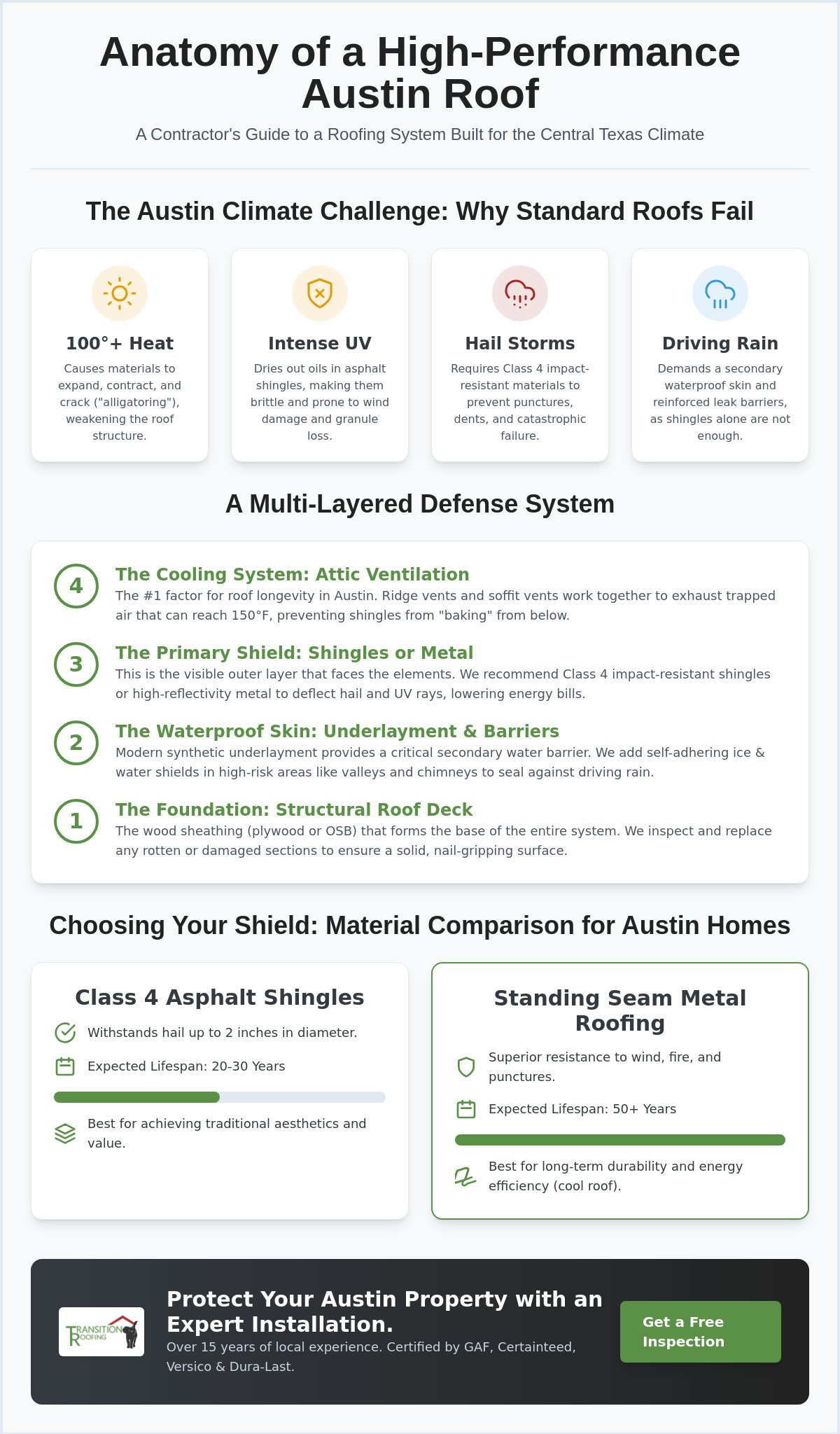
A professional roof installation in Austin TX is a complex, multi-layered defense system. It isn’t just about the top layer of shingles; it’s about how every component works together to handle the Central Texas environment. Our 100-degree summer days are brutal. This intense UV radiation dries out the oils in standard asphalt shingles, making them brittle and weakening the adhesive bonding that keeps them in place during high winds. We focus on building a structure that remains stable despite these stressors.
To see how these components are layered during a standard project, watch this helpful video:
Contractor logic suggests that standard underlayment isn’t enough for our flash-flood rain patterns. We prioritize synthetic underlayments and reinforced leak barriers that act as a secondary waterproof skin. When selecting from various commercially available roofing materials, you must consider how they react to rapid temperature shifts. A roof installation that ignores these local factors will likely fail years before its expected lifespan.
The Threat of Thermal Expansion and UV Exposure
Extreme heat causes roofing materials to expand and contract rapidly. This movement leads to “alligatoring,” where the surface cracks like reptile skin, or shingle blow-offs. Using high-reflectivity materials is a smart move. These products reflect solar energy away from your home. This reduces attic temperatures and takes the strain off your HVAC system during a typical Austin summer.
Hail Resistance Standards for Central Texas
Spring hail storms are a reality here. While a Class 1 rating is basic, we often recommend Class 4 impact-resistant shingles for residential properties. These shingles are designed to withstand larger hailstones without puncturing the mat. For commercial properties in nearby areas like Round Rock or Cedar Park, flat roof systems using TPO are the standard. They offer superior puncture resistance and durability against the elements.
The Anatomy of a High-Quality Roof Installation in Austin TX
A professional roof installation isn’t just a layer of shingles. It’s a precise assembly of components working from the deck up. We start by ensuring the structural roof deck is solid before applying any materials. On top of that deck, we install a series of barriers designed to keep water out and let heat escape. Using industry-leading materials like GAF shingles or CertainTeed systems ensures these layers bond correctly under the Central Texas sun.
Proper attic ventilation is the single most important factor for roof longevity in Austin. Without it, heat builds up to 150 degrees in your attic, baking the shingles from the inside out. This causes the asphalt to break down years early. Incorporating reflective materials can lead to significant cool roof energy savings by reducing the load on your air conditioner. If you’re seeing high energy bills, this is usually when we recommend a full system audit.
Advanced Underlayment and Leak Barriers
Traditional felt paper was the standard for decades, but it often tears or degrades in high heat. We prefer modern synthetic underlayments because they are more durable and provide a flatter surface for shingle attachment. We also install leak barriers in high-risk areas like valleys and around chimneys. A leak barrier is a self-adhering membrane that seals around nail penetrations to provide an extra layer of protection against driving rain.
Ventilation Systems: Ridge Vents vs. Solar Fans
Continuous airflow is the goal for every Austin home. Ridge vents work with soffit vents to create a natural chimney effect, exhausting hot air out the top of the house. For larger residential or commercial properties, we often suggest solar-powered attic fans. These fans actively pull heat out of the attic space without increasing your electricity bill. If you want to see how a complete system can protect your property, we can provide a professional roof assessment to identify any weak points.
Choosing the Right Material for Your Roof Installation in Austin TX
Selecting the right material for your roof installation in Austin TX depends on your budget and how long you plan to own the property. Asphalt shingles remain the most popular choice because they offer a reliable balance of cost and performance. However, the Central Texas heat can be tough on standard materials. High-quality architectural shingles typically last 20 to 25 years, while metal systems can easily protect a home for 50 years or more. Every material we install meets or exceeds the International Residential Code standards for roof assemblies to ensure your home stays safe and code-compliant.
Residential Options: Shingles and Metal
Architectural shingles are the go-to for many homeowners. They are much more durable than old-fashioned 3-tab shingles and offer better wind resistance. If you want the ultimate defense against hail and fire, metal roofing Austin is a superior investment. Standing seam metal roofs reflect solar heat and won’t crack under the sun. For a high-end look, stone-coated metal provides the aesthetic of tile or wood shake with the incredible strength of steel. It is a perfect choice for homeowners who want premium curb appeal without the weight of traditional tile.
Commercial and Flat Roof Solutions
If you are searching for commercial roofing contractors near me, you likely have a low-slope or flat building. These structures require specialized flat roofing membranes like TPO or PVC. These systems are designed to handle ponding water, which would quickly destroy a shingle roof. White TPO is a favorite for Austin businesses because of its “cool roof” properties. It reflects the majority of UV rays, keeping your building cooler and significantly reducing monthly cooling costs during our long summers.
Matching the material to your building type is the first step in a successful project. We use contractor logic to help you decide: shingles for budget-friendly reliability, metal for long-term protection, and TPO for commercial durability. If you’re ready to see which option fits your property best, you can request a customized material comparison from our local experts today.
Navigating the Roof Installation Process in Austin TX: From Inspection to Warranty
A professional roof installation follows a methodical timeline to ensure no detail is overlooked. The process begins with a comprehensive inspection to identify structural damage or rot hidden beneath old shingles. We then move through estimation and material selection to the actual construction phase. Finally, we perform a thorough walkthrough to verify that every valley, vent, and shingle meets our standards. This transparent approach takes the guesswork out of property maintenance.
Contractor logic dictates a complete “tear-off” for every project. We never recommend “roof-overs,” which involve laying new shingles over old ones. This practice traps heat, adds unnecessary weight, and hides existing deck rot. Most manufacturers will void your warranty if you don’t strip the roof to the deck first. If your property suffered hail damage, our insurance claim assistance ensures you have the documentation needed for a fair settlement.
The Logistics of Installation Day
Construction is inherently noisy and produces debris. We manage this by using heavy-duty tarps to protect your landscaping and magnetic sweeps to collect stray nails. Most residential projects in Austin TX take 1 to 3 days to complete. Commercial buildings may require a longer timeline depending on the square footage and material type. We keep you informed at every stage so you know exactly when the crew will arrive and depart.
Understanding Your Warranties and Protection
You need to distinguish between two types of coverage. A manufacturer’s warranty protects you against material defects. A workmanship warranty covers the actual installation quality. Working with a certified roofing contractor Austin TX is critical. Certifications from brands like GAF or Certainteed aren’t just badges; they’re requirements for the highest levels of warranty protection. If you’re dealing with leaks or storm damage, we can take a look and give you a clear plan for your next steps.
Securing Your Property Against the Central Texas Climate
A high-quality roof installation is the most important investment you’ll make for your building’s long-term health. We’ve explored how the intense Austin sun and sudden hail storms demand more than just basic materials. You now understand that a multi-layered system, combined with proper attic ventilation and a full tear-off process, is the only way to ensure your property remains leak-free. Whether you choose architectural shingles or a durable TPO commercial system, the quality of the workmanship determines the life of the roof.
With over 15 years of Central Texas roofing experience, our team knows exactly what it takes to protect your assets. We are certified GAF and Certainteed installers who specialize in both residential and commercial TPO systems. We take pride in moving your structure from a state of vulnerability to one of total security. If you’re seeing signs of wear or dealing with a confusing insurance claim, we can help. Schedule your free roof inspection in Austin today to get started. We’re ready to provide the durable, expert-grade protection your property deserves.
Frequently Asked Questions About Roof Installation in Austin TX
How much does a new roof installation cost in Austin TX?
The total cost depends on several factors including the square footage of your home, the roof pitch, and your choice of materials. Architectural shingles are a different investment level than standing seam metal or stone-coated steel. We also consider the complexity of the project, such as the number of chimneys or valleys that require specialized flashing. We provide clear, detailed estimates after an on-site inspection to ensure you have a precise plan for your budget.
How long does a typical roof installation take for a residential home?
Most residential projects in Central Texas take between one and three days to complete. Our crews focus on efficiency without sacrificing quality, starting with the tear-off and ending with a thorough magnetic sweep for nails. Complex roofs with steep slopes or large commercial properties may require more time. We always monitor the local Austin weather to ensure your home stays dry throughout the entire process.
Can I install a new roof over my existing shingles to save money?
We never recommend “roof-overs” because they trap heat and add thousands of pounds of unnecessary weight to your home’s structure. Laying new shingles over old ones also prevents us from inspecting the roof deck for hidden rot or water damage. Most high-quality manufacturers, like GAF and Certainteed, require a full tear-off to maintain the validity of their long-term warranties. Doing it right the first time prevents expensive failures later.
What is the best time of year for a roof installation in Central Texas?
Late fall and early winter are ideal times for a roof installation because the weather is generally stable and the temperatures are milder. You want to avoid the peak spring hail season and the extreme triple-digit heat of mid-summer whenever possible. However, we maintain a full schedule year-round. Our experienced crews know how to manage the installation process safely even during our hottest months to protect your home from sudden storms.
How do I know if I need a full roof installation or just a repair?
If your roof is over 15 years old or has damage covering more than 20% of the surface, a full replacement is usually the most cost-effective solution. Minor issues like a single leak or a few missing shingles can often be addressed with a professional repair. We look for signs of widespread granule loss, brittle materials, or sagging areas. These symptoms suggest the underlying structure is compromised and requires a more permanent solution.
Does my homeowners insurance cover the cost of a new roof installation after a storm?
Most policies cover a new roof installation if the damage is the direct result of a sudden event like a hailstorm or high winds. Insurance typically does not cover damage caused by age or a lack of regular maintenance. We offer insurance claim assistance to help you navigate the process. We provide the professional documentation and technical details your adjuster needs to ensure your claim is handled accurately and fairly.