
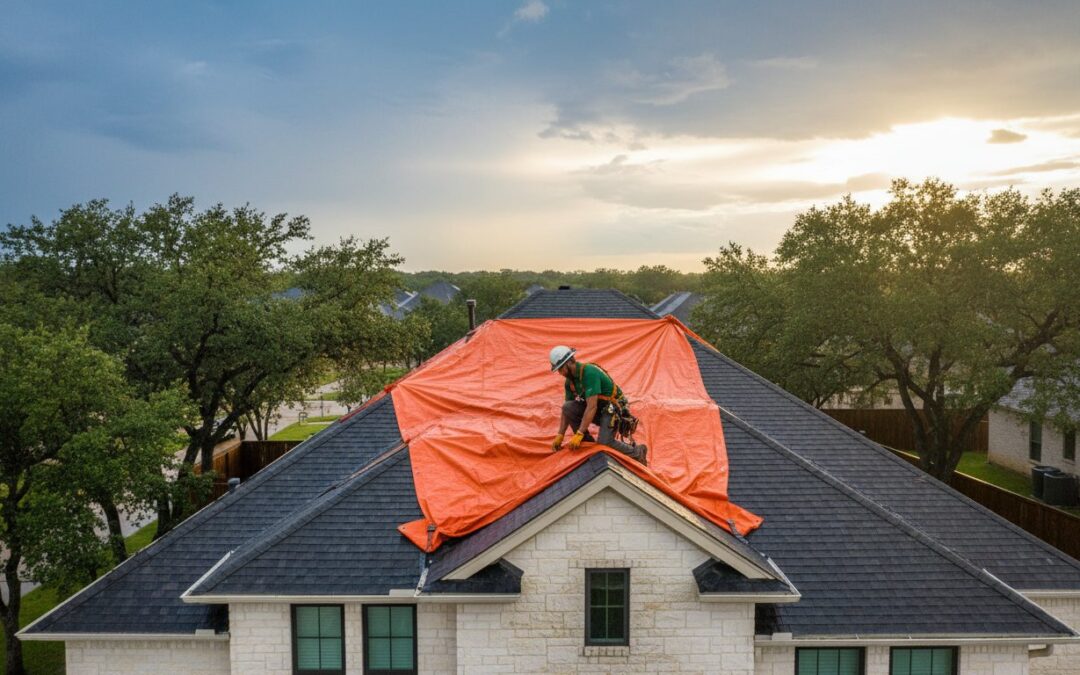
Climbing onto your roof during a Central Texas downpour to patch a hole is the most dangerous mistake you can make. It’s natural to feel a sense of urgency when you see water pooling on your ceiling or dripping onto your flooring. You’re likely wondering, Can you stop an active roof leak right now? The honest answer from a contractor’s perspective is that you cannot safely stop the water from the outside while it’s still raining. However, you can stop the interior damage from escalating into a total loss.
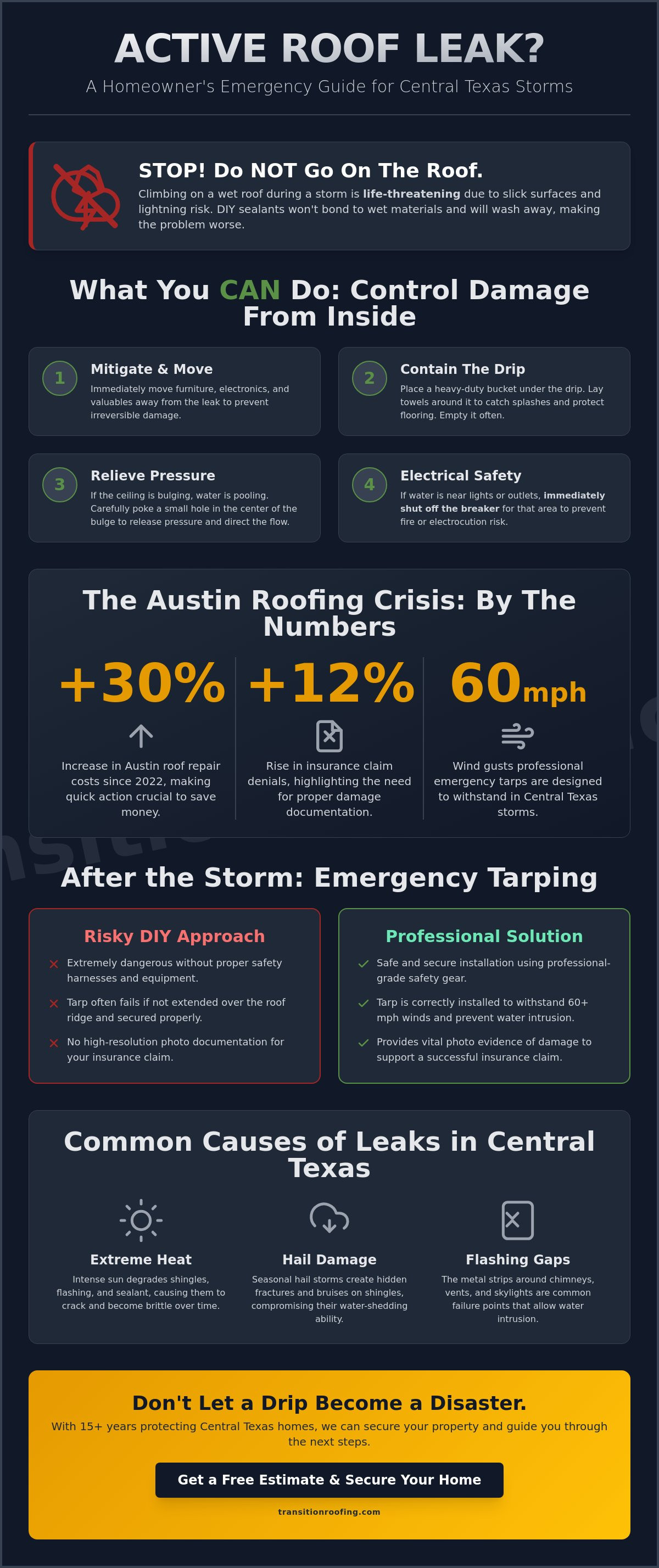
With roof repair costs in Austin surging nearly 30% since 2022, taking the right steps in the first hour can save you thousands in restoration fees. We’ll show you exactly how to manage an active leak from inside your home, when it’s safe to call for an emergency tarp, and how to navigate the 12% increase in insurance claim denials we’ve seen recently. Whether you’re in Round Rock or Central Austin, these proven steps will protect your property until a professional can provide a permanent fix. We’ve spent over 15 years helping neighbors transition from storm damage to total security, and we’ll guide you through this stressful situation with clear, actionable advice.
Key Takeaways
- Protect your property immediately by clearing the area and using heavy duty containers to catch drips before they reach your flooring.
- Understand the safety risks of Austin storms and why the answer to “Can you stop an active roof leak right now?” depends entirely on staying off the roof.
- Learn how extreme Central Texas heat and seasonal hail damage create hidden gaps in your flashing and shingles.
- Follow a step by step guide to documenting damage so you can navigate the insurance claim process with confidence and clarity.
- Discover the specific costs and benefits of emergency tarping versus permanent professional repairs for your home or business.
Immediate Steps to Manage an Active Roof Leak: Can You Stop an Active Roof Leak Right Now in Austin, TX?
When water starts coming through the ceiling, your first instinct is usually to panic. You might ask, Can you stop an active roof leak right now? While you can’t get on the roof safely during a Central Texas storm, you can control the damage inside. Move your furniture, electronics, and valuables to a dry room immediately. Once the area is clear, place a heavy-duty bucket or bin directly under the drip. If the water is hitting the floor, it’s already doing damage you can’t see.
If you notice a bulge in your ceiling, water is pooling above the drywall. Grab a small screwdriver and poke a hole right in the center of that bulge to relieve the hydrostatic pressure. Poking a hole actually prevents a massive drywall collapse by directing the water flow into your bucket rather than letting it spread across the entire ceiling structure.
To better understand this concept, watch this helpful video:
Managing Water Flow and Containment
Water often splashes when it hits the bottom of a plastic bucket. To prevent a mess, use a piece of string or a “wick” taped to the ceiling hole that leads directly into the container. Layer old towels around the base of the bucket to catch any stray splashes and protect your flooring. During heavy Austin downpours, check your containers every 30 minutes. Empty them frequently to avoid overflows that could ruin your carpets or hardwoods.
Protecting Your Home’s Interior Structure
Water doesn’t always fall in a straight line. It often travels along beams or electrical fixtures, which are common causes of roof leaks appearing far from the actual entry point on the roof. Check for signs of moisture near your lights or outlets. If water is anywhere near your electrical system, shut off the breaker for that zone immediately. Safety is the priority. For long-term protection once the storm passes, our residential roofing services can help you transition back to a secure, dry home.
Temporary Exterior Solutions and Emergency Tarping in Austin, TX
Climbing onto your roof during an active rainstorm in Austin, TX is life-threatening. Between the risk of lightning strikes and the slick surface of wet shingles, the danger far outweighs the potential reward. When homeowners ask, Can you stop an active roof leak right now? from the outside, the answer is a firm no until the lightning stops and the rain slows. Hardware store sealants or “patch and pray” caulking won’t bond to wet surfaces like TPO or asphalt. These materials require a dry substrate to create a seal, meaning your DIY fix will likely wash away in the next gust.
Emergency tarping is the only reliable way to stop water entry before permanent repairs begin. Professional roofing crews use weighted tarps or specialized fasteners designed to withstand the 60 mph Central Texas wind gusts that often follow a storm front. These temporary solutions provide the protection you need while you wait for the weather to clear and for a full assessment of the damage to take place.
Why Professional Emergency Tarping is Necessary
For a tarp to work, it must extend over the roof ridge. This prevents water from simply running under the plastic and into your attic. Professional crews use safety harnesses and anchors, which are essential for the steep-slope homes common in neighborhoods like Westlake or Tarrytown. You can find more details on the process in this emergency roof tarping guide. While we are up there, we document the damage with high-resolution photos, which is vital for your insurance claim.
When to Call an Austin Emergency Roofer
If water is pouring in rather than dripping, or if the leak is near your electrical panel, you need immediate help. Visible storm damage, such as a fallen tree limb or large sections of missing shingles, also warrants an emergency call. If you are dealing with significant storm damage, you can read more about Austin roof repair and storm recovery. If you’re seeing signs of structural strain, it’s usually when we recommend contacting a local specialist to secure the property.
Identifying Common Causes of Active Roof Leaks in the Austin, TX Climate
The 100-degree heat in Central Texas is a silent killer for local roofing systems. This extreme temperature causes metal flashing to expand and contract daily, which eventually creates gaps in your sealants. If you’re currently dealing with water inside and wondering, Can you stop an active roof leak right now?, the source is often one of these climate-specific failures. Understanding why your roof failed helps us determine if you need a simple repair or a full replacement.
- Hail damage: Spring storms in Austin often fracture the fiberglass mat inside asphalt shingles. This allows water to seep through the material over time.
- Clogged gutters: When downspouts are blocked, water backs up under the eave or drip edge. This often mimics a roof leak but is actually a drainage failure.
- Ponding water: On flat commercial roofs, standing water finds the smallest seam failure and uses hydrostatic pressure to push into the building.
Flashing and Pipe Boot Failures
The rubber “pipe boot” around your plumbing vent pipes is the #1 cause of leaks we see in Austin, TX. UV degradation from the intense Texas sun makes these rubber seals brittle and prone to cracking within 5 to 7 years. Once the rubber splits, water runs straight down the pipe into your attic. We also frequently find failures in step flashing around chimneys. During heavy, wind-driven rain, water is pushed behind the metal and into your structural framing.
Commercial and Flat Roof Specific Issues
Commercial properties using TPO or PVC membranes often suffer from seam failure. This happens due to poor initial welding or natural aging of the material. You can explore our commercial roofing solutions in Austin to see how we address these specific membrane challenges. Debris buildup is another major risk for flat systems. It blocks drains and creates massive pressure on the membrane seams, leading to sudden, large-scale leaks during storms.
If you suspect your leak is caused by these common Austin issues, schedule a professional roof inspection today to get a clear plan for a permanent fix.
Professional Repair and Insurance Claims for Roof Leaks in Austin, TX
Documenting everything with photos and video while the leak is active provides the proof your insurance adjuster needs. Most Texas insurance policies require you to make a “reasonable effort” to mitigate damage, which includes hiring a professional for emergency tarping. We’ve seen a 12% increase in roof claim denials during 2025, often because homeowners didn’t act quickly enough to stop the spread of water. Transition Roofing provides the detailed reports that property managers and homeowners need to justify their claims. While you might still be wondering, Can you stop an active roof leak right now?, your priority should be capturing the evidence and securing the structure.
The Transition from Patch to Permanent Fix
Don’t settle for a “caulk-only” fix that will fail during the next Central Texas storm. A permanent repair ensures that flashing is replaced and shingles are properly integrated into the existing system. For commercial properties, we recommend a preventative maintenance program to catch small seam failures before they become active emergencies. If you’re looking for a long-term partner, read our guide to Austin roofing contractors to see how we maintain local standards. We’ve spent 15 years helping neighbors move from a state of disrepair to total security.
Navigating the Insurance Process in Central Texas
Understanding the difference between Replacement Cost Value (RCV) and Actual Cash Value (ACV) is vital for Austin property owners. RCV covers the full cost of replacement, while ACV only pays the depreciated value of your old roof. Texas law gives you exactly one year from the date of a storm event to file your claim. We work directly with adjusters to ensure all storm-related damage is addressed, not just the single leak point. If you’re currently asking, Can you stop an active roof leak right now?, remember that the initial mitigation is just the first step. If you’re dealing with a leak, we can take a look and give you a clear plan for your insurance claim. Schedule a roof inspection in Austin today to get started.
Securing Your Austin Property for the Long Term
Managing a leak during a Central Texas storm requires a calm head and a clear plan. While you now know the answer to Can you stop an active roof leak right now? is a safety-first “no” from the exterior, you have the tools to minimize interior damage. By relieving ceiling pressure and documenting the event with clear photos, you’re already ahead of the 12% of homeowners who faced claim denials in 2025. This proactive approach saves your drywall and strengthens your position with the insurance company.
The transition from a temporary tarp to a permanent, secure roof requires an expert who understands the unique heat and hail patterns in Austin, TX. With over 15 years of local experience and certifications from GAF and CertainTeed, we specialize in high-quality storm restoration and insurance claim assistance. We don’t just patch the problem. We ensure your home or commercial building is protected with proven craftsmanship. If you’re dealing with water damage, we can take a look and give you a clear plan. Schedule an emergency roof inspection in Austin today to restore your peace of mind. We’re ready to help you get your property back to total security.
Frequently Asked Questions
Is it safe to go on my roof while it’s raining to stop a leak?
No, it is never safe to climb onto your roof during an active rainstorm in Central Texas. Wet shingles, metal, or TPO membranes become incredibly slick, and the risk of lightning strikes is high. When you ask, “Can you stop an active roof leak right now?” from the outside, the safety risk outweighs any benefit. Wait for the storm to pass and manage the water from inside your home using the steps we discussed earlier.
How much does an emergency roof tarping cost in Austin, TX?
Emergency roof tarping in Austin typically costs between $300 and $600. This fee covers the labor and materials needed to secure a temporary barrier over the damaged area to prevent further interior destruction. If the damage is more extensive and requires a standard emergency repair, costs can range from $500 to over $3,000 depending on the scope. Professional tarping is a vital step in meeting your insurance policy’s requirement to mitigate further loss.
Will my homeowners insurance cover an active roof leak?
Most homeowners insurance policies cover roof leaks if the damage was caused by a sudden, accidental event like a hail storm or a fallen tree limb. Claims are often denied if the leak resulted from a lack of maintenance or the natural aging of the roof. With a 12% increase in claim denials recorded in 2025, it’s critical to document everything immediately and show that you took reasonable steps to stop the water spread.
Can I use roof sealant or caulk while the roof is still wet?
Most standard roof sealants and caulks will not bond to wet surfaces. Applying these products during a rainstorm is ineffective because the water creates a barrier that prevents the adhesive from sticking to the shingles or flashing. While some specialized emergency products exist, they are difficult for homeowners to apply correctly in a storm. Professional emergency tarping remains the only reliable method for stopping water entry before the surface is fully dry.
What happens if I ignore a small roof leak for a few weeks?
Ignoring even a small leak in the Austin, TX climate leads to rapid mold growth and structural rot within 24 to 48 hours. Small drips often travel along rafters, saturating insulation and weakening your ceiling’s integrity. Insurance companies may deny your claim if they determine you didn’t act quickly to fix the issue. A small repair that costs $150 to $500 today can easily turn into a multi-thousand dollar restoration project if left unaddressed.