Why does it feel like your flat roof is a magnet for problems that never truly get solved? You have likely dealt with the frustration of recurring leaks or water that ponds for days after a heavy rain. It is exhausting to pay for a patch only to see the same damp spot reappear during the next Central Texas storm. Most property owners in our area feel this same pressure, especially when trying to decide if they need a minor fix or a full TPO replacement to handle the relentless Texas sun.
Finding a reliable solution for flat roof repair Cedar Park TX does not have to be a guessing game. We understand that you need a leak-free building and a clear plan for your property’s future. This guide will show you how to identify specific damage, navigate the new 2026 Texas licensing laws under HB 3344, and choose a restoration strategy that fits the 2021 International Building Code. We will break down the differences between materials like TPO and Modified Bitumen so you can protect your investment with confidence and secure the professional documentation you need.
Key Takeaways
- Identify the “Big Three” flat roof failures caused by the intense Central Texas heat and thermal shock.
- Learn why professional heat-welding is the only permanent solution for TPO systems compared to temporary mastic patches.
- Apply the “25% Rule” to determine if your flat roof repair Cedar Park TX is a smart investment or if a full replacement is better.
- Discover how infrared moisture detection and core sampling find hidden leaks before they destroy your roof’s underlying insulation.
Common Signs You Need Flat Roof Repair in Cedar Park and Austin TX
Identifying when you need flat roof repair Cedar Park TX often comes down to spotting the “Big Three” failures before they cause interior damage. These are ponding water, membrane shrinkage, and seam separation. In the Central Texas climate, these issues aren’t just bad luck; they’re the direct result of our environment. Understanding flat roof designs and materials helps property owners realize that these systems are constantly battling local stressors.
Austin, TX summers are brutal on roofing membranes. When temperatures hit 100 degrees, your roof experiences “thermal shock.” This happens when the surface temperature swings wildly between the afternoon heat and a sudden evening thunderstorm. This constant expansion and contraction weakens the material over time. It eventually leads to cracks that let water reach your decking.
To see how these environmental factors lead to a full system failure, watch this breakdown of the replacement process:
Ponding water is officially defined as any water that remains on the roof surface for more than 48 hours after a rain event. This standing water puts thousands of pounds of extra weight on your building. It also accelerates the breakdown of the membrane. Hail damage is another silent killer for TPO roofs in Cedar Park. You might not see the fractures immediately, but the impact can bruise the underlying insulation. This often goes unnoticed until the next major rain reveals a leak through the compromised seams.
Identifying UV Degradation and Blistering
The intense Texas sun literally bakes the plasticizers out of older PVC and TPO roofs. This makes the membrane brittle and prone to cracking. On modified bitumen systems, you’ll see an “alligatoring” effect. This looks like cracked, scaly skin and indicates the material has reached the end of its useful lifespan. If you notice blisters or bubbles, it means moisture is trapped inside the system. This requires immediate attention to prevent the rot from spreading to the structural deck.
The Danger of Clogged Scuppers and Drains
Cedar Park debris, like oak leaves and cedar tassels, quickly clogs drains and scuppers. This creates massive structural weight issues during a heavy Central Texas downpour. We recommend property managers do a quick visual check of all drainage points after every major storm. If water isn’t flowing freely, you’re risking a deck collapse or severe structural strain. Keeping these pathways clear is the simplest way to avoid an emergency flat roof repair Cedar Park TX call.
Expert Repair Techniques for TPO and Commercial Systems in Austin TX and Cedar Park
Effective flat roof repair Cedar Park TX requires more than just a bucket of tar. For modern TPO and PVC systems, we use a heat-welding process to create a permanent, molecular bond between the patch and the existing membrane. This technique is the only way to ensure the repair withstands the Central Texas heat. Many building owners rely on “mastic and mesh” fixes. These are temporary band-aids that eventually crack and peel under the sun. A professional membrane patch, however, becomes a structural part of the roof.
Our team follows strict NRCA roofing standards along with GAF and Versico manufacturer guidelines. This technical precision is vital around high-stress areas like HVAC units and vents. These penetrations are the most common leak points in any commercial system. We use reinforced flashing at these junctions to provide an extra layer of protection against building movement and equipment vibration. If you’re noticing cracks or moisture near your rooftop units, our experts can provide a plan to secure those vulnerabilities before the next storm hits.
Repairing Modified Bitumen and BUR Roofs
In older Austin TX buildings with multi-ply systems, we use the “three-course” method to seal leaks. This involves a layer of professional-grade flashing cement, a fabric reinforcement, and a final top coat of cement. This process effectively fixes surface cracking and granule loss. It allows property owners to extend the life of their existing roof without the massive cost of a full tear-off. It’s a steady, reliable way to keep an older structure dry.
TPO Seam and Puncture Repair
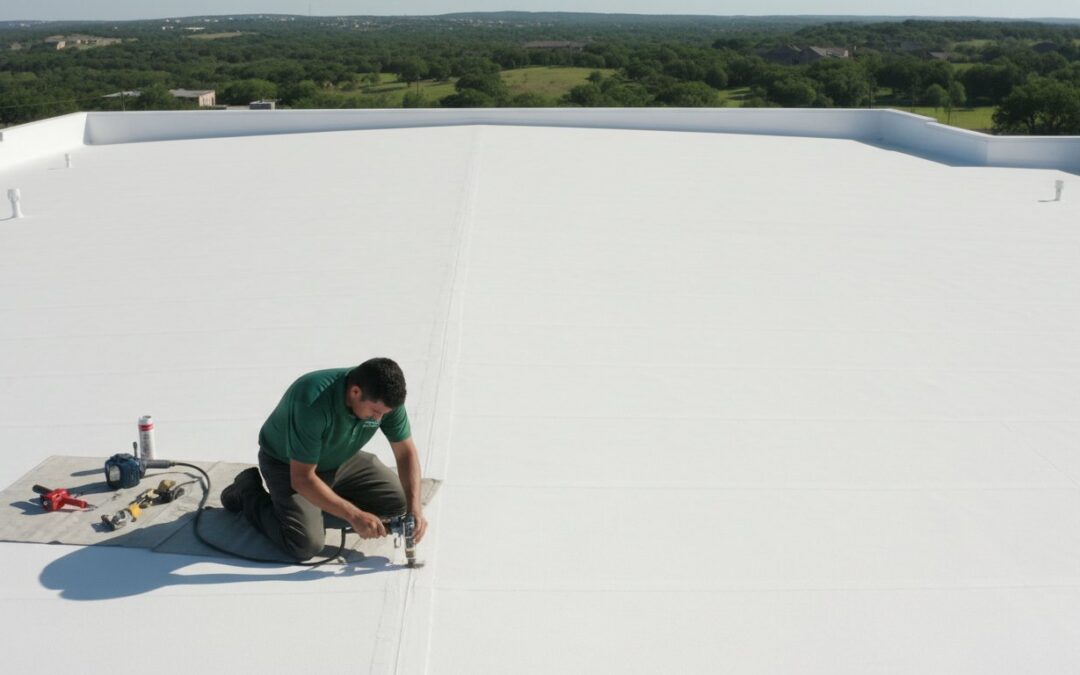
For larger punctures or failing seams, we often use robotic heat welders. These machines maintain a consistent temperature to create a seam that’s actually stronger than the membrane itself. Success is 90% surface preparation. We must strip away all UV-degraded material and dirt so the new weld can fuse properly. Without this deep cleaning, the patch will fail within months. We take the time to do it right because a second repair is always more expensive than the first one.

Flat Roof Repair vs. Replacement Costs in Cedar Park and Austin TX
Deciding between a patch or a full replacement for your flat roof repair Cedar Park TX often comes down to the “25% Rule.” If the cost of a repair exceeds 25% of the price of a new system, we usually recommend a full replacement. Contractor logic tells us that the age of the roof is the best predictor of success. A membrane that is 20 years old has likely lost its flexibility. This makes it difficult for new patches to bond correctly, leading to a cycle of recurring leaks that cost more in the long run.
We use core sampling to determine if your building is a candidate for a simple fix. This process involves removing a small cross-section of the roof to see if the underlying insulation is saturated. If the core sample is wet, a surface patch is a waste of money. Trapped moisture will eventually cause mold and structural rot in your decking. Upgrading to commercial roofing in Austin with a white TPO system offers a high ROI because it reflects the Central Texas sun and lowers your monthly energy bills.
When a Roof Coating is the Better Alternative
Silicone or acrylic coatings can extend the life of a Cedar Park roof by 10 to 20 years. These systems create a seamless, waterproof barrier over your existing roof without the mess of a tear-off. They are a great middle-ground option for budgeting your flat roof repair Cedar Park TX. However, the substrate must be dry and structurally sound. We never apply coatings over wet insulation or failing decks because the moisture will eventually cause the coating to blister and fail.
The True Cost of Neglecting Minor Leaks
A $500 repair can easily turn into a $5,000 deck replacement if you wait too long. Standing water destroys the R-value of your insulation, which forces your HVAC system to run constantly. This neglect leads to higher energy bills and structural damage that can compromise the safety of the building. If you are seeing signs of moisture, contact us for a clear assessment of your roof’s remaining lifespan and a plan to secure your property.
Professional Inspection and Repair Process for Cedar Park and Austin TX Properties
At Transition Roofing, we bring over 15 years of experience to every flat roof repair Cedar Park TX project. We don’t just look for surface holes. Our team uses infrared moisture detection to find water trapped beneath the membrane that the naked eye often misses. This technology is vital in our Central Texas climate. Moisture can hide in the insulation for months before a leak finally shows up on your ceiling. If you’re just starting your search for a contractor, check out our guide on finding a reliable roofer to ensure you’re vetting for the latest 2026 standards.
Our process includes providing the detailed documentation you need for your records. We produce the photos and technical reports required for insurance claims and to keep your manufacturer warranties in good standing with brands like GAF, Versico, and Certainteed. Having this professional paper trail makes the entire maintenance process smoother. It also protects your property value by proving the roof has been professionally maintained.
Navigating Insurance for Cedar Park Storm Damage
Texas insurance companies distinguish between gradual wear and tear and sudden storm damage. Most policies won’t cover a leak caused by 20 years of neglect. They will, however, cover damage from a specific hail or wind event. We help you identify these differences so you can file an accurate claim with your provider. For more on the specific steps to take after a storm, read our Austin roof repair guide for storm recovery.
Preventative Maintenance Programs
Bi-annual inspections in Austin TX are the best way to prevent emergency repairs. We recommend checking your roof every spring and fall to prepare for heavy rains and heat waves. Our maintenance checklist includes:
- Clearing all drains and scuppers of local debris like oak leaves.
- Inspecting all heat-welded seams for signs of stress or separation.
- Removing loose debris that can puncture the membrane during high winds.
- Checking the integrity of the flashing around HVAC units and vents.
If you’re dealing with a recurring leak or just need a clear understanding of your roof’s condition, we can take a look and give you a clear plan. Schedule a roof inspection in Austin today to secure your property for the long term.
Securing Your Property Against the Central Texas Elements
Managing a commercial or residential flat roof in Cedar Park requires a proactive strategy rather than reactive patching. You now have the framework to judge whether a repair makes sense or if a full TPO replacement is the better long-term investment. Remember that the 2026 Texas roofing laws mean choosing a licensed, professional team is no longer just a recommendation. It’s a legal safeguard for your property. By applying contractor logic to your roof’s age and using core sampling to check for saturated insulation, you can avoid the high costs of structural rot and mold.
Transition Roofing brings over 15 years of local expertise to every flat roof repair Cedar Park TX project. We use specialized infrared leak detection to find hidden moisture before it destroys your decking. As certified GAF and Versico installers, we focus on permanent solutions that actually withstand our local weather. If you’re dealing with a frustrating flat roof leak in Cedar Park, schedule a professional inspection with Transition Roofing today. Taking action now prevents minor moisture from turning into a total system failure. We’re here to help you move from a state of vulnerability to total security.
Frequently Asked Questions About Flat Roof Repair in Austin TX
How much does flat roof repair cost in Cedar Park TX?
The cost of flat roof repair Cedar Park TX depends on the specific type of damage, the roofing material, and the condition of the underlying insulation. A simple seam repair or small puncture patch is less of an investment than a project requiring the replacement of saturated decking. We focus on providing a detailed scope of work that addresses the root cause of the leak to prevent you from paying for the same repair twice.
Can you patch a TPO roof that is over 15 years old?
Patching a TPO roof older than 15 years is often difficult because the membrane loses its flexibility and the chemicals that allow for successful heat-welding. While a temporary fix might stop water for a few months, it’s hard to get a permanent molecular bond on a surface that has been baked by the Texas sun for over a decade. If your roof is in this age range, we’ll check the membrane’s integrity to see if a repair is a viable long-term solution.
Why is water ponding on my flat roof after it rains in Austin?
Water ponds on flat roofs in Austin due to structural sagging, poor drainage slopes, or scuppers blocked by local debris like oak leaves and cedar tassels. If you see standing water 48 hours after a storm, your drainage system isn’t functioning correctly. This standing water puts immense pressure on your building’s structure and can lead to a premature failure of the roofing membrane if it’s not addressed quickly.
Does insurance cover flat roof leaks caused by hail in Cedar Park?
Insurance usually covers flat roof leaks if they’re the result of a sudden storm event, such as a hailstorm or high winds. Most policies don’t cover leaks caused by gradual wear and tear or a lack of basic maintenance. We provide the professional documentation and infrared moisture reports that adjusters need to differentiate between storm damage and standard aging, helping you navigate the claim process with clear evidence.
How long does a typical flat roof repair take to complete?
Most flat roof repair Cedar Park TX projects are completed within one to two days. A small puncture or a few failing seams can often be secured in a single morning. If we find that the insulation beneath the membrane is wet, the process takes longer because we must remove the saturated material and ensure the substrate is completely dry before sealing the new patch. This methodical approach is the only way to prevent future mold and rot.