That small drip in the corner of your facility isn’t just a nuisance; it’s a direct threat to your inventory and your bottom line. In Central Texas, we know that a single afternoon storm can turn a minor puncture into a major operational shutdown. Finding a reliable solution for warehouse roof leak repair Austin is about more than just stopping water. It’s about protecting your assets and ensuring your facility stays compliant with the 2024 building codes that became mandatory in July 2025.
You’ve likely dealt with “quick fix” patches that fail during the first heavy rain or buckle under the intense Texas sun. we understand the stress of managing a large scale property while trying to avoid the massive expense of a full replacement. This guide will help you identify the root causes of industrial leaks, from thermal expansion to hail damage. You’ll learn how to weigh the costs of professional repairs against long-term TPO or metal solutions, giving you a clear path to a watertight warehouse and total peace of mind.
Key Takeaways
- Identify how Austin’s triple-digit heat and HVAC vibrations cause industrial roof membranes to pull away from critical seals.
- Learn how infrared moisture surveys find trapped water that visual inspections might miss, preventing hidden structural rot.
- Determine when warehouse roof leak repair Austin is feasible using the 25% rule to compare repair costs against a full system replacement.
- Master the strategy for emergency tarping and temporary fixes to shield your inventory during sudden Central Texas storm events.
Why Warehouse Roofs Leak in Austin TX: Common Industrial Failure Points
Austin’s climate puts immense pressure on large scale structures. When you manage a warehouse, the sheer size of the roof deck creates unique vulnerabilities that residential properties never face. Identifying these specific failure points early is the first step toward effective warehouse roof leak repair Austin. Most issues aren’t just about old age; they’re about the physical stress of the Central Texas environment.
To better understand this concept, watch this helpful video:
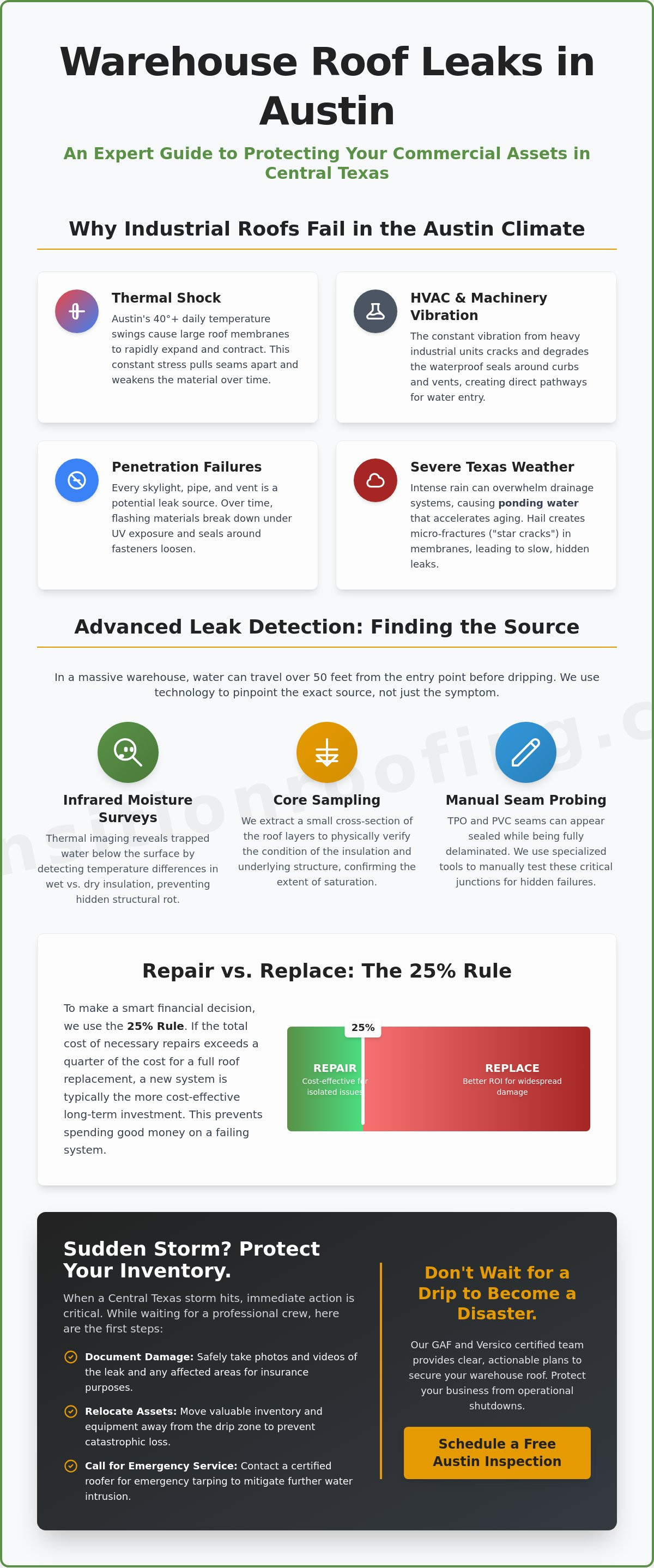
Thermal shock is a major factor here. In Austin, temperatures can swing 40 degrees in a single day. This causes large roof membranes to expand and contract rapidly, which eventually pulls at the seams. If you have a flat roof system, you also have to worry about ponding water. Standing water acts like a magnifying glass for UV rays and puts constant pressure on the membrane. Modern roof coating technologies can mitigate some of this damage, but once the material becomes brittle, leaks are inevitable.
HVAC units also cause significant trouble. These massive industrial units vibrate constantly. That movement, paired with the unit’s weight, often cracks the seals around the HVAC curb. If you see water dripping near your cooling units, the curb flashing is likely the culprit. This is why we focus on more than just the membrane during an inspection; we look at every mechanical attachment.
The Role of Industrial Penetrations in Warehouse Leaks
Every skylight, vent, and pipe boot is a potential entry point. These penetrations require specialized flashing to stay watertight. Over time, the vibration from warehouse machinery can loosen mechanical fasteners. We often find that leaks aren’t in the middle of the roof, but at these critical junction points where the seal has finally given way. Regular maintenance is the only way to catch these before they damage your inventory.
Central Texas Climate Stressors on Commercial Membranes
Austin storms are intense. Flash floods can dump huge volumes of water that overwhelm scuppers and internal drains. If the water can’t leave the roof fast enough, it finds its way inside. Hail is another concern. While it might not look like much on a flat roof, large stones can cause “star fractures” in TPO. These tiny cracks eventually allow water to seep into the insulation layer, leading to hidden rot and structural damage.
Tactical Leak Detection and Repair for Austin TX Warehouses
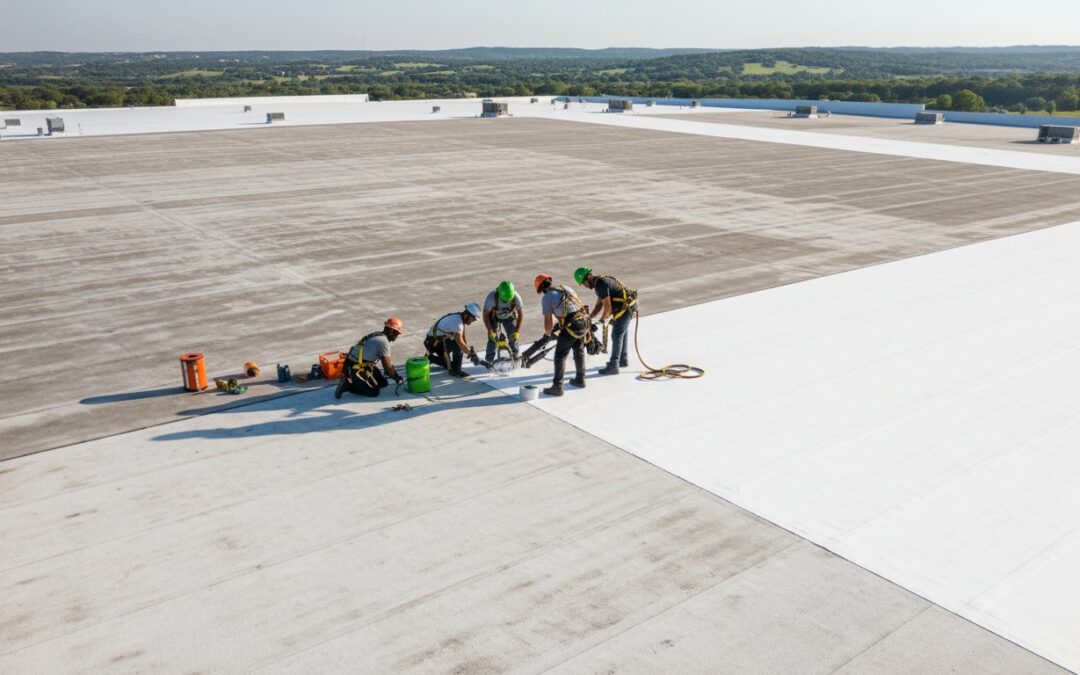
Finding the source of a leak in a massive industrial facility is often more complex than it looks. Water rarely drips directly below the entry point. In Austin warehouses with open metal decks, rain often hits a structural rib and travels 50 feet or more before finally falling onto your inventory. Our process for warehouse roof leak repair Austin begins with tracking these water trails back to the physical breach in the membrane.
We use several advanced methods to ensure we aren’t just guessing. Infrared moisture surveys are a staple for our Central Texas clients. By using thermal imaging at night, we can see where wet insulation is holding heat longer than the surrounding dry areas. This allows us to map out the exact size of the damage without tearing up the entire roof. If the moisture seems deep, we perform core sampling. This involves taking a small, circular cross section of the roof layers to check for structural rot or saturated insulation that could lead to mold.
Seam failure is another common culprit. TPO and PVC seams can sometimes look perfectly intact while being completely delaminated. We use specialized probe tools to manually test these junctions. If you’re noticing water stains on your ceiling but can’t find the source, we can perform a thorough commercial roof inspection to pinpoint the entry point before it spreads.
Modern Repair Techniques for Commercial Systems
- Heat-Welding: For TPO and PVC systems, we use robotic or hand-held heat welders to fuse new patches to the existing membrane. This creates a chemical bond that is often stronger than the original material.
- Silicone Coatings: In areas where minor ponding occurs near drains, we apply high-solids silicone. These coatings are waterproof and highly reflective, which helps combat the Austin heat.
- Warranty Compliance: We follow specific repair protocols from manufacturers like GAF, Versico, and Carlisle. Using these certified methods ensures your existing warranty remains valid after the repair is complete.
Minimizing Business Downtime During Repairs
Your warehouse operations shouldn’t stop because of a roof leak. We coordinate our staging areas to ensure we don’t block loading docks or interrupt high-traffic forklift lanes. Our teams focus on fast, non-invasive mitigation to stop water intrusion immediately. This protective approach keeps your logistics moving while we implement a permanent, long-term solution for the structure.
Repairing vs. Replacing Your Industrial Roof in Austin TX: Evaluating Warehouse Roof Leak Repair Austin
Deciding between a patch and a full replacement is a financial calculation that every facility manager eventually faces. For large properties, the 25% rule is the standard we use. If more than a quarter of your roof surface is failing, the cost of ongoing warehouse roof leak repair Austin will quickly exceed the price of a new system. Most TPO and EPDM membranes in Central Texas have a lifespan of 15 to 20 years. If your roof is approaching that age, sinking money into frequent repairs is often a case of diminishing returns.
Insulation health is another critical factor. When water gets past the membrane, it saturates the polyiso insulation boards. Saturated insulation loses its R-value and can lead to structural rot in the metal deck. A simple patch on top won’t dry out the layers underneath. In these cases, we usually recommend a partial or full replacement to maintain the building’s integrity and prevent long term structural issues.
Calculating the ROI of a Commercial Roof Repair
Emergency patches are often expensive and reactive. While they stop the immediate drip, they don’t address the underlying cause of failure. A planned commercial roof installation allows you to budget effectively and take advantage of new energy efficient materials. White TPO systems are especially valuable in Austin because they reflect solar heat. This can significantly lower your warehouse cooling costs during the summer months. Preventative maintenance programs can also extend the life of your existing roof by catching small seam failures before they become major leaks.
Insurance Claims for Warehouse Storm Damage
Austin is a magnet for hail and severe storms. Large industrial roofs are prone to impact damage that might not cause an immediate leak but will shorten the roof’s life. Navigating commercial insurance claims requires a contractor who understands the difference between cosmetic damage and functional loss. We help document the damage clearly so you get the coverage you deserve under your policy. If you’re seeing signs of storm damage, we can help you evaluate your options for a commercial claim to ensure your assets are protected.
Emergency Warehouse Roof Leak Repair Austin: Protection for Your Inventory
When a Central Texas storm hits, you don’t have time to wait for a full estimate. Active water intrusion can destroy thousands of dollars in inventory in minutes. Our immediate goal for emergency warehouse roof leak repair Austin is stabilization. We use heavy duty tarping and sandbagging to divert water away from your products and toward drainage points. This stops the bleeding while we wait for the weather to clear.
It’s vital to understand the difference between a temporary patch and a permanent fix. A quick patch is meant to get you through the storm, but it isn’t a long term solution. These materials often degrade quickly under the Austin sun. With over 15 years of experience in the local industrial market, we’ve seen many “quick fixes” lead to major structural damage because they weren’t followed by a professional repair. Once the storm passes, we transition from mitigation to a permanent restoration that matches your existing membrane.
Establishing a Preventative Maintenance Plan in Austin TX
The best way to handle a leak is to prevent it from happening. We highly recommend a preventative maintenance program to catch small issues before they become emergencies. This involves bi-annual inspections, usually before the spring and fall storm seasons. We focus on clearing scuppers, checking HVAC curb seals, and ensuring your drainage systems can handle flash floods. We also document the condition of your roof, which is invaluable for insurance claims and maintaining manufacturer warranties from brands like GAF or Versico.
Schedule Your Warehouse Inspection Today
If you’re noticing water stains on your warehouse floor or moisture on your ceiling deck, the damage has already begun to spread. Waiting only increases the likelihood of needing a full replacement. If you’re dealing with a leak, we can take a look and give you a clear plan to secure your building and protect your assets. Schedule a roof inspection in Austin today to ensure your facility remains watertight and compliant with current building codes.
Secure Your Industrial Assets Against the Austin Climate
Protecting your warehouse requires a proactive approach that addresses the specific stressors of Central Texas. We’ve seen how thermal expansion and heavy storm cycles can compromise even the most durable TPO and metal systems. By applying the 25% rule and utilizing tactical detection methods like infrared surveys, you can manage your facility’s integrity without the stress of unexpected downtime. Reliable warehouse roof leak repair Austin is about implementing permanent solutions that respect your budget and your operational schedule.
With over 15 years of local experience and certifications from industry leaders like GAF and Certainteed, we specialize in durable TPO and metal industrial systems. We don’t just patch leaks; we provide the long term security your business deserves. If you’re dealing with moisture issues or just want to verify the health of your structure, we’re here to help. Schedule a professional warehouse roof inspection in Austin today to get a clear, expert assessment. Let’s move your property from a state of vulnerability to one of total security.
Frequently Asked Questions
How much does warehouse roof leak repair cost in Austin?
The total cost depends on the size of the breach, the type of membrane involved, and whether the underlying insulation is saturated. Minor repairs such as resealing a pipe boot or a small HVAC curb are less intensive than fixing large sections of delaminated TPO seams. We evaluate the complexity of the repair and the materials needed, such as specialized heat-welding or high-solids silicone, to provide a clear plan that fits your budget.
Can you repair a warehouse roof while we are still operating?
Yes, we perform most warehouse roof leak repair Austin services without interrupting your daily business operations. We coordinate our staging areas to ensure we don’t block loading docks or forklift lanes. Our crews work efficiently to stop water intrusion while your team continues their logistics and inventory management. This approach allows you to maintain productivity while we secure the structure above you.
How do I know if my warehouse roof leak is caused by hail damage?
Hail damage on flat industrial roofs often shows up as “star fractures” or subtle indentations that aren’t always visible to the untrained eye. These impacts can crack the membrane, allowing water to seep into the insulation layer during the next Central Texas storm. We check for impact marks on soft metals like HVAC vents and flashing, which are clear indicators that your roof membrane likely sustained functional damage during a hail event.
What is the most common cause of leaks on flat warehouse roofs in Austin?
Thermal expansion is the leading cause of industrial leaks in our region. Austin’s extreme temperature swings cause large roof membranes to stretch and pull, which eventually weakens the seams and flashing points. Additionally, clogged scuppers and internal drains often lead to ponding water. When water sits on a flat roof for more than 48 hours, it puts constant pressure on the system and accelerates the degradation of sealants and membranes.
How long does a typical industrial roof repair take to complete?
Most moderate industrial repairs are finished within one to three days. The exact timeline depends on the weather conditions and the specific repair method required, such as heat-welding TPO patches or replacing saturated insulation boards. We prioritize immediate mitigation to protect your inventory from further damage. Once the site is stabilized, we implement the permanent fix to ensure your facility remains watertight for the long term.