
In the wake of a Central Texas storm, a roof that isn’t leaking can be just as dangerous to your wallet as one that is. Many Austin homeowners find themselves asking, “What are the signs of hidden hail or storm damage if I do not see a leak yet? Do I have to pay my deductible and can a roofer act as my adjuster or waive it?” It’s a valid concern because “invisible” damage often leads to structural rot months after the clouds clear. You want to protect your property without falling victim to insurance fraud or unexpected legal trouble.
We agree that the insurance process feels overwhelming, especially when your roof looks fine from the ground. This guide will teach you how to identify subtle damage like shingle bruising and granule loss before they turn into expensive leaks. You’ll also learn the facts about Texas House Bill 2102, which makes it a Class B misdemeanor for contractors to waive deductibles. We’ll explain the clear legal boundaries between a roofer and a public adjuster to ensure your claim is handled with integrity and local expertise.
Key Takeaways
- Learn how to identify hidden shingle bruising and granule loss that compromise your roof’s integrity long before a leak appears in your ceiling.
- Discover the definitive answer to “What are the signs of hidden hail or storm damage if I do not see a leak yet? Do I have to pay my deductible and can a roofer act as my adjuster or waive it?” based on current Texas law.
- Understand why Texas House Bill 2102 makes it illegal for contractors to waive or absorb your deductible, protecting you from potential insurance fraud charges.
- Clarify the legal role of a roofing contractor as a documentation expert rather than a public adjuster to ensure your storm claim remains compliant.
- Gain the confidence to navigate the Central Texas storm restoration process by distinguishing between professional repair estimates and legal claim negotiation.
Spotting Hidden Hail and Storm Damage in Austin TX Without a Leak
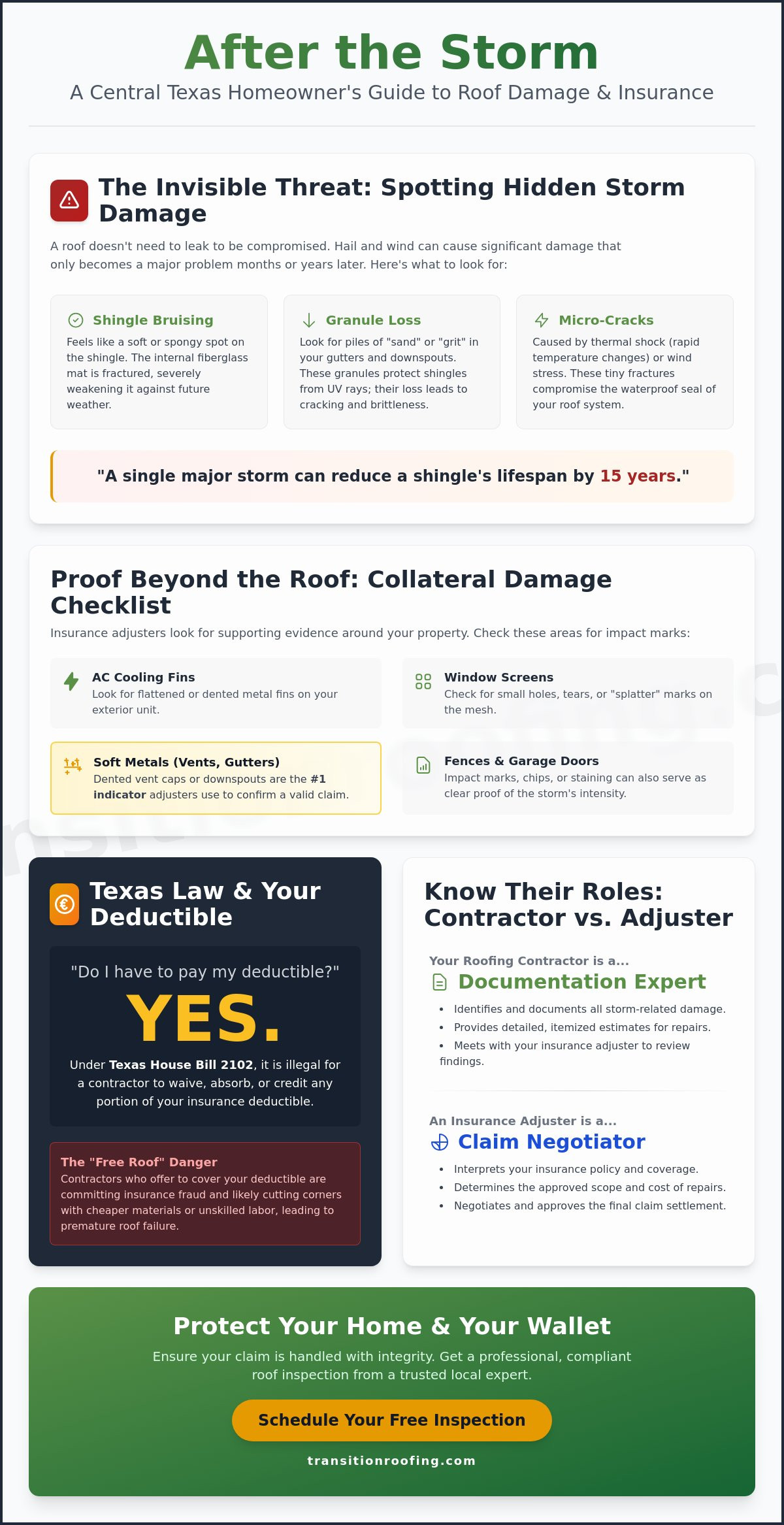
Austin storms often leave behind a path of destruction that your eyes can’t catch from the ground. Many residents ask us, “What are the signs of hidden hail or storm damage if I do not see a leak yet? Do I have to pay my deductible and can a roofer act as my adjuster or waive it?” The most common hidden killer of an asphalt roof is shingle bruising. These are soft spots in the shingle mat that feel like a bruise on a piece of fruit. While the shingle looks intact, the internal fiberglass layer is shattered, which leads to premature failure within a few seasons.
Another major indicator is granule loss. If you find what looks like heavy sand in your gutters, your roof is losing its structural protection. These granules shield the asphalt from the harsh Central Texas sun. Once they’re gone, the sun bakes the shingles, making them brittle. We also look for thermal shock. This happens when a roof surface, heated to 100 degrees or more, is suddenly hit by cold rain. The rapid contraction causes micro-cracks that compromise the waterproof seal.
Why ‘No Leak’ Doesn’t Mean ‘No Damage’ in Austin TX
A roof doesn’t have to leak today to be “totaled” in the eyes of an insurance company. A single major storm can reduce a shingle’s lifespan by 15 years. This is why we recommend a professional residential roof inspection after any event involving high winds or large ice. Understanding What is hail? helps you realize that even small, fast-moving stones can hit with enough force to break the bond between your shingles and the roof deck.
Collateral Signs Around Your Austin TX Property
Insurance adjusters look for proof beyond the shingles. We recommend checking these common areas for impact marks:
- AC Cooling Fins: Look for flattened or dented metal slats on your exterior unit.
- Window Screens: Check for small holes or “splatter” marks on the mesh.
- Soft Metals: Dented vent caps or lead boots are the #1 indicator adjusters use to confirm a claim.
- Downspouts: Check the base of your gutters for dings or “sand” piles from granule loss.
Impact marks on garage doors or fence staining also serve as clear proof of the storm’s intensity. If these items are damaged, your roof likely requires professional attention from a local specialist who understands our specific climate challenges.
Texas Law and Your Deductible: What are the signs of hidden hail or storm damage if I do not see a leak yet? Do I have to pay my deductible and can a roofer act as my adjuster or waive it?
Yes, you must pay your insurance deductible by law. This is the most common point of confusion for homeowners asking, “What are the signs of hidden hail or storm damage if I do not see a leak yet? Do I have to pay my deductible and can a roofer act as my adjuster or waive it?” Since September 1, 2019, Texas House Bill 2102 has made it strictly illegal for a roofing contractor to waive, credit, or “absorb” any portion of a deductible. This law ensures that the insurance process remains transparent and prevents contractors from cutting corners on your home to save money.
Violating this law is a Class B misdemeanor in Texas. It’s also considered insurance fraud, which can carry heavy legal consequences for both the contractor and the homeowner. Insurance carriers now have the right to request proof of payment, such as a canceled check or a bank statement, before they release the final depreciation check. When you ask, “What are the signs of hidden hail or storm damage if I do not see a leak yet? Do I have to pay my deductible and can a roofer act as my adjuster or waive it?” the legal answer is that you are responsible for that initial cost. At Transition Roofing, we provide detailed, transparent estimates that comply with all Texas Department of Insurance rules.
The Dangers of ‘Free’ Roofs in Central Texas
If a contractor offers to cover your deductible, they are likely making up that cost elsewhere. This usually means using cheaper materials, skipping necessary components like starter shingles, or hiring inexperienced labor. A “free” roof often leads to leaks and premature failure within 3 to 5 years. If you’re seeing this kind of offer, we recommend getting a second opinion from a trusted local roofing contractor who values your long-term security over a quick sale.
Financing Options for Your Austin TX Roof Deductible
We understand that a deductible can be a sudden and significant expense, especially when they range from 1% to 5% of your home’s value. While we cannot legally waive the fee, we do offer flexible payment plans to ease the financial burden. With over 15 years of experience in the Central Texas climate, we’ve helped thousands of neighbors navigate these costs honestly. We prioritize your peace of mind by providing a clear plan that fits your budget while keeping your claim fully compliant with state law.
Can a Roofer Act as My Adjuster in Austin TX?
In Texas, the law is very clear about the roles people play during an insurance claim. If you’re asking, “What are the signs of hidden hail or storm damage if I do not see a leak yet? Do I have to pay my deductible and can a roofer act as my adjuster or waive it?” you must understand that a roofer cannot legally act as your adjuster. A roofer is a contractor hired to perform repairs. An insurance adjuster is either an employee of the insurance carrier or a licensed public adjuster hired specifically to negotiate the financial settlement.
Texas law prohibits a roofing contractor from acting as a public adjuster on any property where they also provide repair services. This prevents a major conflict of interest. While we can’t negotiate your claim, Transition Roofing plays a vital role by attending the adjuster meeting. We ensure the insurance representative sees every bruised shingle and dented vent cap we found during our inspection. We provide the technical evidence needed to move your claim forward without breaking state law.
The Difference Between a Contractor and a Public Adjuster
A public adjuster is a licensed professional who can legally represent you in negotiations. A contractor is an expert in shingle systems who provides the scope of work and cost estimates. We use GAF and CertainTeed standards to document damage so our assessments meet the highest industry benchmarks. Attempting to have one person fill both roles is illegal in Texas. It can lead to your claim being voided or even legal charges. We prioritize your protection by staying strictly within our role as your technical expert.
Winning Your Claim in Austin TX with Expert Documentation
Success with an insurance claim often comes down to the quality of the evidence. We recommend having a certified roofing expert provide a comprehensive report for the adjuster. This report includes high-resolution photos of collateral damage and shingle bruising that ground-level eyes usually miss. If your initial claim is denied despite clear storm signs, this documentation is your best tool for requesting a re-inspection. We stand by our findings and provide the facts your insurance company needs to make a fair decision for your home’s long-term security.
Secure Your Roof Before the Next Austin Storm
Waiting for a visible leak is a gamble that often leads to expensive structural repairs. You now know that shingle bruising and granule loss are the silent indicators of a compromised roof. You also understand that following Texas HB 2102 is the only way to keep your insurance claim legal and your property protected. If you’re still asking, “What are the signs of hidden hail or storm damage if I do not see a leak yet? Do I have to pay my deductible and can a roofer act as my adjuster or waive it?” the answer lies in professional documentation rather than legal shortcuts.
Transition Roofing provides the honest, expert assessments that Central Texas homeowners have trusted for over 15 years. We are GAF and CertainTeed certified, ensuring your home receives high-quality materials and proven craftsmanship. We pride ourselves on being HB 2102 compliant, so you can rest easy knowing your claim is handled with total integrity. Schedule your honest, no-leak-required storm inspection in Austin today. We look forward to helping you transition your roof back to a state of total security.
Frequently Asked Questions About Austin Storm Damage
Is it illegal for a roofer to waive my deductible in Texas?
Yes, it is strictly illegal under Texas House Bill 2102, which went into effect on September 1, 2019. This law makes it a Class B misdemeanor for any contractor to waive, rebate, or “absorb” an insurance deductible. If a roofer offers to cover your costs, they are asking you to participate in insurance fraud. We maintain total integrity by providing transparent estimates that follow these state regulations while offering honest financing options.
Can I get my roof replaced if I don’t have a leak yet?
Yes, insurance carriers frequently approve full replacements based on structural damage rather than active water entry. Many homeowners ask, “What are the signs of hidden hail or storm damage if I do not see a leak yet? Do I have to pay my deductible and can a roofer act as my adjuster or waive it?” because they want to be proactive. Issues like shingle bruising and 30% granule loss are enough to justify a claim because they compromise the roof’s long-term ability to shed water.
What happens if I don’t fix hidden hail damage right away?
Ignoring hidden damage allows the Central Texas sun to bake the exposed asphalt where granules were knocked loose. Over a period of 12 to 18 months, these spots become brittle and eventually crack, leading to sudden leaks and mold growth. Most insurance policies also have a 365-day deadline for filing a storm claim. If you wait until the ceiling is dripping, you may have to pay for the entire replacement out of your own pocket.
How do I know if my roofer is acting as an illegal public adjuster?
A roofer is overstepping their legal bounds if they attempt to negotiate the financial settlement of your claim or sign a contract to “handle” the insurance company for you. In Texas, a contractor can only discuss the scope of work, material costs, and technical damage with an insurance representative. We focus on providing the “thick” documentation and photo evidence your adjuster needs to make a fair decision without violating the legal separation between contractors and adjusters.