
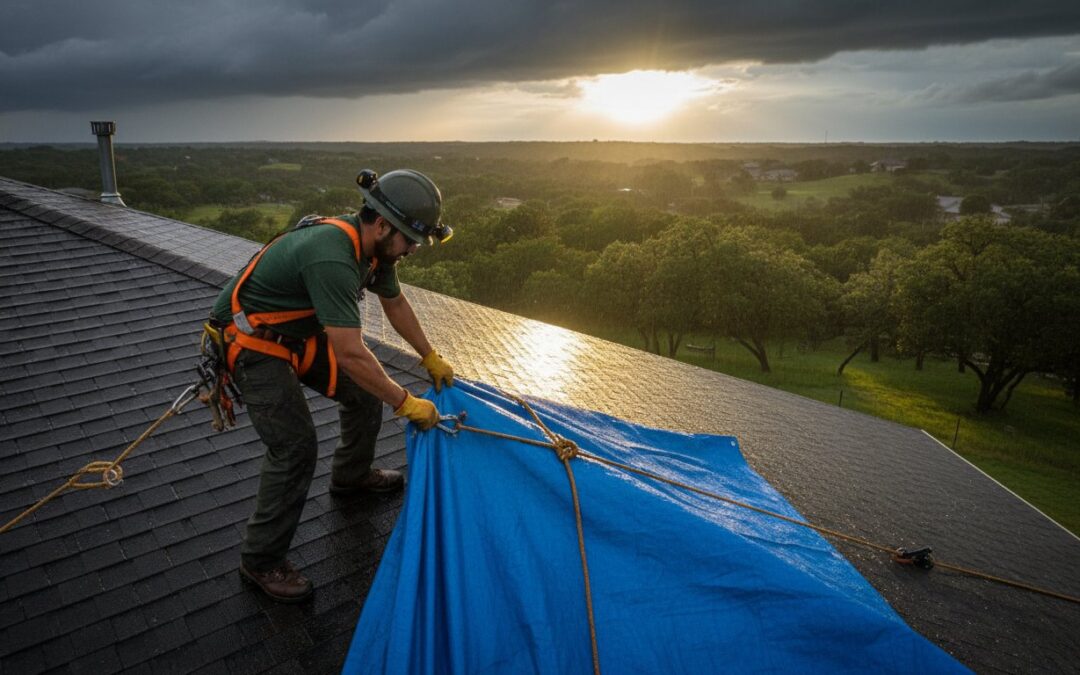
Last spring, a homeowner in Circle C Ranch watched as a single midnight downpour turned a minor ceiling stain into a steady stream of water hitting their living room floor. It’s a terrifying moment when you realize your home’s primary defense has failed, leaving you in desperate need of an emergency roof leak repair during a sudden Central Texas storm. You’re likely worried about structural integrity, hidden mold, and the complex insurance claims that follow. We understand that stress because we’ve helped neighbors through these exact scenarios for over 15 years.
This guide will teach you exactly how to identify, contain, and professionally resolve urgent roofing failures to protect your property’s value. You’ll learn when it’s safe to perform basic containment and when you need a professional team on your roof immediately to prevent further water damage. We’ll preview the essential triage steps every Austin resident needs to know to move from a state of crisis back to total security and long-term protection.
Key Takeaways
- Learn how to distinguish between a minor drip and a catastrophic failure that requires immediate emergency roof leak repair to protect your home’s structural integrity.
- Discover how Austin’s extreme heat and sudden flash floods accelerate shingle damage and why these specific local weather patterns lead to sudden failures.
- Follow five critical safety and containment steps to manage water intrusion inside your home without risking a dangerous climb on a wet or wind-swept roof.
- Understand how to navigate the insurance claim process correctly while avoiding “storm chasers” who lack a physical presence in Central Texas.
- Identify the specific industry certifications and local credentials needed to ensure your home is in the hands of a professional, long-term protector.
What Qualifies as an Emergency Roof Leak Repair in Austin TX?
An emergency roof leak repair in Austin TX is any situation where the roofing system fails to protect the interior of your home or threatens its structural stability. It isn’t just about a wet floor. It’s about preventing the total loss of your ceiling or electrical systems. In our experience at Transition Roofing, we categorize an emergency as any breach that allows water to flow freely into living spaces or occurs alongside visible structural sagging. If you notice water pooling near your foundation or coming through your ceiling, you need to act fast to protect your investment.
To better understand how to handle these urgent situations, watch this helpful video on managing leaks during a storm:
The Central Texas climate creates a unique timeline for damage. Austin’s high humidity often stays above 60 percent even after a storm passes. This moisture trapped in your attic can trigger toxic mold growth in as little as 24 to 48 hours. Waiting for a sunny day to call a contractor often results in much higher remediation costs. While a professional home inspection is great for routine maintenance, a catastrophic failure requires an immediate response from a specialized roofing crew to tarp the area and stop the clock on water damage.
Signs You Need Immediate Triage
- Electrical hazards: If you see water streaming near light fixtures, ceiling fans, or outlets, shut off your breaker immediately. This is a fire risk that requires an emergency roof leak repair and an electrician’s review.
- Structural exposure: Large sections of missing shingles or visible plywood decking after a hailstorm leave your home’s “skeleton” vulnerable to rot.
- Ceiling bubbles: If your drywall looks like it’s holding a water balloon, it’s heavy and dangerous. Saturated drywall can weigh over 200 pounds and collapse without warning. If the ceiling is bowing, evacuate that room immediately.
When It Can Wait (Non-Emergencies)
Not every leak is a crisis. If you discover a single missing shingle on your lawn after the rain has stopped, your underlayment is likely still providing temporary protection. Minor dampness on an attic rafter without active dripping usually doesn’t require a midnight service call. Similarly, if your gutters are overflowing because they’re clogged with debris, the solution is a cleaning rather than a structural repair. These issues are important, but they can be scheduled during regular business hours to save you on emergency dispatch fees.
If you’re seeing active water intrusion right now, don’t wait for the mold to set in. We recommend getting a professional eyes on the problem before the next Austin thunderstorm rolls through. Contact us today to schedule a roof inspection in Austin and secure your home’s integrity.
Common Causes of Sudden Roof Failures in the Central Texas Climate
Austin averages over 40 days above 100 degrees annually. This intense UV radiation dries out the essential oils in asphalt shingles, making them brittle and prone to failure. Once shingles lose their flexibility, they crack or “alligator,” which leaves your home vulnerable to the next storm. When a sudden thunderstorm rolls through, these cracks allow water to penetrate the underlayment. This often leads to the need for an emergency roof leak repair to prevent structural damage or mold growth.
Flat roof systems on Austin homes often struggle with the 3 to 5 inches of rain that can fall during a single flash flood event. If your drainage is clogged or your membrane seams are aging, water ponds on the surface. This standing water increases pressure on weak spots, forcing leaks through the smallest imperfections in the seal. High-wind events in Central Texas also bring down heavy Live Oak limbs. A single fallen branch can puncture a roof deck or tear away gutter systems in seconds, creating an immediate opening for rainwater.
Hail and Wind Damage in Austin
Small 1-inch hail might not look destructive, but it can strip protective granules off shingles in under five minutes. This exposes the underlying asphalt to rapid UV degradation. High winds in Austin often reach 60 mph during spring squall lines, causing wind uplift that peels back TPO membranes or asphalt shingles. If you suspect your roof was hit by a recent storm, it is vital to schedule a roof inspection near me to document the “bruises” before they turn into major leaks.
Thermal Expansion and Aging Materials
The Central Texas climate forces roofing materials to expand and contract constantly. During a 100-degree day, a metal roof surface can reach 160 degrees, then cool rapidly during a night-time shower. This cycle causes metal panels and flashing to pull away from their fasteners. This flashing pull-away is a primary reason for leaks around chimneys and valleys. For those with specialized systems, our metal roof repair austin guide details how we secure these failures. According to This Old House, identifying these failures early is the best way to manage the costs and safety risks of a sudden emergency roof leak repair

How to Contain a Roof Leak: 5 Steps for Austin TX Homeowners
When water starts dripping from your ceiling, panic is your worst enemy. Managing an emergency roof leak repair in Austin TX requires a calm, methodical approach to minimize structural damage to your home. Your primary goal is to stop the water from spreading until a professional can arrive. Safety is the absolute priority. Never climb onto a roof during a rainstorm, in high winds, or while the surface is wet. Falls are a leading cause of residential injuries, and no roof is worth your physical safety.
Interior Damage Control
- Capture the water: Place buckets or bins under active drips. If water is running down a wall, tape a piece of string to the ceiling to lead the water directly into the container.
- The Pinhole Trick: If you see a bulge or bubble in your drywall, it is holding trapped water. Use a screwdriver or an ice pick to puncture the center of the bulge. This releases the pressure and allows the water to drain into a bucket rather than spreading across the ceiling and causing a total collapse.
- Protect your assets: Move furniture, rugs, and electronics to a dry room. If items are too heavy to move, cover them with heavy-duty plastic sheeting or trash bags.
Safe Exterior Triage (If Possible)
You can sometimes mitigate damage from the ground without ever stepping on a ladder. Use a telescoping tool to clear localized gutter clogs that might be causing water to back up under your shingles. If a fallen branch is visible on your roof, identify its location from the ground so you can report it to your contractor. Avoid DIY tarping during active storms or high winds. Wind gusts in Central Texas can easily catch a tarp and pull a homeowner off a roof or ladder. This is a job for professionals with the right safety harnesses.
While the leak is active, document everything. Take clear photos and videos of the dripping water, the damaged drywall, and any ruined property. This evidence is vital for your future insurance claim. As you prepare to call for help, follow the advice from the National Insurance Crime Bureau to ensure you are working with a legitimate local business. Avoid “storm chasers” who knock on doors after a heavy rain. Instead, call a trusted protector like Transition Roofing. We provide rapid mitigation to secure your home’s integrity and stop the cycle of damage. If you are seeing water spots on your ceiling right now, this is when we recommend calling for an immediate professional inspection.
Managing Insurance Claims for Emergency Roof Repairs in Austin TX
Your insurance policy is a legal contract that includes specific obligations for the homeowner. Most Texas policies contain a “duty to mitigate” clause. This means you are required to take immediate action to prevent further damage once a leak is identified. If you delay calling for an emergency roof leak repair, the insurance company may refuse to pay for secondary damage like mold growth or ruined attic insulation. Taking fast action isn’t just about saving your ceiling; it is about protecting your right to a full claim payout.
Be wary of “storm chasers” who knock on doors after a heavy Central Texas hail storm. These out-of-state companies follow weather maps and often disappear once the insurance checks are cashed. They lack the local roots needed to honor a long-term warranty. Working with an established Austin specialist ensures you have a partner who understands local building codes and the extreme thermal expansion issues caused by our 100-degree summers. We provide the “contractor logic” adjusters need, using industry-standard software to justify the actual costs of high-quality materials and skilled labor. Homeowners across the broader region facing similar storm damage challenges can also find expert guidance in our roof repair San Antonio guide, which covers durable solutions designed for Central Texas climates.
The Documentation Checklist
- Capture the evidence: Take wide-angle photos of the entire roof and close-up shots of the specific damage point. Do the same for interior leaks and water spots on the ceiling.
- Save every receipt: Keep a dedicated folder for any money spent on triage. This includes the cost of heavy-duty tarps, buckets, or shop-vacs used to extract water.
- Log the event: Write down a clear statement like, “The leak began at 3:30 PM on Tuesday during the high-wind thunderstorm.” Adjusters need this specific data to match the damage to a recorded weather event.
Navigating the Claims Process
Contact your insurance agent immediately to secure a claim number. This number is the key to every conversation you will have with the carrier. Transition Roofing recommends that you have your contractor present during the adjuster’s physical inspection. Adjusters are often overworked after a storm and can easily miss subtle signs of wind uplift or hail bruises that lead to future failures. We make sure the adjuster sees every detail so your settlement covers a complete restoration. For more details on what happens after the initial emergency, read our austin roof repair guide for long-term recovery steps.
Finding a Trustworthy Emergency Roof Leak Repair Contractor in Austin TX
When you are facing an emergency roof leak repair, the pressure to act fast can lead to hiring the first person who picks up the phone. In the Austin market, you must be selective to avoid “storm chasers” who disappear once the rain stops. A reliable contractor must have a physical office in Central Texas. This ensures they are accountable for their work long after the initial crisis. Look for companies with over 15 years of experience specifically in the Austin area. This longevity proves they understand how 100-degree summer heat and sudden hail storms impact local roofing materials.
Verify that any contractor you consider holds major industry certifications from manufacturers like GAF, Certainteed, or Versico. These credentials are not just stickers on a truck. They indicate that the crew follows strict installation protocols and can offer enhanced warranties. You should also understand the difference between a “quick patch” and a “transition to security.” A quick patch is a temporary bandage that often fails during the next storm. A transition involves stabilizing the roof and creating a clear path to a permanent, high-quality solution that protects your home for decades. Our 2026 checklist for choosing qualified roofers in Austin TX can help you verify credentials and avoid common hiring mistakes before you sign any contract.
Transition Roofing’s Emergency Response
Our emergency process begins with rapid stabilization. We use heavy-duty tarping and structural reinforcement to stop water entry the moment we arrive. We don’t rely on visual inspections alone. Our team uses thermal imaging technology to find hidden moisture trapped behind your drywall or under your insulation. This data-driven approach prevents mold growth that often goes unnoticed after a leak. Our “Trusted Protector” philosophy ensures that every repair is handled with integrity. We move your roof from a state of failure to a state of total security, focusing on quality craftsmanship rather than a fast, cheap fix.
Service Areas and Availability
We provide rapid response services to homeowners in Austin, Round Rock, Pflugerville, and Cedar Park. Our crews are positioned throughout Central Texas to reach your property quickly after a major weather event. Because we are local, we understand the specific building codes and permit requirements for each of these municipalities. This local expertise speeds up the restoration process and ensures your repair meets all safety standards. Property owners in the greater region can also explore our comprehensive roof repair San Antonio contractor guide for expert solutions tailored to the same demanding Central Texas climate conditions.
If you’re seeing water stains or active drips now, don’t wait for the damage to spread to your ceilings and electrical systems. This is when we recommend getting a professional on the roof immediately to prevent thousands of dollars in interior damage. We are ready to provide a clear plan and a thorough roof inspection in Austin. Contact us today to secure your home.
Secure Your Property with a Proactive Austin Triage Plan
Central Texas storms don’t wait for a convenient time to strike. When water starts entering your home, the difference between a minor patch and a total replacement often comes down to how fast you act. You now have the tools to identify a true crisis, contain the moisture, and navigate the insurance process without the usual stress. It’s about moving your roof from a state of disrepair back to total security before the next line of storms hits the Hill Country.
Transition Roofing has spent over 15 years protecting Austin neighborhoods from the unpredictable heat and hail cycles that define our region. We maintain an A+ rating and hold elite GAF and CertainTeed certifications because we believe quality craftsmanship is the only way to ensure long term protection. Don’t let a small drip turn into a structural disaster. Our team is ready to provide a clear plan to restore your home’s integrity with the steady hand of a local expert.
If you’re facing a crisis and need an emergency roof leak repair, let a trusted neighbor handle the heavy lifting. We focus on getting the job done right the first time so you can stop worrying about the forecast and start feeling safe under your own roof again. Schedule your emergency roof inspection in Austin now to protect your investment for years to come.
Frequently Asked Questions About Emergency Roof Leak Repair in Austin TX
Is a leaking roof a homeowners insurance emergency?
Yes, insurance carriers consider a sudden leak an emergency because you have a legal duty to mitigate further damage to your property. Most policies in Central Texas require you to take immediate action to stop water from entering the structure. If you ignore the leak, the insurance company might deny 40% to 60% of the interior damage claim because the homeowner failed to protect the home from secondary rot or mold.
How much does a temporary emergency roof tarping cost in Austin?
Professional tarping services in the Austin area typically range from $200 to $600 depending on the roof pitch and the size of the damaged area. According to national industry data from HomeAdvisor, these costs are generally covered by your insurance provider under the “reasonable repairs” clause. This initial investment prevents thousands of dollars in drywall and flooring damage while you wait for a permanent solution.
Can a roof leak cause a fire if water hits electrical wiring?
Water from a roof leak creates a significant risk of electrical fires if it contacts junction boxes, recessed lighting, or attic wiring. When moisture bridges the gap between hot and neutral wires, it causes a short circuit that can ignite wooden rafters or dry insulation. If you see water dripping from a ceiling fan or outlet, turn off the power at the main breaker box immediately and call an expert.
How long can I leave a tarp on my roof before a permanent repair?
A high-quality tarp usually lasts about 30 to 90 days before the intense Central Texas sun begins to degrade the polyethylene material. While a tarp stops the immediate flow of water, it’s a temporary bandage rather than a long-term fix. We recommend scheduling your permanent emergency roof leak repair within 14 days to ensure the underlying wooden decking doesn’t warp or develop wood-destroying fungi.
What should I do if my ceiling is sagging from a roof leak?
You should immediately place a bucket under the sag and poke a small hole in the center of the bulge with a screwdriver to drain the trapped water. This controlled release prevents the entire ceiling from collapsing under the weight of the pooled liquid. Once the pressure is relieved, call a professional to identify the entry point on the roof and assess the structural integrity of your attic joists.
Do roofing companies in Austin offer 24/7 emergency services?
Many local contractors provide 24/7 response teams specifically for storm restoration and emergency roof leak repair in Austin TX. Response times usually vary between 2 and 4 hours during active storm fronts. Having a local specialist on speed dial ensures that your home is secured with a temporary seal before the next wave of rain causes more internal damage to your ceilings and walls.
How can I tell if hail caused my roof leak?
Hail damage often appears as dark, circular bruises on shingles or missing granules that expose the black fiberglass mat underneath. In Austin, 1-inch hail is often enough to crack the asphalt layer and create a direct path for water. If you notice dented gutters, damaged window screens, or shredded plants after a storm, there’s an 85% chance your roof sustained impact damage that requires a professional inspection.
Should I call my insurance company or a roofer first?
You should call a reputable roofers in Austin TX first to document the damage and provide a temporary dry-in to protect your home. A contractor provides the technical evidence and photos your adjuster needs to process the claim accurately. Having an expert on-site during the adjuster’s visit ensures that 100% of the storm damage is identified, which prevents you from paying for missed repairs out of pocket later.