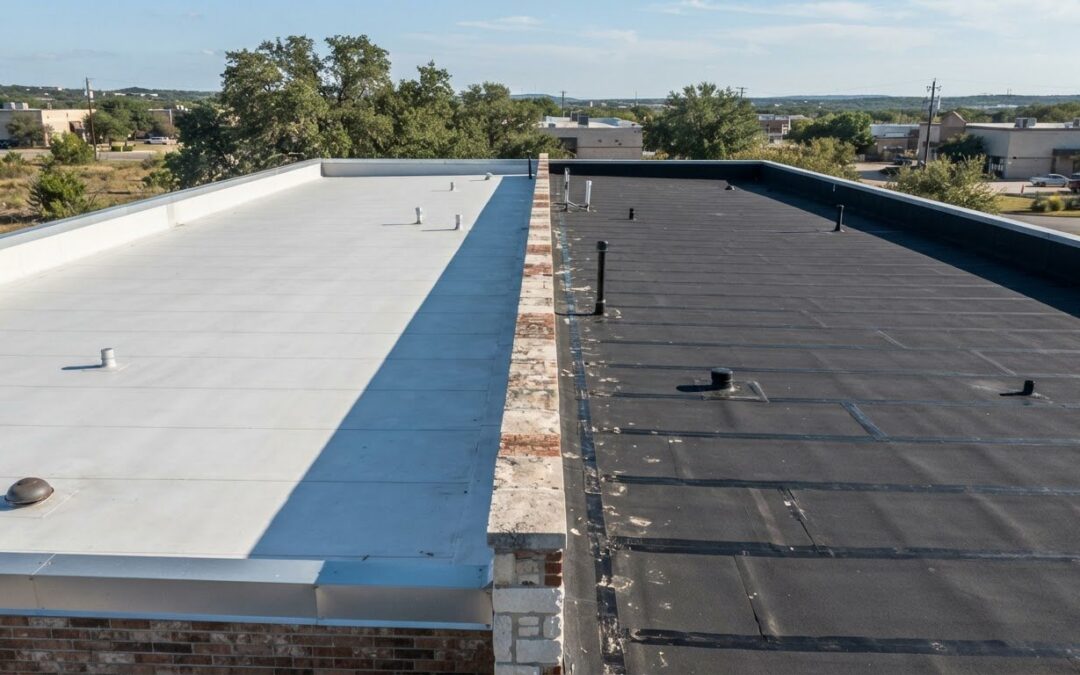
Choosing an EPDM vs TPO roof for Austin sun exposure means weighing more than lifespan. EPDM roofing is expected to last 25-30 years, while modern TPO roofing is expected to last 20-30 years. That gives EPDM a possible edge on paper, but installation quality and sun exposure also affect a roof’s long-term performance.
Durability matters when choosing a flat roof. In Central Texas, intense sun can also affect a membrane’s surface temperature, building comfort, and cooling needs. The right choice depends on the property and the roof’s priorities.
This comparison explains how EPDM and TPO perform in Austin, including lifespan, heat reflection, cooling costs, installation quality, and warranty terms. You’ll learn what to weigh before choosing a system for dependable protection over time.
Key Takeaways
- Compare long-term value by looking beyond the initial membrane choice to reflectivity, repair needs, and replacement scope.
- Match the membrane to the building and roof details; alternative flat-roof systems may suit different uses.
- TPO’s heat-welded seams and EPDM’s tape or adhesive seams call for different installation methods.
- Judge hail protection and warranty terms by the full installed roof assembly, not membrane type alone.
EPDM vs TPO Roof for Austin Sun Exposure: Which Costs Less Long-Term?
Austin building and energy requirements can affect a roof assembly and project scope, but they do not make one membrane universally less expensive. Compare the complete installed system, maintenance needs, and heat performance rather than material alone.
Reflectivity and Cooling Costs
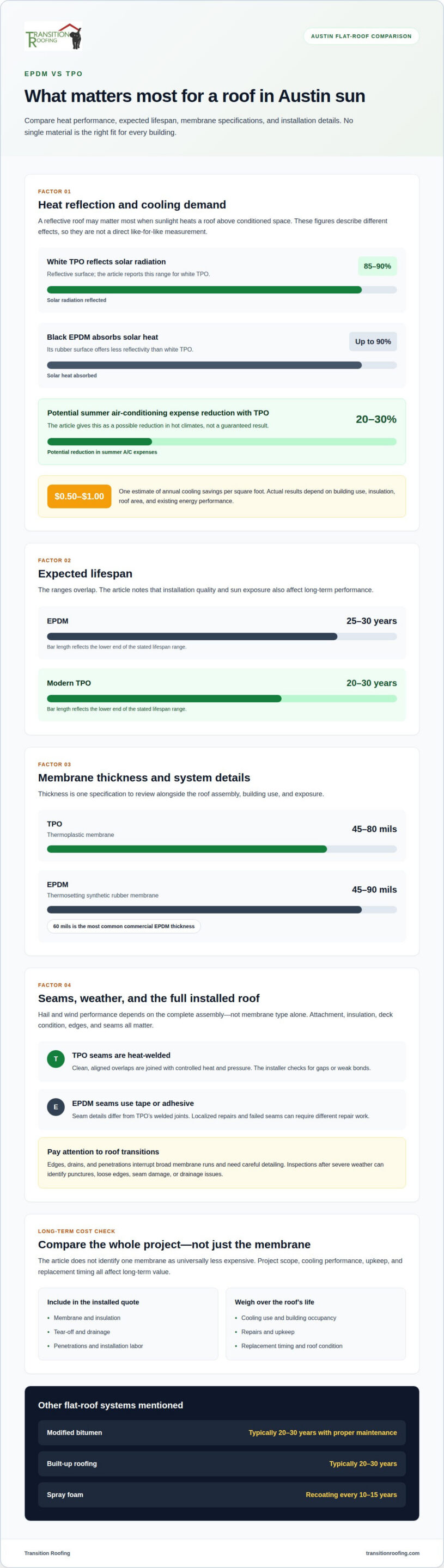
White TPO reflects 85-90% of solar radiation. In hot climates, it can reduce summer air-conditioning expenses by 20-30%. Black EPDM absorbs up to 90% of solar heat, so its rubber surface offers less reflectivity than white TPO. On a sun-exposed flat roof, that difference may make TPO appealing when cooling demand is a key operating cost.
Installed Costs and Long-Term Value
Compare quotes by membrane, insulation, tear-off, drainage, penetrations, and installation labor. Those details shape the project total more than a material-only comparison. TPO’s reflective surface may support long-term value through lower cooling use, while EPDM offers a different balance of upfront scope and upkeep. Expected lifespan is 25-30 years for EPDM and 20-30 years for modern TPO.
| Membrane | Material and installation | Long-term cost factors |
|---|---|---|
| EPDM | Rubber membrane; tape or adhesive seams | Repairs, upkeep, replacement timing |
| TPO | Reflective membrane; heat-welded seams | Cooling use, repairs, replacement timing |
Repair and replacement costs depend on the damage, roof access, and the number of penetrations or seams involved. A localized EPDM patch differs from repairing a failed TPO seam, which requires attention to the welded joint. Regular inspections can help identify seam damage or drainage issues early, before they expand the repair scope. Commercial roofing in Austin also involves project-specific details that shape installation planning.
Choose based on the building’s cooling needs, roof condition, and full project scope.
EPDM vs. TPO Roofing Characteristics in Austin, TX
In Austin, hail and wind performance depends on the full installed roof assembly, not membrane alone. TPO usually measures 45-80 mils; EPDM typically measures 45-90 mils, and 60 mils is the most common commercial EPDM thickness.
EPDM Roofing Characteristics
EPDM is a thermosetting synthetic rubber membrane, often used on low-slope commercial roofs. Its seams use tape or adhesive rather than heat welding. Commercial EPDM thicknesses range from 45 to 90 mils, giving project teams options for different roof assemblies. For a warehouse or retail building, roof details and inspections help determine how the membrane handles local exposure.
TPO Roofing Characteristics
TPO is a thermoplastic membrane with heat-welded seams. Its usual thickness range is 45-80 mils. The white surface reflects sunlight, while the welded seams create a different installation method from EPDM’s taped or adhered joints. TPO is used on commercial flat roofs, including offices and retail buildings. The specified thickness should suit the roof assembly and exposure.
Hail, Wind, and Severe Weather Resistance
Neither EPDM nor TPO guarantees protection from Austin hail or wind on its own. Hail performance depends on the installed assembly, including attachment, insulation, deck condition, edges, and seams. EPDM’s tape or adhesive seams and TPO’s welded seams require different installation details. After severe weather, an inspection can identify punctures, loose edges, or seam damage.
Other flat-roof choices include modified bitumen, built-up roofing, and spray foam. Modified bitumen uses two or more layers and typically lasts 20-30 years with proper maintenance. Built-up roofing systems typically last 20-30 years; spray foam requires recoating every 10-15 years.
For an Austin project, review flat-roof system options alongside the building’s use and roof details.
Cooling-Cost Savings from Reflective Roofing in Austin, TX
On a sun-exposed Austin roof, a reflective surface can reduce heat absorbed by the building. TPO’s white finish may support lower summer cooling demand, especially where the roof covers conditioned space. One estimate puts annual cooling savings at $0.50-$1.00 per square foot. Actual results depend on building use, insulation, roof area, and existing energy performance.
A large, conditioned warehouse may have different priorities from a small, unconditioned storage building. Reflectivity matters most when sunlight heats a roof above occupied spaces. A membrane alone cannot correct inadequate insulation, air leaks, or inefficient cooling equipment. Those factors influence how much roof heat reduction affects energy use.
TPO is a thermoplastic polyolefin membrane, and propylene-based materials are part of this polymer family. Installers join its edges with heat welding. They align and clean the overlap, apply controlled heat, then press the softened layers together. This forms a welded seam rather than EPDM’s taped or adhesive joint.
A sound welded seam depends on clean surfaces, consistent machine speed, and proper heat. After welding, the installer checks for gaps or weak bonds. Roof edges, drains, and penetrations need careful detailing because they interrupt broad membrane runs. These transitions matter on Central Texas flat roofs exposed to heat, hail, and storms.
Reflective roofing can support cooling performance, while sound seams help keep the roof assembly watertight. Compare energy use alongside insulation and building occupancy, then consider the installation details. This gives property owners a clearer view of operating value than reflectivity alone.
Installation Quality and Warranty Terms in Austin, TX
Austin heat, hail, and wind test the entire roof assembly, not just its membrane. Loose edges, weak seams, or poorly sealed penetrations can let weather reach the insulation and roof deck. Installation details affect resistance, leak risk, and how well the system performs. Because hail performance depends on the complete assembly, membrane type alone cannot predict how a roof will fare.
No single insulation or attachment method works best for every Austin roof. The right combination depends on the deck, wind exposure, existing layers, and selected membrane system. Insulation must suit the assembly, while attachment must secure the system and support its design. Include these details in the installation plan before work begins.
Warranty terms vary by system and manufacturer. Review the coverage, term, maintenance requirements, and exclusions for damage or installation issues. Compare membrane coverage with workmanship coverage, since they may address different problems. Keep project documents and inspection records together. Maintenance records can help document how the roof was cared for during its service life.
EPDM stands for ethylene propylene diene monomer, a rubber membrane whose seams are joined with tape or adhesive. TPO is thermoplastic, and installers heat-weld its seams. Both systems require careful surface preparation and detailing around drains, edges, and penetrations. A thorough installation includes checking these transitions and completed seams, not just the open roof area.
For a commercial roof installation, a clear scope should identify the membrane, insulation, attachment, and warranty terms. Talk with a roofing professional about your Austin installation to review the assembly details before work starts.
Transition Roofing in Austin, TX
Transition Roofing helps Austin property owners turn a membrane comparison into a practical roofing decision. With over 15 years of local experience and installers certified by GAF, CertainTeed, Versico, and Dura-Last, the team serves commercial properties across Central Texas, including Round Rock. The right next step starts with the roof’s condition, drainage, seams, penetrations, and exposure.
Transition Roofing provides commercial roof installation and TPO roofing systems. The installation plan considers how the roof deck, insulation, edges, and openings work together. This helps property owners assess the complete assembly rather than choosing by membrane color alone.
An existing roof may need repair rather than full replacement. Transition Roofing also provides commercial roof repair for leaks, seam concerns, and storm damage. The damage’s extent and location help determine whether targeted repairs or a broader roofing plan makes sense.
Metal roofing offers commercial properties another option, with design and performance considerations that differ from single-ply membranes. In Austin and nearby communities, heat, hail, and storms make roof condition and project goals central to the decision.
If you’re weighing a new roof or repairs, contact Transition Roofing to discuss the next step for your property.
Choose the Roof System That Fits Your Building
Connect the membrane choice to how the building is used. A warehouse with little conditioned space may have different priorities from an occupied office with high cooling demand. Roof condition matters too: recurring leaks, storm damage, or failing seams can shift the decision from selecting a new membrane to planning a repair or replacement.
For a practical review, gather the roof’s repair history, known leak locations, cooling priorities, and warranty terms. These details help frame a project around the building’s needs instead of one feature in isolation. The EPDM vs TPO roof for Austin sun exposure decision should account for both the roof assembly and Central Texas conditions.
Transition Roofing can help you assess the next step for a commercial roof, whether you’re considering a new system or addressing an existing problem. Contact Transition Roofing to discuss your building and roofing needs. A clear plan starts with understanding the roof you have and the protection you want moving forward.
Frequently Asked Questions
Is TPO better than EPDM in Texas?
Neither membrane suits every Texas building. TPO may fit a property where a reflective roof surface is a priority, while EPDM may suit projects with different design or maintenance needs. Building use, roof layout, equipment placement, and future repair access can all affect which system makes more sense. The best fit depends on the whole project, not one material feature.
How do EPDM and TPO compare in UV and heat resistance in Austin, Texas?
Both membranes face strong sun exposure in Austin, but their surface characteristics differ. White TPO reflects sunlight, while black EPDM absorbs more solar heat. UV and heat performance also depend on the membrane selected and how the roof is detailed and maintained. For a building with rooftop equipment or frequent service access, consider those details alongside the surface’s response to sun.
How much do EPDM and TPO roofs cost per square foot installed in Austin?
There is no single installed price per square foot for every Austin roof. Project scope varies with roof size, existing conditions, tear-off needs, access, and details around equipment and drains. A useful estimate clearly defines the included work and materials, making it easier to compare EPDM and TPO proposals on the same scope. Transition Roofing provides free, no-obligation estimates with transparent pricing and no hidden fees.
What is the expected lifespan of EPDM vs TPO roofing in Central Texas?
Both systems are designed to provide long-term roof service, but actual lifespan depends on installation, drainage, maintenance, and exposure. Rather than relying on age alone, watch for recurring leaks, surface damage, and repairs that repeatedly affect the same areas. These signs can help a property manager decide whether continued repairs or planning a replacement is the more practical next step.
How do black EPDM and white TPO affect roof temperatures and cooling costs in Austin?
Black EPDM absorbs more solar heat, while white TPO reflects sunlight. The effect on indoor comfort and cooling use also depends on insulation, conditioned space, and building operations. A roof above a regularly occupied office can affect comfort differently from one over an unconditioned storage area. Consider how the building is used when weighing surface color and energy priorities.
What maintenance and repair issues are common with EPDM and TPO roofs?
Common trouble spots include damaged flashing, punctures, clogged drains, and standing water. Rooftop work can also damage the membrane near equipment or service paths. After hail or a major storm, watch for new leaks or visible damage and arrange a professional assessment. Addressing a localized problem early can help prevent moisture from affecting other parts of the roof assembly.
If you’re planning a roof project or dealing with a leak, contact Transition Roofing to discuss the next step.