
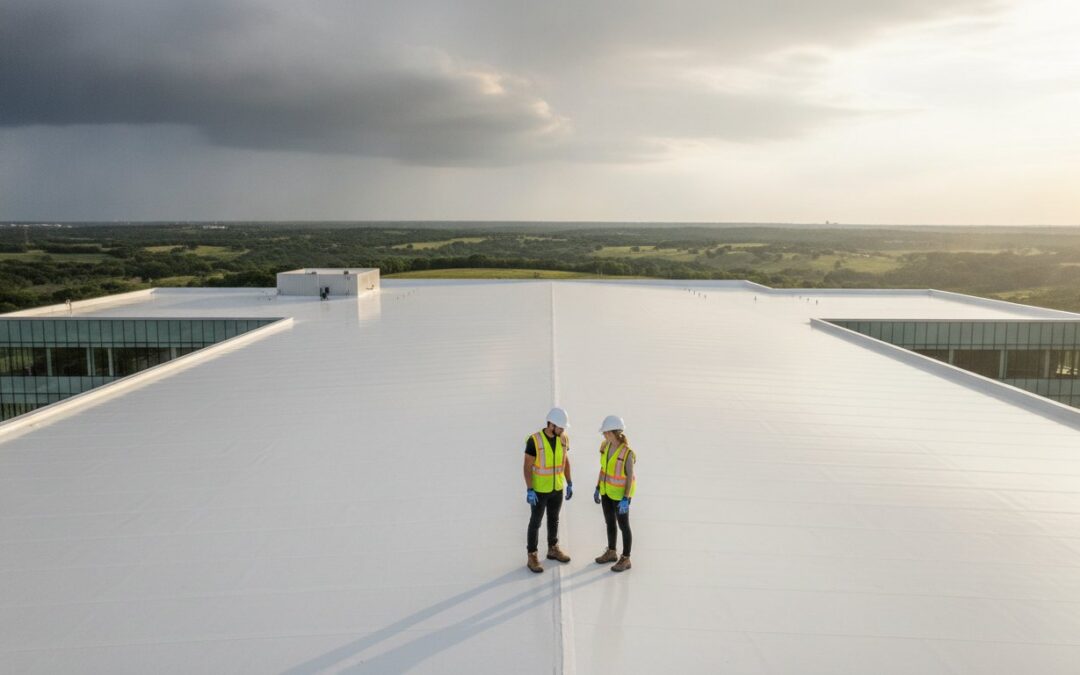
What if your data center’s most critical fail-safe isn’t located in the server rack, but sixty feet above it? In Lakeway, we know that a single afternoon storm can dump inches of rain in minutes, putting your uptime at immediate risk. You’ve invested millions in hardware and cooling, yet a hairline fracture in a TPO seam can bypass every digital redundancy you have. It’s a stressful reality for any facility manager, but it’s one we can manage with the right approach.
This guide provides a specialized strategy for data center roof leak prevention Lakeway facility managers need to secure their infrastructure against the 2026 climate realities. You’ll learn how to achieve zero water ingress while lowering cooling costs through reflective roofing. We will cover the specific material standards required for 115 mph wind speeds and the maintenance intervals that extend your roof’s lifespan well beyond its twenty-year average. By focusing on local building codes and the unique thermal challenges of Central Texas, you can transform your roof from a vulnerability into a long-term asset.
Key Takeaways
- Learn why high-density server environments require a zero-tolerance water ingress policy to maintain facility uptime during unpredictable Central Texas storms.
- Discover how TPO and PVC systems from certified manufacturers like GAF and Certainteed reduce thermal gain and lower energy costs in the Austin heat.
- Implement a bi-annual maintenance checklist for data center roof leak prevention Lakeway to identify vulnerabilities before they reach the server rack.
- Master the “contractor logic” behind when to perform targeted repairs versus a full roof replacement to maximize your facility’s infrastructure lifespan.
Why Data Center Roof Leak Prevention Lakeway Matters for Austin TX Uptime
A modern data center is much more than a simple building shell; it’s a mission-critical component of your IT infrastructure. In our region, the roof serves as the first line of defense for millions of dollars in hardware. While many facilities rely on internal moisture sensors, these are reactive measures. If a sensor alerts you, the water has already breached the envelope. Effective data center roof leak prevention Lakeway demands a proactive structural strategy that stops water before it ever enters the building. We focus on high-performance commercial roofing in Austin to ensure your facility remains a fortress.
Lakeway has a unique micro-climate that produces sudden, intense flash storms. These events can overwhelm standard commercial drainage systems in a matter of minutes. In high-density server environments, there is a zero-tolerance policy for water ingress. Even a small leak that doesn’t hit a rack directly will raise ambient humidity levels. This creates a hidden risk for long-term hardware corrosion and unpredictable circuit failures across your entire floor.
The Cost of a Single Leak in Central Texas
For tech businesses in the Austin area, downtime costs are measured by the second. A roof failure during a severe storm leads to more than just hardware replacement; it causes a massive loss of client trust. Humidity from a minor leak also shortens the lifespan of sensitive copper connections. Proactive maintenance is the only way to prevent these expensive outcomes and maintain your reputation for reliability.
Thermal Bridging and Cooling Efficiency
Your roof’s integrity directly affects your massive cooling loads. In the intense summer heat, thermal bridging occurs when heat bypasses your insulation through conductive materials like metal fasteners or gaps in the roof deck. This forces your HVAC systems to work much harder and drives up energy bills. A seamless, high-quality membrane keeps your cooling costs predictable and your infrastructure secure; to further optimize your facility’s energy resilience, you can visit Texas Engineered Solar LLC.
Selecting High-Performance Roofing Systems for Austin TX Data Centers
Selecting the right membrane is the first line of defense against infrastructure failure. In the Central Texas heat, choosing cheap materials is a gamble that rarely pays off. High-performance systems like TPO and PVC offer the durability required for 24/7 facilities. With over 15 years of experience, we’ve seen how the right material selection directly impacts long-term reliability and energy costs.
TPO Roofing: The Reflective Advantage
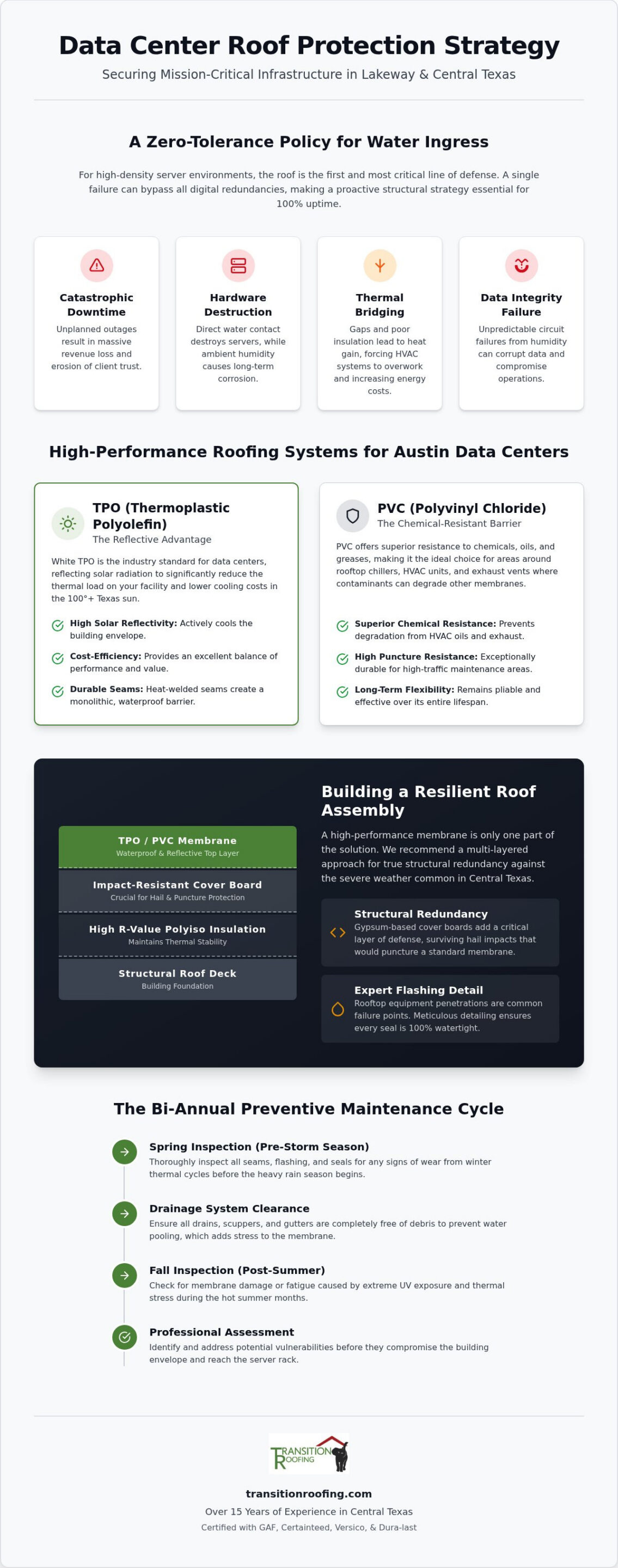
White TPO (Thermoplastic Polyolefin) is the industry standard for commercial roofing Austin data centers. It reflects a massive portion of solar radiation, which significantly reduces the thermal load on your cooling units. This reflective property is essential for effective data center roof leak prevention Lakeway, as it prevents the membrane from expanding and contracting excessively in the 100-degree sun. For facilities following data center roofing best practices, TPO provides a balance of cost-efficiency and high-speed installation.
While TPO is excellent for reflection, PVC is often better for areas near rooftop chillers. PVC membranes offer superior resistance to chemicals and oils that might leak from HVAC maintenance. This resistance prevents the membrane from softening or degrading over time, which is a common cause of leaks in high-density facilities. We prioritize high R-value insulation during these installs to ensure the building remains thermally stable regardless of the outside temperature.
Multi-Layered Protection and Redundancy
We recommend a multi-layered approach that includes impact-resistant cover boards. In Lakeway, severe hail can puncture a standard membrane if it’s installed directly over soft insulation. Using a gypsum-based cover board adds the structural redundancy needed to survive a storm without a breach. We often see complex flashing around rooftop HVAC equipment; these are common failure points that require expert detailing. If you’re concerned about existing equipment penetrations, we can evaluate your flat roofing systems to ensure every seal is watertight.
The Data Center Preventive Maintenance Checklist for Austin TX Facilities
A robust strategy for data center roof leak prevention Lakeway includes more than just a visual walk-through. We recommend a bi-annual inspection schedule timed specifically for the Central Texas climate. The first check should happen in early spring before the heavy thunderstorm season, and the second in late fall to clear debris before winter. This rhythm allows you to catch minor issues before they become catastrophic failures.
- Clear Scuppers and Drains: Standing water is the primary enemy of flat roofs. We ensure all drainage points are clear to prevent “ponding,” which adds thousands of pounds of stress to your structural deck.
- Probe Seam Integrity: On TPO and PVC systems, we manually check the heat-welded seams. The intense Austin heat can cause membrane expansion that stresses these joints over time.
- Inspect HVAC Curbs: Data centers have a high density of rooftop penetrations. We examine the flashing around every chiller curb and pipe boot to ensure the seals haven’t cracked or pulled away. For facilities seeking to optimize their internal climate systems alongside roof repairs, Ultra Air Heating and Cooling provides expert commercial HVAC solutions that ensure peak operational efficiency.
Post-Storm Inspection Protocols in Lakeway
In Lakeway, a single hail event can compromise even the toughest membrane. After any significant storm, you should look for “bruising” on the membrane or cracks in the flashing. These small punctures often go unnoticed until the next rain. If you’ve recently experienced severe weather, follow our guide on Austin roof repair to understand the recovery process. Catching hail damage early is the difference between a simple patch and a full structural failure.
Documenting for Warranty and Insurance
Contractor logic is simple: if it isn’t documented, it didn’t happen. Maintaining detailed logs of every inspection protects your GAF or Certainteed warranties. Insurance adjusters in Lakeway often deny claims if a property manager cannot prove they performed regular upkeep. We provide the comprehensive reporting you need to keep your coverage intact. To secure your facility, you can sign up for our preventative maintenance programs today.
Emergency Response and Professional Inspections in Austin TX
When a severe storm hits Central Texas, you don’t have time to wait for a national dispatcher or a generic service call. Having a local partner in Lakeway ensures rapid response for emergency tarping and immediate damage assessment. This rapid action is the only way to shield your hardware when a membrane fails during a flash flood. We bring over 15 years of experience to these high-stakes commercial projects, acting as a protective authority for your critical infrastructure.
Contractor logic dictates when to patch and when to pivot to a full replacement. We analyze the total saturation of the roofing system. If moisture has compromised the insulation across a large percentage of the deck, a repair is often just a temporary bandage that risks future downtime. However, for isolated punctures on a relatively new TPO membrane, a targeted fix from an expert flat roofing company Austin is the right financial move. We prioritize long-term protection and only recommend replacement when the structural integrity is truly at risk.
Transitioning from Vulnerability to Security
A documented maintenance program moves your facility from a state of constant risk to total security. Our GAF and Certainteed certifications mean we follow strict manufacturer standards that keep your long-term warranties valid. We offer transparent audits that provide a clear roadmap of your roof’s current health. This process isn’t a high-pressure sales pitch; it’s a seasoned expert giving you the data you need to manage your assets safely and predictably.
Final Steps: Securing Your Lakeway Facility
If you’re noticing water stains, increased humidity, or visible membrane blistering, the time to act is now. Don’t wait for the next severe weather event to test your infrastructure. We can take a look and give you a clear plan for data center roof leak prevention Lakeway before the storm season peaks. If you’re dealing with signs of wear, we can perform a thorough audit and help you decide the best path forward. Schedule a roof inspection in Austin today to ensure your facility stays dry and your servers stay online.
Securing Your Infrastructure for the Long Term
Protecting a data center requires moving beyond reactive sensors to a proactive structural strategy. By selecting high-performance TPO or PVC membranes and sticking to a bi-annual maintenance schedule, you can eliminate the vulnerabilities that lead to catastrophic downtime. We’ve seen how the Central Texas climate tests even the best facilities, but a specialized approach to data center roof leak prevention Lakeway ensures your servers stay dry and your cooling costs remain under control. It’s about building a safety net that works 24/7, just like your hardware.
With over 15 years of local experience and GAF Master Elite certification, our team understands the zero-tolerance requirements of high-uptime commercial systems. We prioritize integrity and quality craftsmanship to move your facility from a state of risk to one of total security. If you’re ready to safeguard your critical assets, schedule your data center roof inspection in Lakeway today. We are here to help you build a more resilient future for your business.
Frequently Asked Questions
How often should a data center roof in Lakeway be inspected?
Data center roofs should be inspected at least twice per year to ensure maximum uptime. It’s best to schedule these visits in early spring and late fall. This timing allows our team to clear debris before the heavy storm season and verify seal integrity before winter. Regular inspections are the core of data center roof leak prevention Lakeway strategies, as they help identify minor membrane thinning before water reaches your servers.
What is the best roofing material for data centers in the Austin TX climate?
TPO and PVC membranes are the top choices for facilities in the Austin TX climate. White TPO reflects a high percentage of solar radiation, which is vital for reducing the massive cooling loads required by server racks. PVC is often better for areas with high concentrations of rooftop HVAC units because it resists chemicals and grease. Both materials provide the durability needed to withstand intense Central Texas heat and severe thunderstorms.
Can a roof leak really damage servers if we have a sub-ceiling leak tray?
Yes, a roof leak remains a critical threat even with sub-ceiling trays in place. Trays can overflow during heavy Lakeway downpours or fail if the drainage line becomes clogged. Beyond direct drips, a leak significantly increases the humidity levels within the facility. This moisture can cause long-term corrosion on sensitive circuit boards and copper connections, leading to unpredictable hardware failures that trays simply cannot prevent.
How long does a commercial TPO roof last in the Central Texas heat?
A professionally installed TPO roof typically lasts 20 years or more in the Central Texas heat. However, this lifespan depends heavily on consistent preventative maintenance and the thickness of the membrane used. Using a thicker 80-mil membrane can provide better resistance to the frequent hail events common in Lakeway. Regular cleanings and seam checks ensure the reflective properties stay active, preventing the material from becoming brittle over time.
Does my commercial roof warranty cover hail damage in Lakeway?
Standard manufacturer warranties from GAF or Certainteed typically cover material defects rather than acts of God like hail damage. While some high-performance systems include limited hail riders, most storm damage requires an insurance claim. This is why we provide insurance claim assistance to help property managers navigate the process. Maintaining a documented maintenance log is essential, as adjusters often look for proof of care before approving a full roof replacement.