Texas held its spot as the #1 state for hail damage for the 11th year in a row, with over 900 major events recorded in 2025 alone. If you live in Central Texas, you already know that our intense heat and unpredictable storms don’t just age a roof; they aggressively attack it. It’s stressful to wonder if your home is truly protected or if the next storm will lead to an expensive disaster. This guide identifies the seven critical signs you need a new roof in Texas, helping you catch structural failures before they turn into costly interior leaks.
At Transition Roofing, we’ve spent over 15 years inspecting Austin homes and maintaining GAF and Certainteed certifications to ensure our neighbors get honest answers. We’ll show you exactly what to look for, from shingle damage to subtle structural shifts. You’ll learn how to tell if a repair is a waste of money and whether your 2026 insurance claim has a real chance of approval. Our goal is to provide the clarity you need to move from a state of vulnerability to total security.
Key Takeaways
- Learn to identify visual red flags like shingle curling and heavy granule loss that signal your roof is no longer protecting your home from the Central Texas sun.
- Understand why Austin’s extreme climate often shortens a standard roof’s lifespan to 15-20 years, regardless of the manufacturer’s original rating.
- Discover the critical signs you need a new roof in Texas after a major hail or wind event, including how to spot shingle bruising and lifted tabs.
- See how a professional 21-point inspection from a GAF-certified local contractor provides the documentation needed for successful insurance claim assistance.
Visible Visual Signs You Need a New Roof in Austin TX
Most homeowners don’t think about their roof until water drips from the ceiling. However, the Central Texas sun is relentless. Identifying the visual signs you need a new roof in Texas early can save you thousands in structural repairs. We often see shingles that look fine from the ground but are actually failing due to extreme thermal shock. If you notice shingle edges curling or buckling, the protective seal has likely broken.
To better understand this concept, watch this helpful video:
Shingle Damage and Granule Loss
When you clean your gutters, look for what looks like coarse sand. These are granules. High UV exposure in Austin causes shingles to shed this protective layer. Once “bald spots” appear, the asphalt layer is exposed to direct sunlight, leading to rapid degradation. You might also notice “clawing,” where heat causes the shingle edges to turn upward. While some minor issues can be addressed with Austin roof repair, widespread curling usually means the material has reached the end of its functional life. These environmental stressors significantly impact asphalt shingle lifespans in our region.
Interior Warning Signs in the Attic
Take a flashlight into your attic on a bright day. If you see pinpricks of light peeking through the roof boards, you have a problem. This often indicates that the flashing around chimneys or vents has cracked from repeated expansion and contraction. Also, check for “soft spots” in the decking. If the wood feels spongy or looks dark, it suggests long-term rot. Persistent dampness despite multiple minor repairs is one of the clearest signs you need a new roof in Texas. If you’re seeing these issues, it’s time to consider a professional assessment.
Age and Material Lifespan Factors in Austin TX
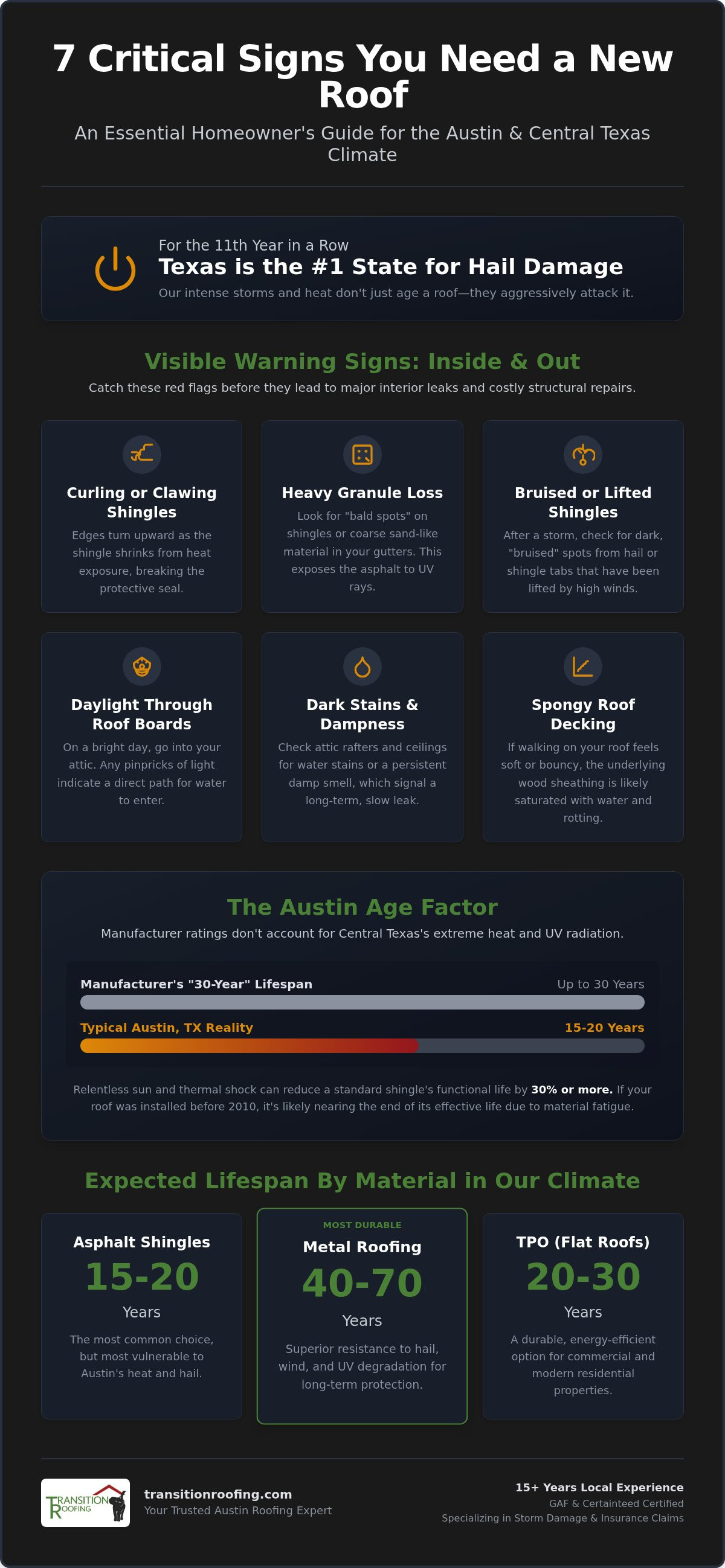
Many homeowners are surprised when their “30-year” roof begins failing after just 15 years. In the Central Texas climate, intense heat and UV rays act like a slow-cooker on your shingles. While manufacturer ratings are based on ideal conditions, Austin’s reality often cuts those estimates by 30% or more. If your roof was installed before 2010, you are likely seeing the signs you need a new roof in Texas simply due to material fatigue.
Expected Lifespan by Material Type
The material you choose determines how often you’ll have to worry about structural failure. We’ve seen how different systems handle the local environment over our 15 years in business:
- Asphalt Shingles: Typically last 15-20 years in Austin. Transition Roofing uses high-quality GAF and Certainteed products to maximize this window.
- Metal Roofing: Offers 40-70 years of protection and stands up much better to hail.
- TPO (Flat Roofs): Usually remains functional for 20-30 years.
Older 3-tab shingles are especially vulnerable. They often fail during high-wind gusts in Round Rock or Pflugerville because they lack the weight of modern architectural shingles. If you’re weighing the cost of hail damage repair against a total update, consider that newer materials offer significantly better wind resistance.
The ‘Rule of Two’ for Shingle Layers
Texas building codes generally allow a maximum of two shingle layers. However, we rarely recommend an “overlay.” Adding a second layer traps heat between the shingles, essentially cooking the top layer from both sides. This practice often voids manufacturer warranties and makes a full Residential Roof Replacement mandatory once the second layer eventually fails. Poor attic ventilation accelerates this process by letting heat build up under the decking. If you suspect your roof has multiple layers or is simply aging out, scheduling a professional assessment can provide a clear timeline for your next steps.
How Central Texas Storms and Heat Damage Roofs in Austin TX
Storm damage is the leading cause of early roof replacement in Central Texas. While natural aging is a factor, one severe weather event often forces a homeowner’s hand. High-wind gusts in Round Rock and Pflugerville frequently lift shingle tabs, breaking the critical adhesive seal. Once these tabs are compromised, the intense UV radiation in Austin “bakes” the remaining flexibility out of the material. This makes the shingles brittle and prone to snapping. These are the subtle signs you need a new roof in Texas that homeowners often miss from the ground.
The Invisible Threat of Hail
Hail doesn’t always leave a visible hole, but it does cause “bruising.” These circular impacts fracture the fiberglass mat hidden beneath the granules. Over time, these fractures expand, leading to leaks months after the storm has passed. Since you can’t easily see these fractures, check your “soft metals” first. Dents in gutters, downspouts, or attic vents are reliable proxies for roof damage. If your metal vents look like they’ve been hit with a ball-peen hammer, your shingles likely sustained similar force.
Navigating the Insurance Claim Process
Don’t wait for a visible leak to file a claim. By the time water reaches your ceiling, the structural decking may already be rotting. We recommend having a contractor on-site when the insurance adjuster arrives. Adjusters sometimes miss the microscopic fractures caused by hail, but an experienced eye ensures every bit of damage is documented. At Transition Roofing, we specialize in insurance claim assistance to help you navigate this complex process. Our 15 years of experience ensures your claim is based on technical evidence and local expertise.
If you’ve recently experienced a storm in Central Texas, schedule a professional roof inspection today to catch damage before it spreads.
Scheduling a Professional Roof Assessment in Austin TX
A generic handyman can spot a missing shingle, but they often miss the technical “bruising” or structural fatigue caused by the Central Texas climate. When evaluating the signs you need a new roof in Texas, you need an expert who understands how thermal expansion affects local decking. A professional assessment provides a clear path forward. If the cost of repairs exceeds 30% of the roof’s total value, or if the system is approaching its 15th year, we usually recommend a full replacement to protect your home’s equity. For those residing in Florida, Heroic Roofing provides similar expert storm damage assessments and roofing services for local homeowners.
Certifications aren’t just badges. They represent a commitment to integrity and high-level technical proficiency. At Transition Roofing, our 15+ years of local experience is backed by GAF and Certainteed certifications. This allows us to offer enhanced “Golden Pledge” style warranties that generic contractors simply can’t provide. Finding a reliable roofer involves verifying these credentials to ensure your long-term protection. These certifications guarantee that the crew follows strict installation protocols for wind resistance and ventilation.
Your Next Steps for a Secure Home
Our 21-point professional inspection goes beyond the shingles. We examine the flashing, attic ventilation, and the health of the underlying decking. This results in a detailed written report. This documentation is vital for your home insurance records, especially if you’re filing a claim for storm damage in 2026. If you see granules in your gutters or curling shingle edges, don’t wait for a leak to confirm your fears. We provide a transparent, no-fluff plan to move your home from a state of vulnerability to total security. If you’re dealing with suspected damage, we can take a look and give you a clear plan. Schedule a roof inspection in Austin today, or visit ultimatesolutionroofing.com if you are seeking a trusted roofing partner in Middle Tennessee.
Understanding the signs you need a new roof in Texas is the first step toward long-term peace of mind. Whether you’ve noticed shingle curling from the heat or suspect bruising from a recent hailstorm, acting early prevents minor issues from becoming structural failures. Transition Roofing brings over 15 years of local experience to every project. As GAF and Certainteed certified experts, we provide the technical precision required to navigate the harsh Austin climate. We also offer specialized insurance claim assistance to ensure you receive the coverage you’re entitled to after a storm.
Don’t leave your home’s safety to chance or wait for the next heavy rain to reveal a leak. We’re here to help you move from a state of vulnerability to total security with a clear, honest plan. Schedule your professional roof inspection in Austin today and let our team provide the expert guidance your home deserves. Our goal is to ensure your property remains a safe haven for years to come.
Frequently Asked Questions
How much does a new roof cost in Austin TX?
The total investment for a roof replacement in Austin depends on several variables including the square footage of your home, the pitch of the roof, and the specific materials you choose. While asphalt shingles are a common choice, high-performance options like standing seam metal or TPO often require a higher initial budget. We provide transparent, project-based estimates that account for current labor rates and material inflation in Central Texas to ensure no hidden surprises.
Does Texas homeowners insurance cover roof replacement for age?
Standard homeowners insurance policies in Texas generally don’t cover roof replacement due to age or normal wear and tear. Coverage is typically reserved for sudden and accidental events like the major hail storms we see in Round Rock and Pflugerville. However, identifying the signs you need a new roof in Texas often involves finding hidden storm damage that qualifies for a claim. We specialize in insurance claim assistance to help you document these valid losses.
How long does a roof typically last in Central Texas weather?
A typical asphalt shingle roof in Central Texas lasts between 15 and 20 years, even if the manufacturer’s rating is higher. The intense UV radiation and thermal shock from our summer heat cycles accelerate material fatigue significantly compared to other regions. Choosing premium materials like GAF or Certainteed shingles, combined with a preventative maintenance program, can help extend this window. Metal systems offer the longest protection, often lasting 40 to 70 years in our climate.
Can I just repair the leaky part of my roof instead of replacing it?
If the damage is localized to a small area and the rest of the roof is in good condition, a repair is often the right move. However, if the repair cost exceeds roughly 30% of the roof’s total value, or if the shingles are brittle from age, a full replacement is usually the more cost-effective long-term solution. Patching an old roof often leads to a cycle of recurring leaks that can eventually damage your home’s interior decking.
What is the best roofing material for the Austin heat?
Metal roofing and TPO systems are excellent for the Austin heat because they reflect UV rays rather than absorbing them. For residential homes, high-quality architectural shingles with reflective granules also perform well. The key is combining these materials with advanced underlayments and proper attic ventilation to reduce heat transfer. This approach protects your structural integrity and helps manage cooling costs during our triple-digit summer days in areas like Lakeway and Cedar Park.