
A commercial roof in Austin is more than just a structural necessity; it is a high-performance shield engineered to survive 115 mph winds and the relentless Central Texas sun. You probably feel the weight of choosing the right system while worrying about business downtime or complex insurance hurdles after a hailstorm. It is a lot to manage, and the anxiety of making a costly mistake is completely understandable. We know you need a solution that protects your bottom line as much as it protects your inventory.
At Transition Roofing, we have spent over 15 years mastering the commercial roof installation process for local property managers. This guide explains exactly how a professional project works, from the initial tear-off to the final warranty inspection. You will learn how to choose between TPO, metal, and flat systems to meet Austin’s “cool roof” mandates and secure a leak-free building. We will also explain how to navigate the 2026 Texas licensing laws and insurance hurdles to ensure your asset remains in safe, capable hands.
Key Takeaways
- Learn why a structural analysis is the first step to identifying hidden deck damage and choosing heat-reflective materials for the Austin climate.
- Understand the exact 5-step commercial roof installation process used in Austin, starting with a clean tear-off and proper substrate preparation.
- See how multi-point inspections and GAF or Versico certifications ensure your new roof qualifies for a long-term manufacturer warranty.
- Discover how to navigate insurance claims after Central Texas hail storms to lower your long-term maintenance costs and protect your investment.
Pre-Installation Assessment and Material Selection in Austin, TX
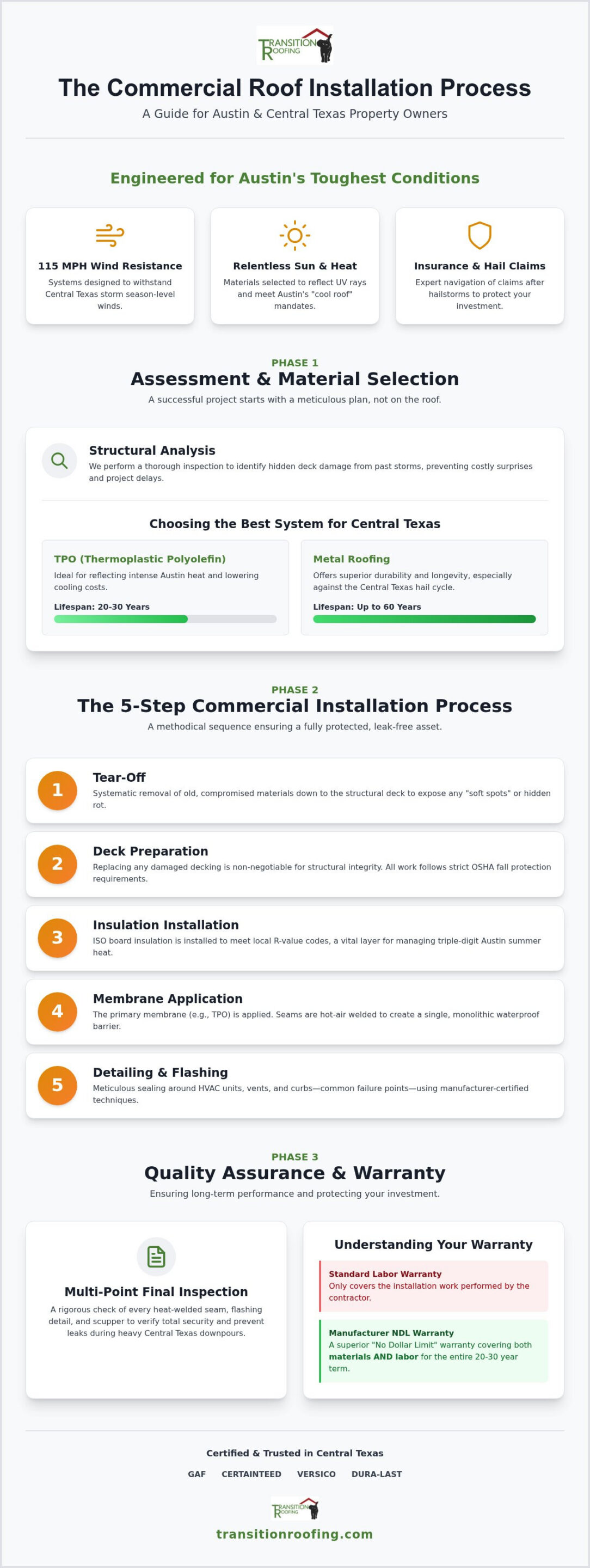
The commercial roof installation process doesn’t start on the roof; it starts with a thorough structural analysis. We’ve spent over 15 years inspecting Austin properties, and we know that hidden deck damage from past storms is often the biggest surprise for owners. Identifying these issues early prevents costly delays once the project begins. Our assessment also accounts for local energy efficiency standards, ensuring your new system meets the city’s “cool roof” requirements. We design every system to handle 115 mph wind speeds, providing the stability your business needs during the Central Texas storm season.
Choosing the Best System for Central Texas Heat
Austin’s intense sun makes UV reflectivity a top priority for any building owner. TPO is a popular choice because it reflects heat and significantly reduces cooling costs. You might also consider metal roofing, which offers superior durability against the Central Texas hail cycle. When comparing different commercial roofing membrane types, it’s vital to weigh the long-term lifespan against initial costs. TPO systems typically last 20 to 30 years, while metal can last up to 60. If you are struggling to decide, check out our guide on choosing the right commercial roof material to find the perfect match.
The Staging and Logistics Plan
Construction shouldn’t stop your business from running. We develop a custom staging plan to coordinate material deliveries, ensuring we don’t block customer parking or loading docks. Safety is our primary objective during this stage of the commercial roof installation process. We establish clear communication channels with property managers to provide daily updates. This methodical approach keeps your property safe and your operations moving without unnecessary stress. We focus on a hands-on strategy that prioritizes your peace of mind from day one. You’ll always know exactly where the project stands.
The 5-Step Commercial Roof Installation Process in Central Texas
A successful commercial roof installation process moves in a logical sequence to ensure long-term security. We follow a methodical timeline that transforms a vulnerable structure into a fully protected asset. Each stage is designed to address the specific environmental stressors found in Austin, TX, from heavy spring rains to intense summer heat.
Tear-Off and Deck Preparation
Step one is the systematic tear-off of old, compromised materials. We don’t just scrape the surface; we clear everything down to the deck to find “soft spots” or rotted wood that others might hide. Step two involves substrate preparation. Replacing damaged decking is non-negotiable for structural integrity. During this phase, we strictly follow OSHA fall protection requirements to keep our crew and your property safe. We work in sections to ensure the site stays watertight even if a sudden Central Texas storm rolls in.
Membrane Application and Sealing
In step three, we install ISO board insulation to meet local R-value codes. This layer is vital for managing triple-digit Austin summers. Step four is the application of the primary membrane or metal panels. For TPO systems, we use hot-air welding on every seam. This creates a single, monolithic waterproof sheet that won’t pull apart under stress. Step five focuses on detailing around HVAC units, vents, and curbs. These are common failure points, so we use manufacturer-certified techniques from GAF and CertainTeed to ensure high-wind uplift resistance. If you’re seeing signs of wear on your current system, starting a professional assessment early can prevent minor issues from becoming major replacements. This methodical approach ensures your building remains leak-free for decades.
Quality Assurance and Final Inspection Standards in Austin, TX
The commercial roof installation process concludes with a rigorous multi-point inspection. We check every heat-welded seam, flashing detail, and scupper to ensure they meet our high standards. With over 15 years of local experience, we know that even a small oversight can lead to a leak during a heavy Central Texas downpour. We don’t consider the job finished until every inch of the membrane is verified for total security. This methodical final phase ensures your asset is ready for the long haul.
Manufacturer Warranty Validation
There’s a big difference between a standard contractor labor warranty and a manufacturer NDL (No Dollar Limit) warranty. A labor warranty only covers the work performed, but an NDL warranty covers both materials and labor for the entire term. To secure a 20-30 year NDL warranty from GAF or Versico, the manufacturer must perform their own independent inspection. As a certified expert roofing contractor in Austin, TX, we ensure every detail follows strict factory specifications. This validation is the only way to guarantee your long-term protection remains fully valid.
Local Code Compliance and Safety
We ensure the new system meets specific Austin, TX drainage and slope requirements to prevent ponding water, which is a major cause of membrane failure. Once the technical checks are complete, we perform a final walkthrough with the property manager to address any remaining punch-list items. We also use magnetic sweeps for a total site cleanup, protecting your tenants and customers from stray screws or metal scraps. Finally, you’ll receive a digital “Project Closeout” file. This includes high-resolution photos and all warranty documents for your insurance and maintenance records. If you want to move your building from a state of vulnerability to total security, schedule a roof inspection in Austin today.
Maximizing ROI and Navigating Insurance Claims in Central Texas
Investing in a high-quality commercial roof installation process pays off through lower utility bills and fewer emergency repairs. In Austin, TX, our intense UV exposure can degrade poor materials quickly. By choosing reflective systems and ensuring expert installation, you avoid the premature failure that plagues many local buildings. For property owners who want to apply similar heat-reduction strategies to their homes, you can explore Residential Window Tinting to learn about mitigating UV damage and heat gain. We focus on durability that survives the Texas hail cycle and protects your bottom line for decades.
Central Texas is known for volatile weather. When hail strikes, navigating the insurance claim process is stressful for any property manager. We assist by providing the technical documentation and photo evidence that adjusters need to see. This ensures your claim accurately reflects the damage and required repairs. For more on recovering from local weather events, see our guide on Austin Roof Repair: Central Texas Storm Recovery.
Ongoing Maintenance Programs
You can extend your roof’s life by 25% or more with a consistent maintenance program. We recommend bi-annual inspections to clear debris and check for minor membrane tears before they become major leaks. This proactive approach is just as vital for properties in nearby areas. If you manage assets across the region, read our Commercial Roofing San Antonio Guide for more system insights.
Keeping a clear documentation trail simplifies future warranty or insurance claims. The digital closeout file we provide contains high-resolution photos and manufacturer specs. This level of transparency protects your investment. It makes the difference between a simple claim and a long, expensive dispute. Our goal is to move your building from a state of vulnerability to one of total security.
Securing Your Building’s Future in Central Texas
Securing your building’s future in Central Texas requires more than just a quick material swap. It demands a methodical commercial roof installation process designed to withstand triple-digit heat and sudden hailstorms. You now understand how proper material selection, a systematic 5-step installation, and rigorous quality checks protect your long-term investment. At Transition Roofing, we bring over 15 years of local experience to every project. Our team is certified by GAF and CertainTeed, ensuring your manufacturer warranties remain valid and your structure stays secure. We also provide expert insurance claim assistance for hail damage to reduce your stress during storm recovery. Moving your property from a state of vulnerability to total security is our primary objective. If you’re ready to protect your asset with a high-performance system, we’re here to help. Schedule a professional commercial roof assessment in Austin today and get a clear plan for your building’s protection.
Frequently Asked Questions
How long does a commercial roof installation typically take in Austin?
Most commercial projects in the Austin area take between one and three weeks to complete. The exact timeline for your commercial roof installation process depends on the square footage and the complexity of the roof’s layout. Weather is the biggest variable; we pause work during heavy rain to keep your building watertight. We provide a detailed schedule during the assessment so you can plan for our crew’s presence.
Will my business need to close during the installation process?
You won’t need to close your business while we work. We coordinate with property managers to ensure customer entrances and loading docks remain clear and safe. Most of the noise is limited to the initial tear-off phase. We use a methodical staging plan to manage material delivery and debris removal. This minimizes the impact on your daily operations while we move your structure toward total security.
What is the most durable commercial roofing material for Texas hail?
Standing seam metal roofing is widely considered the most durable choice for the Central Texas hail cycle. If you prefer a membrane system, a thick TPO with high-density ISO board offers excellent impact resistance. These systems are engineered to survive 115 mph wind speeds and large hail strikes. Choosing the right material during the commercial roof installation process ensures your building qualifies for long-term manufacturer warranties and insurance discounts.
How much does a commercial roof installation cost per square foot?
The cost per square foot varies based on material choice, insulation thickness, and the current condition of your roof deck. TPO systems are generally more cost-effective than standing seam metal, but metal offers a significantly longer lifespan. We provide transparent estimates that account for local building codes and energy efficiency standards. A structural analysis is necessary to give you an accurate price that avoids unexpected surprises during construction.
Can you install a new commercial roof over an existing one?
You can sometimes install a new system over an existing one, but building codes in Austin typically limit roofs to two total layers. We generally recommend a full tear-off to inspect the underlying deck for hidden rot or moisture. Installing over a compromised substrate can void your manufacturer warranty and trap water. We evaluate your specific roof to determine if a “recover” project is a safe, long-term option.