
You walk into your building after a heavy Central Texas downpour only to find water dripping onto your inventory or office equipment. It’s a frustrating moment that every property manager fears. When you’re facing a commercial flat roof leak repair Austin project, the pressure to act fast is high. You need more than a temporary patch that fails during the next storm. We understand that water intrusion causes more than just physical damage; it disrupts your tenants and creates unpredictable costs. This guide will show you how to identify the real source of a leak, mitigate immediate damage, and implement professional repairs that actually last. We’ll walk through the technical side of TPO and flat roof systems while explaining how to handle insurance hurdles. With over 15 years of experience and certifications from GAF and Versico, we’ve seen how the Austin heat stresses these structures. You’ll gain the clarity needed to move your building from a state of vulnerability to total security.
Key Takeaways
- Austin’s extreme summer heat causes flat roofs to expand and contract, which leads to membrane cracking and UV degradation over time.
- Ignoring a leak allows moisture to destroy expensive insulation boards, often causing structural damage before water is even visible inside.
- Follow a professional process for commercial flat roof leak repair Austin property managers use to safely document damage and inspect critical flashings.
- Use the “25% Rule” to determine if a repair is cost-effective or if it’s time for a long-term solution using high-quality materials like Versico or Dura-last.
Common Causes of Commercial Flat Roof Leaks in Austin TX
Austin weather is brutal on commercial buildings. Between triple-digit summer days and sudden spring storms, your roof membrane stays under constant stress. Most commercial flat roof leak repair Austin calls we receive aren’t caused by a single event. Instead, they’re the result of long-term environmental wear that eventually gives way. Understanding these local stressors helps you spot trouble before a drip becomes a flood.
The Impact of Central Texas Heat on Roof Membranes
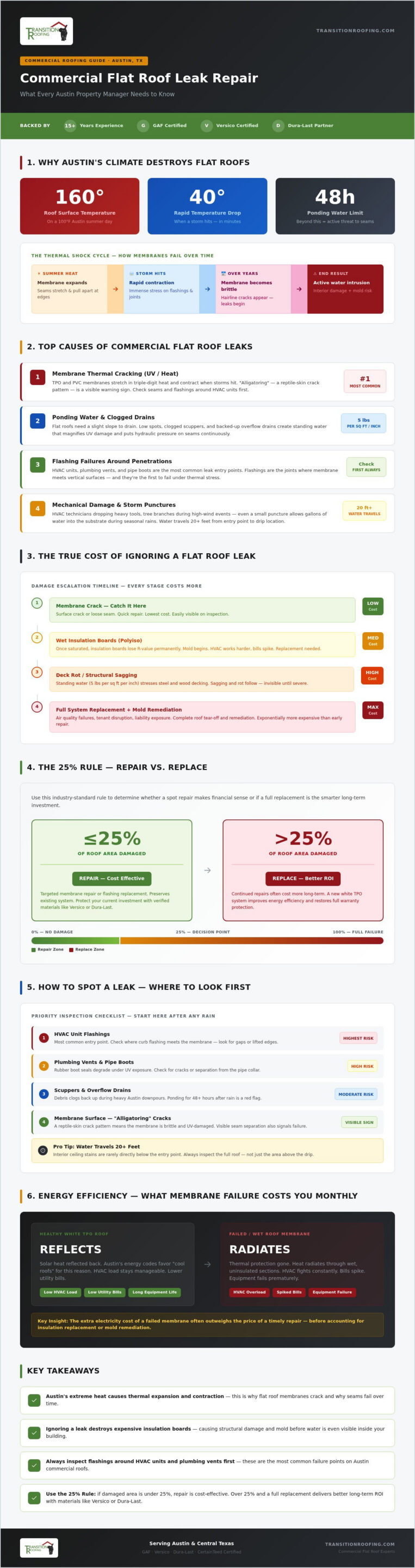
The sun is the biggest enemy of modern flat roof materials like TPO and PVC. On a 100-degree Austin day, your roof surface can easily reach 160 degrees. This heat causes the membrane to stretch and pull at the seams. When a sudden afternoon thunderstorm hits, the temperature drops 40 degrees in minutes. This thermal shock causes the material to contract rapidly, putting immense pressure on flashings. Over years of this cycle, older membranes become brittle and lose their elasticity, leading to hairline cracks.
Poor Drainage and Ponding Water Issues
Flat roofs aren’t actually flat. They’re designed with a slight slope to move water toward scuppers and drains. However, structural shifts or poor installation can create low spots. If you see water standing for more than 48 hours after a rain, you have ponding water. This standing weight creates a magnifying glass effect for UV rays, which accelerates membrane rot. It also puts constant hydraulic pressure on the seams of your commercial roofing system.
Common culprits that trigger leaks include:
- Clogged primary drains or overflow scuppers that back up during heavy downpours.
- Mechanical damage from HVAC technicians dropping heavy tools or panels on the membrane.
- Storm debris, like tree branches, that puncture the surface during high-wind events.
Even a small puncture from a dropped tool can allow gallons of water to enter the substrate during our seasonal rains. If you’re seeing water stains on your ceiling tiles, the source is often further away than you think.
The High Cost of Ignoring Membrane Failure in Austin TX
Membrane failure occurs when your roof’s outer waterproof layer stops protecting the building’s core. In our climate, this often goes unnoticed until interior damage is severe. When water breaches the membrane, it saturates the polyiso insulation boards. Once these boards get wet, they lose their R-value and structural integrity. This trapped moisture often leads to mold growth, which creates serious air quality concerns for your tenants. Addressing a commercial flat roof leak repair Austin project early prevents these compounding financial losses.
Structural Risks of Saturated Roof Systems
A saturated flat roof system is incredibly heavy. Standing water weighs about 5 pounds per square foot for every inch of depth. This constant weight stresses steel and wood decking, often causing them to sag or rot. Small drips often hide major structural issues that only professional commercial roof leak detection and repair can uncover. If you suspect water is trapped beneath your membrane, it’s best to have a professional check your roof deck before the damage spreads.
Energy Efficiency Losses in Central Texas
Austin’s energy codes favor “cool roofs” like white TPO because they reflect solar heat. When a membrane fails, you lose this thermal protection. Your HVAC system has to work much harder to fight the heat radiating through wet, uninsulated sections of the roof. This leads to spiked utility bills and premature equipment failure. The cost of the extra electricity alone often outweighs the price of a timely repair. Keeping your membrane intact is the only way to maintain the energy efficiency your building was designed to provide.
Identifying and Mitigating Commercial Flat Roof Leaks in Austin TX
Finding the source of a commercial flat roof leak repair Austin project is tricky. Water often travels 20 feet or more from the entry point before it drips through the ceiling. Start by inspecting your flashings around HVAC units and plumbing vents. These are the most common failure points. Look for “alligatoring,” which is a pattern of cracks in the membrane that looks like reptile skin. If you see these cracks or a loose seam, you’ve likely found your culprit. A fast response to commercial flat roof leak repair Austin needs keeps your business running without interruption. Early detection prevents minor issues from becoming structural emergencies.
Safe Leak Documentation for Insurance Claims
Documentation is your best tool for insurance claims and warranty work. Take wide and close-up photos of the interior damage first. Then, head to the roof and find the area directly above the drip. Use a date-stamp on your photos, especially after a major Central Texas hail event. This proves the damage happened during a specific storm. Clear photos of punctures or wind-lifted seams make the claims process much smoother for your ownership group.
Immediate Action Steps for Facility Managers
While waiting for a crew, stop the damage from getting worse. Clear any leaves or trash from your primary drains and overflow scuppers. If water can’t leave the roof, it will back up and find its way through the smallest seam. Use a non-permanent roof crayon to mark where you suspect the leak is. This helps the contractor find the spot quickly. If the leak is persistent, we use infrared thermography to find trapped moisture. This is usually when we recommend an Austin roof repair expert to create a moisture map. If you’re dealing with an active leak, contact our team for a professional assessment today.
Expert Commercial Flat Roof Leak Repair Austin TX and Maintenance
Transition Roofing brings over 15 years of local experience to every commercial flat roof leak repair Austin project. We understand that property managers need reliable solutions that don’t disrupt daily operations. We use premium materials from Versico and Dura-last to ensure long-term seam integrity. When deciding between a simple repair or a full commercial roofing replacement, we follow the “25% Rule.” If the cost of professional repairs exceeds 25% of the total roof’s value, a full system replacement is usually the smarter financial move. This logical framework keeps your maintenance budget predictable and effective.
Specialized Repair Techniques for TPO and PVC
We avoid “caulk and walk” fixes that quickly fail in the intense Central Texas sun. Our crews use robotic hot-air welding to fuse new membrane material directly to the existing roof surface. This creates a permanent, waterproof bond that is actually stronger than the surrounding material. It’s vital to ensure chemical compatibility between your old membrane and the new repair sheets. Using the wrong material will lead to immediate rejection and new leaks. We verify every material match before starting any work to guarantee a successful bond.
The Value of Preventative Maintenance Contracts
A preventative maintenance plan can extend your roof’s lifespan by 5 to 10 years. We perform bi-annual inspections to catch minor seam splits or clogged drains before they cause interior damage. These scheduled visits build a documented service history for your building. This detailed record is essential for future insurance claim assistance after a major hail storm. Our team is certified by GAF and Certainteed, ensuring we meet all local Austin commercial codes. We don’t just patch holes; we move your structure from a state of vulnerability to one of total security.
Securing Your Building’s Future in Austin TX
Managing a commercial property in Central Texas requires a proactive approach to maintenance. You now know how the Austin heat stresses membranes and why ignoring a small drip leads to saturated insulation boards. Use the 25% Rule and high-performance TPO or PVC systems to make smarter financial decisions for your building. Our team brings over 15 years of local experience and top certifications from GAF, Certainteed, and Versico to every project. We specialize in precision commercial flat roof leak repair Austin property managers trust to keep their tenants dry and their building assets secure. If you’re dealing with water intrusion or want to avoid the next emergency, we’ll provide a clear plan. Address vulnerabilities now to stay ahead of the weather. Schedule a professional commercial roof inspection in Austin today to ensure your building is ready for the next storm. Your roof is your first line of defense; we’re here to help you keep it strong.
Frequently Asked Questions
How much does commercial flat roof leak repair in Austin cost?
Most commercial flat roof leak repair Austin projects are priced based on the size of the damage, the type of membrane, and the ease of access. While a small TPO patch is straightforward, a leak that has saturated the insulation requires more labor and materials. We provide transparent estimates after a physical inspection. This ensures you aren’t paying for a “one size fits all” fix that doesn’t actually address your building’s failure points.
Can a flat roof leak be fixed without a full replacement?
Yes, a flat roof leak can often be repaired without a full replacement if the underlying insulation and deck are still dry. We use the “25% Rule” to guide property managers. If the cost of the repair is less than a quarter of the total roof value and the system is structurally sound, a professional patch or coating is the most cost-effective choice. Regular maintenance programs help keep your roof in this repairable state.
What are the signs that my commercial roof has a hidden leak?
Signs of a hidden leak include bubbling paint on interior walls, musty odors, or ceiling tiles that are soft to the touch. You might also notice a sudden increase in HVAC cooling costs as the wet insulation loses its efficiency. On the roof, looking for “alligatoring” or standing water that lasts more than 48 hours often points to a breach that hasn’t fully manifested as an interior drip yet.
How long does a typical commercial roof repair take in Austin?
Most minor commercial flat roof leak repair Austin projects are completed within one to two business days. The exact duration depends on the severity of the damage and current weather conditions. A simple hot-air weld for a TPO seam is relatively quick, while repairs involving the replacement of saturated polyiso boards take longer. Our goal is always to minimize business disruption while ensuring a permanent, waterproof seal for your property.
Will my commercial property insurance cover flat roof leak repairs?
Commercial insurance typically covers roof repairs if the damage is caused by a sudden, covered event like a hail storm or high-wind event. However, most policies won’t pay for repairs caused by long-term neglect or normal wear and tear. This is why keeping a documented history of preventative maintenance is vital. It proves to the adjuster that the leak resulted from storm damage rather than a lack of upkeep.