
What if your commercial roof wasn’t just a recurring maintenance expense, but a financial asset that actually paid for itself during a brutal Central Texas summer? Many property managers look for TPO roofing Austin to solve the constant stress of rising utility bills and the fear of leaks during unpredictable flash floods. You’re likely tired of watching AC units struggle against the 105-degree heat while wondering if your current system will survive the next major storm. It’s a high-stakes challenge that requires a steady, expert hand to manage correctly.
We’ve spent over 15 years helping local owners move their buildings from a state of vulnerability to total structural security. This guide explains how modern TPO systems protect your investment while lowering monthly cooling costs for decades. You’ll learn the practical differences between 60-mil and 80-mil membranes, along with the specific steps needed to meet 2026 energy codes. We’ll show you how to secure a leak-free future for your property without the guesswork or high-pressure sales tactics. By the end, you’ll have a clear plan for long-term protection.
Key Takeaways
- Understand why white reflective membranes are the industry standard for cooling large commercial spaces in the Central Texas climate.
- Learn why 60-mil is the recommended baseline for TPO roofing Austin to balance upfront installation costs with long-term puncture resistance.
- Identify early warning signs of seam failure and why specialized heat-welding is required for lasting, leak-proof repairs.
- Discover how GAF and Certainteed certifications ensure your project meets strict 2026 building codes and local wind speed requirements.
Why TPO Roofing is the Standard for Austin TX Commercial Buildings
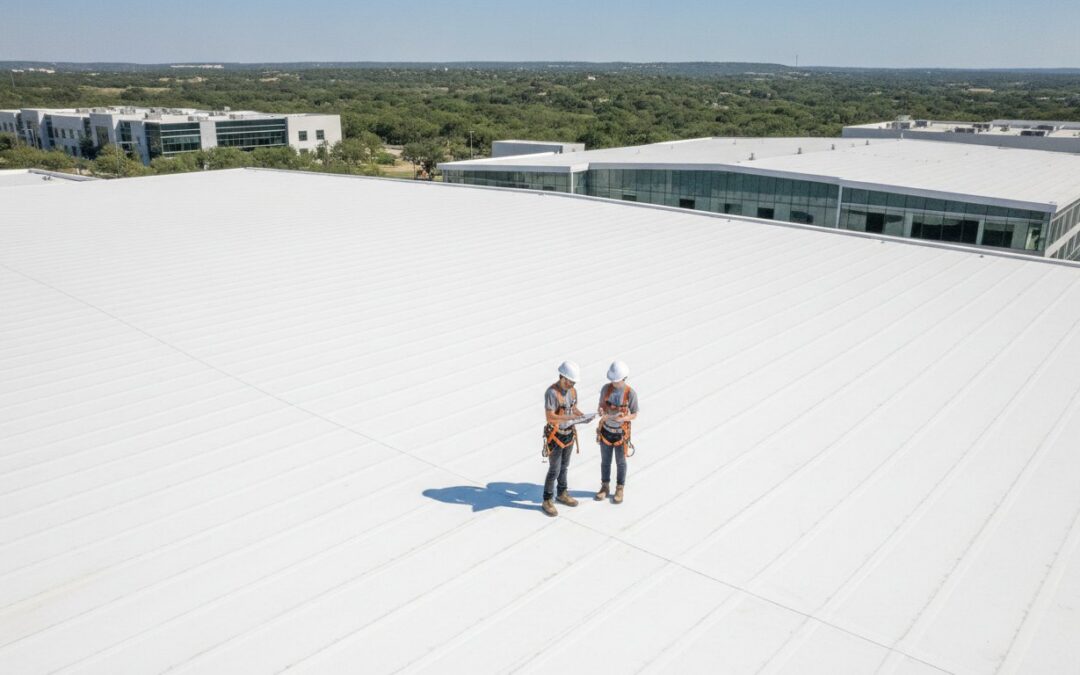
Thermoplastic Polyolefin, or TPO, is a single-ply reflective roofing membrane that’s become the primary choice for commercial roofing in Austin. It combines the long-term durability of rubber with the high performance of hot-air welded seams. This installation method creates a monolithic, leak-proof barrier across your entire building. It’s a critical defense against the sudden, heavy downpours that characterize the Central Texas climate. Beyond protection, TPO is 100% recyclable. This allows Austin TX property managers to reduce their environmental impact while securing their structural assets.
Combating the Central Texas Heat Index
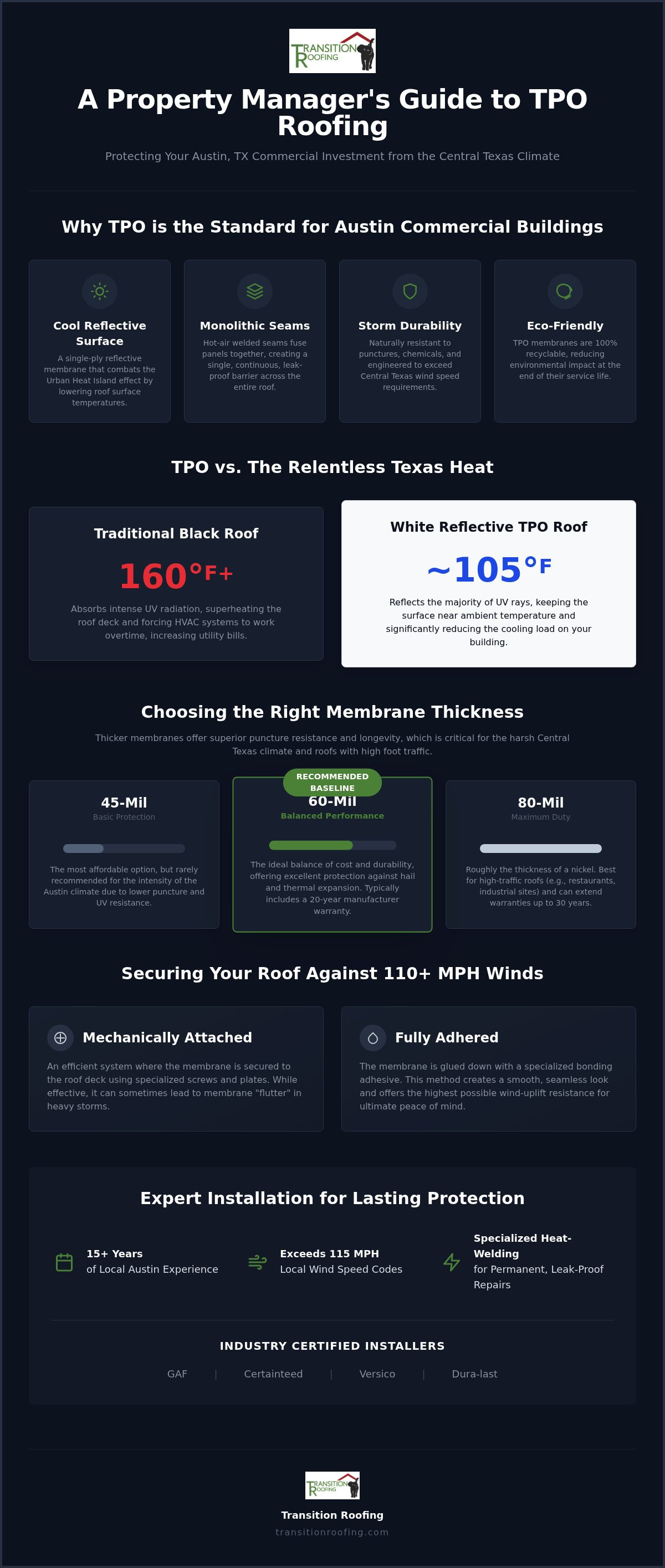
Austin’s summer heat is relentless. On a typical 105-degree afternoon, a traditional black EPDM roof can absorb enough energy to reach 160 degrees or more. White TPO reflects the majority of UV rays, keeping the surface temperature much closer to the ambient air. This reflection directly combats the Urban Heat Island effect prevalent in downtown Austin, TX. By significantly lowering the roof’s surface temperature, your rooftop HVAC units aren’t forced to run at maximum capacity. This reduction in AC load helps prevent premature equipment failure and lowers monthly utility costs.
Durability Against Austin Storms and Wind
Installing TPO roofing Austin systems provides a robust defense against regional weather extremes. These membranes are naturally resistant to punctures and common chemical exposure found in industrial zones. In Travis County, commercial structures must meet design wind speeds of 110-115 mph. TPO systems are engineered to exceed these requirements when installed with proper contractor logic and attachment methods. Because the seams are fused together using specialized heat-welding tools, the joints become the strongest part of the roof. This ensures your building remains watertight during the high-wind events and hail storms that frequently roll through Central Texas.
Choosing the Right TPO Membrane Thickness in Austin TX
TPO membranes come in three standard thicknesses: 45-mil, 60-mil, and 80-mil. While 45-mil is the most affordable, we rarely recommend it for TPO roofing Austin projects due to the intensity of our local climate. In our 15 years of local experience, we’ve found that 60-mil serves as the ideal baseline. It typically carries a 20-year manufacturer warranty and provides enough material to withstand the extreme thermal expansion common in Central Texas. Thicker membranes aren’t just about longevity. They add critical protection against physical damage from routine maintenance on rooftop equipment.
The 60-Mil vs. 80-Mil Comparison
An 80-mil membrane is roughly the thickness of a nickel. It provides significantly better puncture resistance and slower UV degradation than the 60-mil standard. We usually recommend this for high-traffic environments. This includes restaurant roofs where grease traps require monthly servicing or industrial sites with extensive HVAC systems. The extra investment in 80-mil can extend your manufacturer warranty to 30 years through partners like Versico or Dura-last. This ensures your asset remains protected through decades of hail and storms.
Attachment Methods: Fully Adhered vs. Mechanically Attached
In Austin, TX, the attachment method determines how well your TPO roofing Austin system handles 110 mph wind speeds. There are two primary ways we secure these systems:
- Mechanically Attached: This system uses screws and plates to secure the membrane to the deck. It’s efficient but can lead to membrane “flutter” during heavy storms.
- Fully Adhered: We use specialized bonding adhesive to glue the membrane down. This creates a smooth look and the highest wind-uplift resistance available.
For buildings with high-value inventory, the fully adhered method offers peace of mind by eliminating air movement under the membrane. If you aren’t sure which system fits your specific deck type, we can evaluate your commercial roof options to find the most reliable solution for your structure.
TPO Roof Repair and Maintenance in Austin TX
Maintaining TPO roofing Austin systems requires a different approach than standard asphalt or metal roofs. You might notice “bridging,” where the membrane pulls tight and lifts away from wall transitions, or small gaps in the seams. These vulnerabilities often lead to hidden leaks that damage insulation long before they appear on your ceiling. Because TPO is a thermoplastic, any Austin roof repair must be performed by specialists using high-heat robotic welders. Patching with generic sealants or “wet patch” products is a temporary fix that usually fails within a few months.
Our preventative maintenance programs are designed to catch these issues early. Consistent inspections can extend the life of a flat roof by 10 years or more by keeping seams tight and drains clear. As a specialized flat roofing company Austin managers trust, we focus on maintaining the structural integrity of your system rather than just reacting to emergencies. This methodical approach ensures your assets stay in safe, capable hands.
Handling Hail Damage on TPO Membranes
Central Texas storms bring unique challenges to commercial properties. While TPO is flexible when new, years of UV exposure can make older membranes brittle. Hail strikes don’t always create obvious holes. Instead, they often cause microscopic fractures in the top weathering layer. These fractures allow water to seep into the internal scrim, eventually rotting the roof deck. A professional inspection after a major storm is the only way to verify if your system is still providing total security.
The Role of Roof Coatings in Restoration
If your membrane is aging but the insulation remains dry, a silicone roof coating might be a viable alternative to a full replacement. These coatings restore the original reflectivity of your TPO roofing Austin system and seal minor surface cracks. This process can defer a costly tear-off for several years while significantly improving energy efficiency. If you’re seeing ponding water or worn spots, schedule a TPO assessment today to see if restoration is right for your building.
The Transition Roofing Process for Austin TX Property Owners
Our methodical approach to TPO roofing Austin ensures every project moves from a state of vulnerability to total security. We start with meticulous deck preparation. Our crews remove all old debris and ensure a clean, dry surface for the new insulation layers. Once the membrane is laid out, our team uses robotic heat-welders to fuse the seams together. We don’t just hope the seams hold; we perform physical testing on every inch of the roof surface. With over 15 years of experience and certifications from GAF and Certainteed, we maintain the highest standards in the industry.
We understand that your business doesn’t stop just because the roof needs work. Our “business-first” strategy involves clear communication and flexible scheduling to minimize disruption to your tenants or customers. We manage the heavy lifting so you can focus on your operations. If you are ready for a transparent, professional assessment, visit our commercial roofing Austin page for a free estimate.
Expert Insurance Claim Assistance
Navigating commercial insurance claims in Travis County can be a stressful and complex process. We provide specialized assistance by creating the detailed documentation that adjusters require for storm damage approval. This includes forensic-level evidence of hail impacts and wind uplift. Our expertise with Versico and Dura-last systems ensures your documentation meets strict warranty compliance standards. We act as your local authority, making sure your asset is restored with integrity and the right materials.
Your Next Steps for a Secure Commercial Roof
If you are seeing ponding water on your flat roof or noticing your utility bills climbing every month, it is time for a professional eye. These are often signs that your current system has reached its limit and requires attention before a minor leak becomes a major structural issue. We can take a look and give you a clear, honest plan for your building. Schedule a comprehensive TPO inspection in Austin today to protect your long-term investment.
Securing Your Commercial Investment in Central Texas
Choosing the right TPO roofing Austin system is one of the most impactful decisions you can make for your property’s long-term health. By selecting a 60-mil or 80-mil membrane, you aren’t just meeting 2026 energy codes; you’re building a defense against rising utility costs and the brutal heat of a Travis County summer. Remember that a monolithic, heat-welded barrier is your best protection against the flash floods and high-wind events that define our local climate. Our team brings over 15 years of local experience to every project. We are GAF Master Elite and Certainteed Certified, with deep technical expertise in Versico and Dura-last systems. We focus on moving your building from a state of vulnerability to one of total security through methodical craftsmanship and transparent service. If you’re seeing signs of wear or want to verify your roof’s integrity before the next storm season, we can help. Schedule your professional TPO roof inspection in Austin today and let our neighborly experts provide a clear plan for your facility’s protection.
Frequently Asked Questions
How long does a TPO roof typically last in the Austin TX climate?
A well-installed TPO roof typically lasts between 20 and 25 years in Central Texas. The intense UV exposure in Austin TX can accelerate degradation if the membrane isn’t maintained properly. Thickness plays a major role in longevity; 80-mil systems often reach the upper end of that range. Regular inspections help catch seam failures or punctures early, ensuring your building stays protected through decades of heat and storms.
Can a TPO membrane be installed over an existing flat roof system?
Yes, a TPO overlay or “recover” is often possible if the existing roof deck is structurally sound and dry. This process involves installing a new layer of TPO roofing Austin over the old system, which saves on tear-off labor and disposal costs. However, building codes generally limit properties to two roof layers. We always perform moisture scans first to ensure we aren’t trapping wet insulation, which would lead to deck rot.
Does the white color of TPO really lower my building’s energy bills?
The highly reflective white surface of TPO roofing Austin systems can reduce surface temperatures by as much as 60 degrees during the summer. This reflection significantly lowers the heat transfer into your building, which decreases the load on your HVAC units. Many property managers see a noticeable drop in monthly cooling costs after switching from a dark EPDM roof. It’s a practical, energy-efficient solution for the intense Central Texas heat index.
How do I know if my TPO roof needs a repair or a full replacement?
Minor issues like localized punctures or small seam gaps usually only require a commercial roof repair. If you see widespread cracking across the entire membrane, it’s a sign the material has reached the end of its lifespan. We also look for saturated insulation beneath the surface. If more than 25% of the roof area has trapped moisture, a full replacement is usually the most cost-effective long-term solution for your asset.
What is the difference between TPO and PVC roofing for Austin businesses?
Both are single-ply reflective membranes, but they serve different needs. TPO is generally more cost-effective and offers excellent UV resistance for standard office buildings. PVC contains plasticizers that make it resistant to chemicals, oils, and animal fats. We typically recommend PVC for Austin restaurants or industrial facilities with grease exhaust. For most other commercial applications in Central Texas, TPO provides the best balance of durability and value for your investment.