
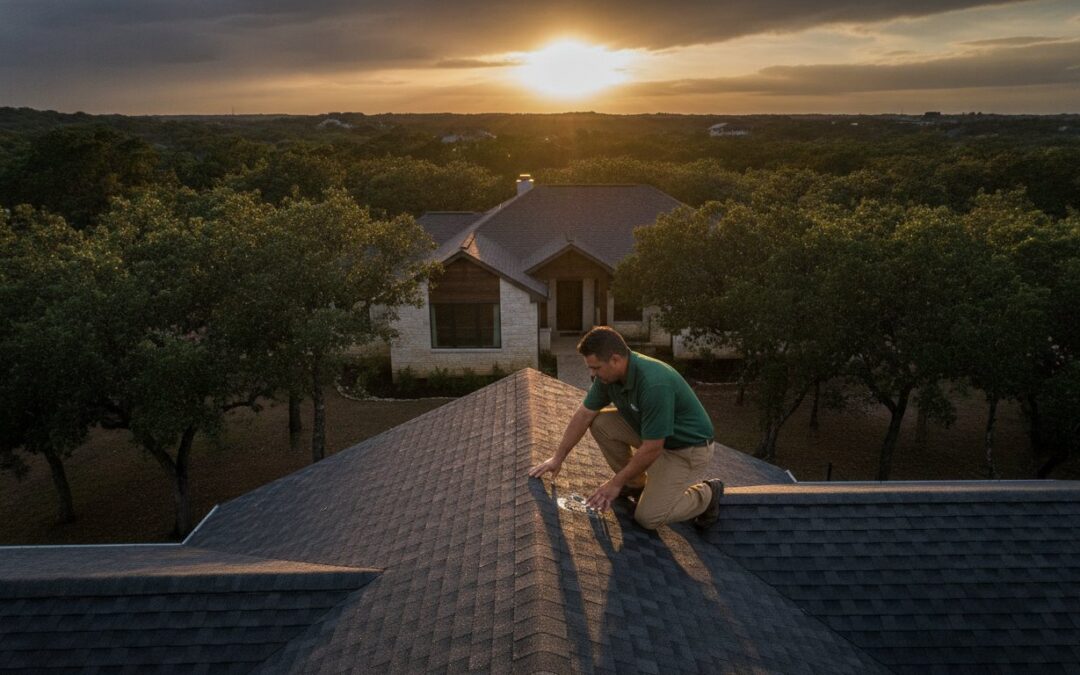
If you think a roof inspection after a Central Texas hailstorm is just a guy with a ladder and a clipboard, you might be leaving your home’s safety to chance. It’s stressful to deal with the aftermath of a storm, especially when “storm chasers” start knocking on your door with high-pressure pitches. You want to protect your property from hidden leaks and mold, but the insurance process often feels like a confusing maze. This guide explains exactly what to expect during a storm damage roof inspection so you can move forward with confidence.
We’ll walk through the professional assessment process, show you how to identify a legitimate damage report, and explain the legal timelines for your insurance claim. With over 15 years of experience in Austin, TX, we know that a real inspection is a forensic audit of your home’s defense. You’ll learn how to spot the difference between a sales pitch and a professional plan that keeps your family dry and secure.
Key Takeaways
- Learn why a professional assessment starts on the ground to find collateral damage like dented gutters before an expert ever climbs onto your shingles.
- We break down exactly what to expect during a storm damage roof inspection so you can identify real hail hits and avoid high-pressure sales pitches.
- Discover why having a local Austin expert present during the insurance adjuster’s meeting ensures that hidden structural damage is not overlooked.
- Understand the specific criteria used to determine if your roof needs a simple repair or a full replacement based on the intense Central Texas climate.
Why an Austin, TX Roof Inspection is Mandatory After Hail or High Winds
A professional storm damage roof inspection is a forensic evaluation of your shingles, flashing, and structural integrity. In Austin, TX, many homeowners fall for the “ground-level myth.” This is the false belief that if you don’t see missing shingles from the driveway, your roof is fine. In reality, a roof can be functionally totaled while looking perfect from the street. Understanding what to expect during a storm damage roof inspection starts with knowing that the most dangerous damage is often invisible to the untrained eye.
The Role of Hail and Heat in Central Texas
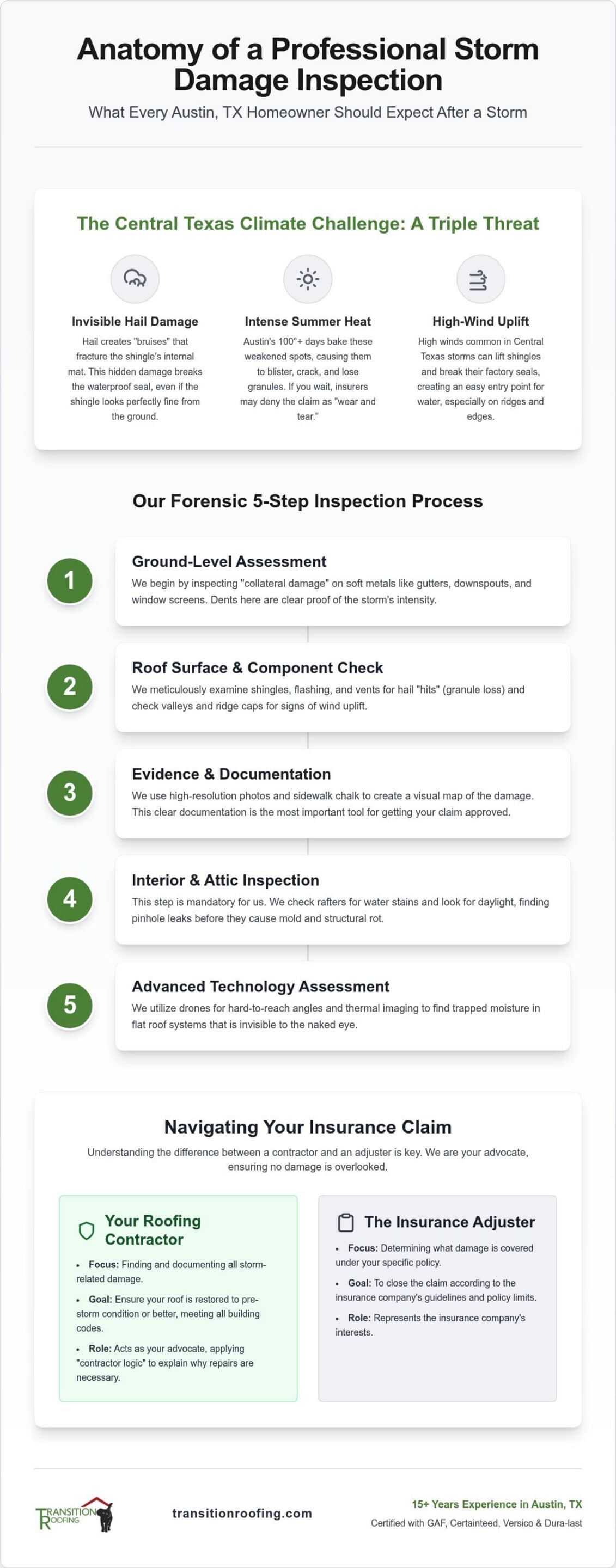
The Central Texas climate is brutal on compromised materials. When hail damage occurs, it creates “bruises” that fracture the internal asphalt mat. While the shingle stays in place, its protective seal is broken. Our 100-degree summer days then bake these weakened spots, causing them to blister and crack. If you wait too long to schedule an assessment, insurance adjusters may claim the damage is just standard “wear and tear” from the heat, leading to a denied claim.
Commercial vs. Residential Storm Impacts
Damage looks different depending on your system. For residential GAF or Certainteed shingles, we look for circular granule loss. On commercial TPO roofing systems, hail often causes “star fractures” that allow water to seep into the insulation layer. Metal roofing reacts differently; high-velocity hail may not cause a leak immediately, but the resulting dents can compromise the finish and lead to premature rusting. With over 15 years of local experience, we know how to document these specific Austin weather patterns to protect your investment.
Step-by-Step: What to Expect During a Storm Damage Roof Inspection in Austin, TX
A professional inspection begins on the driveway. We look for “collateral damage” on gutters, downspouts, and window screens. These soft metals act like a record of the storm’s intensity. If hail was large enough to dent a downspout, it was almost certainly large enough to fracture your shingles. This ground-level check provides the initial proof needed to build a solid case for your insurance provider.
Next, we perform the roof surface check. We examine vents, flashing, and shingle surfaces for specific “hit” patterns. On GAF or Certainteed asphalt shingles, this usually looks like dark, circular spots where granules have been knocked away. We also check the “seams” of the roof, such as the valleys and ridge caps, where high winds often cause the most uplift.
Clear evidence is vital for a successful claim. We use high-resolution photos and sidewalk chalk to circle impact zones. This turns your roof into a visual map that clearly shows the density of the damage. When you know what to expect during a storm damage roof inspection, you understand that this documentation is the most important tool for getting your claim approved.
The Interior and Attic Assessment
Many roofers skip the attic, but we consider it mandatory. We check rafters for water stains and look for daylight peeking through the roof deck. Pinhole leaks often show up here before they ever reach your ceiling. If you suspect your home’s defense is compromised, scheduling an expert assessment is the best first step to prevent mold and structural rot.
Advanced Tools and Technology
Ladders are just the start of our process. Drones capture high-definition angles we can’t see from the eaves, and moisture meters find damp insulation that feels dry to the touch. Thermal imaging identifies trapped moisture in flat roof systems by detecting temperature differences between water and dry materials. This level of detail ensures no hidden vulnerability is left behind after a Central Texas storm.
Navigating the Insurance Claim Process in Austin, TX: Contractor vs. Adjuster
Understanding the difference between a roofing contractor and an insurance adjuster is the key to a successful claim. A contractor looks for damage. An adjuster looks for policy coverage. This distinction is a major part of what to expect during a storm damage roof inspection. We use our 15+ years of experience to apply “contractor logic” when discussing repairs with insurers. This means we explain how the damage happened and why specific repairs are required to meet current building codes.
Beware of “storm chasers” who knock on doors after a hailstorm and disappear once they get a check. Local Austin certifications from manufacturers like GAF and Certainteed prove we are rooted in the community. These credentials also help with your claim. Insurance companies generally respect contractors who maintain high industry standards and understand the specific Central Texas climate.
Meeting the Insurance Adjuster
When the adjuster arrives at your Austin home or business, it’s vital to have your roofer present. We don’t just stand by; we advocate for you. We point out the bruised shingles and dented flashing we documented earlier. This ensures the adjuster sees the full extent of the storm’s impact before they finalize their report. Having an expert on the roof during this meeting prevents legitimate damage from being overlooked.
Reviewing the Scope of Loss
After the inspection, you’ll receive a “Scope of Loss” document. This is different from a standard estimate. It’s a line-by-line breakdown of what the insurance company agrees to pay for. If the scope is missing essential items like ridge vents or starter shingles, we work to get those added. For more details on the recovery steps, see our guide on Austin roof repair.
If you’re feeling overwhelmed by the paperwork, contact us for insurance claim assistance to get your project back on track.
Next Steps After Your Austin, TX Roof Inspection: Repair or Replace?
Once the assessment is finished, you face a critical decision. If the storm caused isolated issues on a single slope, a targeted repair might be enough to restore your home’s integrity. However, we often recommend a full replacement if your roof is over 15 years old or shows widespread granule loss. Structural damage to the decking or multiple leaks usually mean a new system is the only way to ensure total security. Knowing what to expect during a storm damage roof inspection helps you weigh these options before the next Central Texas storm hits.
If your roof is leaking now, we start with emergency tarping. This stops interior water damage while your insurance claim processes. Many Austin homeowners use this opportunity to upgrade to metal roofing for superior hail resistance. Our team uses 15+ years of experience to help you choose materials that stand up to the intense heat and wind patterns of our region.
Getting the Work Scheduled
Most storm restoration projects in Austin, TX, take two to four weeks to begin after insurance approval. We coordinate the delivery of GAF or Certainteed materials and the arrival of the crew. To prepare, please move vehicles from the driveway and clear patio furniture from the work zone. This keeps your assets safe and allows our team to work efficiently to secure your home.
Long-Term Protection
A new roof or major repair is a significant investment. We suggest enrolling in preventative maintenance programs to catch minor heat-related wear before it becomes a leak. This proactive approach extends the life of your shingles and provides peace of mind. If you’ve recently experienced a storm in Central Texas, we can take a look and give you a clear plan. Schedule your inspection with Transition Roofing today.
Securing Your Austin, TX Home After a Storm
A Central Texas storm can leave your property vulnerable to hidden leaks and structural rot that don’t show up from the driveway. By understanding what to expect during a storm damage roof inspection, you can navigate the insurance process without the stress of being scammed. Your local contractor serves as your primary advocate, ensuring the insurance adjuster sees every bruised shingle and dented vent before finalizing their report. This forensic approach is the only way to guarantee your home remains secure against the next round of hail and heat.
Transition Roofing brings over 15 years of local Austin experience to every project. As GAF and Certainteed Certified experts with an A+ rating for insurance claim assistance, we provide the steady guidance you need during property recovery. Schedule your professional storm damage inspection with Transition Roofing today to move your home from a state of vulnerability to total security. We look forward to helping you restore your peace of mind with quality craftsmanship you can trust.
Frequently Asked Questions: What to Expect During a Storm Damage Roof Inspection
How long does a storm damage roof inspection take in Austin?
A standard inspection usually takes between 45 and 90 minutes. This timeline depends on the size of your property and the complexity of the roof design. We spend time checking the ground for collateral damage before moving to the roof surface and the attic. Our goal is to provide a thorough report that documents every impact zone so you have clear evidence for your insurance claim.
Do I have to pay for a roof inspection after a storm?
Most professional roofing companies in Austin, TX, offer a no-pressure expert assessment at no initial cost to the homeowner. We believe in providing a clear plan before you commit to any repairs or replacements. This allows you to understand exactly what to expect during a storm damage roof inspection without any financial risk. If we find damage, we help you navigate the insurance claim assistance process with your provider.
What if the insurance adjuster says there is no damage but my roofer disagrees?
You have the right to request a re-inspection with a different adjuster. Disagreements often happen when an adjuster misses subtle hail bruises that a contractor’s forensic audit identifies. We recommend having your roofer present during the adjuster’s meeting to point out specific damage. If the denial persists, you can provide our detailed photo report and chalked impact zones as evidence for a formal claim appeal.
Can I file a claim if my roof is 15 years old and was hit by hail?
Yes, you can still file a claim, but the payout structure depends on your specific policy type. Most policies are either Replacement Cost Value (RCV) or Actual Cash Value (ACV). RCV covers the full cost of a new roof; ACV pays a depreciated amount based on age. even with an older roof, a professional inspection is vital to prevent hidden leaks from causing mold in your Central Texas home.
Should I call my insurance company before or after the roof inspection?
We recommend calling a local roofing expert before contacting your insurance company. A professional roofer can verify if there is enough damage to warrant a claim. This prevents a zero pay claim from appearing on your insurance record. Once we confirm the damage and document the impact patterns, you can file your claim with confidence. This process ensures you have a professional report ready for the adjuster’s visit.